
The best pet health tech of 2026: A dog owner’s honest guide
your dog’s health and safety.
Your dog can’t tell you when something hurts. She can’t say “my heart’s racing” or “I’ve been drinking way more water than usual.”
She wags her tail and hopes you notice. That’s the whole problem with loving an animal who can’t talk. You’re always guessing.
So of course a $70 billion pet industry looked at that gap and said: let’s build a gadget for it. Now you can strap a mini computer to your dog’s neck and get real-time data on her heart rate, her sleep, her location, even her scratching habits. Sounds incredible, right? It also sounds like a lot of hype wrapped around a subscription fee.
Both things can be true. That’s what this guide is for. No sales pitch, no fear-mongering. Just a clear-eyed look at what these devices actually do, which ones earn their price tag, and which ones you can skip without losing any sleep.
Why dog wearables are having a moment
Think about how much human wearable tech has exploded in the last decade. Smartwatches went from novelty to normal. People know their resting heart rate the way they used to know their blood type: rarely, but suddenly it matters.
Dog owners want that same peace of mind. And honestly, why wouldn’t they? Dogs hide pain. It’s practically their job description, a leftover survival instinct from the wild. By the time a limp becomes obvious, or a cough won’t quit, the problem has often been brewing for weeks.
Add in a wave of new sensor technology, cheaper cellular data, and AI models that can spot patterns humans miss, and you get a genuine boom. 2G and 3G networks shutting down pushed manufacturers toward better GPS and GLONASS-based tracking. Newer chips sip battery instead of draining it. The result is a market that finally, mostly, works as advertised.
That doesn’t mean every device deserves a spot on your dog’s collar. Let’s break the category down.
Category 1: GPS trackers
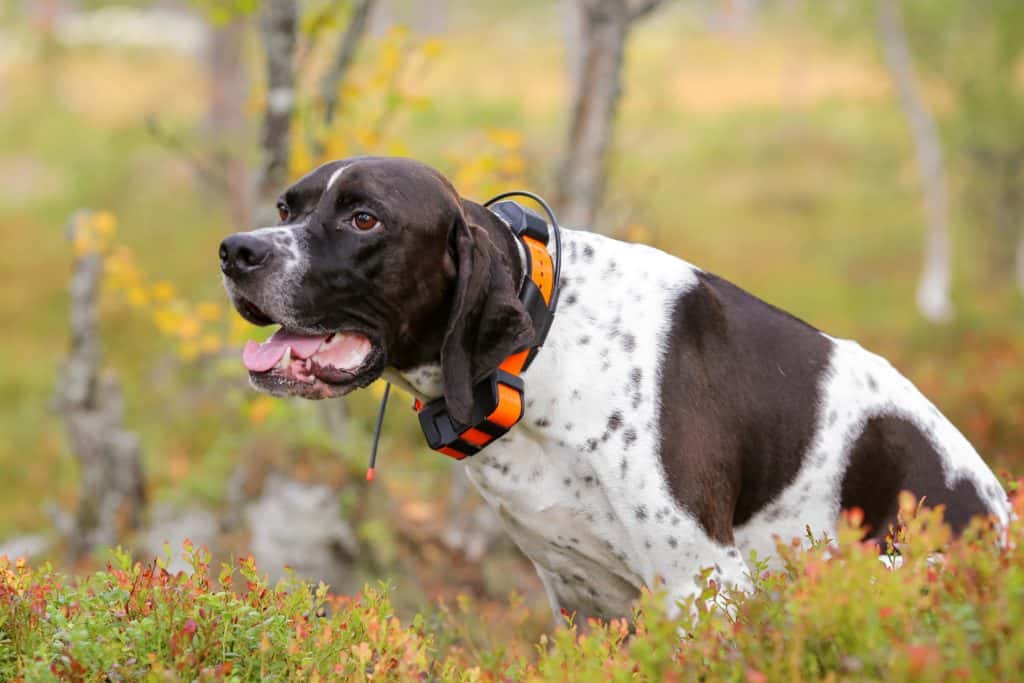
This is where the wearable boom started, and it’s still the most useful category for most owners. A GPS collar does one job well: it tells you where your dog is when she’s not where she’s supposed to be.
Tractive DOG 6 is the collar most people should start with. It’s affordable: the device itself runs around $50 to $70, and the subscription is in the $5 to $8 per month range. It updates your dog’s location every two to three seconds, which is fast enough actually to be useful if she bolts after a squirrel. Battery life stretches close to two weeks.
The catch? It leans on cell towers so that rural coverage can get spotty. If you live in a rural area with a weak cell signal, look for a GPS tracker that supports multiple network types (like the Fi Series 3, which combines cellular and satellite systems) or one that lets you choose your carrier.
Devices with more powerful GPS chips and the ability to switch between available networks tend to perform better outside cities. Always check which networks a tracker actually supports in your area before buying.
Fi Series 3 is the premium pick. The device costs more upfront, and the annual subscription isn’t cheap, but you’re paying for battery life measured in months, not days, plus a slicker app experience. If you have a dog who spends serious time off-leash in the backcountry, Fi earns its keep.
Halo Collar 5 blends GPS tracking with virtual fencing and training tools. It works on multiple cellular carriers, which helps in areas where one network drops out. If you want containment and location in a single device, this is worth a look.
A quick word on Whistle: if you’re still seeing “Whistle dog tracker” recommendations floating around, know that Tractive acquired the brand, and the original Whistle platform was shut down in 2025. Existing devices stopped functioning. If you own an old Whistle collar, it’s dead weight now. Don’t buy one secondhand expecting it to work.
Resist the urge to slap an Apple AirTag on your dog’s collar and call it a day. AirTags run on Bluetooth, not GPS. They rely on other people’s iPhones passing nearby to relay location. In a crowded city, that might work often enough.
On a hiking trail or in a rural neighborhood, your “tracker” goes silent the moment your dog is out of range. Use one as a cheap backup if you want. Never as your only line of defense.
Category 2: Activity and sleep monitors
These devices are the pet version of a fitness tracker. They count steps, log rest, and build a baseline of what “normal” looks like for your specific dog.
Here’s why that baseline actually matters: a healthy twelve-year-old Lab and a healthy two-year-old Border Collie have wildly different normal activity levels. A generic chart telling you your dog should walk “X minutes a day” is basically useless.
What you want is a device that learns your dog, then flags when something shifts. A sudden drop in movement. Restless nights that weren’t restless before. Less time on her feet after meals. Those small shifts are often the first breadcrumb trail toward arthritis, thyroid issues, or pain your dog is quietly working to hide.
The metrics that matter most here are consistency and trend, not any single day’s number. One low-activity day means nothing. Two weeks of declining activity means something. Look for an app that shows you graphs over time, not just a daily score that resets every morning.
Category 3: Health alert devices

This is where things get genuinely interesting, and also where you need to keep your expectations grounded.
PetPace 3.0 sits at the clinical end of the spectrum. It packs in more than eight sensors and gets used by veterinary practices, not just pet parents. It continuously tracks heart rate, respiratory rate, temperature, and more. The tradeoff is cost. You’re looking at several hundred dollars a year, which puts it out of reach for casual use. This device makes the most sense for dogs already managing a diagnosed condition.
Invoxia’s Biotracker takes a different approach. Instead of subscriptions, it’s a one-time purchase. It uses radar sensors instead of optical ones, so it can measure heart and breathing rates through fur without requiring skin contact. That’s a real advantage for long-haired or anxious dogs who don’t love a snug sensor pressed against their skin.
A published study that followed over 700 dogs using this kind of tracker found it useful for establishing what normal resting heart and respiratory rates actually look like in real-world settings, not just in a vet clinic, where a dog’s heart rate can spike from stress alone.
The study showed that Biotracker’s readings closely matched veterinary-grade equipment for resting dogs and helped owners spot early health changes that might otherwise go unnoticed. Most owners were able to use the data to identify patterns and discuss changes with their veterinarians sooner than they normally would have.
Maven Pet specifically targets chronic condition management. Owners managing dogs with heart murmurs, congestive heart failure, or seizure disorders use it to catch vital sign changes early, sometimes early enough to medicate before a crisis hits. It’s not a crystal ball. It’s a smoke detector. It tells you something changed. You still have to call your vet to find out why.
Speaking of seizures: no wearable on the market today can reliably predict a seizure before it happens. What the good ones can do is log restlessness, sleep disruption, and heart rate spikes around seizure events, which helps you and your vet spot patterns and triggers you’d otherwise miss in a handwritten diary. Think of it as a black box recorder, not an early warning system.
Category 4: Smart camera collars
This category is still finding its footing. A handful of 2026 launches, like the collar-mounted units debuting AI-powered health analysis alongside GPS, are trying to combine location tracking with visual or motion-based health insights in one wearable. It’s an ambitious idea.
Fewer devices to buy, one app to check.
Right now, though, most genuinely useful camera-based pet monitoring still lives on stationary indoor cameras rather than collars, using AI to watch gait and posture for signs of limping or discomfort.
A camera mounted on a moving, shaking, mud-diving dog has a much harder job than one bolted to your living room wall. If you’re drawn to this category, treat it as an emerging space to watch rather than a mature purchase you can fully trust yet.
What to look for when buying
Skip the marketing copy and check these four things instead.
Battery life. A collar that dies every three days is a collar you’ll forget to charge, and a forgotten collar protects nobody. Look for at least a week of real-world battery life, not the best-case number on the box.
Fit. Your dog isn’t a mannequin. She rolls in things, scratches, swims, and sleeps in weird positions. A collar that rubs, chafes, or slips off after one good shake in the yard is worthless no matter how smart it is.
App quality. This sounds shallow until you’re squinting at a laggy, confusing app at 6 a.m. trying to figure out where your dog wandered off to. A clean, fast, reliable app is not a nice-to-have. It’s the whole point.
Vet integration. The best health devices let you export data or share it directly with your veterinarian. Look for options that allow you to send activity or health reports by email, download PDFs you can print, or use the device app to share real-time data with your vet’s clinic. Some brands even offer portals where vets can log in and review ongoing trends. A chart full of numbers means nothing if your vet can’t easily see it during an appointment.
Devices worth skipping
Not every gadget deserves a spot on your dog’s neck. Skip anything still riding on the old Whistle platform, since it simply doesn’t work anymore.
Skip standalone Bluetooth trackers marketed as full GPS replacements; they’re proximity finders wearing a GPS costume.
And be wary of ultra-cheap imported “health collars” with no published accuracy data and no vet endorsement anywhere. If a company can’t tell you how their sensor was validated, that’s your answer.
Red flags for unvalidated or unreliable devices:
- No mention of veterinary partnerships, external studies, or published accuracy data.
- Vague or missing details on how the device measures what it claims to measure.
- Slick marketing but no real reviews from vets or reputable pet owners—especially if all the testimonials sound generic.
- Outdated platforms or products that rely on networks about to be shut down.
- No clear customer service or warranty policy.
When in doubt, stick with brands that spell out their validation process and can point to vet-backed evidence.
Comparison table: Top 5 devices head to head
| Device | Best for | Device cost | Ongoing cost | Standout feature |
| Tractive DOG 6 | Budget GPS tracking | ~$50–70 | ~$5–8/month | Location updates every 2–3 seconds |
| Fi Series 3 | Long battery, off-leash dogs | ~$200–300 | Annual subscription required | Months of battery life on one charge |
| Halo Collar 5 | GPS plus containment training | Premium tier | Subscription required | Unlimited custom virtual fences |
| Invoxia Biotracker | No-subscription health tracking | One-time cost | None | Radar sensors read through fur |
| PetPace 3.0 | Chronic condition management | Premium tier | Highest of the group | 8+ clinical-grade sensors, vet-used |
Budget picks vs. premium picks
On a budget? A Tractive-style GPS collar covers the single most valuable use case, knowing where your dog is, without draining your wallet. Pair it with your own eyes and a good relationship with your vet.
Ready to invest? If your dog is a senior, manages a chronic condition, or has a breed-specific risk (think heart disease in Cavaliers or bloat in deep-chested breeds), a clinical-grade monitor like PetPace or a no-subscription option like Invoxia can genuinely change outcomes by catching trouble early.
Expert note: what vets actually think
Veterinarians tend to land in a similar place on this technology: cautiously supportive, with one big caveat. These devices are trend-spotting tools, not diagnostic ones. A single odd reading isn’t an emergency. A pattern that holds for days or weeks is worth a phone call. Vets increasingly welcome owners who bring months of activity or heart rate data to an appointment because it fills in the gaps between checkups. What they don’t want is an owner treating a wearable’s alert as a diagnosis. The collar can tell you something’s off. Only your vet can tell you what it means.
FAQs
Are these devices accurate?
It depends heavily on the sensor type and the brand. For GPS trackers, most reputable devices claim typical location accuracy within about 8 to 16 feet (2.5 to 5 meters) outdoors. However, this can widen in areas with tall buildings, dense trees, or poor cell signal. For health sensors, such as those measuring heart rate and respiratory rate, the accuracy usually falls within 5% to 10% of veterinary equipment under ideal conditions. Still, error margins may increase if the sensor loses contact or if the dog moves a lot. Radar and optical-based sensors that avoid direct skin contact tend to produce steadier readings for most dogs, especially those with thick coats. None of these devices replace a vet exam, and none should be read as a diagnosis on their own.
Are they worth it for healthy dogs?
For a healthy, young dog, a GPS tracker is easily worth it if she’s ever off-leash, escape-prone, or spends time somewhere she could get lost.
Health-monitoring sensors matter less for a healthy dog day-to-day, but they build a baseline that becomes genuinely valuable later, when “normal” starts to shift with age. Think of it less like buying insurance and more like keeping a diary before you need one.
At the end of the day, no gadget replaces watching your dog, really watching her. The way she gets up in the morning. The way she greets you at the door. Technology can catch what your eyes miss on a busy Tuesday. It can’t replace the attention you already give her every single day. Use it as a second set of eyes, not a substitute for your own.
Sara B. Hansen has spent 20-plus years as a professional editor and writer. She’s also the author of The Complete Guide to Cocker Spaniels. She decided to create her dream job by launching DogsBestLife.com in 2011. Sara grew up with family dogs, and since she bought her first house, she’s had a furry companion or two to help make it a home. She shares her heart and home with Nutmeg, a Pembroke Welsh Corgi. Her previous dogs: Sydney (September 2008-April 2020), Finley (November 1993-January 2008), and Browning (May 1993-November 2007). You can reach Sara @ editor@dogsbestlife.com.