
Why most dog owners get portion control completely wrong
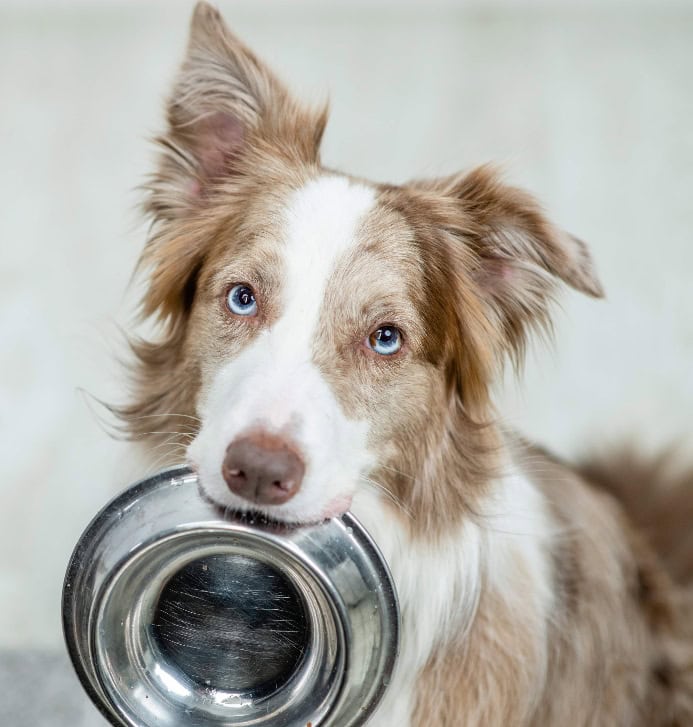
There’s a quiet worry that lives rent-free in the back of your mind every time you fill your dog’s bowl. You wonder: Is that too much food?
You add a little more because they’re looking up at you with those eyes. And then you wonder again.
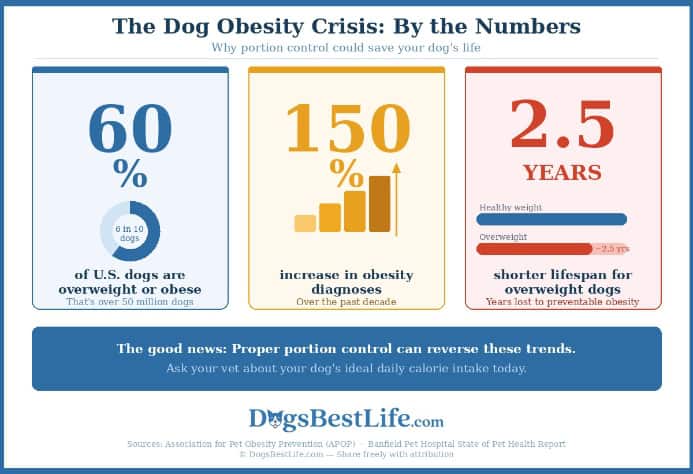
Here’s the unpleasant truth: that nagging feeling is probably right. More than half of dogs in America are now overweight or obese, and the numbers keep rising.
Being just 10% overweight can cut your dog’s lifespan by one-third. Too much weight can cause health complications, including heart, kidney, and liver disease, as well as diabetes, arthritis, joint problems, and cancer.
Let that sink in. One-third.
And yet nearly a third of owners of overweight or obese dogs classify their pet as “normal” or even “thin” when asked by their vet.
If you’re thinking about portion control, recognize that understanding and implementing the right feeding practices are as vital as following a regular feeding schedule to keep your dog healthy and giving them a longer, happier life.
Rising rates of overweight dogs
- Rising rates of overweight dogs
- Importance of portion control for dogs
- Understand feeding guidelines on dog food packaging
- Use breed and size calculators to determine portions
- Adjust food portions based on your dog’s activity level
- Health risks of overfeeding in dogs
- Tips for practical weight management in dogs
- Common portion control mistakes to avoid
- Monitor your dog’s weight and make adjustments
- Emotional feeding
- The role of exercise in weight management
- Maintain health through proper portion control
- Your next step starts today
The numbers are hard to ignore. Nearly 60% of dogs in the U.S. are overweight or obese — and obesity diagnoses have increased by more than 150% in dogs over the past decade alone. It’s not slowing down.
The risk climbs dramatically with age. Fewer than 10% of dogs are overweight in their late growth stage.
By the time they hit middle age, that figure tops 50%. In other words, the older your dog gets, the higher the risk.
And being overweight is associated with a shorter lifespan by up to 2.5 years across multiple breeds.
Two and a half years. That’s two and a half more summers of fetch. Two and a half more years of muddy paws on your clean floors. It matters.
Importance of portion control for dogs
Most dog owners mistake portion control for restriction, but it’s really about accuracy.
Feeding your dog the right amount isn’t withholding love — it’s expressing it.
Research consistently shows that maintaining dogs at their ideal weight helps prevent health issues and prolongs their lives.
Paying close attention to meal portions can substantially extend your dog’s life and improve their health.
Think of it this way. You wouldn’t fill a car’s gas tank until it overflows every single time and call that good maintenance.
Overfeeding accumulates harm. By the time you see symptoms like limping, labored breathing, or lethargy, the damage is done.
In a landmark longevity study, dogs fed 25% fewer calories than a control group lived an average of two years longer and had significantly fewer medical problems. Portion control isn’t a punishment. It’s a gift.
Understand feeding guidelines on dog food packaging
You’ve probably done this. You’ve flipped the bag over, peered at the feeding chart, and followed it to the letter. Responsible, right? Maybe not.
The feeding recommendations on pet food labels often overestimate how much your dog actually needs. Why?
Because one set of guidelines can’t possibly account for the massive variation in metabolic rates, temperaments, breeds, and environments among individual dogs. The chart on the bag is written for an average dog. Yours probably isn’t average.
Treat label guidelines only as a rough starting point. For specific advice, consult your vet, who can consider your dog’s body, age, and lifestyle.
Here’s what to actually look for on the label:
- Kilocalories (kcal) per cup: This is the most useful number on the bag. Two foods can look identical in volume but differ wildly in calorie density.
- Life stage designation: Is the food formulated for puppies, adults, or all life stages? Feeding an adult dog puppy food is like giving a sedentary office worker an athlete’s meal plan.
- Nutritional adequacy statement: This tells you whether the food is genuinely complete and balanced, or just supplemental.
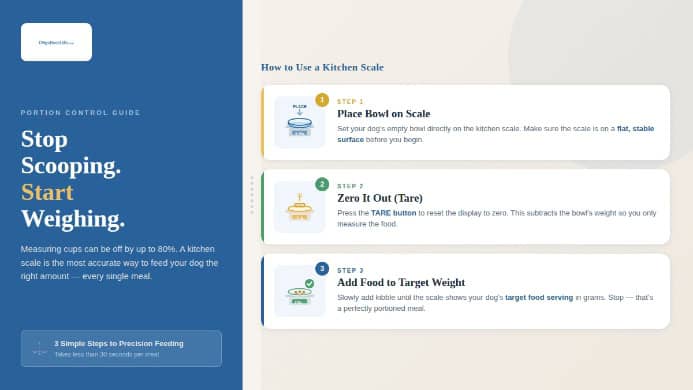
One more thing: weigh your dog’s food in grams rather than scooping by eye, even if you use a measuring cup for dry food.
Get a kitchen scale. It’s a small change that makes a massive difference. To do this, place your dog’s food bowl on the scale, press zero to reset it, then add food until you reach the right weight. This simple step lets you control portions accurately, every time.
Use breed and size calculators to determine portions
Here’s something most dog owners don’t realise: every breed has unique nutritional requirements that depend on size, weight, age, and activity level. A Chihuahua and a Great Dane are not just different sizes of the same animal. Their metabolisms, energy needs, and portion requirements are worlds apart.
Toy breeds need smaller but more frequent meals. Large breeds may need fewer meals but larger portions with joint-supporting nutrients.
Working breeds such as Border Collies or Huskies often need higher-calorie diets due to their energy expenditure. Generic feeding charts don’t address those distinctions.
This is where breed and size calculators become genuinely useful. Tools like the Dog Food Advisor calculator, Royal Canin’s Feeding Portion Calculator, and Purina’s pet food calculator take the guesswork out of portions. They factor in not just weight but also age, breed, and activity level.
A few things to know when using these calculators:
- Use your dog’s ideal weight, not their current weight if they’re overweight. Feeding based on an overweight body means perpetuating the problem.
- Adjust for life stage. Older dogs have significantly lower energy needs than younger ones. Small to medium dogs are considered seniors at around seven years of age, while larger breeds reach senior status much sooner, sometimes as early as five years of age.
- Limit treats. Treats should make up no more than 10% of your dog’s total daily calorie intake. If you’re training heavily, subtract those calories from their daily total. Choose healthy treat options whenever possible.
Consider low-calorie choices such as small pieces of fresh vegetables (carrots, green beans, or cucumbers), air-popped plain popcorn, or commercially available low-calorie dog treats. You can also use part of your dog’s regular kibble as treats during training.
Always avoid high-fat, salty, or sugary human foods, and remember to keep portions small and appropriate.
Remember, while calculators aren’t perfect, starting with customized estimates and modifying as needed is the most effective approach to portion control.
Adjust food portions based on your dog’s activity level
This is the piece most people miss entirely. Your dog’s calorie needs aren’t static. They change. Week to week, season to season, year to year.
A dog that hikes, runs, or plays daily burns far more calories than one that lounges on the couch. Active breeds or working dogs need larger portions or higher-calorie food, while less active dogs thrive on moderate feeding to maintain lean muscle without gaining fat.
Think about it practically. Your dog gets two long runs a day in summer. In winter, those runs become short, reluctant shuffles around the block.
It’s the same dog. Same food. Same portions. But the calorie burn has dropped significantly. That gap? It becomes weight gain.
A change in routine — like fewer walks in winter or more outdoor activity in summer — means calorie needs fluctuate. When life changes, feeding should change with it.
Spayed and neutered dogs also need fewer calories than unaltered dogs. This fact catches many owners off guard after their dog’s surgery, once the weight starts creeping on despite no apparent change in feeding.
When your dog’s activity drops, reduce portions. When activity rises, adjust upward. Watch and respond.
Health risks of overfeeding in dogs
Let’s be blunt about what’s actually at stake here. Weighing too much isn’t a cosmetic issue. It’s a medical crisis.
The consequences affect nearly every system of the body. Excess weight doesn’t just slow a dog down — it actively causes disease. We’re talking arthritis, diabetes, heart failure, high blood pressure, liver disease, chronic kidney disease, bladder and urinary tract disease, impaired thyroid function, and cancer.
That’s not a list of minor inconveniences. That’s a list of conditions that cause real suffering.
The joint damage alone is devastating. Even one or two extra pounds adds considerable stress to joints that weren’t designed to carry that load. And here’s the part that’s often overlooked: fat cells actively produce inflammatory chemicals that damage even non-weight-bearing joints. The harm isn’t just mechanical. It’s biochemical.
Vets see it all the time. For example, a 10-year-old Lab can no longer get into the car because of crippling hip arthritis.
The damage didn’t happen overnight. It built up quietly, year after year, meal after meal. Obesity is a slow, insidious, silent process. And people often don’t take action until there’s a crisis. By then, recovery is much harder.
The core takeaway: Act before weight becomes a crisis to safeguard your dog’s health and well-being.
Tips for practical weight management in dogs
Good weight management means consistently applying clear practices: measure meals, monitor treats, avoid free-feeding, limit table scraps, and keep everyone in your household on the same plan.
The takeaway: Consistency is vital.
Measure every meal using a kitchen scale for accurate, consistent portions. Non-standard cups lead to errors. A scale removes all ambiguity.
Count treats as calories. Treats should account for no more than 10% of daily intake. Adjust the main meal to compensate if you train often.
Don’t free-feed. Keeping the bowl full at all times can lead to overeating, especially in bored or inactive dogs. Scheduled mealtimes give you control and help you notice early if your dog’s appetite changes. This is an important health signal.
Cut the table scraps. It’s hard to resist those eyes. But human food can add hidden calories and cause digestive issues. It’s a kindness in disguise to say no.
Make the whole household consistent. If one person is carefully measuring meals while another is slipping extras under the table, the effort is wasted. Everyone in the home needs to be on the same page.
Common portion control mistakes to avoid
Even well-intentioned owners fall into the same traps. Watch out for these:
Eyeballing portions. Guessing “about a cup” is rarely accurate. Portion sizes drift upward over time without you noticing — often by 20–30% more than intended.
Feeding out of guilt or habit. Filling the bowl because it’s 5 p.m., or because your dog looks sad, isn’t the same as feeding based on need. Routine and emotion are powerful — and often work against your dog’s health.
Forgetting to count treats. A handful of training treats, a dental chew, a bite of your dinner — these add up fast. Many owners track meals carefully but overlook treats, which can add hundreds of extra calories a day.
Using the wrong measuring tool. A coffee mug, a solo cup, a “heaping” scoop — none of these are consistent. Use a kitchen scale every time.
Feeding all dogs in the household the same amount. A young, active dog and a senior, sedentary dog living under the same roof have very different calorie needs. One plan does not fit all.
Not adjusting for life changes. After surgery, illness, injury, reduced activity, or aging, calorie needs shift.
Keeping the same portions through major life changes is one of the most common causes of gradual weight gain.
Monitor your dog’s weight and make adjustments
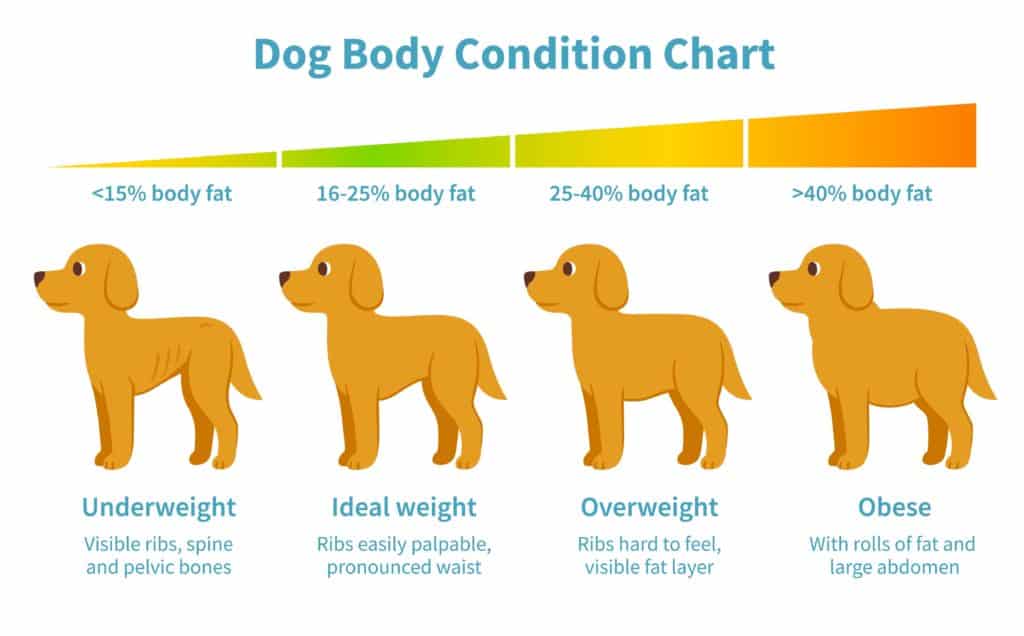
Monitor your dog’s weight at home regularly — routine checks let you make timely adjustments before small gains become big problems.
Monitoring your dog to make sure it maintains an ideal body condition score is simple.
From above, your dog should have a visible waist, a slight narrowing between the ribcage and the hips. From the side, there should be a gentle tuck upward in the belly. No tuck, no waist? It’s worth reassessing portions.
Weigh your dog monthly, especially on a new food or feeding plan. Small adjustments — 10% up or down — can make a real difference.
If your dog needs to lose weight, aim for a 10–15% calorie reduction every two to three weeks. Crash dieting is as counterproductive for dogs as it is for humans.
If hunger is a concern, try low-calorie fillers like green beans, carrots, or broccoli, and consider puzzle feeders or slow bowls to make meals more satisfying. Your dog can lose weight without feeling deprived.
Always consult your veterinarian.
Come prepared with specific questions, such as “What is my dog’s ideal weight?” How many calories do they need daily? How often should I adjust portions? What signs mean it’s time to update the plan? What is the ideal portion size for my dog’s meals? Specific questions get specific answers.
Your vet can build a nutrition plan tailored to your dog’s age, size, activity level, and health. Annual weight checks aren’t just about vaccines — they’re about catching problems before they become crises.
Emotional feeding
Here’s something no dog feeding guide talks about enough: a lot of overfeeding comes from love.
You’ve had a long day. Your dog is sitting there, patient and hopeful. Giving them a little extra feels like a connection — like care. And sometimes feeding extra is guilt-driven. You were out late. You skipped the walk. The extra scoop feels like an apology.
Those feelings are completely understandable. But food isn’t the only way to show your dog you love them — and it’s not the best way.
When you feel the urge to give a little extra, redirect it. A five-minute game of tug. A belly rub. A short walk around the block. An extra training session with a few pieces of their regular kibble as rewards. These alternatives give your dog what they’re actually looking for: your attention and engagement. They satisfy the bond without adding calories.
Breaking the emotional feeding cycle doesn’t mean being cold or withholding. It means finding better ways to say “I love you” — ones that add years to your dog’s life instead of weight to their frame.
The role of exercise in weight management

Portion control is powerful. But it works best when it’s paired with regular physical activity.
Exercise burns calories, builds lean muscle, supports joint health, and improves mood — for both of you. A dog that moves regularly is easier to keep at a healthy weight, even if their diet isn’t perfect. A dog that barely moves will struggle to stay lean even on a carefully measured diet.
This doesn’t mean your dog needs to run marathons. Consistent, daily movement is what matters. For most dogs, that means at least 30 minutes of moderate activity per day — walks, play sessions, fetch, swimming, or whatever your dog enjoys and can do safely, given their age and breed.
As your dog’s activity level changes — seasonally, with age, or after injury — adjust both their exercise and their portions together. The two levers work in tandem. Pull only one, and you’ll see limited results. Use both, and you give your dog the best possible chance at a long, healthy life.
Maintain health through proper portion control
Here’s the thing. You’re not a bad owner because your dog has gained a few pounds. You’re a loving owner who may not have had all the information. That changes today.
Pick one small change you can make—maybe measuring meals with a scale instead of a scoop, or setting a consistent feeding schedule—and start with just that.
Progress happens one simple step at a time, and you and your dog can begin today.
Portion control isn’t about being strict or withholding.
It’s about being intentional. Learning to read the label critically and not taking it as gospel. It’s about using a breed-specific calculator instead of guessing. It’s about adjusting portions when the seasons change, when your dog slows down, when life shifts.
Watch for a visible waistline, ribs you can feel but not see, energy, and firm stools.
That’s your benchmark. Not the chart on the bag. Not what feels like enough. Your dog’s actual body.
The good news? It doesn’t take dramatic changes to make a real difference.
Vets consistently report that even a 6% reduction in body weight can meaningfully improve a dog’s comfort and mobility.
Small changes. Consistent habits. A dog who lives longer, moves better, and feels more like themselves.
That’s what portion control actually is. And now you know how to get it right.
Your next step starts today
Knowledge without action doesn’t change anything. So here’s a simple, concrete commitment: for the next seven days, weigh every one of your dog’s meals on a kitchen scale. Not a scoop. Not a guess. A scale.
That’s it. One week. One change.
Notice whether the amount looks different from what you’ve been giving. Notice whether your dog seems satisfied. Check in on their energy, their stools, and their waistline. Let the data tell you something.
From there, layer in the next step — adjusting for treats, syncing portions with activity, and scheduling a vet check-in. Progress builds on itself.
Your dog can’t advocate for their own health. You’re the one holding the bowl. Make it count.
Sara B. Hansen has spent 20-plus years as a professional editor and writer. She’s also the author of The Complete Guide to Cocker Spaniels. She created her dream job by launching DogsBestLife.com in 2011. Sara grew up with family dogs, and since she bought her first house, she’s had a furry companion or two to help make it a home. She shares her heart and home with Nutmeg, a Pembroke Welsh Corgi. Her previous dogs: Sydney (September 2008-April 2020), Finley (November 1993-January 2008), and Browning (May 1993-November 2007). You can reach Sara @ editor@dogsbestlife.com.