
Step-by-step guide: Turn your dog’s touch fear into trust
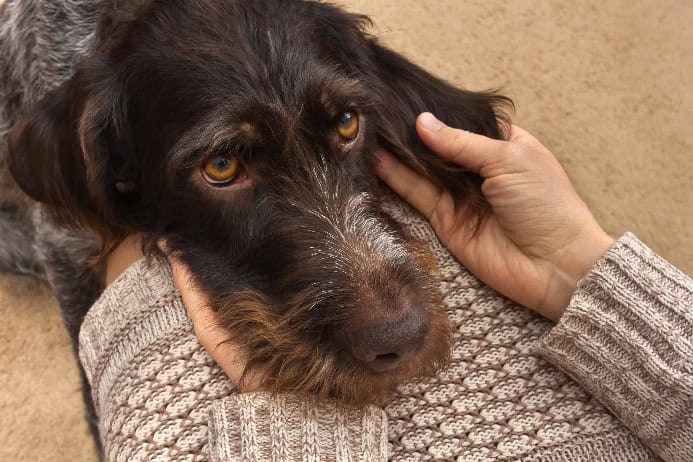
Some dogs are calm when you touch their paws, ears, or tail. Others pull away or get wiggly when approached.
Sensitivity is common and makes sense. Paws have many nerves, ears are delicate, and tails play a key role in communication.
With a calm, gradual desensitization plan and regular practice, you can help your dog feel safe and cooperative during handling and care.
Why sensitive spots need special care
Paws, ears, and tails serve important functions.
Dogs rely on their paws for balance and traction, so grabbing them out of the blue can be startling.
Ears are vulnerable to irritation when handled roughly or cleaned too aggressively.
The tail helps with balance and social signaling, which is why many dogs guard it.
Desensitization is about teaching your dog that touch in these areas predicts good things.
Short sessions, clear signals, and lots of rewards set the stage for success.
When practiced consistently, your dog begins to relax because each interaction feels predictable, comfortable, and brief.
Start with trust and timing
Choose calm moments when your dog has had a walk, a meal, or a play session and is already more settled.
Start where your dog is most comfortable. A soft stroke on the shoulder with a treat is a great opening move.
Then, over a few sessions, work down the leg, closer to the ear, or the tail. Keep your touch light and purposeful.
Use a simple marker, like ‘yes’ or ‘good,’ to signal that your dog did well, then reward with a small treat.
End before your dog wants to end. Finishing on a positive note builds confidence and ensures your next session starts smoothly.
Paws: From touch to tools
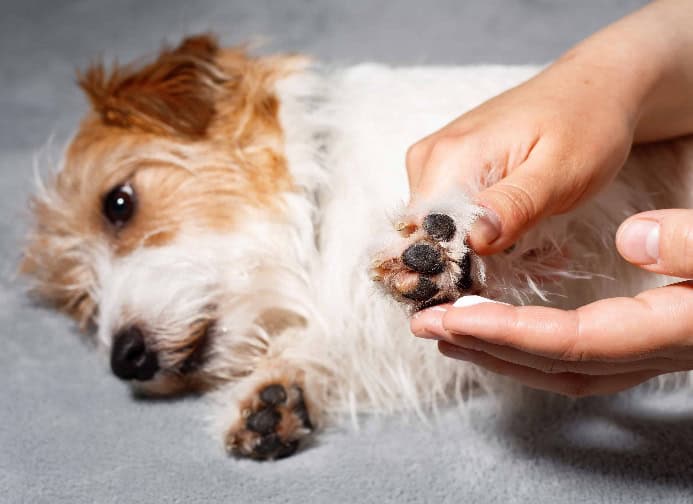
Pair a short paw touch with a treat.
Touch, treat, release, repeat, then stop.
Later, hold the paw for 1 or 2 seconds, keeping it low for safety.
When your dog is relaxed, show grooming tools, offer a treat, and put the tool away.
Gently tap a clipper on a nail so your dog hears it, and reward.
Many dogs prefer a file or grinder, so introduce those sounds quietly while giving treats.
If your dog pulls back, make sessions shorter and reward more.
The goal is to help your dog relax by letting them know what comes next.
Ears: Gentle checks and clean associations
Approach the ear from the side, not from above.
Lift the flap for just a second, look, reward, and release.
Over time, increase the duration you hold the flap, and pair it with a calm voice and steady breathing.
If your veterinarian recommends a cleaner, put a drop on a cotton pad and wipe only what you can see.
Avoid inserting swabs into the ear canal.
The aim is to associate ear handling with comfort rather than restraint.
If the sound of a hair dryer or grooming tools makes your dog uneasy, play those sounds softly during a cuddle session and feed treats until your dog barely notices.
Progress at your dog’s pace so cooperation grows with each session.
Tail and rear handling: Safety and consent
Start with the base of the tail, where many dogs accept touch more easily.
Stroke softly along the top and sides, then reward and pause. Work your way toward the tip over multiple sessions.
Briefly lifting the tail for a second or two can prepare your dog for grooming and routine checks, but keep it gentle and avoid overextending.
Watch for subtle signals like a stiff body, a lip lick, or a head turn that tell you to slow down, add distance, or take a break.
Short, predictable reps build a sense of control in your dog, which, in turn, makes handling safer and smoother for you.
Partnering with pros to build confidence
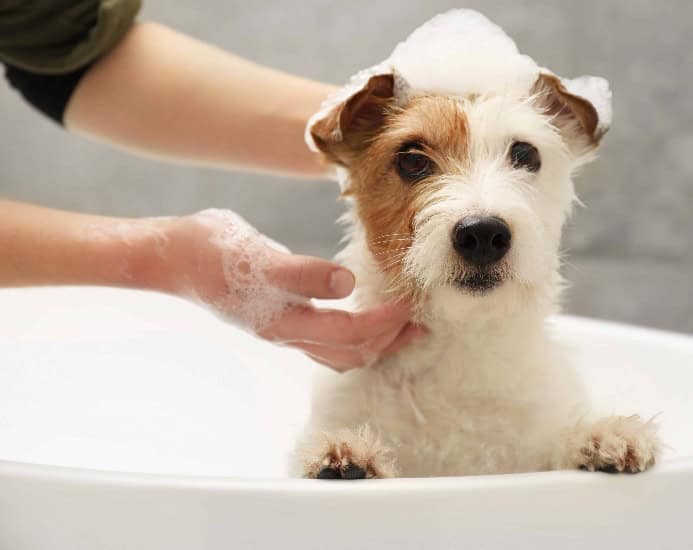
Real-world practice with skilled handlers can accelerate your dog’s comfort.
If you prefer help, consider scheduling dog grooming for a calm cleanup and a chance to reinforce your training in a friendly setting.
You can search for services like full and mini grooms, baths, and walk-in nail care, delivered with one-on-one attention in clean, safety-focused salons, which pair well with at-home desensitization and help make future visits more predictable for sensitive dogs.
Final thoughts on desensitizing your dog to grooming
Desensitizing paws, ears, and tails is an investment in your dog’s comfort and your everyday routine.
Keep sessions brief, pair touch with rewards, and progress gradually so your dog always feels safe. Over time, you will see easier nail care, calmer ear checks, and more relaxed brushing.
With patience, consistency, and occasional support from a professional, gentle handling becomes part of your shared language, and your dog’s confidence grows with every practice session.
Lizzie Howard is a Colorado native who, after graduating from the University of Colorado, now works as a freelance writer. When Lizzie isn’t writing, she enjoys hikes, baking for her friends and family, and spending time with her beloved yellow lab, Sparky.