
The German Shorthaired Pointer difference: Discover this amazing breed
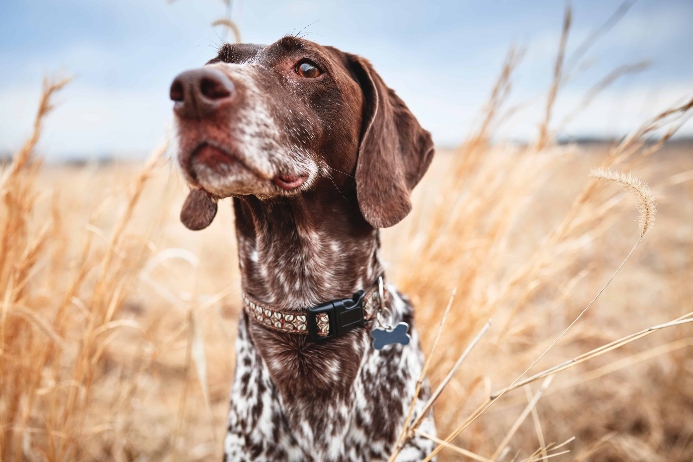
You didn’t just get a dog. You got a roommate who runs ultramarathons, has opinions about your schedule, and will absolutely redecorate your yard if you leave them alone too long.
That’s the German Shorthaired Pointer, also known as the GSP, in a nutshell.
And if you’re reading this, you’re either already owned by one or you’re standing at the edge of that cliff, peering over with a mix of excitement and low-key terror.
Maybe you’re thinking: I researched this breed for months, I’m active enough, I’ve had dogs before, how hard can it be? That feeling? Totally valid.
And also, you’re not wrong, but you’re not entirely right either. The GSP is genuinely one of the most rewarding breeds on the planet. The catch is they demand a lot from you first.
Expect a dog with near bottomless energy, a sharp mind that needs regular challenges, and a large appetite for time, training, and your attention.
If you can provide hours of exercise, ongoing mental stimulation, and are willing to make your dog a central part of your daily routine, you’re in the right place. This guide will make sure you go in with both eyes open.
History of the breed
- History of the breed
- Physical characteristics and appearance
- Temperament and personality traits
- Common health conditions
- Energy levels and exercise needs
- Training tips and challenges
- Grooming and care requirements
- Suitability as a family pet or working dog
- Final thoughts on the German Shorthaired Pointer
The German Shorthaired Pointer is not a recent fad or social media phenomenon. Instead, this breed traces its heritage to 17th-century Germany, where hunters intentionally bred a versatile dog capable of handling a range of field tasks.
To achieve this, German breeders combined Spanish Pointers with scent hounds and, later, English Pointers.
Their aim was not to produce a decorative pet, but rather a highly capable hunting companion. This dog needed to track, retrieve, point, and adapt to home life after a day in the field—an impressive set of requirements that the GSP fulfills exceptionally well.
German Shorthaired Pointers arrived in America in the 1920s and were recognized by the American Kennel Club in 1930. Over the years, the breed has gained popularity with hunters, competitors, and energetic families seeking a companion with endurance and drive.
Physical characteristics and appearance
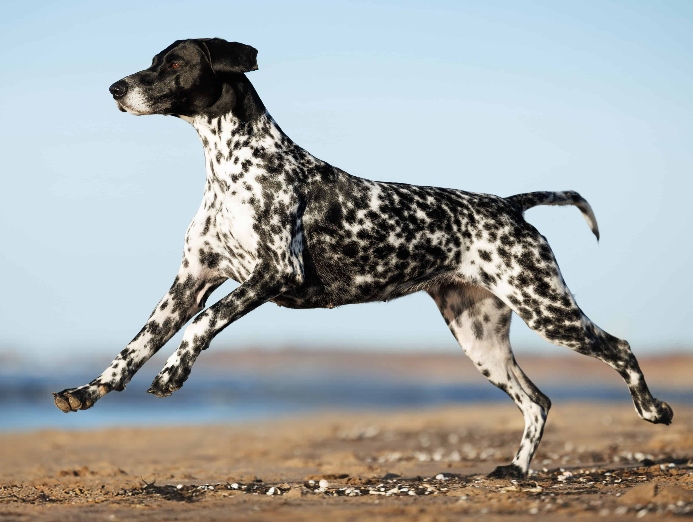
German Shorthaired Pointers have a sleek, athletic build, designed for agility and stamina. Their short, dense coats come in liver, liver-and-white, or black-and-white, often featuring unique spotted or patched patterns. Each dog’s markings are distinct.
Full-grown GSPs usually weigh 45 to 70 pounds and measure 21 to 25 inches at the shoulder, with males generally being larger. They are known for their floppy ears, expressive eyes, and trim waists, giving them a refined appearance.
Every part of their physique is built for activity: a deep chest for stamina, webbed feet for swimming, and a low-maintenance coat that dries quickly and resists dirt.
These aren’t dogs you look at. They’re dogs you watch in motion.
Temperament and personality traits
GSPs are highly intelligent, affectionate, and energetic dogs. They form close bonds with their families and thrive on interaction and mental stimulation. Without enough engagement, their boundless energy can lead to unwanted behavior.
GSPs are deeply devoted to their people and want to be involved in every aspect of daily life. Their loyalty and enthusiasm mean they do best in homes where they are not left alone for long periods.
Mental stimulation is essential for this breed. GSPs require tasks, challenges, and variety to keep their minds and bodies busy. Without enough to do, they may create their own forms of entertainment, such as getting into things around the house.
When given enough exercise and mental activity, GSPs are joyful, enthusiastic, and committed companions who bring energy and happiness to their households.
Common health conditions

GSPs are generally a robust, healthy breed, but they do carry some hereditary risks worth knowing about.
Major health issues
One health concern in this breed is hip dysplasia, a joint problem that can affect mobility, particularly in older dogs. Choosing a breeder who tests for this condition is vital.
GSPs, like other deep-chested breeds, are susceptible to bloat, a sudden and potentially fatal condition. Recognizing symptoms such as a swollen belly, unsuccessful attempts to vomit, or restlessness can be life-saving.
Hypothyroidism appears with some regularity in the breed, causing weight gain, lethargy, and skin issues. It’s manageable with medication but requires ongoing monitoring.
Cone degeneration (CD) is a genetic eye condition found in some GSP lines that causes progressive vision loss in bright light. Responsible breeders test for this, so ask about it directly.
Choosing a breeder or rescue
When looking for a German Shorthaired Pointer, choosing the right breeder or rescue makes a world of difference.
A reputable breeder will be transparent about health testing and gladly share results for conditions like hip dysplasia and cone degeneration.
Look for breeders who prioritize the well-being of their dogs, welcome visits to meet their puppies and breeding dogs, and are active in breed-specific clubs or activities.
Stay away from sellers who can’t provide clear health records, promise quick pickups, or are unwilling to answer detailed questions.
If considering a rescue, work with organizations dedicated to the breed that assess each dog’s health and behavior, and match adopters thoughtfully.
Health maintenance
Regular vet check-ups, a quality diet, appropriate exercise, and sourcing from health-tested breeding stock go a long way toward keeping your GSP healthy for their typical 12 to 14-year lifespan.
Energy levels and exercise needs
The GSP is among the highest-energy dog breeds. They require at least one to two hours of intense physical activity daily—more than just a walk or casual play. Sufficient exercise is essential for their well-being.
Activities such as running, hiking, swimming, agility training, and games in large spaces are ideal for GSPs. They excel when they have room to run and opportunities to use their keen sense of smell. While they can adapt to city living, meeting their exercise needs is non-negotiable.
Urban owners need to plan for daily long walks or runs, seek out dog-friendly parks or trails for off-leash play, use dog daycare or playgroups for extra stimulation, and commit to frequent outings in varied environments.
Apartments can work if you consistently provide these outlets, but without them, a GSP’s energy will quickly overwhelm a typical city routine.
GSP puppies should avoid excessive high-impact activity until they are fully grown, typically around 18 months, to protect their developing joints. Short, controlled play sessions are best during this stage.
The reward for getting this right? A calm, settled, affectionate dog at home. The consequence for getting it wrong? A furry tornado in your living room.
Training tips and challenges
The intelligence and eagerness of GSPs make them highly trainable, but they can also pick up undesirable habits just as quickly as good ones.
Early socialization is crucial. Introducing your GSP to diverse people, animals, and environments while they are young helps set the foundation for a well-adjusted adult dog.
Use positive reinforcement methods when training GSPs, as they are sensitive to harsh discipline. Short, frequent, and rewarding sessions work best to keep them motivated and confident.
Training a reliable recall is essential, as a GSP’s strong prey drive can easily distract them. Teaching them to come when called is crucial for their safety.
Teaching GSPs to walk nicely on a leash requires patience and consistency, as their enthusiasm often leads to pulling. Using a no-pull harness can help make walks with these canines more manageable.
Grooming and care requirements
Grooming a GSP is straightforward. Their short coat sheds moderately and requires only weekly brushing with a rubber brush or grooming mitt to stay tidy and healthy.
Bathing every four to six weeks is usually enough for a GSP, unless they get into something messy. Their nails grow quickly and should be trimmed monthly. Regular ear cleaning helps prevent infections.
Dental hygiene is important; brushing their teeth several times each week or providing appropriate chew toys can help maintain oral health. Make checking their eyes and ears a routine part of care.
Beyond that, they’re remarkably easy to keep clean for a dog that spends serious time outdoors. The coat doesn’t hold mud the way a longer-haired breed would, and it dries quickly after water activities. Small mercies.
Suitability as a family pet or working dog
The honest answer? The GSP excels at both, but there are caveats.
Family dogs
As a family dog, they’re playful, patient, and loving. They do well with children, especially kids old enough to handle an enthusiastic 60-pound dog.
While GSPs can be exuberant around toddlers and small pets, supervision and training are essential. When it comes to other pets like cats or small animals, their strong prey drive means careful, gradual introductions and secure management are a must.
Some GSPs can coexist peacefully with cats and other pets if raised together and given consistent boundaries; however, not all individuals will be equally tolerant, and supervision is always recommended in multi-pet households.
Their need for human connection makes them deeply invested family members, not a dog you banish to the backyard.
Working dogs
GSPs excel as working dogs, valued for their versatility and stamina in hunting and dog sports. Providing them with meaningful tasks or activities brings out their best qualities.
Considerations for owners
The breed isn’t ideal for sedentary owners, people who work long hours without a plan for the dog, or small urban living without a serious commitment to exercise.
GSPs are social dogs and should not be left alone for long stretches; most experts recommend a maximum of four to six hours alone at a time.
Regular periods longer than this can lead to anxiety or destructive behavior. If you know you’ll be away for extended periods, consider arranging for a dog walker, enrolling your GSP in doggy daycare, or having a trusted friend or family member stop by to break up the day.
Planning for their social needs is just as important as their physical exercise and mental stimulation. But for active individuals, outdoorsy families, or anyone who actually wants a dog deeply embedded in their daily life, the GSP rewards are a match made in heaven.
Final thoughts on the German Shorthaired Pointer
Owning a German Shorthaired Pointer is a lifestyle choice. These dogs are energetic, affectionate, and full of personality.
Get it right, and you’ll have a dog that makes you fitter, keeps you laughing, and gives you a decade-plus of loyal, joyful partnership.
Get it wrong, and you’ll spend your days trying to manage a dog whose energy was always bigger than the life you offered them.
The German Shorthair doesn’t ask for much. Just your time, your engagement, your consistency, and your willingness to go outside even when it’s cold. They pups do the rest, with enthusiasm that borders on embarrassing.
And honestly? That’s exactly why we love them.
Sara B. Hansen has spent 20-plus years as a professional editor and writer. She’s also the author of The Complete Guide to Cocker Spaniels. She created her dream job by launching DogsBestLife.com in 2011. Sara grew up with family dogs, and since she bought her first house, she’s had a furry companion or two to help make it a home. She shares her heart and home with Nutmeg, a Pembroke Welsh Corgi. Her previous dogs: Sydney (September 2008-April 2020), Finley (November 1993-January 2008), and Browning (May 1993-November 2007). You can reach Sara @ editor@dogsbestlife.com.