
Canine cognitive dysfunction: 7 signs your older dog may need help now

Your dog stares at the wall. He wanders into a room and stands there. Your dog forgets where his water bowl is, even though it hasn’t moved in seven years. He barks at nothing at 3 a.m. and looks at you like he’s never seen your face before.
That’s not only getting old. If you’re worried, you’re not alone—and you’re not wrong for noticing.
Picking up on changes like this shows how much you care, and paying attention is the first step in helping your dog.
This is something you need to take seriously, because your dog is counting on you to figure it out.
Canine cognitive dysfunction (CCD) is real, it’s heartbreaking, and it’s wildly underdiagnosed. Millions of dog owners are watching their senior dogs change and crediting it to age.
But age doesn’t explain everything. And once you understand what’s actually happening inside your dog’s brain, you’ll know what to do about it.
Let’s talk about it.
What is canine cognitive dysfunction?
- What is canine cognitive dysfunction?
- How common is this?
- The DISHAAL framework: what to watch for
- How CCD progresses
- Getting a diagnosis
- What you can actually do about it
- Environmental enrichment: keeping the brain active
- Day-to-day life with a dog who has CCD
- DISHAAL symptom checklist
- You’re not imagining it
Think of CCD as the dog equivalent of Alzheimer’s disease in humans. It’s a neurodegenerative condition that affects cognitive function—memory, awareness, perception, and learning.
Physical changes in the brain, including the buildup of amyloid plaques (deposits of abnormal protein) and the deterioration of neural connections, drive it all.
Here’s what makes CCD so sneaky: the early signs look a whole lot like normal aging—slowing down, sleeping more, being a little less interested in play. Easy to brush off. Easy to miss.
But CCD isn’t just “slowing down.” It’s a progressive condition that steals your dog’s ability to recognize their environment, interact with their family, and feel safe in their own skin.
And the earlier you catch it, the more you can do.
How common is this?
More common than most people realize, and that’s not an exaggeration.
Research suggests that about 28% of dogs aged 11-12 show signs of CCD. By the time dogs reach 15 or 16, that number climbs to over 68%. More than two-thirds of dogs in that age range are affected.
Large-breed dogs are particularly at risk because they age faster than small breeds. A Great Dane at 8 is already a senior dog. A Labrador at 10 is well into the stage where you should be watching closely.
The hard truth is that CCD is probably affecting far more dogs than we even know about, because so many owners and veterinarians attribute the signs to normal aging. So if your gut is telling you something is off with your senior dog, trust it.
The DISHAAL framework: what to watch for

Veterinarians use an acronym called DISHAAL to organize the most common signs of CCD. It stands for:
Disorientation — Getting lost in familiar spaces. Standing in corners. Staring at nothing. Walking into furniture. Forgetting how to find their way around the yard they’ve lived in for years.
Interaction changes — Your once-velcro dog stops seeking you out. Or your independent dog suddenly becomes clingy and anxious. Either direction can signal cognitive change. Some dogs stop greeting family members at the door. Some dogs seem to forget who you are.
Sleep-wake cycle changes — This is one of the most common early signs, and it’s exhausting for owners. The dog that used to sleep through the night is now up at 2 a.m., pacing, vocalizing, or restless. Meanwhile, they sleep heavily during the day. The internal clock gets scrambled, and it’s disorienting for everyone in the house.
House soiling — A dog who was reliably housetrained for a decade suddenly starts having accidents indoors. They don’t signal, they don’t go to the door, they go. This isn’t defiance. It’s not a UTI (though rule that out). It’s a loss of the learned behavior that used to be automatic.
Activity changes — Some dogs with CCD slow down dramatically and lose interest in everything. Others become restless and compulsive, pacing constantly or engaging in repetitive behaviors. Both are worth noting.
Anxiety — A new, pervasive anxiety that shows up without clear cause. Separation anxiety in a dog who never had it before. Fear of sounds, spaces, or situations that never bothered them. General restlessness that doesn’t resolve despite reassurance.
Learning and memory loss — Forgetting commands they knew cold and struggling to learn new things. Not remembering routines they’ve followed for years.
Not every dog shows all of these signs. Some dogs show one or two early on. That’s enough to bring up with your vet.
NORMAL AGING VS. CCD: WHAT’S THE DIFFERENCE?
| Normal aging | Canine cognitive dysfunction |
| Moving more slowly | Getting lost in familiar spaces |
| Sleeping more | Sleeping during the day, awake at night |
| Less enthusiasm for play | Losing interest in family members |
| Mild hearing or vision loss | Staring blankly, seeming confused |
| Needing more bathroom breaks | Having accidents without signaling |
| Moving carefully on stairs | General anxiety and restlessness |
How CCD progresses
CCD moves through three general stages, and knowing where your dog is helps you plan.
Mild stage: The signs are subtle. You might notice your dog seems “off” occasionally. A little confused, a little less sharp. They still function well day-to-day. This is the stage where intervention is most powerful, so don’t wait.
Moderate stage: The signs become hard to ignore. Sleep disruption is significant. House soiling happens regularly. Your dog struggles to navigate the home or yard. Interactions with family members change visibly. Quality of life is still good, but the condition is clearly progressing.
Severe stage: Your dog has lost most of their ability to function independently. They may not recognize family members. They may be unable to eat or drink without guidance. This is the stage where quality of life becomes the central topic of conversation, and it’s one you need to have openly with your veterinarian.
Getting a diagnosis
There’s no single definitive test for CCD. A diagnosis is based on ruling out other possibilities and building a clinical picture.
Your vet will look at bloodwork, urinalysis, thyroid levels, and possibly imaging to eliminate other causes of the symptoms: pain, hypothyroidism, kidney disease, urinary tract infection, vision or hearing loss, or a brain tumor.
Before your vet visit, it helps to prepare. Bring a written list of the symptoms you’ve noticed, including when they started and how often they occur.
Take short videos of any unusual behaviors—like disorientation, confusion, or nighttime pacing—so you can show your vet exactly what’s happening.
Write down any questions or concerns you want to discuss. This preparation makes it much easier for your vet to get a clear picture and ensures your dog gets the most thorough evaluation possible.
Once physical causes are ruled out or addressed, your vet will evaluate behavior using your history, observation, and, if needed, a standardized cognitive assessment questionnaire.
The key is to go in prepared. Keep a journal or take phone notes about what you’re seeing: when it happens, how often, how long it lasts, and what changes.
Video is incredibly helpful. Catch a nighttime pacing episode on camera. Show your vet the dog who stares at the corner of the kitchen. That real-time evidence is worth more than the most thorough verbal description.
What you can actually do about it
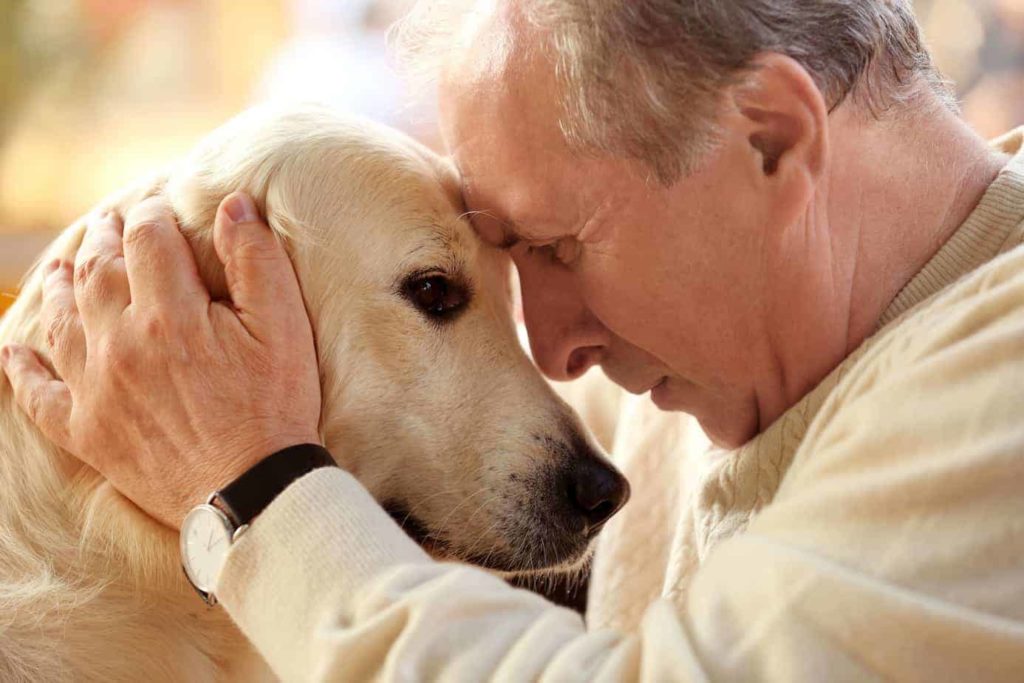
Here’s the part people are desperate for. The honest answer is that CCD is progressive and irreversible. But it absolutely can be managed, and that management makes a real difference.
Medication options
Selegiline (brand name Anipryl) is the only FDA-approved medication for CCD in dogs. It works by increasing dopamine in the brain and clearing certain harmful compounds.
It doesn’t work for every dog, and results take four to eight weeks to appear, but for many dogs it produces meaningful improvement in signs.
Like all medications, Selegiline can have side effects such as gastrointestinal upset, restlessness, or changes in behavior.
Your vet will discuss whether your dog is a good candidate and go over what to watch for.
Supplements
Omega-3 fatty acids (specifically DHA) support brain health and are worth considering for your senior dog’s routine. SAMe (S-adenosylmethionine) has shown some promise for cognitive support in dogs and is available as a supplement.
Medium-chain triglyceride (MCT) oil is another option that some research supports for cognitive function. However, not all supplements are safe or appropriate for every dog, and some can interact with other medications or existing conditions.
Always talk to your vet before starting anything new to make sure it’s safe and customized to your dog’s needs.
Diet
Several prescription diets formulated for senior dogs include antioxidants and other brain-supporting nutrients. Hill’s b/d (brain diet) has the most research behind it for CCD.
Ask your vet whether a diet change makes sense as part of your management plan.
Environmental enrichment: keeping the brain active
This part matters more than people think. The brain, even an aging one, responds to stimulation. Enrichment doesn’t cure CCD, but it can slow progression and improve quality of life.
Keep routines consistent. Dogs with CCD rely heavily on predictability because their capacity to adjust to changes has diminished. Feed, walk, and sleep at the same times every day. Don’t rearrange furniture. Keep their environment as stable as possible.
Offer mental engagement. Puzzle feeders, sniff walks, gentle training sessions with easy, familiar commands. The goal isn’t to frustrate them. It’s to keep the brain engaged without overwhelming it.
Try light therapy. Some research supports the use of full-spectrum light exposure during the day to help regulate sleep-wake patterns. A simple daylight lamp near where your dog rests can make a difference.
Reduce nighttime anxiety. Nightlights help dogs who are confused in the dark. A comfortably warm dog bed in a safe, enclosed space can reduce overnight anxiety. Some dogs do better sleeping near their owners during this phase. Let them.
Consider calming support. Adaptil diffusers (synthetic dog-appeasing pheromone) and melatonin can help with nighttime restlessness and anxiety. These aren’t cures, but they’re tools.
Day-to-day life with a dog who has CCD

Living with a dog in cognitive decline is emotionally draining in a way that’s hard to explain to people who haven’t done it. It feels like a slow goodbye to someone who’s still here. Grieve that. It’s real.
And also: your dog still needs you, maybe more than ever.
Keep interactions positive and calm. Don’t punish confusion. If your dog has an accident, clean it up and move on. If they bark at night, comfort them without frustration if you can. They’re not misbehaving. They’re lost.
Protect them from danger. A dog with CCD can get stuck behind furniture, fall down stairs, wander out of a yard, or get disoriented in an unfamiliar space. Baby gates, ramps, and close supervision in new environments are practical necessities.
Monitor quality of life honestly. This is the hardest part. Watch for whether your dog is still finding joy.
Are they eating? Seeking connection? Having moments of comfort and pleasure? Or are they in consistent distress?
Quality-of-life assessment tools can help you track this over time and have clearer conversations with your vet when the hard decisions come.
If you reach the point where you are considering end-of-life decisions, remember that you do not have to face it alone.
Veterinarians can help guide you through these choices and discuss what is best for your dog and your family. Support groups are also available, and asking for help is a sign of love and care, not failure.
DISHAAL symptom checklist
Watch for these signs and note how often they occur:
[ ] Gets stuck in corners or behind furniture [ ] Stares blankly at walls or into space [ ] Seems not to recognize family members [ ] No longer greets people at the door [ ] Wanders at night or can’t settle [ ] Sleeps heavily during the day [ ] Has indoor accidents without signaling [ ] Shows new anxiety or clinginess [ ] Paces without purpose [ ] Doesn’t respond to familiar commands [ ] Loses interest in food, play, or interaction
Bring this list to your vet appointment, filled in with your observations.
You’re not imagining it
If you’ve read this far, you’re probably watching your dog change. That combination of love, helplessness, and grief you’re feeling right now? It’s valid. You’re not overreacting.
CCD is real. It’s common. And you catching it, questioning it, and looking for answers is exactly the right response.
Work with your vet. Manage what you can. Accept what you can’t. And give your dog the gift of knowing that even as their world gets smaller and more confusing, you’re still right there.
That matters more than you know.
Sara B. Hansen has spent 20-plus years as a professional editor and writer. She’s also the author of The Complete Guide to Cocker Spaniels. She decided to create her dream job by launching DogsBestLife.com in 2011. Sara grew up with family dogs, and since she bought her first house, she’s had a furry companion or two to help make it a home. She shares her heart and home with Nutmeg, a Pembroke Welsh Corgi. Her previous dogs: Sydney (September 2008-April 2020), Finley (November 1993-January 2008), and Browning (May 1993-November 2007). You can reach Sara @ editor@dogsbestlife.com.