
How to exercise your dog safely in hot weather
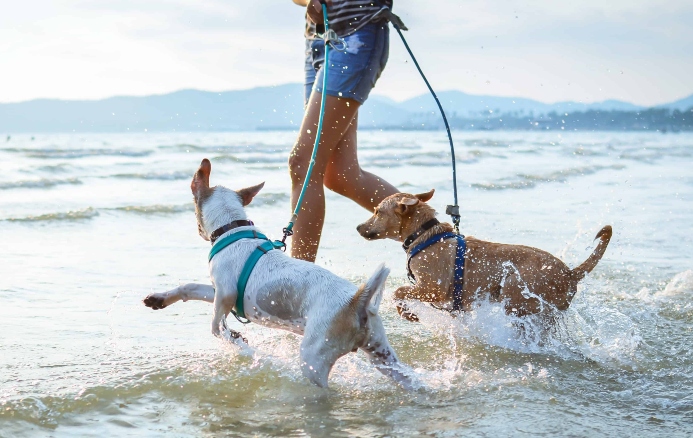
Asphalt can hit 125 degrees on a 90-degree day. That’s warm enough to fry an egg, and hot enough to blister a paw in under a minute. Your dog has no idea, though.
He’ll chase a tennis ball across a scorching parking lot with the goofy grin he wears in October, because dogs don’t read thermometers.
They read your energy. You say “let’s go,” they go. So the job of keeping them safe in summer heat lands squarely on you.
Hot weather doesn’t cancel exercise. It just rewrites the rules.
Break those rules, and you’re looking at burned pads, heat exhaustion, or a frantic drive to the emergency vet.
Follow them and your dog still gets all the romping, sniffing, ball-chasing joy summer has to offer, minus the medical drama.
Here are tips for safe exercise in hot weather.
Understanding temperature guidelines for exercising dogs
Think of heat tolerance like a dimmer switch, not an on-off button. There’s no single magic number that applies to every dog on the planet.
A few benchmarks still hold up. Once the temperature climbs past 80°F, start paying attention.
Past 90°F, shorten everything. Past 95°F with real humidity in the mix, outdoor exercise becomes a gamble most dogs shouldn’t have to take.
Humidity matters as much as the number on the thermostat, maybe more. Dogs cool themselves mainly by panting, which evaporates moisture from the tongue and airways.
Crank up the humidity and that evaporation slows to a crawl. A “mild” 85°F day with heavy humidity can be more dangerous than a dry 95°F day out west.
Breed, age, weight, and coat all shift that dial further.
Flat-faced breeds like bulldogs, pugs, and boxers struggle to pant efficiently even in mild weather, so their safe window for exercise shrinks quickly.
Older and overweight dogs overheat more quickly, as do puppies, whose internal thermostats haven’t fully come online yet.
The simplest gut check? If you wouldn’t jog right now in jeans and a winter coat, don’t ask your dog to either.
Importance of paw protection in hot weather
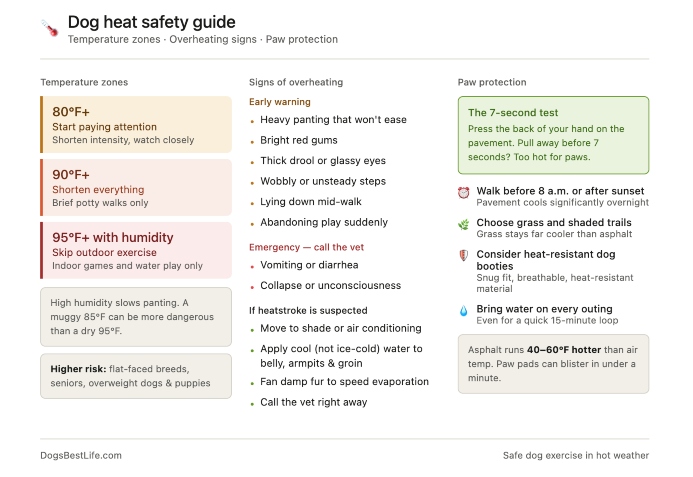
Try this test before any summer walk: press the back of your hand on the pavement and hold it there for seven seconds. Flinch before the timer’s up? That ground is too hot for paws.
Paw pads are tough, but they’re not fireproof. Asphalt, concrete, and synthetic turf soak up the sun like a sponge soaks up water, often running 40 to 60 degrees hotter than the surrounding air.
A sidewalk that feels pleasantly warm to your sneakers can scald bare skin with every step.
Burned pads don’t always look dramatic right away. Blistering and peeling often show up hours later, by which point the damage is already done. Prevention beats treatment every time here.
A few fixes that actually work: walk in the early morning or after sunset, once pavement has had time to cool. Stick to grassy and shaded trails whenever possible.
And don’t write off booties as a gimmick. When picking dog booties, make sure they fit well without slipping off, are made of heat-resistant material, and provide enough comfort that your dog will actually wear them.
Recognize signs of overheating in dogs
Dogs are stoic creatures. They rarely slow themselves down, even when their bodies are sending up flares. That stubborn enthusiasm is exactly why you need to spot trouble before your dog will admit to it.
Heavy panting that won’t ease up is signal number one. Pair that with bright red gums, thick drool, glassy eyes, or wobbly steps, and you’ve moved from “warm dog” to “dog in trouble.”
Vomiting, diarrhea, or collapse are late-stage warnings, the canine equivalent of a check engine light nobody bothered to check.
Watch the body language too. A dog who suddenly wants to lie down mid-walk, or who abandons a ball he was obsessed with 30 seconds earlier, is telling you something important. Listen, even when he tries to play through it.
Safe exercise routines and timing during hot days
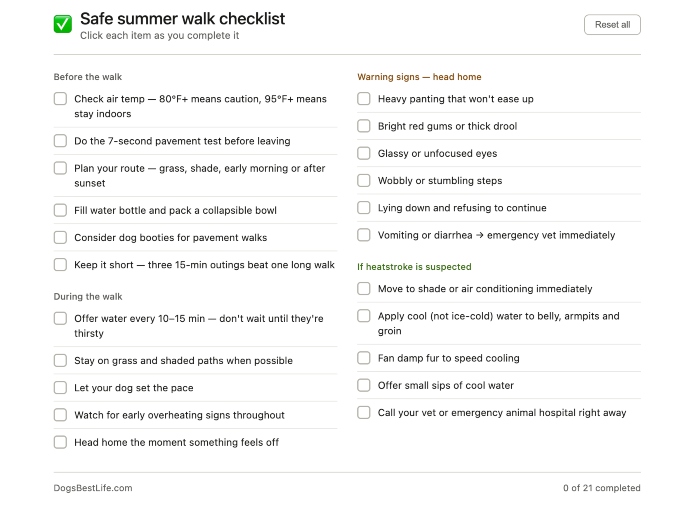
Timing wins half the battle. Dawn and dusk serve as your allies in summer. Temperatures drop, pavement cools, and the sun stops working against you.
A 6 a.m. walk will beat a noon walk every single time, even on the same day.
Intensity matters as much as the clock. Swap sprint-heavy fetch sessions for a relaxed sniff-and-stroll instead. A slow walk loaded with new smells gives a dog real mental stimulation, and it puts far less strain on his cooling system than an all-out chase across the yard.
Shorter, more frequent outings beat one long marathon walk. Three fifteen-minute strolls spread across the cooler hours will tire a dog out just as well as one exhausting hour at 2 p.m., without pushing his body anywhere near the danger zone.
For a simple summer-friendly walk schedule, try a quick walk around 6:30 a.m. before the day heats up, another short outing just after sunset, and a final potty break before bedtime. Adjust the timing depending on your local temperatures, but always aim for the coolest windows.
Alternative activities for dogs when it’s too hot outside
When the heat index says stay inside, your dog’s energy doesn’t get the memo. Luckily, plenty of activities burn that energy without anyone setting paw on blistering pavement.
Indoor games like hide and seek, snuffle mats, and puzzle feeders work a dog’s brain hard, and a tired brain often produces the same calm, satisfied dog as a tired body does.
Stair fetch, tug-of-war, and short training sessions also require real physical effort, all in air-conditioned comfort.
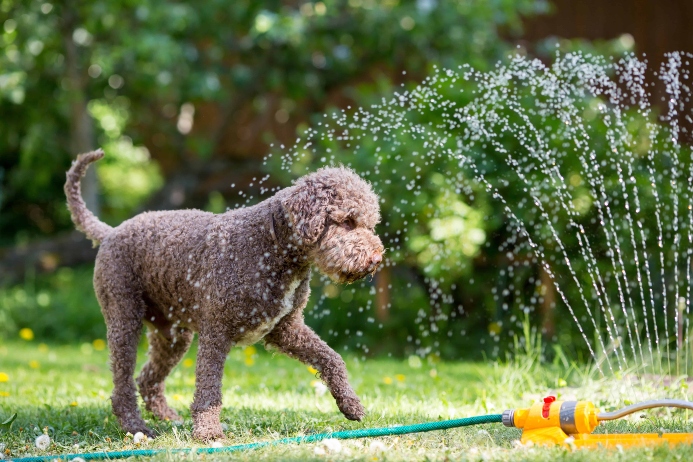
Water play deserves its own mention. A kiddie pool in the shade, a backyard sprinkler, or a supervised swim lets a dog move and cool off at once, two birds with one splash.
Not every dog takes to water naturally, so ease into it and let curiosity lead rather than forcing the issue.
If the heat keeps you inside, you can still help your dog burn off energy and stay sharp.
Try setting up a simple obstacle course using chairs and cushions, playing the muffin tin game (hide treats under tennis balls in a muffin tin), or letting your dog sniff out treats hidden in cardboard boxes.
These indoor enrichment activities challenge your dog’s mind and keep their body moving, making for a content and tired pup no matter the weather.
Tips for keeping your dog hydrated during exercise
A dehydrated dog sits one bad decision away from heatstroke. Hydration isn’t a summer nicety. It’s the whole ballgame.
Bring water on every outing, no exceptions, even for a quick fifteen-minute loop around the block. A collapsible bowl costs less than a coffee and weighs next to nothing in a pocket or bag.
Offer water before your dog shows signs of thirst, not after. Once panting turns desperate, you’re already playing catch-up.
Small, frequent sips beat one big gulping session, which can sometimes trigger bloating or vomiting in a dog already stressed by heat.
At home, scatter a few water bowls around and drop in an ice cube or two during peak afternoon hours.
Wet food or broth-based treats can sneak extra hydration into a dog’s day too, especially for the dogs who never seem all that interested in their water bowl on their own.
What to do if your dog shows symptoms of heatstroke
If your dog shows real signs of heatstroke, treat it like the emergency it is. This isn’t a wait-and-see situation. Minutes matter here, not hours.
Get your dog out of the heat immediately, into shade or air conditioning.
Offer cool water, not ice-cold. Extremely cold water can constrict blood vessels, slowing the cooling process and working against what you’re trying to do. If you need to transport your dog to a vet or animal hospital, keep the car cool with air conditioning or open windows, and lay your dog on a wet towel if possible.
Keep offering small amounts of cool water and continue wetting your dog’s body as much as you can. Monitor their breathing and keep them calm during the drive.
Acting quickly and keeping your dog as cool as possible en route can make a big difference in their recovery.
Wet your dog’s body with cool water, focusing on the belly, armpits, and groin, where blood vessels sit close to the skin. A fan blowing over the damp fur speeds up evaporation and helps drop body temperature faster than wet fur sitting still.
Call your vet or the nearest emergency animal hospital right away, even if your dog seems to perk back up. Heatstroke can damage organs internally well after the obvious symptoms fade, so a professional check still matters once the crisis looks like it’s passed.
Final thoughts on safe dog exercise in hot weather
Summer doesn’t have to mean months of guilty, shortened walks and a restless dog pacing the living room floor.
It just means trading brute force for a little strategy. Walk early, check the pavement, carry water, and know the warning signs cold.
Do that, and your dog gets to chase every ball, sniff every bush, and soak up every bit of summer joy, safely, tail wagging the whole way through.
Sara B. Hansen has spent 20-plus years as a professional editor and writer. She’s also the author of The Complete Guide to Cocker Spaniels. She created her dream job by launching DogsBestLife.com in 2011. Sara grew up with family dogs, and since she bought her first house, she’s had a furry companion or two to help make it a home. She shares her heart and home with Nutmeg, a Pembroke Welsh Corgi. Her previous dogs: Sydney (September 2008-April 2020), Finley (November 1993-January 2008), and Browning (May 1993-November 2007). You can reach Sara @ editor@dogsbestlife.com.