
Puppy separation tips: How to make alone time feel safe
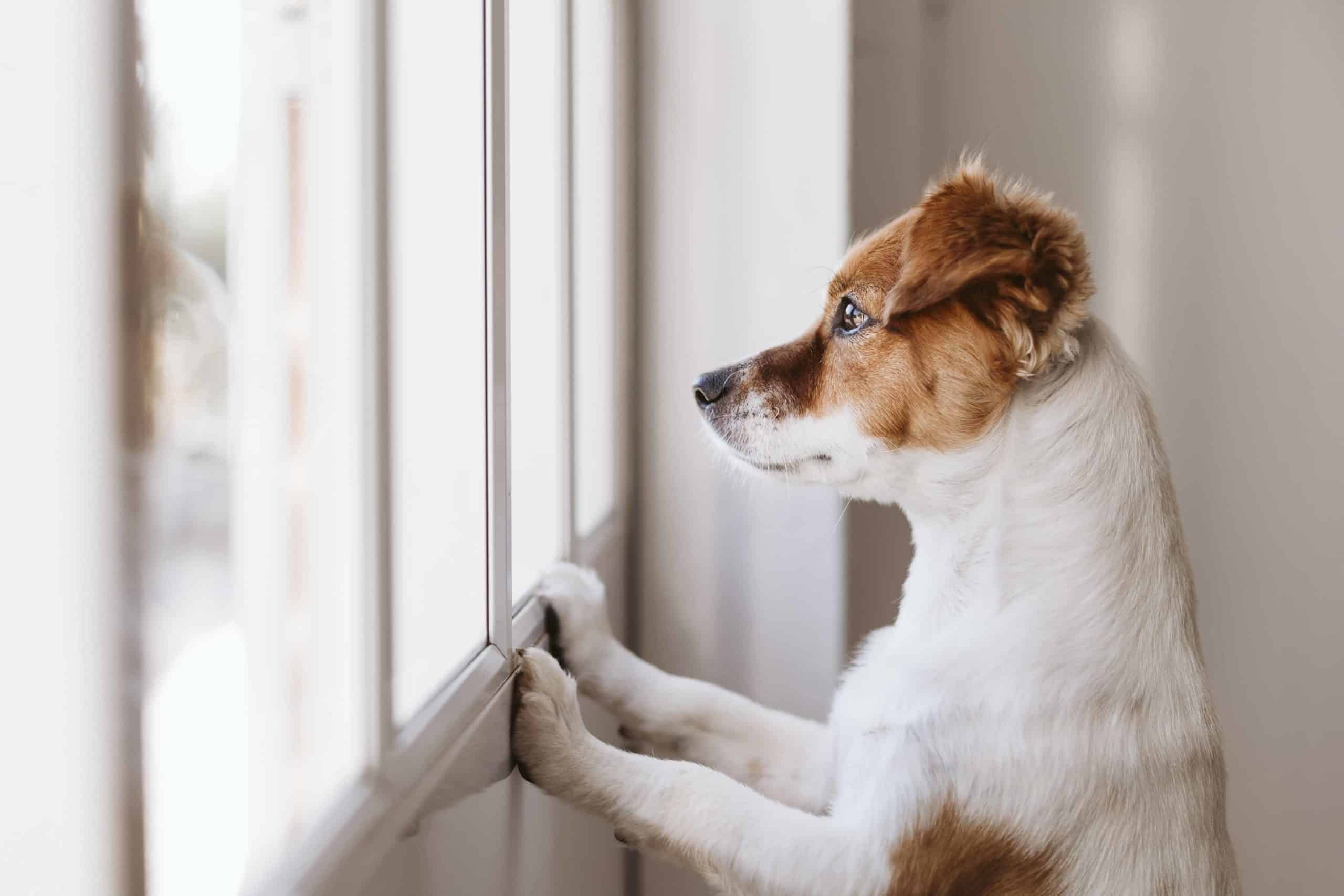
One of the most valuable skills you can teach a puppy is how to be comfortable on their own. Learning to settle without constant company is a normal, healthy part of a dog’s development, and it pays off for the whole household.
The basic approach is simple: set up a secure space, introduce short periods alone in small, manageable steps, and use toys, treats, and praise to make the experience positive.
Done consistently, this kind of training helps prevent separation anxiety and builds a puppy’s overall confidence.
Before diving into a training plan, it helps to understand what actually motivates your particular puppy, since that will shape every technique that follows.
Know your puppy to teach alone time
- Know your puppy to teach alone time
- Feed meals in a safe space
- Start using your puppy's safe space
- Monitor your puppy during alone time
- Entertain your puppy during alone time training
- Start early to teach alone time
- Signs your puppy needs extra help
- Overcome training obstacles
- Frequently asked questions
- Final thoughts on alone-time training
Every dog responds differently to motivation, so it’s worth figuring out what makes your puppy tick before you start.
Food-driven breeds — Labradors and Golden Retrievers are classic examples — usually respond well to treats.
If your puppy isn’t especially food-motivated, play or verbal praise may work better, and a nervous puppy might settle faster with a calming sound, a cozy hideaway, or a favorite toy.
Puppies explore the world with their mouths, so before any alone time begins, puppy-proof the area thoroughly.
Removing anything that could cause injury is essential. It’s tempting to toss in a soft blanket or plush toy for comfort, but these can pose a choking hazard if chewed apart.
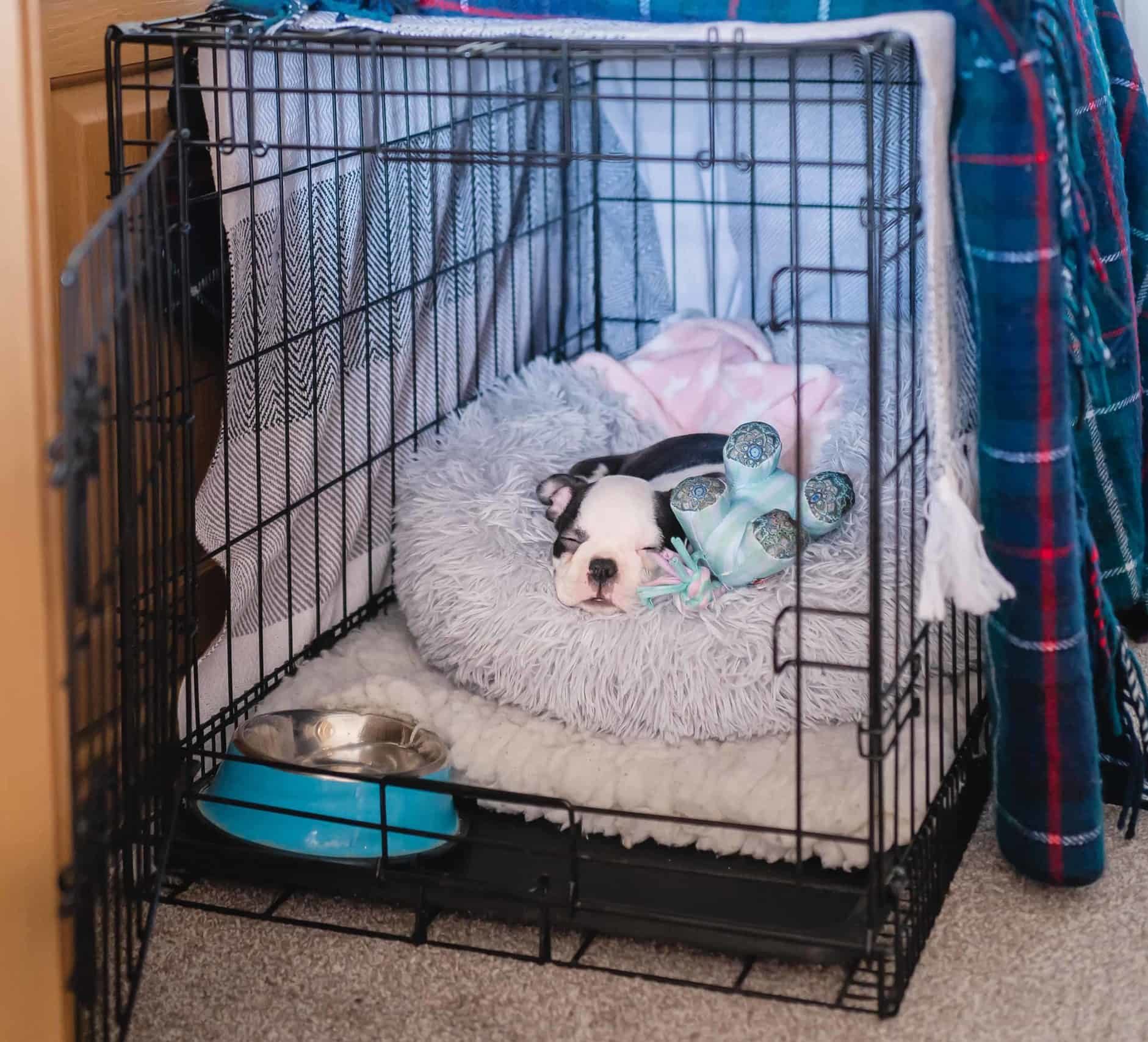
A crate is often the safest option, since it prevents a puppy from falling down stairs or getting into something dangerous while unsupervised.
Feed meals in a safe space
Start by letting your puppy spend time in their designated safe area — a crate, an exercise pen, or a small room like a bathroom — while you’re still home.
Puppies accustomed to constant company can find sudden alone time jarring, so this step builds familiarity first.
Feeding meals in that space helps your puppy associate it with good things rather than isolation.
If you’re using a small room, spending some time there for relaxed playtime also helps.
Keep the safe space open at all times so your puppy never associates it with punishment, and reserve a few special toys or treats exclusively for that spot.
Once your puppy chooses to go into the safe space on their own, you’re ready to begin structured alone-time training.
Start using your puppy’s safe space
Give your puppy a chew toy or a food puzzle — a stuffed Kong or a lick mat with a little pumpkin or peanut butter works well — before you leave the room. Freezing the filled toy beforehand makes it last longer and can soothe a teething puppy’s gums.
Step out calmly after handing over the toy or treat. Wait about a minute, then return and offer quiet praise along with a small reward. Repeat this pattern, gradually stretching out the time you’re away.
The goal is for your puppy to learn that you always come back. Begin with just two to five minutes and work your way up to an hour or two over time.
Monitor your puppy during alone time
If your puppy cries or whines, resist the urge to let them out right away — doing so teaches them that fussing gets your attention and ends the confinement. Crate training pays double duty here, supporting both potty training and alone-time skills.
Wait for a calm moment before opening the door, then reward that calm behavior with a treat or soft praise. If your puppy repeatedly panics when left, it’s a sign you’ve pushed the duration too far, too fast. Step back to feeding meals or playing in the safe space, and lengthen the alone periods more gradually.
This process should build confidence, not stress — avoid jumping to long stretches too soon, and never use the safe space as a form of punishment. Also skip loose blankets or towels if your puppy tends to chew, since torn fabric can pose a choking risk.
Entertain your puppy during alone time training
Once your puppy is settling in comfortably, offer food puzzles or chew toys each time they go into the crate — avoid anything soft or destructible enough to be swallowed. Positioning the crate near a window or door, or playing the radio or TV for background noise, can make the space feel less isolating.
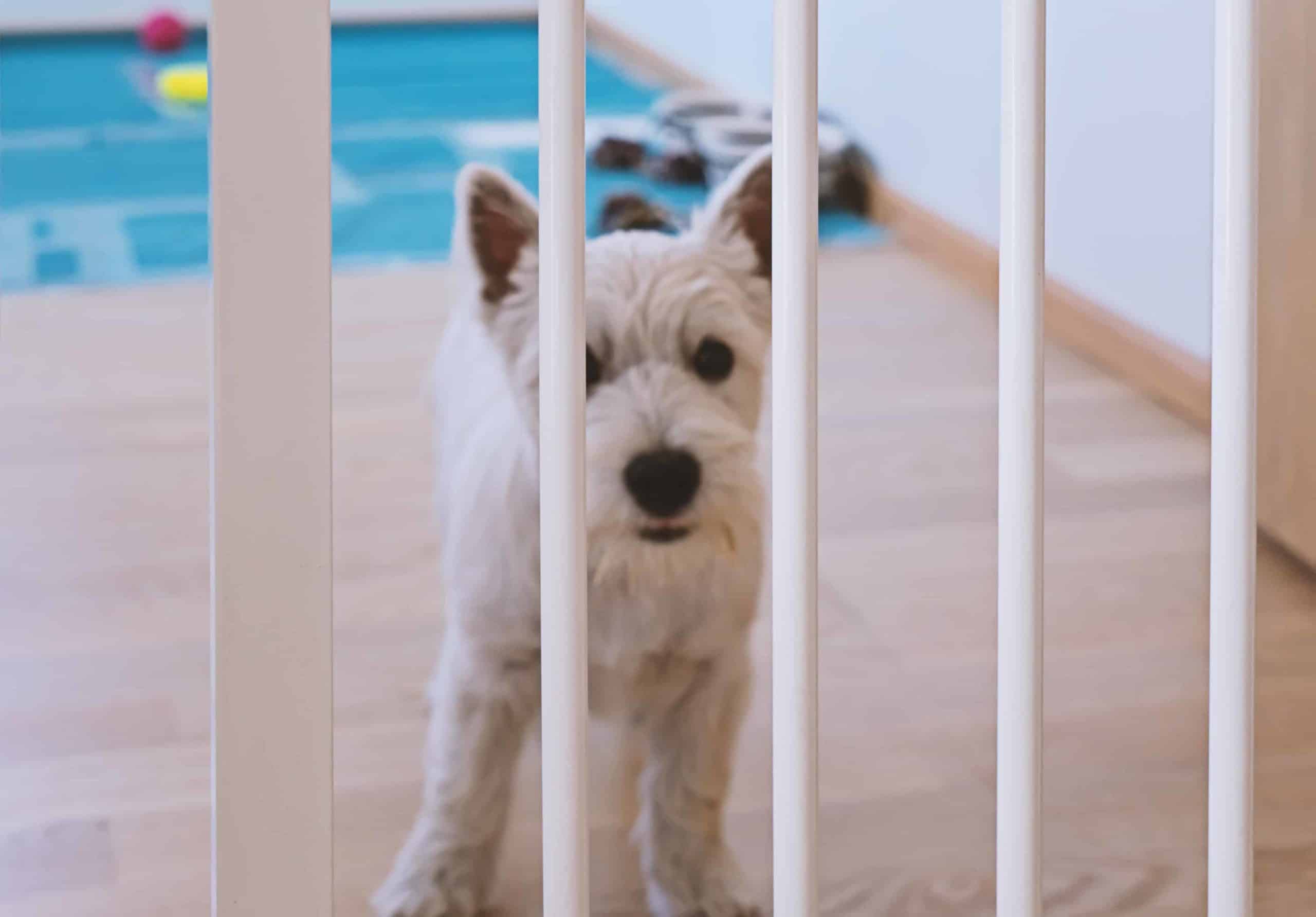
Swap blankets for a proper crate mat if chewing is an issue. If your puppy resists the crate itself, a playpen or baby gate can create a larger, still-secure area with more room to move. Food toys and other engaging activities work well in this bigger setup too.
There’s no need to feel guilty about a smaller confinement area — dogs don’t require full run of the house. In fact, keeping the space appropriately sized helps with potty training, since a puppy with too much room may be more likely to soil a corner away from their bed.
A mudroom, laundry room, or bathroom can all double as a safe space, especially with a white noise machine or radio for company and any hazards cleared out.
Start early to teach alone time
A puppy’s bladder capacity limits how long they can reasonably be left, so factor that into your training schedule. The American Kennel Club notes that puppies under 10 weeks need a bathroom break roughly every hour.
From 10 to 12 weeks, that stretches to about two hours; after three months, three hours; and by six months, dogs can typically manage around six hours.
Even adult dogs generally shouldn’t go more than six to eight hours without a potty break.
If your schedule doesn’t allow for a midday break, a neighbor or dog walker can fill the gap. Above all, don’t rush the process — rushing creates stress for both of you.
Stay patient and consistent, and gradually extend the time your puppy spends alone.
Signs your puppy needs extra help
Occasional whining or a little restlessness during early training is normal and usually fades as your puppy builds confidence. But some behaviors point to something more serious than everyday adjustment, and catching them early makes a real difference.
Watch for these signs of significant distress rather than routine fussiness:
● Destructive escape attempts — scratching or chewing at doors, windows, or crate bars hard enough to cause injury or property damage
● Excessive drooling, panting, or pacing that goes well beyond normal settling-in behavior
● Panic barking or howling that continues non-stop rather than tapering off after a few minutes
● Loss of bladder or bowel control despite being recently taken out, especially if it wasn’t a housetraining issue before
● Self-injury, such as broken nails or raw paws, from frantic attempts to get out of the confined space
● Refusing to eat or drink, or ignoring favorite toys and treats, even after repeated attempts to settle them
If you notice several of these signs together, or if they persist even after weeks of gradual, patient training, it’s a good idea to bring in outside help.
A certified dog trainer or veterinary behaviorist can assess whether your puppy is experiencing true separation anxiety, which often requires a more structured desensitization plan than general alone-time training.
Your veterinarian is also worth consulting, since anxiety-related symptoms can sometimes overlap with medical issues, and in some cases medication support can make behavioral training more effective.
Acting on these signs early — rather than waiting to see if your puppy grows out of it — tends to lead to a faster, smoother recovery for everyone involved.
Overcome training obstacles

Alone-time training rarely goes perfectly in a straight line. Here’s how to work through the most common sticking points:
Separation anxiety
Start small: Begin with short absences and gradually increase the time.
Safe space: Create a cozy area with their favorite items to help them feel secure.
Barking or whining
Ignore attention-seeking: Wait for calm behavior before giving attention.
Enrichment: Use puzzle toys or engaging activities before you leave.
Destructive behavior
Pet-proof: Secure or remove items they could damage.
Chew toys: Provide durable toys to keep them busy.
Routine adjustment
Be consistent: Establish a daily routine for departures and arrivals.
Practice low-key departures to reduce anxiety.
Feeling overwhelmed
Monitor progress: Track behavior to identify improvements.
Be patient: Recognize that every pet adapts at their own pace.
Seek support
Professional help: Consult a trainer if your pet struggles significantly.
Connect with others: Share experiences with fellow pet owners for support.
Incorporating alone time into daily life
Alone-time training works best when it isn’t treated as a separate chore that only happens during dedicated “practice sessions.”
Weaving short separations into your everyday routine helps your puppy see solitude as simply part of normal life, rather than something unusual to worry about.
A few easy ways to build this in naturally:
● During TV time or a quiet evening, step into another room for a few minutes rather than always staying in sight — it’s a low-pressure way to add reps without setting aside extra time.
● Practice calm, low-key departures before quick errands like taking out the trash or grabbing the mail, so short absences start to feel routine rather than eventful.
● Rotate which room or safe space your puppy settles in for these mini-absences, so their comfort isn’t tied to one specific spot.
● Use ordinary household moments — a shower, folding laundry, mowing the lawn — as built-in opportunities for supervised independence.
● Keep a stuffed food toy on standby specifically for these everyday separations, so your puppy has something engaging to associate with your brief absences.
Over time, these small, unplanned moments of independence add up to more real-world practice than formal sessions alone, and they reinforce that being apart from you is just a normal, unremarkable part of the day.
Frequently asked questions
Can I leave a puppy alone overnight?
It depends on age and how far along they are in training. Very young puppies typically can’t hold their bladder overnight and will need at least one nighttime break.
Older, well-trained puppies who’ve built up to several hours of daytime alone time may manage a full night in a safe, puppy-proofed space. Still, many owners choose to keep puppies nearby (such as in a crate in the bedroom) until housetraining and alone-time skills are both solid.
How do I handle setbacks?
Setbacks are a normal part of the process, not a sign that training has failed. If your puppy suddenly struggles after a period of progress, dial back to a duration at which they were previously successful and rebuild from there more gradually. Avoid the temptation to push through a bad stretch — patience now prevents bigger anxiety issues later.
How long should the first alone-time sessions be?
Start with just two to five minutes at a time. Short, frequent, successful sessions build confidence far more effectively than long stretches that end in distress.
Is it normal for a puppy to whine at first?
A brief period of fussing when first learning to settle is common and usually fades within a few sessions. Persistent, escalating distress is distinct and warrants addressing with the strategies above.
When should I involve a professional?
If distress behaviors persist despite weeks of gradual, consistent training, or if you notice signs such as destructive escape attempts or panic barking, a certified trainer or veterinary behaviorist can help develop a more tailored plan.
Final thoughts on alone-time training
Helping your puppy get comfortable spending time alone is a core part of their development and long-term well-being.
Dogs are naturally social, so it’s normal for some puppies to need more time and patience than others.
Building a safe, comfortable space, introducing solitude in small steps, and using toys and treats to keep the experience positive will help your puppy grow more confident and reduce the risk of separation anxiety.
Keep an eye on their progress, adjust the pace as needed, and make sure the safe space always feels like a good place to be — never a punishment.
With consistency, patience, and a willingness to weave practice into everyday moments, your puppy will learn that alone time is nothing to fear.
Combined with regular potty breaks and a bit of planning, that groundwork sets you both up for a calmer, happier life together.

Sara B. Hansen has spent 20-plus years as a professional editor and writer. She’s also the author of The Complete Guide to Cocker Spaniels. She decided to create her dream job by launching DogsBestLife.com in 2011. Sara grew up with family dogs, and since she bought her first house, she’s had a furry companion or two to help make it a home. She shares her heart and home with Nutmeg, a Pembroke Welsh Corgi. Her previous dogs: Sydney (September 2008-April 2020), Finley (November 1993-January 2008), and Browning (May 1993-November 2007). You can reach Sara @ editor@dogsbestlife.com.