
12 human foods that are secretly toxic to dogs

Most people know that grapes and chocolate are dangerous for dogs, but there are ten more foods you might not expect.
Many of the most toxic items are everyday pantry staples.
Here’s a quick list of 12 human foods that are harmful to dogs, so you can easily spot a potential hazard:
- Xylitol (artificial sweetener)
- Grapes and raisins
- Onions, garlic, leeks, and chives
- Macadamia nuts
- Alcohol
- Caffeine
- Raw yeast dough
- Avocado
- Nutmeg
- Salt and salty snacks
- Cooked bones
- Cherries, apricots, and stone fruit pits
Some of these foods might surprise you or be hard to recognize as dangerous.
Keep reading to learn more about each one and find out what to do if your dog eats any of them.
If your dog just ate something on this list
Call the ASPCA Animal Poison Control Center at (888) 426-4435 or take your pet to an emergency vet right away. Look out for signs like vomiting, weakness, confusion, drooling, seizures, or sudden loss of balance while you get help.
Don’t wait for symptoms, since many toxins can cause serious organ damage before you notice anything is wrong.
Xylitol (artificial sweetener)–Extreme danger
Xylitol is found in products many owners might not think to check, like sugar-free gum, some peanut butters, vitamins, mouthwash, candy, and certain prescription medications.
For dogs, even a small amount can cause a large insulin spike that quickly drops blood sugar, a condition called hypoglycemia, within 30 to 60 minutes. In larger amounts, it can cause liver failure within days, and without fast veterinary care, it is often deadly.
Act quickly: Symptoms such as vomiting, loss of coordination, collapse, and seizures can appear within 30 minutes. Read peanut butter labels every time. If xylitol appears anywhere on the ingredient list, never give it to your dog.
Grapes and raisins–Extreme danger
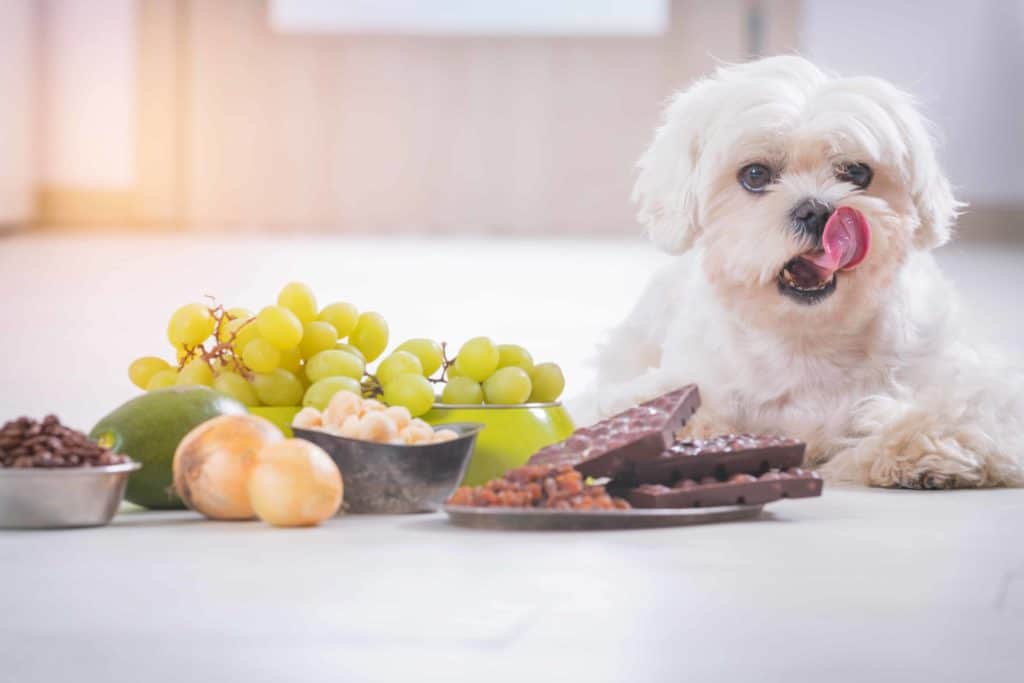
Grapes and raisins can cause sudden, permanent kidney failure in dogs, and there is no known safe amount.
The reaction varies widely: one dog might eat several with no problem, while another might get very sick after just one. Since the exact toxin is still unknown, every exposure is risky. Never wait to see what happens.
Raisins are often hidden in foods such as trail mix, granola bars, cereal, stuffing, and fruitcake.
Even one bag of trail mix left on a coffee table or low shelf can be a problem. Watch for signs such as decreased urination, vomiting, and tiredness within 24 hours if your dog eats any.
Onions, garlic, leeks, and chives–High danger
All plants in the allium family are dangerous for dogs.
Harmful chemicals damage red blood cells, breaking them down faster than the body can replace them. This leads to hemolytic anemia, which means your dog can’t carry enough oxygen.
Garlic is the most toxic, about 5 times more toxic than onions by weight. The risk is the same whether the food is raw, cooked, or powdered, and includes broths, table scraps, baby food, and anything with onion or garlic salt.
This risk adds up over time. Dogs that eat scraps with onions or garlic can slowly develop anemia, even without an obvious incident. Look for pale gums, weakness, and fast breathing. It’s best not to share your dinner plate.
Macadamia nuts–Moderate danger
Macadamia nuts cause clear symptoms in dogs, such as weakness in the back legs, vomiting, muscle tremors, and elevated body temperature.
No one knows exactly why they are toxic, but just six nuts can make a small dog sick.
Symptoms usually appear within 12 hours. Most dogs recover with vet care, but it can still be a scary experience.
Chocolate-covered macadamia nuts are especially dangerous because the nuts can cause macadamia poisoning, and the chocolate adds another toxic risk.
Keep cookie tins, nut bowls, and gift baskets out of reach during holidays like Thanksgiving and Christmas.
Alcohol–Extreme danger

Dogs cannot handle alcohol the way humans can. Even a small amount of alcohol can cause dangerous changes in blood sugar, body temperature, and blood pressure.
If a dog drinks from a spilled glass, eats rum cake, or gets into fermenting fruit, it can lead to alcohol poisoning.
Signs include stumbling, vomiting, confusion, and, in severe cases, trouble breathing or passing out. It takes much less alcohol to harm a dog than most people think.
During parties, remember that beer, wine, cocktails, rum cake, and fermented fruit are all risky for dogs. Keep drinks off low tables and remind guests not to leave glasses where dogs can reach them. Raw yeast dough is also a source of alcohol, which is explained below.
Caffeine–High danger
Caffeine overstimulates a dog’s nervous system and heart. Even a moderate amount can cause restlessness, heavy breathing, muscle tremors, and irregular heartbeats.
Caffeine is found in more places than you might think, like coffee grounds, used tea bags, energy drinks, and some over-the-counter medicines. Chocolate is also dangerous because it contains both caffeine and theobromine.
Caffeine works quickly, and symptoms can show up within an hour. If your dog eats or drinks anything with caffeine, treat it as an emergency. Used coffee pods or grounds in the trash are just as dangerous as fresh coffee.
Raw yeast dough–High danger
When a dog eats raw yeast dough, it causes two emergencies. The dough keeps rising in the stomach, which can press on nearby organs and cut off blood flow.
At the same time, the dough ferments and makes alcohol, which is absorbed into the blood and can cause alcohol poisoning. Both problems can become life-threatening very quickly.
Dough rises even faster in a dog’s stomach than it does on your counter. Don’t leave raw dough on low surfaces or in uncovered bowls. Even a piece the size of a tennis ball can cause dangerous bloating in a medium-sized dog.
Avocado–Moderate danger
Avocados have persin, a natural toxin found in every part of the plant, including the flesh, pit, skin, and leaves.
If dogs eat avocado, persin can cause vomiting, diarrhea, and dangerous fluid buildup around the heart or lungs.
The large pit is also a risk of choking or blockage. For people in warmer areas, backyard avocado trees mean this danger is always present.
Guacamole is even more dangerous because it mixes avocado with onion and garlic, making it a serious risk. Don’t share it with your dog, and let your guests know why.
Treat backyard avocado trees as hazards and pick up fallen fruit right away.
Nutmeg–Moderate danger
Nutmeg contains myristicin, which affects the nervous system and can cause hallucinations, confusion, a fast heart rate, and seizures if dogs eat a lot of it.
Small exposures, such as licking a spoon used for baking, usually only cause mild stomach upset. Larger amounts can lead to serious symptoms that persist for more than 2 days.
Nutmeg is found in many popular seasonal foods, like pumpkin pie, eggnog, and spiced baked goods.
Nutmeg is hidden in many fall and winter treats, like pumpkin spice blends, eggnog, and mulled cider seasonings. Keep baked goods out of your dog’s reach, and watch for confusion, rapid eye movement, or disorientation if you think your dog ate something spiced.
Salt and salty snacks–Moderate danger
Too much salt can cause salt poisoning in dogs, leading to extreme thirst, vomiting, diarrhea, and muscle tremors. In severe cases, it can cause seizures or even death.
The biggest risk comes from eating a lot of salty foods at once, such as a whole bag of chips, a lot of beef jerky, soy sauce, or even sidewalk de-icing salt.
Homemade play-dough, which has a lot of salt, has also caused deaths in dogs.
At parties, having lots of pretzels, chips, and crackers out can lead to dogs accidentally eating too much salt.
Keep snack bowls off low tables, remind guests not to share, and always make sure your dog has fresh water. Dehydration can make salt poisoning worse very quickly.
Cooked bones–High danger
Cooking makes bones brittle, so they break into sharp pieces instead of rounded ones. These sharp fragments can cut a dog’s mouth, throat, stomach, or intestines, and small pieces can get stuck in the digestive tract.
Chicken drumstick bones are a common problem. The idea of a dog happily chewing a bone is misleading, because once a bone is cooked, it becomes dangerous.
Raw bones are usually more flexible and less likely to splinter, but they can carry bacteria. Never give your dog cooked bones from any animal. After meals, take out the trash right away, since dogs can get into bins quickly.
Cherries, apricots, and stone fruit pits–Moderate danger

The pits of cherries, apricots, peaches, and plums all have amygdalin, which the body turns into cyanide.
Eating one pit probably won’t cause poisoning, but eating several, especially from fruit trees in the yard, can lead to toxic buildup.
The fruit itself isn’t poisonous, but it can upset a dog’s stomach. The pits also pose a risk of choking or blockage due to their size.
If you have cherry, apricot, peach, or plum trees in your yard, your dog might eat the pits without you noticing, especially when fruit falls in summer. If your dog eats a pit, watch for dilated pupils, trouble breathing, bright red gums, or collapse. These are signs of cyanide poisoning, so call poison control right away.
What to do if your dog eats any of these foods
Don’t try to make your dog vomit unless a vet tells you to. Write down what your dog ate and how much, then act fast: call ASPCA Poison Control at (888) 426-4435 or go straight to an emergency vet.
The most dangerous foods for dogs aren’t rare—they’re probably in your kitchen right now. It could be trail mix on the counter, garlic-laced leftovers, or bread dough rising by the stove. Knowing what to look out for is your best protection.
Keep this list handy, check your labels, and if you’re unsure, call your vet before sharing food. Your dog depends on you to keep them safe.
If you want to give your dog a treat, there are plenty of safe, healthy options.
Try plain cooked chicken, baby carrots, blueberries, apple slices with the seeds removed, or small pieces of plain rice cake.
Many dogs also like a spoonful of plain pumpkin puree or a frozen green bean for a crunchy snack. If you’re not sure about a treat, ask your vet.
Giving safe treats is a great way to show your dog love and keep them happy.
Sara B. Hansen has spent 20-plus years as a professional editor and writer. She’s also the author of The Complete Guide to Cocker Spaniels. She created her dream job by launching DogsBestLife.com in 2011. Sara grew up with family dogs, and since she bought her first house, she’s had a furry companion or two to help make it a home. She shares her heart and home with Nutmeg, a Pembroke Welsh Corgi. Her previous dogs: Sydney (September 2008-April 2020), Finley (November 1993-January 2008), and Browning (May 1993-November 2007). You can reach Sara @ editor@dogsbestlife.com.