
How to stop your dog from acting aggressively toward strangers
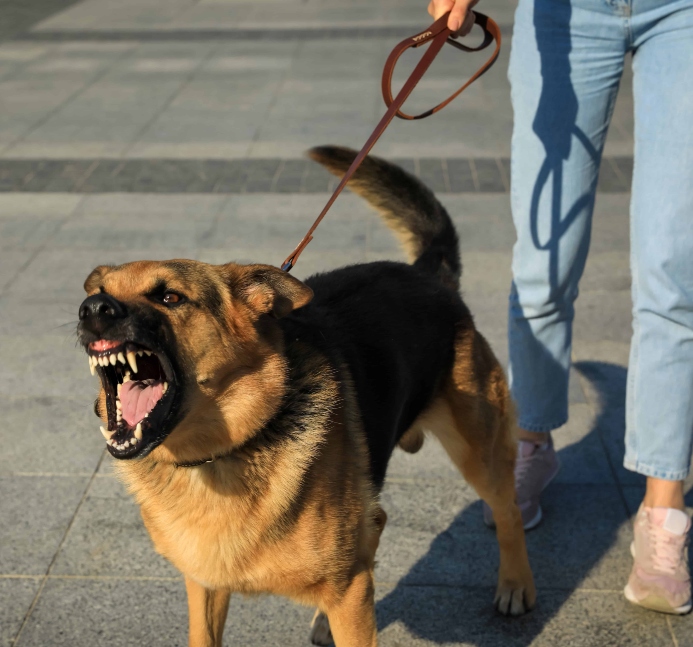
An unexpected bark or lunge at the front door can escalate in seconds. When you’re trying to figure out how to stop your dog from acting aggressively toward strangers, safety has to come first, every single time.
In the United States, emergency rooms provide medical care to approximately 1,000 individuals daily for dog-inflicted injuries that are not fatal. Managing the environment right away—before considering training—is the most responsible action an owner can take.
Of the estimated 4.5 million dog bites that occur across the U.S. each year, nearly 20% result in infections.
Before opening the door for guests or packages, owners should immediately implement safety protocols to ensure everyone’s safety. Building the right habits simplifies this process.
Why dogs act aggressively toward strangers
Fear drives behavior
Many dogs display aggressive behavior not because they want to dominate, but because they’re trying to create distance from something they perceive as a threat.
Ask any trainer who specializes in reactivity, and they’ll tell you the same thing: fear is behind the vast majority of stranger-directed aggression.
The literature on dog bite statistics shows how often fear-based reactions lead to serious harm when warning signs are overlooked.
A dog experiencing fear aggression will typically bark, growl, back away, and then lunge if they feel cornered by an approaching stranger.
Territorial behavior triggers
Doorbells, loud knocks, and the sudden arrival of visitors can cause a major spike in a dog’s arousal levels.
Picture this: your dog is napping on the couch, the doorbell rings, and within two seconds, they’re at full volume, hackles up, barreling toward the entryway.
The U.S. Postal Service has noted that even friendly dogs can react unpredictably when protecting their home turf.
Fast movements, unfamiliar uniforms, large delivery bags, and direct eye contact from strangers can significantly intensify this territorial response at the front threshold.
What dog bite news tells owners
Recent data paints a clear picture of the risks faced by daily visitors to residential properties.
The USPS reported over 5,200 attacks on postal employees last year, prompting renewed safety campaigns.
Postal officials specifically urge owners to secure dogs in a closed room before opening the door. The human cost of these incidents can be substantial, including serious physical injury and lasting emotional distress.
That’s not just a statistic; for the person who gets bitten, it can mean weeks of recovery and medical bills that pile up fast.
| Behavior pattern | What it may look like | Common trigger | Safer owner response |
| Fear-based reactivity | Barking, retreating, lunging, hiding, growling | A stranger enters space too quickly | Increase distance, use treats, and avoid forcing interaction |
| Territorial arousal | Barking at door, charging entry, stiff posture | Doorbell, knock, visitor at threshold | Crate or gate first; open the door only after the dog is secured |
| Over-excitement / poor impulse control | Jumping, frantic barking, mouthing | Guests arriving, chaos in entryway | Teach a place or crate routine; reward calm behavior |
| Offensive aggression / high risk | Hard stare, freezing, snapping, biting with forward posture | Close approach or handling | Stop DIY work; consult a professional immediately |
Start with management first
Secure your dog before opening the front door
Putting your dog in a crate, behind a sturdy baby gate, or in a closed room before you touch the doorknob is the most important step you can take.
The USPS advises pet owners to secure their dogs indoors before opening the door to accept mail or packages. Relying entirely on verbal commands is risky if your dog has a known history of charging the entrance.
Owners may also face liability for medical expenses, lost work time, and emotional distress if a loose dog slips past them and causes harm.
Anyone suffering an injury from a dog bite may have grounds to pursue compensation, which means taking just a moment to secure the entry can protect you from severe legal battles and financial liabilities in the future.
Use barriers and distance to lower stress
Physical management tools are essential for keeping your dog below their stress threshold when strangers are nearby.
Experts advise keeping dogs completely inside the house or safely behind a secure fence, well away from the front door where deliveries occur.
Tools like frosted window film (you can pick it up for a few dollars at any hardware store), white noise machines, and indoor leashes can block visual and auditory triggers, reducing your dog’s overall anxiety before a guest even knocks.
Stop rehearsals of the unwanted behavior
Every time your dog rushes the door and successfully scares away a mail carrier, the aggressive behavior is reinforced.
Think of it like a feedback loop: the dog barks, the carrier leaves, and from the dog’s perspective, the barking “worked.”
When a carrier feels unsafe because of an unrestrained dog, mail service may be interrupted entirely. By managing the environment, you prevent the dog from practicing the problem behavior, which is the first real step toward improvement.
Here’s a quick routine you can start using today:
- Put your dog in a crate or closed room before you touch the doorknob.
- Wait for barking to soften, if possible, before moving closer to the door.
- Open the door only after the dog is physically secured.
- Tell guests not to approach, stare at, or reach toward your dog.
- Bring your dog out only if calm and only with a plan; never “to see what happens.”
Teach calm responses
So far, you’ve covered why dogs react aggressively and how to manage the environment to prevent anyone from getting hurt. Now it’s time to talk about building better habits through training.
Reward good behavior
Training a dog to act calmly means consistently rewarding quiet behavior, disengagement, and moving away from the door. The USPS emphasizes daily prevention.
Offering high-value treats, such as freeze-dried liver or string cheese, when the dog calmly looks at a distant stranger, builds positive associations and can reduce defensive reactions.
Train an incompatible behavior
You can’t simply tell a dog to stop barking; you have to give them a specific job that makes it impossible to charge the door.
Teaching a dog to go to a mat, move into a crate, or target your hand for a treat physically prevents them from lunging at a visitor.
It’s the difference between saying “don’t do that” and saying “do this instead,” and the second approach works far better with dogs.
Maintain a safe distance
Counter-conditioning changes a dog’s emotional response by pairing the sight of a stranger with highly desirable food at a distance where the dog feels safe.
The USPS also advises owners to avoid close interactions between dogs, children, and carriers when a dog may react protectively. Instead, stand well back from the door, feed your dog treats as the stranger appears, and stop the treats when the stranger leaves.
Over several repetitions, the dog starts to associate “stranger shows up” with “good things happen,” which is exactly the emotional shift you’re looking for.
Why punishment often backfires
Using harsh corrections like yelling, leash jerks, or shock collars often worsens fear-based reactivity. Punishing a dog for growling can teach them to suppress warning signs, and that’s a dangerous outcome.
You’ve essentially taught the dog to skip the growl and go straight to a bite without any vocal warning. Not where you want to end up, right?
Address mouthing and bite risk
Start bite inhibition early
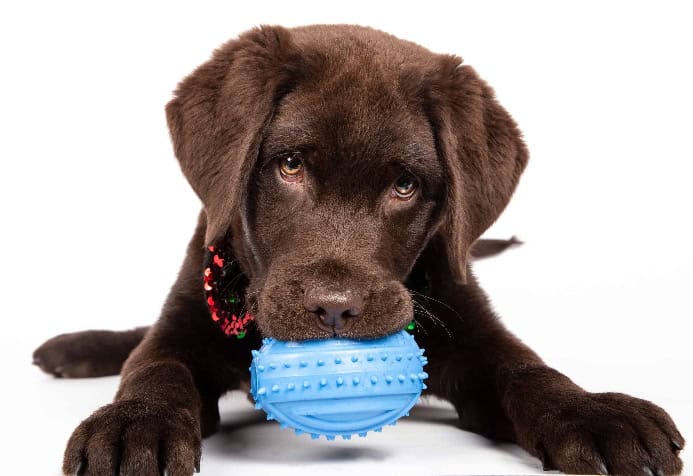
Bite inhibition is a dog’s ability to control the force of their mouth, a crucial skill for preventing severe injuries. While this skill is best taught during puppyhood (which is one reason early socialization matters so much), adult dogs can still learn softer habits through careful impulse-control exercises and consistent redirection away from human skin.
Redirect teeth to safe alternatives
If a dog becomes excessively mouthy when visitors arrive, immediately redirect that energy onto a sturdy chew toy or a trained obedience cue. An overly aroused dog may redirect their teeth onto whatever is closest, whether that’s your hand, the guest’s coat, or the leash.
Ending the interaction before the dog reaches a frantic state of over-excitement is the safest way to keep a playful nip from becoming a painful bite.
Recognize warning signs
A dog often shows subtle cues before biting: hard stare, stiff posture, lip licking, wide eyes, or a tucked tail. With an estimated 4.5 million bites annually, recognizing distress signals is a safety skill.
Nearly 1,000 Americans visit ERs for dog bites daily—a number that could fall if owners learned to back away at the first sign of tension, instead of pushing through.
Know when to get help
Respond quickly when necessary
If your dog has broken the skin, bitten someone more than once, or intensely guards the front door, seek professional help immediately. High-risk aggression isn’t a DIY project; finding a certified positive-reinforcement trainer with experience in aggression is the most responsible next step you can take. This is one of those situations where pride needs to take a back seat to safety.
Rule out pain and illness
Sudden changes in behavior or unexplained aggression toward strangers can often be traced back to underlying medical conditions like chronic pain, cognitive decline, or sensory loss.
Insurance companies paid $1.56 billion in dog-related injury claims in 2024, underscoring the financial cost of ignoring serious behavior changes. A thorough veterinary exam can identify endocrine or neurological issues that may be contributing to your dog’s irritability before behavior modification begins.
Hire a certified trainer
When seeking outside help, hire a certified professional who uses modern, science-based methods rather than punishment-based techniques.
A veterinary behaviorist can safely assess the dog, create a tailored management plan, and prescribe medication if anxiety is severely hindering progress.
If you’re also dealing with other puzzling behavioral issues, it’s worth noting that stopping a dog from eating feces requires the same kind of patient, professional approach as reactivity.
The common thread is always: understand the cause first, then address the behavior.
Small changes that protect everyone

Safety habits matter more than good intentions
Hoping your dog will eventually calm down isn’t a strategy. Consistent daily safety habits are what actually protect visitors, and they protect you from liability too. Between 2015 and 2024, the typical payout for a dog bite insurance claim increased dramatically.
Beyond the severe physical and emotional trauma these incidents inflict on all parties, relying on the excuse that a dog has no history of aggression rarely provides a valid legal safeguard.
Calm, consistent practice beats “One Big Test”
You’ve probably been tempted to invite someone over to see if your dog has improved. Don’t do it that way.
True progress comes from repeated, low-stress training sessions where the dog stays quiet behind a gate long before they’re allowed to greet a guest face-to-face. Each small win builds confidence (for both you and the dog) and makes the next session a little easier.
A safer door routine starts today
You don’t have to choose between being compassionate to your pet and being cautious with your community. Reported dog attacks on Postal Service employees fell slightly year over year, but vigilance is still necessary.
Secure your dog before you open the door, lower their stress with barriers and distance, and reward calm choices consistently. A calmer dog starts with a safer plan, and that plan starts the next time someone rings the bell.
Caecilia Mediana writes about dogs and the people who love them. She covers behavior, training, and everyday pet care. Her goal is to make complex topics easy to understand. She believes that informed owners make better companions for their dogs.
Master dog training: 30 expert tips for a perfectly behaved pup