
Why do dogs still have wild wolf DNA hiding inside?
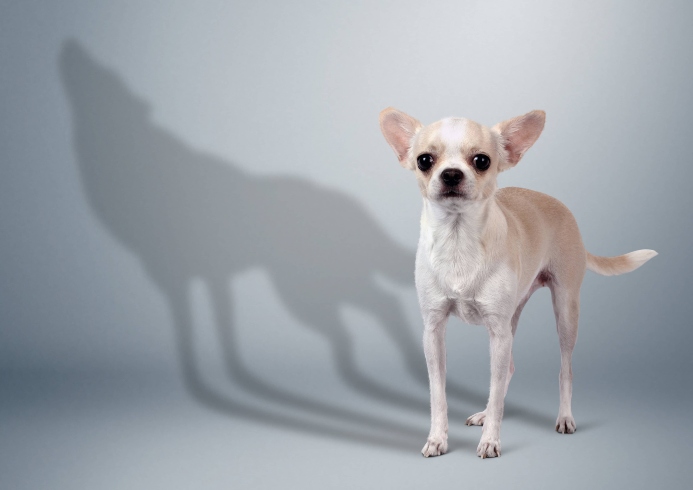
Your couch potato has a secret. Underneath that snoring, drooling, treat-obsessed exterior sits a genome that still remembers the hunt.
Even the chihuahua. Yes, even the one wearing a tiny raincoat right now.
Scientists just confirmed something that sounds like it belongs in a fantasy novel: most modern dogs carry measurable wolf DNA, and it didn’t stop flowing into their genomes the moment dogs became “dogs.”
It kept trickling in for thousands of years after domestication.
If you’ve ever looked at your dog mid-zoomie, eyes frantic, and thought “there’s something ancient going on in there,” you weren’t imagining it. You were onto something real.
Let’s dig into what this actually means, because it’s way more interesting than a party trick fact for your next dog park conversation.
Understanding how much wolf DNA lives on in your dog can help you in practical ways, from training with your dog’s instincts in mind, to feeding them in a way that respects their heritage, to interpreting those odd behaviors that seem to come out of nowhere.
The wolf inside your couch potato still has a say in their everyday life—and knowing that can make you a better dog owner.
The discovery that surprised scientists
- The discovery that surprised scientists
- How much wolf DNA does your dog actually carry?
- Which breeds carry the most ancient wolf DNA
- What the wolf in your dog says about its instincts
- Dietary echoes: What wolf ancestry tells us about protein needs
- 11,000-year-old dog skulls and the domestication puzzle
- Why dogs diverged from wolves in the first place
- What this means for training and everyday behavior
- Your dog’s inner wolf, explained
- The bottom line on wolf DNA in dogs
For a long time, the assumption was simple.
Dogs split off from an extinct wolf population around 20,000 years ago, and once that split happened, the two lineages stayed pretty separate.
Dogs became dogs. Wolves stayed wolves. Case closed.
Except it wasn’t.
A team from the American Museum of Natural History and the Smithsonian’s National Museum of Natural History dug through more than 2,700 canine genomes, spanning ancient Ice Age wolves all the way to your neighbor’s golden retriever.
What they found flipped the old assumption on its head. Nearly two-thirds of breed dogs still carry wolf ancestry that entered their genomes through interbreeding roughly 1,000 generations ago, long after domestication was already underway.
Every single village dog genome they studied, the free-roaming dogs that live alongside people without formal breeding, showed detectable wolf ancestry too.
Lead researcher Audrey Lin put it perfectly: modern pet dogs can appear worlds away from wolves, animals we’ve devoted centuries fearing and demonizing.
But the traits we love most in our dogs, the loyalty, the alertness, the endurance, may trace right back to that wolf lineage we’ve tried so hard to distance them from.
This isn’t a study about how different dogs and wolves became. It’s a study about how entangled they still are. You can read the full research summary from the American Museum of Natural History and the published paper in PNAS.
Here’s the part that should stop you in your tracks: it turns out dog genomes can tolerate a surprising amount of wolf DNA and still produce the goofy, tail-wagging companion sleeping on your feet right now.
Dogness, apparently, isn’t as fragile as we thought.
Dogs and wolves share 99.9% of their DNA. But that 0.1% makes all the difference between a creature that howls at the moon and one that howls because the mail carrier showed up.
How much wolf DNA does your dog actually carry?
Here’s where it gets breed-specific, and where things get genuinely wild.
Most typical breed dogs carry a small trace, often under 1%. But some breeds carry noticeably more, and the pattern isn’t always what you’d expect.
The Great Anglo-French tricolor hound, a common French hunting breed, showed the strongest signal among non-wolfdog breeds, with a range of 4.7% to 5.7%.
The Shiloh shepherd came in around 2.7%, which tracks with its history of breeding programs that leaned on wolfdog lines.
Even the humble chihuahua, a dog you could tuck into a purse, carries around 0.2% wolf ancestry. Try explaining that one to someone who thinks chihuahuas are basically rats with attitude.
If you’re curious about your own dog’s breed, several trusted databases and breed organizations now publish information on ancestral wolf DNA levels by breed.
You can look up breed-specific genetic information through resources like the American Kennel Club, Embark, or Wisdom Panel to see where your dog falls on the wolf ancestry spectrum.
Then there are the breeds intentionally created by crossing dogs with actual wolves. Czechoslovakian wolfdogs and Saarloos wolfdogs sit at the extreme end, carrying anywhere from 23% to 40% wolf ancestry.
These aren’t ancient breeds passively holding onto old genes. They’re deliberate, modern hybrids, and they require the kind of experienced handling you wouldn’t need for your average lab mix.
So no, your dog probably isn’t secretly part wolf in some dramatic Hollywood sense. But the line between “wolf” and “dog” is blurrier than any of us grew up believing.
Which breeds carry the most ancient wolf DNA
Some breeds didn’t pick up wolf genes through modern crossbreeding.
They’ve simply held on to a greater portion of the original wolf blueprint because they diverged earlier and avoided much of the intense 19th-century breeding that remodeled so many modern dogs.
Think of these breeds as living museum pieces. While other breeds got remodeled again and again by human hands, these dogs kept more of their original architecture intact.
Breed spotlight
| Breed | Why it matters |
| Shiba Inu | An ancient Japanese breed that reportedly shares as much as 5.5% DNA specifically with Japanese wolves, according to researchers at Japan’s Graduate University for Advanced Studies |
| Chow Chow | Considered a “basal breed” from China, one of the foundational lineages that shaped modern dog evolution |
| Akita | A large, independent Japanese breed known for strong territorial instincts and a loyal, watchful temperament |
| Siberian Husky | An Arctic breed shaped by isolation and harsh conditions, which helped it retain primitive genetic traits |
| Alaskan Malamute | Another Arctic sled dog whose genome still echoes its wolf lineage in both looks and behavior |
Notice a pattern? Cold climates and isolation seem to preserve wolf genetics. Makes sense. When you’re not constantly being reshuffled into new breeding programs, you don’t lose your original blueprint as fast.
What the wolf in your dog says about its instincts
Ever wonder why your dog loses its mind over a squirrel? Or why some dogs howl the second a siren goes off? Or why a dog that’s never met another dog somehow knows how to play by pack rules?
That’s the wolf talking.
Prey drive isn’t a personality quirk your dog invented. It’s a direct inheritance. Wolves survive by chasing, chasing, and chasing some more.
Your dog doesn’t need to catch dinner anymore, but the wiring never got the memo. That’s why a tennis ball can turn a sleepy retriever into a heat-seeking missile in half a second.
Howling works the same way. Wolves howl to communicate across huge distances, to locate pack members, to warn off rivals. Your husky isn’t malfunctioning when it howls along with a fire truck. It’s running ancient software on modern hardware.
And pack behavior? That explains why dogs read social cues so fluently, why they crave structure, why a dog devoid of clear leadership can spiral into anxiety or pushiness.
Wolves live and die by their pack hierarchy. Dogs inherited that same deep need for social order, just aimed at humans instead of other wolves.
Feeling a little more forgiving about your dog’s “weird” behaviors yet?
You should. None of this is bad behavior. It’s biology.
Dietary echoes: What wolf ancestry tells us about protein needs

Here’s where things get practical, and maybe a little controversial.
Wolves are obligate carnivores built to survive on meat, organs, and bone.
Dogs evolved to be more flexible, developing extra copies of genes that let them digest starches far better than wolves ever could.
That’s a genuine evolutionary shift, and it’s a big part of what made living alongside humans possible in the first place.
But flexible doesn’t mean identical to a human diet, and it definitely doesn’t mean dogs thrive best on filler-heavy kibble stacked with corn and byproduct meal.
Dogs still need substantial amounts of high-quality animal protein to maintain muscle mass, coat health, and energy levels.
Look for dog foods where named meats like chicken, beef, lamb, or salmon are listed as the first ingredient, instead of vague fillers or byproducts.
Good examples include kibble with “chicken meal” or “deboned salmon” listed first in the ingredient list, or wet food that starts with “beef” or “turkey” rather than “animal digest” or “meat byproduct.”
Ancestry doesn’t demand a raw meat diet or a return to the wild. It just deserves a little respect at mealtime.
Before making major diet changes, it’s worth talking to your vet, and resources like the American Kennel Club’s nutrition guidance serve a solid starting point.
Should you panic about your dog’s food right now? No. Should you glance at the ingredient list a little more critically? Probably.
11,000-year-old dog skulls and the domestication puzzle
For decades, the story was that dog diversity, all those different sizes and shapes and skull structures, came from Victorian-era breeding programs a couple hundred years ago. Turns out that story is way too simple.
A massive international analysis of ancient canine skulls found that dogs were already diversifying in size and shape more than 11,000 years ago. The oldest confirmed domestic dog in the study came from a Mesolithic site in Russia called Veretye, dated to roughly that same timeframe.
Researchers also found early domestic dogs showing up separately in the Americas around 8,500 years ago and in Asia around 7,500 years ago.
In other words, dogs didn’t wait around for humans to get sophisticated about breeding. They started branching into different shapes and roles almost as soon as domestication began, filling niches as hunters, guardians, and companions. You can explore more on this from ScienceDaily’s coverage of the research.
That timeline matters because it reframes the whole domestication story. Dogs weren’t passively molded by humans over a couple hundred recent years. They co-evolved with us over thousands of years, adapting to every change in how humans lived.
Why dogs diverged from wolves in the first place
So if dogs and wolves keep swapping genes even after domestication, why did they diverge at all?
The leading theory isn’t as romantic as “humans tamed the fiercest wolves.” It’s more like natural selection did the heavy lifting.
Wolves that were less fearful of humans, maybe drawn in by scraps around early settlements, had an advantage. They got food without risking a full hunt.
Over generations, that tolerance for human proximity got selected for again and again, together with physical changes like smaller teeth, floppier ears, and that distinctive puppy-eyed expression dogs use to melt our hearts.
Dogs essentially domesticated themselves as much as humans domesticated them. It was a partnership, not a conquest.
And the fact that wolf genes continued slipping back in for thousands of years afterward tells us this wasn’t a clean, one-time split. It was a long, messy, ongoing relationship. Sound familiar? Most good relationships are.
What this means for training and everyday behavior
So what do you actually do with all this information?
Start by dropping the outdated “dominance” training myths that oversimplified wolf pack behavior decades ago. Wild wolf packs aren’t ruled by constant power struggles, as old training books claimed.
They’re built more like families, with structure, cooperation, and clear roles. Training built on fear and forced submission misreads the very science it claims to be based on.
Instead, lean into what wolf ancestry actually tells you. Your dog craves structure, not intimidation. Give clear, consistent expectations instead of chaos.
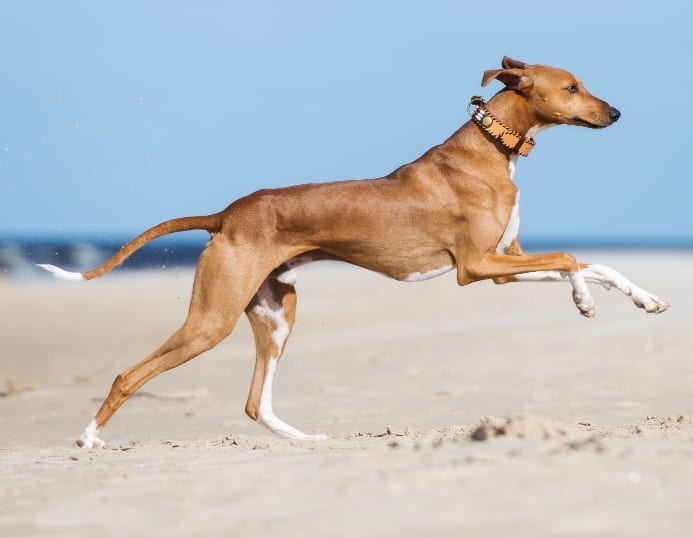
Your dog has genuine prey drive, so channel it into games like tug, fetch, or scent work instead of getting frustrated when it fixates on a squirrel.
Try setting up a short daily scent trail indoors or outdoors using treats or a favorite toy, letting your dog use its nose to search and “hunt” as it would in the wild.
Practice structured fetch sessions with clear start and end signals to satisfy the chase instinct while reinforcing listening skills.
For dogs that love to dig, offer a designated digging box or area in the yard so they have a place to dig without causing chaos elsewhere.
Your dog is wired for social bonding, so invest in relationship-based training methods that build trust rather than compliance through fear, such as practicing recall games, gentle mat training for calmness, or short, positive training sessions focused on teamwork.
None of this means treating your dog like a wild animal. It means recognizing that the instincts beneath the fur are real, ancient, and worth working with rather than against.
Your dog’s inner wolf, explained
A few everyday behaviors, decoded:
Digging before lying down? Wolves do this to create a comfortable, insulated resting spot. Your dog is just redecorating.
Circling before settling? An old instinct to flatten grass and check the ground for anything unwelcome.
Guarding food or toys? A leftover survival behavior from a time when resources weren’t guaranteed.
Burying bones or treats? Classic wolf-style food caching, saving resources for leaner days that, for your dog, never actually come.
The bottom line on wolf DNA in dogs
Your dog isn’t a wolf in disguise, and it doesn’t need to live like one. But it isn’t as far removed from that ancestry as we once believed either.
That howl, that prey drive, that need for structure and pack—none of it is an accident or a flaw. It’s a genetic echo, quietly running in the background of every dog on every couch in every living room.
Most ‘wolfy’ behaviors, like digging, chasing, howling, or guarding toys, are completely normal parts of being a dog and nothing to worry about.
But if any behavior ever feels extreme—like nonstop aggression, panic, or anything that seems out of your control—it’s a good idea to talk to a trainer or your vet. Most of the time, you’re just seeing natural instincts at work.
So the next time your dog stares out the window like it’s guarding the last outpost of civilization, give it a little credit. Somewhere in that DNA, a wolf is still watching too.
Sara B. Hansen has spent 20-plus years as a professional editor and writer. She’s also the author of The Complete Guide to Cocker Spaniels. She decided to create her dream job by launching DogsBestLife.com in 2011. Sara grew up with family dogs, and since she bought her first house, she’s had a furry companion or two to help make it a home. She shares her heart and home with Nutmeg, a Pembroke Welsh Corgi. Her previous dogs: Sydney (September 2008-April 2020), Finley (November 1993-January 2008), and Browning (May 1993-November 2007). You can reach Sara @ editor@dogsbestlife.com.