
Why these 7 Saint Bernard mixes are absolutely irresistible
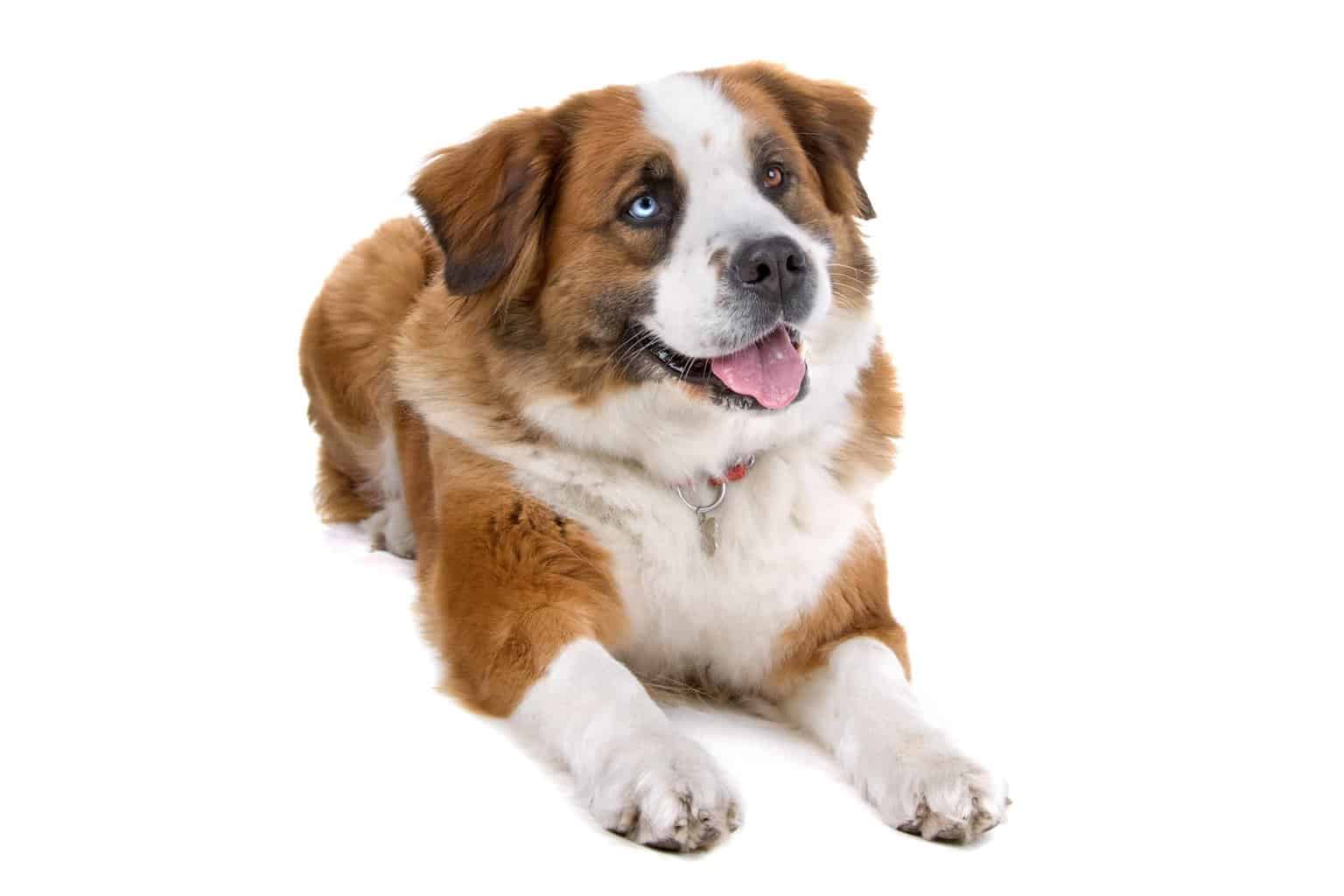
Saint Bernards are one of the cutest and friendliest working dogs you’ll ever find. These furry giants are popular for their family-loving and playful nature.
But, these dogs:
- Grow up to be 28 inches to 30 inches in height
- Can weigh up to 180 pounds
- Could be emotionally and socially demanding
- Can have difficulty surviving in warm weather
Because the puppy can get so large, Saint Bernard mixes might be better for you than an original Saint Bernard. But because they are still large, they need early socialization and training.
The mixed breeds carry the appealing attributes of the Saint Bernard, combined with the characteristics of the cross, and often provide traits that the original breed does not possess.
Now, what do we mean by that?
Well, that’s what we will explain in this post. We’ll introduce seven super adorable Saint Bernard mixes, compare them with the original, and demonstrate how the mixed breed could be a perfect fit for you.
Mini Saint
Mini Saint is a mix of Cocker Spaniel and Saint Bernard. Cocker Spaniels grow up to be 17 inches, while Saint Bernards grow to be 34 inches. Consequently, the Mini Saint has a maximum height of about 19 inches, making it relatively small.
Nevertheless, this Saint Bernard mix does not have reduced maintenance needs. You’d have to feed a mini saint pup 10-15 times a day and spend more time grooming their thick coat. Plus, Mini Saints rank a 2/5 in terms of health. They may face issues that the original parents’ breeds do not.
On the upside, however, their small size makes them an excellent option for tiny houses and apartments.
Unlike the original St. Bernard, these dogs are also comparatively emotionally and socially independent.
In terms of lifespan, the mix lives longer than a Saint Bernard but shorter than a Cocker Spaniel.
Energy levels: Mini Saints generally exhibit moderate energy levels. While they do enjoy playtime and daily activities, they are not as hyperactive as some smaller breeds. They can balance between being playful and enjoying relaxed family time, making them well-suited for various living situations, including apartments and homes with smaller yards.
Exercise needs: This breed requires regular exercise to maintain a healthy weight and prevent behavioral issues. Daily walks, play sessions, or agility activities can keep both of them physically and mentally stimulated. Aim for at least 30 to 45 minutes of exercise each day. This can include walks, fetch games, or even indoor playtime when the weather doesn’t cooperate.
Potential health issues: Like many mixed breeds, Mini Saints can inherit health concerns from either of their parent breeds. Common issues to watch for include hip dysplasia, joint problems, and certain heart conditions. Regular veterinary check-ups, a balanced diet, and appropriate exercise are crucial for minimizing these risks and ensuring a long, healthy life.

Saint Bernewfie
This one’s got a unique name.
It’s unique in its attribute, too. Saint Bernewfie is a mix of Saint Bernard and Newfoundland. This Saint Bernard mix is a medium-sized dog that grows up to 29 inches in height and weighs around 165 pounds when fully grown. The dog lives up to 10-12 years and comes in the following colors:
- Black
- Brown
- Black
- Black and brown
In terms of temperament, Bernewfie is a sweet and loving dog. It requires company for most of its time, making it an excellent choice for anyone seeking easy-to-maintain companionship.
Energy levels: Saint Bernewfies are generally known for having moderate energy levels. While they enjoy playtime and will engage in energetic bursts, they are also quite content lounging around the house with their families. These dogs thrive in environments where they can enjoy a balanced lifestyle—a mix of playtime and relaxation. Daily activities that excite them, such as short walks or play sessions in the yard, can help keep their energy in check.
Exercise needs: Despite their moderate energy levels, Saint Bernewfies require regular exercise to maintain a healthy lifestyle and prevent boredom. Aim for at least 30 to 60 minutes of physical activity each day. This can be achieved through daily walks, swimming, or even playtime in a safe, enclosed area. Their large size means they need space to move around, so having access to a yard is ideal. Additionally, mental stimulation through training sessions or puzzle toys can help keep their minds sharp and engaged.
Potential health issues: Like many mixed breeds, the Saint Bernewfie can inherit health issues from both parent breeds. Common concerns include hip and elbow dysplasia, certain heart conditions, and obesity. Regular veterinary check-ups and maintaining a healthy diet are crucial in preventing and managing these potential health issues. Monitoring their weight and ensuring they receive adequate exercise is also important to avoid obesity, which can exacerbate existing conditions.
Saint Berhusky
Evident by the name, Saint Berhusky is the cross of Saint Bernard and Siberian Husky. Since both the parent breeds are super cute, Saint Berhusky is no exception.
This Saint Bernard mix is distinguished by its thick, tricolor coat, featuring black, brown, and white colors. Plus, their eyes are either a warm brown, like Bernard’s, or a distinct blue, like the Husky’s.
These are medium to large dogs. However, their frame resembles that of the Husky more than the Saint Bernard. Plus, they are a little bulky. In terms of health, they are healthier than the mini saints and can live up to 10-12 years.
As for the temperament, these dogs are friendly. But we do not recommend these to households with children or people with hectic schedules. That’s because Berhuskies are free-spirited, intelligent, and slightly stubborn dogs requiring proper training and attention.
Energy levels: The energy levels of the Saint Berhusky can vary, but they generally fall on the higher end of the spectrum. This breed inherits the playful and lively disposition from the Siberian Husky, and it can be energetic, especially during its younger years. While the Saint Bernard tends to be more laid-back, the Saint Berhusky often seeks out playtime, making them an enthusiastic member of the family. They thrive on engagement and can be quite spirited, displaying a love for both play and exploration.
Exercise needs: Due to their higher energy levels, Saint Berhuskies require regular exercise to stay healthy and happy. Daily walks, play sessions, and opportunities for running are essential for this breed. Ideally, they should get at least 60-90 minutes of exercise each day. Activities such as hiking, playing fetch, and even agility training can provide the physical and mental stimulation they crave. It’s crucial to adapt the exercise routine to their age and energy level; younger dogs may require more playtime, while older dogs may enjoy more moderate activities.
Potential health issues: The Saint Berhusky can be prone to certain health issues. Some common health concerns to be aware of include:
- Hip Dysplasia: A condition where the hip joint doesn’t fit properly into the hip socket. It can lead to arthritis and pain, especially as they age.
- Elbow Dysplasia: Similar to hip dysplasia, this condition occurs when the elbow joint develops abnormally, resulting in discomfort and mobility issues.
- Bloat (Gastric Torsion): This is a serious condition where the stomach fills with gas and twists, requiring immediate veterinary attention.
- Eye Problems: Both parent breeds can be susceptible to eye conditions, including cataracts and progressive retinal atrophy.
Saint Bermastiff
Saint Bermastiff combines the traits of a Saint Bernard and a Mastiff, making the dogs intelligent and curious.
This Saint Bernard mix is an excellent fit for households with teens and preteens. They can learn many tricks and are easy to train. Plus, their friendly nature makes them safe companions for children.
In terms of size, however, they are more or less the same as a Saint Bernard. They share a similar lifespan and maintenance requirements.
Energy levels: Saint Bermastiffs generally have moderate energy levels. While they enjoy playtime and activities, they are not as hyperactive as some other breeds. These dogs typically exhibit a calm demeanor, preferring to lounge comfortably while remaining attentive and interactive with their family. They do enjoy short bursts of play, especially in their younger years, but as they age, their energy levels tend to decrease, making them less demanding in terms of activity.
Exercise needs: Although the Saint Bermastiff doesn’t require extensive exercise, regular physical activity is essential for maintaining its health and well-being. A daily routine that includes a couple of short walks and some playtime in a secure area will suffice. Generally, they should aim for about 30 to 60 minutes of exercise each day, depending on their age and health. It’s essential to avoid strenuous activities, especially in hot weather, as large breeds are prone to overheating.
Potential health issues: Like many large dog breeds, Saint Bermastiffs can be susceptible to specific health issues. Some of the most common concerns include:
- Hip Dysplasia: This genetic condition affects the proper fit of the hip joint and can lead to arthritis over time.
- Elbow Dysplasia: Similar to hip dysplasia, this condition can cause pain and mobility issues in the joints.
- Bloat: Due to their size and shape, they are at risk for gastric torsion, or bloat, which is a life-threatening condition that requires urgent veterinary attention.
- Heart issues: Larger breeds are prone to certain heart conditions as they age, making regular check-ups essential.
- Obesity: Because of their large size, maintaining a healthy weight is crucial to prevent additional health complications, especially as they age.
Saint Bullnard
The Saint Bullnard is a crossbreed of a St. Bernard and a Pitbull. This mixed breed comes with a perfect balance of playfulness and discipline.
You can expect the dog to play well, along with cats, dogs, and other pets. You can even entrust them with your kids. The dogs will protect and play. We recommend early and careful training, as these dogs can be large and strong.
Energy levels: The Saint Bullnard typically has moderate energy levels. While they are not as high-strung as some working breeds, they still require sufficient activity to stay healthy and happy. They enjoy engaging with their families and often have bursts of energy, especially when playing or socializing. Generally, they are more relaxed indoors but can become playful and spirited during outdoor activities.
Exercise needs: To keep a Saint Bullnard physically and mentally stimulated, regular exercise is essential. They benefit from daily walks, playtime in a secure yard, and engaging activities that challenge their minds, such as obedience training or puzzle toys. Aim for at least an hour of moderate exercise each day, which can include brisk walks, gentle runs, or interactive games. This will help prevent boredom and possible behavioral issues.
Potential health issues: Like many large breeds, the Saint Bullnard can be predisposed to specific health conditions. Common concerns include hip dysplasia, elbow dysplasia, and cardiomyopathy. Regular veterinary check-ups, a balanced diet, and appropriate exercise can help mitigate some of these risks. Additionally, it’s essential to monitor their weight, as obesity can exacerbate joint issues and lead to other health complications.
Saint Chownard
It is a mix of Chow Chow and Saint Bernard and is incredibly adorable. It takes the facial features of the Chow Chow and the physical build of the Saint Bernard. And so, this mix appears younger than its age.
Saint Chownard is easy to maintain. And it’s typically well-behaved. However, owing to its introverted nature, you can expect the dog to be uncomfortable around strangers.
Energy levels: Saint Chownards have moderate energy levels. They possess an innate curiosity and love to engage in playful activities with their humans. While they enjoy bursts of energy, they don’t typically require constant high-energy play. They are equally content lounging around the house, making them suitable companions for families who enjoy a more relaxed lifestyle.
Exercise needs: Due to their moderate energy levels, Saint Chownards require regular but not excessive exercise. A combination of daily walks, playtime, and mental stimulation through training or interactive toys will keep them happy and healthy. Typically, a couple of walks each day, along with some play sessions, will suffice. However, it’s essential to tailor the exercise to their energy levels, as some may require more vigorous activity than others.
Potential health issues: Like many breeds, Saint Chownards are prone to specific health issues. Typical concerns may include hip dysplasia, heart conditions, and obesity due to their love of food and less active lifestyle. Regular veterinary check-ups, a balanced diet, and maintaining an appropriate exercise routine are crucial in preventing these health problems. Genetics can also play a role, so it’s essential to be aware of any hereditary conditions prevalent in the breed.
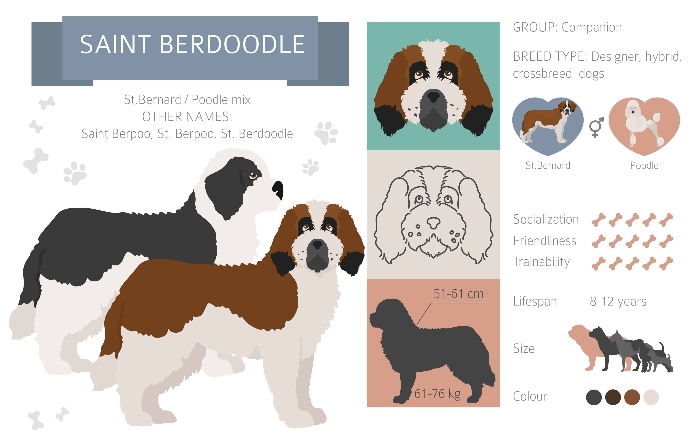
Saint Berdoodle
Lastly, we have the most adorable mix, i.e., the Saint Berdoodle. Evident by its name, it is a mix of a Saint Bernard and a Poodle.
It grows up to be only 30 inches. So it is relatively small. However, this Saint Bernard mix is energetic and playful. You can expect this curly-haired pup to keep you engaged for hours.
It’s also friendly and loves attention. Before adopting a Saint Bernedoodle, you should consider that the pups can be a bit noisy.
Energy levels: Saint Berdoodles typically possess a moderate to high energy level. They are energetic and playful, often exhibiting bursts of energy that can surprise their owners. The influence of the Poodle in the mix usually contributes to their lively character, meaning they thrive on interaction and mental stimulation. They enjoy engaging with their families and are often excited to partake in various activities, making them a charming addition to any active household.
Exercise needs: To keep a Saint Berdoodle healthy and happy, regular exercise is crucial. These dogs generally require at least 60 minutes of physical activity each day. This can include walks, playtime in the yard, or sessions of fetch. Given their intelligence and eagerness to please, Saint Berdoodles also excel in obedience training and agility exercises, which can serve as additional outlets for their energy. Mental stimulation is just as important as physical exercise, so incorporating puzzle toys or training sessions can be beneficial in preventing boredom and destructive behaviors.
Potential health issues: Like all breeds, Saint Berdoodles can be predisposed to specific health issues. While they often enjoy hybrid vigor, it’s essential to be aware of potential concerns that can affect their overall well-being. Some of the common health issues seen in this breed mix include hip and elbow dysplasia, certain eye disorders (such as Progressive Retinal Atrophy), and skin allergies, particularly those that might stem from their Poodle lineage. Regular vet check-ups, a balanced diet, and maintaining a healthy weight can help mitigate some of these risks.
Final words about Saint Bernard mixes
Well, that’s not it. There are several more St Bernard mixes out there, including the Saint Pyrenees (Great Pyrenees mix), Saint Shepherd (German Shepherd mix), or Saint Bernese (Bernese Mountain Dog mix).
If you seek a mixed breed that’s more protective and suitable for serving as a watchdog, consider exploring one of these seven Saint Bernard mixes.
However, if you’re looking for a cute appearance and a home-friendly pet, the seven mixes above are a good option.
Arslan Hassan is an electrical engineer passionate about writing, designing, and anything tech-related. His educational background in the technical field has given him the expertise to write on a wide range of topics.