
What makes mini-bernedoodles so special? The ultimate guide
Being allergic to dogs is one of the most disheartening things ever when you’re a wannabe pet parent. You love animals, and you want to take care of one yourself so you can experience the spectacular bond between human and puppy.
When you get close to a dog, the only problem is that your allergies flare up. You have to vacate the premises immediately. It’s a thoroughly disappointing experience and one that many dog-allergic individuals have dealt with on more than one occasion. You have so much love to give, but getting close to a dog can severely harm you.
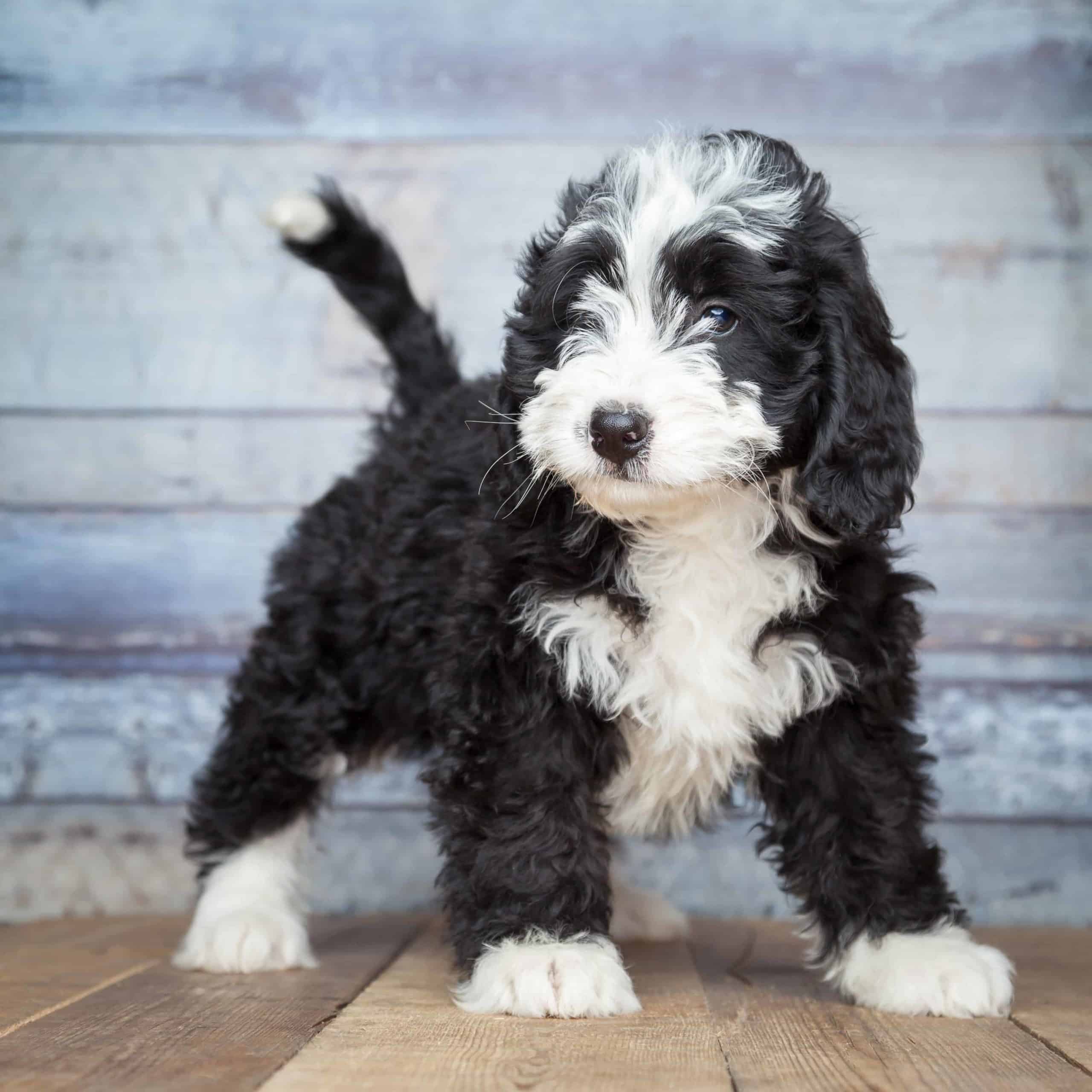
What if I told you there was a breed out there that tends to be hypoallergenic, which would let you become a proud dog owner after all? That puppy, which is the perfect intersection of many of our four-legged friends’ best traits, is the mini-bernedoodle.
Mini-bernedoodles are often called a designer breed, being a cross between the Bernese Mountain Dog and poodles, and contain the best qualities of both of their parent breeds.
An often sought-after breed, mini-bernedoodles are loyal, playful, and available from reliable breeders online, making it easy to adopt and take one into your home.
If any of the above has piqued your interest, adopting a mini-bernedoodle might be the perfect way for you to bring a dog into your home without risking severe injury.
Here’s everything you need to know about this increasingly popular breed and how to determine whether a mini-bernedoodle is the right breed for you.
The best of both worlds: Basic mini-bernedoodle traits
Being a cross of two breeds, the characteristics of mini-bernedoodles tend to vary from puppy to puppy, though some things stay consistent across the spectrum.
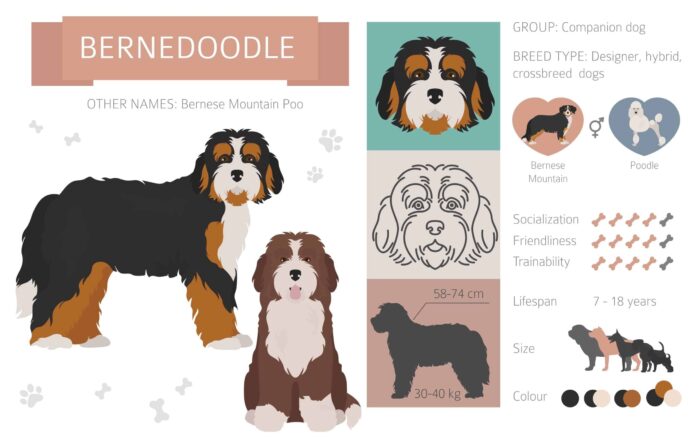
Mini-bernedoodles tend to be average-sized dogs, with heights ranging from 17 to 21 inches and a weight that runs anywhere from 22 to 45 pounds. Most breeders advise that if you want a smaller bernedoodle, choose a female because male bernedoodles tend to grow larger.
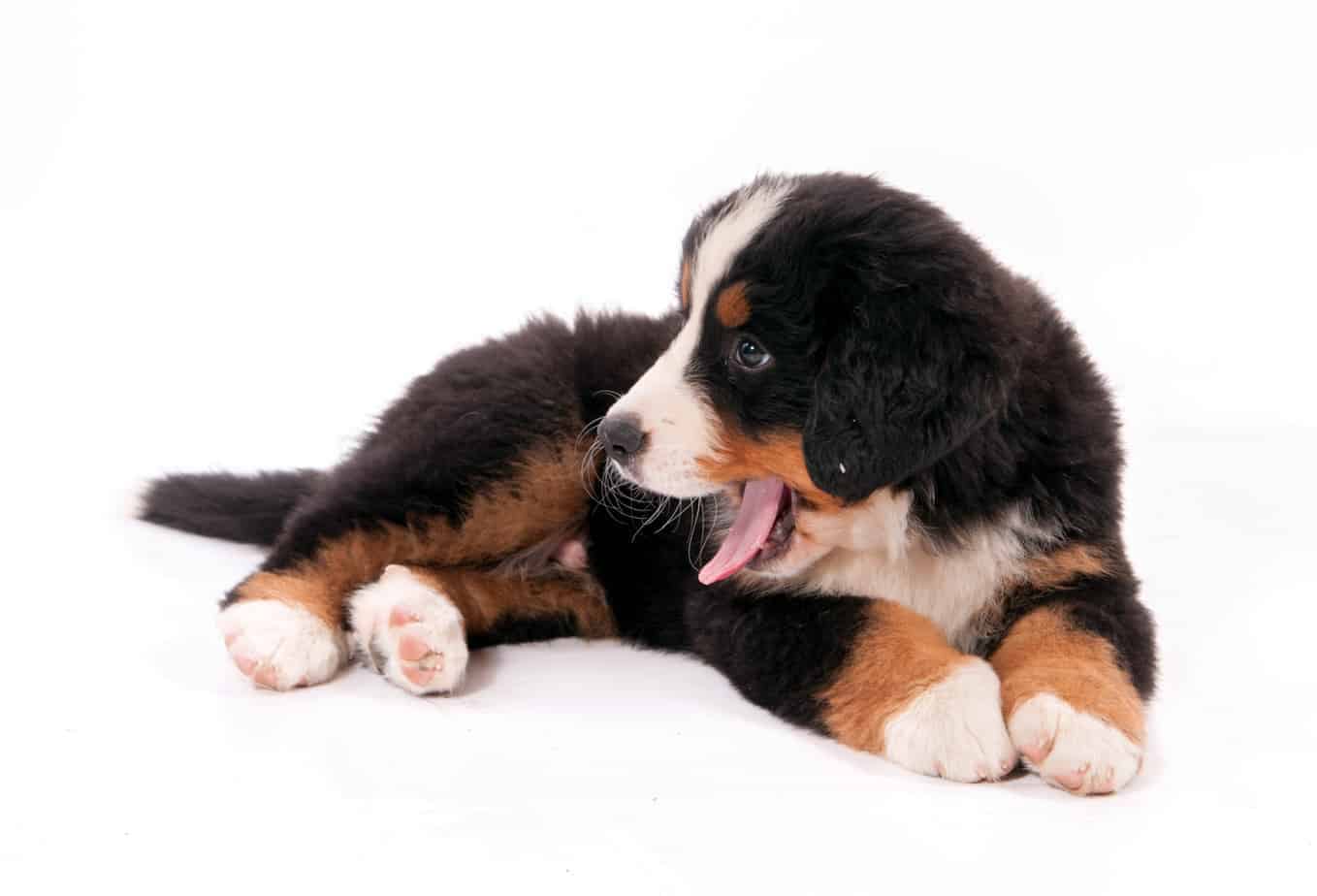
Mini-bernedoodles tend to live from 12 to 15 years, and their coats are usually a mixture of white and black, with occasional tan and brown accents.
Mini-bernedoodles tend to get the best of both worlds from their very different parents, with the better characteristics of both breeds offsetting the worst of the other.
From poodles, they tend to get their low-shedding, hypoallergenic coats (part of what makes bernedoodles both great for people who have dog allergies and people who hate cleaning up dog hair), intelligence, and an outgoing disposition.
From Bernese mountain dogs, they tend to get the color of their coats, fierce loyalty to their owners, and the outgoing attitude of the poodle is reinforced, making them twice as friendly to people they’re meeting for the first time.
Temperament and behavior
Mini-bernedoodles are known for their affectionate and friendly nature, making them excellent companions.
They bond with their families and thrive on human interaction, often seeking attention and cuddles.
Their intelligence, inherited from the Poodle side, makes them highly trainable.
With consistent training and positive reinforcement, they quickly learn commands and tricks.
Their playful spirit encourages lots of interactive play, which is essential to keep them happy and mentally stimulated.
Typically friendly with humans and other pets, Mini Bernedoodles are great for families and multi-pet households.
They usually get along well with children, but early socialization is vital for well-rounded behavior.
While they enjoy playtime, they also have a calm demeanor and can adapt to various living situations.
Training challenges
Mini-bernedoodles are intelligent and quick learners, but they can also present some training challenges.
One major issue is their stubbornness; they may resist commands if they don’t see the purpose, requiring patience and consistency from their owners.
Their playful and energetic nature can lead to distractions during training sessions.
To keep their attention, it’s essential to make training fun and engaging, incorporating games and varied activities.
Early socialization is crucial in preventing behavioral issues. Without exposure to different environments, people, and animals, they might become fearful or overly excited.
Although positive reinforcement is effective, be cautious not to overindulge with treats, as this can lead to weight gain and a sense of entitlement.
With the right approach, patience, and consistency, mini-bernedoodles can become well-behaved and loyal companions.
Grooming and care tips
Brushing: Brush 2-3 times a week to prevent mats. Use a slicker brush or comb.
Bathing: Bathe every 4-6 weeks with a mild dog shampoo. Avoid over-bathing.
Trimming: Schedule professional grooming every 6-8 weeks for a tidy look.
Ear care: Check ears weekly and clean gently with a dog ear cleaner if needed.
Nail clipping: Trim nails every 3-4 weeks to avoid overgrowth.
Vet check-ups: Regular vet visits for health monitoring and vaccinations are essential.
Dental care: Brush teeth a few times a week and consider dental chews.
Diet: Provide a balanced diet suited for small to medium breeds; consult your vet.
Exercise: Ensure at least 30-60 minutes of daily physical activity.
Mental stimulation: Use puzzle toys and training to keep their mind engaged.
Common questions
Q: How big do mini-bernedoodles get?
A: Mini-bernedoodles typically weigh between 10 and 50 pounds and stand about 12 to 18 inches tall at the shoulder. Their size can vary depending on the genetics of the parents, especially the size of the Poodle used for breeding.
Q: What are the negatives of mini-Bernedoodles?
A: Some negatives include potential health issues inherited from the Bernese Mountain Dog, such as hip dysplasia and certain genetic conditions.
They may also have high grooming needs due to their wavy or curly fur, and they can be prone to separation anxiety if left alone for long periods.
Q: How much does a mini-bernedoodle puppy cost?
A: The cost of a mini-bernedoodle puppy can range from $2,500 to $5,000, depending on the breeder’s reputation, location, and the puppy’s lineage. Prices may be higher for those with desirable traits or from champion bloodlines.
Q: Is a mini-bernedoodle a good dog?
A: Yes, mini-bernedoodles can be great companions. They are known for their friendly and affectionate nature, making them excellent family pets. They typically get along well with children and other animals and are generally eager to please.
Q: How long does it take for a mini-bernedoodle to reach full size?
A: Mini-bernedoodles usually reach their full size by around 12 months, although some may take up to 18 months to fully mature. Growth rates can vary based on genetics and individual differences.
Q: What are the breed’s behavioral issues?
A: Mini-bernedoodles may exhibit some behavioral issues such as separation anxiety, stubbornness, or herding instincts (especially if they inherit traits from the Bernese Mountain Dog or Poodle). Early socialization and training can help mitigate these behaviors.
Q: Do mini Bernedoodles bark a lot?
A: Mini-bernedoodles are not known for excessive barking, but they can be vocal, especially if they are bored or anxious. Proper training and regular exercise can help manage barking habits.
Q: Do mini-bernedoodles stay small?
Mini-bernedoodles typically remain small compared to standard Bernedoodles, but their size can still vary. They don’t grow as large as their standard counterparts, but there’s still a possibility for some variance in size.
Q: What do you need to know before getting a Bernedoodle?
A: Before getting a Bernedoodle, consider their grooming needs, exercise requirements, and potential health issues. Research reputable breeders, understand their temperament, and evaluate whether their characteristics align with your lifestyle. You should also be prepared for commitment and training, as socialization is essential for their development.
Is a mini-Bernedoodle right for you?
As already mentioned above, the mini-bernadoodle is extremely intelligent, making it easier than other breeds to train; but bernedoodles can also be notoriously stubborn.
If you can coax your bernedoodle with the correct motivation, a la treats, you may find it much easier to train them.
Bernedoodles also tend to be playful and excitable and require regular exercise and outdoor time, meaning they’re especially suited for people who live active lifestyles.
Lastly, the hypoallergenic coat can be thick and coarse, and so requires extensive amounts of grooming and detangling: your bernedoodle will require frequent visits to the groomer to keep its coat healthy and clean.
None of these are necessarily drawbacks, especially for a dog owner happy to have one despite allergies: but they are things to keep in mind, as bernedoodles can be higher maintenance than other breeds.
However, they pay for that in spades with fierce loyalty, high intelligence, and a long life span.
Final thoughts on mini-bernedoodles
The mini-bernedoodle is a fantastic option for those seeking a loyal, intelligent, and hypoallergenic companion.
This breed combines the best traits of the Bernese mountain dog and poodle, offering joy and playfulness in any home.
Though they require regular grooming and exercise, the bond you’ll create is well worth the effort.
If you’re ready to experience the love a mini-bernedoodle can offer, don’t let allergies deter you—consider welcoming one into your life.