
Dog pool safety 101: Teach your dog to swim this summer
Every summer, thousands of dogs drown in backyard pools. Not lakes. Not rivers. Backyard pools.
The ones with steps, the ones with toys floating on the surface, the ones surrounded by family and laughter.
It happens fast and often, and most owners never saw it coming because they assumed their dog could handle it.
That assumption is the problem.
Swimming is one of the absolute best forms of exercise a dog can get.
Low impact, full body, mentally stimulating, and perfect for hot days when pavement would fry their paws. But the pool that offers all of that can also become a trap.
This guide covers both sides of that coin: keeping your dog safe and helping them genuinely love the water.
The ‘natural swimmer’ myth: not every dog is built for this
- The ‘natural swimmer’ myth: not every dog is built for this
- Pool hazards specific to dogs
- Step-by-step introduction to the pool for hesitant dogs
- Life jackets: when to use them and how to fit one
- Pool exit training: teaching your dog to find the steps
- Safe pool toys versus hazardous ones
- How much swimming is too much
- Post-swim care: ears, eyes, and coat
- A final word on supervision
You’ve probably heard someone say, “All dogs can swim. It’s instinctive.” It’s one of those things that sounds true because dogs do this thing called the doggy paddle. But here’s the reality: some dogs are about as naturally buoyant as a brick.
Brachycephalic breeds like Bulldogs, Pugs, French Bulldogs, and Boxers have short snouts that make breathing hard even on land. In the water, they tire quickly, struggle to keep their heads above water, and can go under in seconds.
Short legs combined with heavy, barrel-shaped chests, as you see in Dachshunds and Basset Hounds, create a serious weight imbalance. These dogs work twice as hard to stay afloat, exhausting themselves in the process.
Even dogs with longer legs and athletic builds aren’t automatically water-safe. Greyhounds have almost no body fat, which means very little natural buoyancy. Dogs with joint conditions, heart issues, or neurological problems face real risks in the water too.
Breeds that typically take to water well include Labrador Retrievers, Golden Retrievers, Portuguese Water Dogs, and Irish Water Spaniels. Their body composition, coat type, and temperament make them strong, confident swimmers. But even dog breeds with webbed feet need supervision and training.
The breed matters. Know what you’re working with before you assume your dog can handle the deep end.
Pool hazards specific to dogs
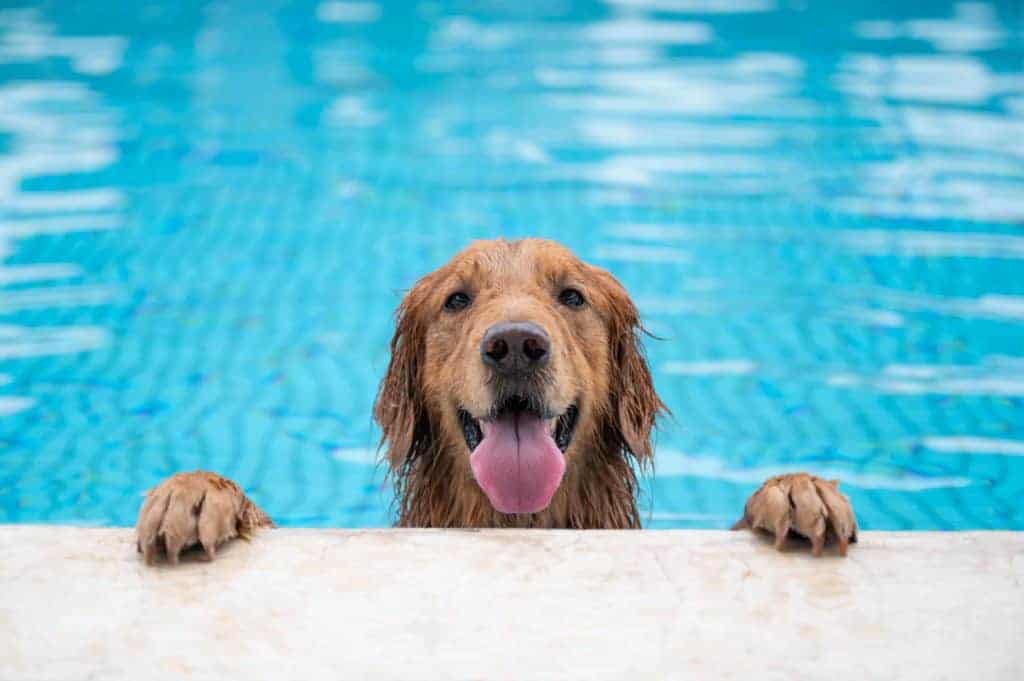
The water itself isn’t the only danger. Pools create a whole environment of risks that owners often overlook.
Chemical exposure is a real concern. Chlorine at standard pool levels isn’t toxic in small amounts, but dogs who spend a lot of time swimming swallow more water than humans do. Prolonged exposure irritates their eyes, skin, and ears. Saltwater pools are generally gentler, but neither type is completely harmless with prolonged exposure.
To help minimize risk, keep chemical levels at the lowest effective amount, rinse your dog with fresh water after each swim, and always allow chemicals to fully circulate and settle before letting your dog in.
If possible, look for pool chemical products labeled pet-safe or dog-friendly, and consult your pool professional to help you choose the safest options for homes with pets.
Exhaustion sneaks up on dogs. Unlike a child who’ll get out when they’re tired, many dogs will keep swimming until they physically can’t anymore, especially retrievers and other working breeds who have an almost compulsive drive to fetch.
A dog can go from excited to dangerously fatigued in a surprisingly short window.
Entrapment is another overlooked hazard. Pool drains create suction. A dog investigating the bottom of the pool can get a paw, a nose, or a flap of skin caught. It’s rare, but it happens, and the outcome is devastating.
Make sure your drain covers are fully secured and meet current safety standards.
Slippery pool surrounds cause injuries before the dog even hits the water. A dog running full tilt toward the pool on wet concrete or tiles can wipe out badly.
Slip-resistant mats around the pool perimeter are a simple fix that most people don’t consider until after an incident.
Step-by-step introduction to the pool for hesitant dogs
Tossing a reluctant dog in the water to “teach” them to swim is one of the worst things you can do. It creates fear, destroys trust, and can put a dog off water for life. Worse, it can be physically dangerous.
Go slow. Start on the steps.
Let your dog approach the pool at their own pace. Sit near the water, keep your energy calm, and let them sniff around without any pressure to get in. Reward calm, curious behavior.
Next, encourage them onto the first step with treats and praise. Don’t push. Don’t pull. Just reward every small move toward the water. Let them stand on the step and get comfortable with the sensation of water on their paws.
From there, gradually encourage them further, one step at a time, always letting them set the pace. Get in the water with them. Your presence makes a massive difference, especially for anxious dogs.
Once they’re in the water, support their hindquarters. Dogs new to swimming often panic and go almost vertical, which is inefficient and exhausting. Help them find a more horizontal position and praise them as they figure out the paddling rhythm.
Keep early sessions short. Five to ten minutes is plenty. Always finish on a positive note before they become tired or anxious. Build good associations over multiple sessions rather than pushing too hard in one go.
Life jackets: when to use them and how to fit one
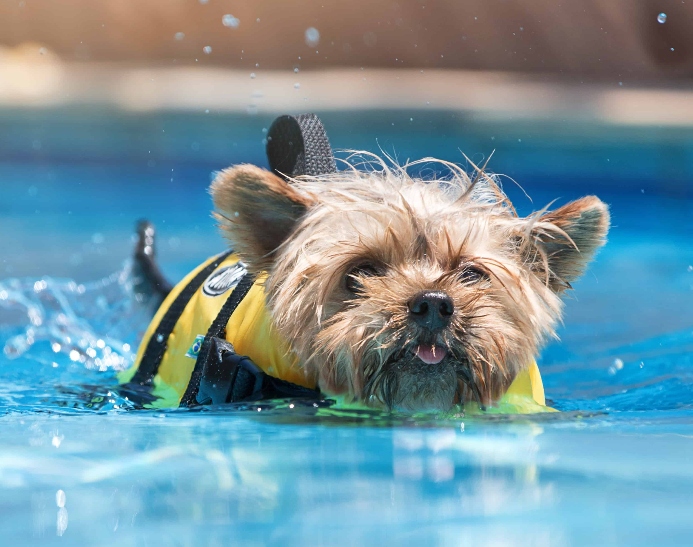
A canine life jacket isn’t just for dogs who can’t swim. It’s smart safety equipment for any dog near open water or a pool when constant supervision isn’t possible.
For brachycephalic breeds, short-legged breeds, senior dogs, puppies, and dogs with any health condition affecting stamina or coordination, a life jacket isn’t optional. It’s mandatory.
For confident swimmers, a life jacket is still worth having for boating trips, rough water, or any situation where you can’t guarantee you’ll be able to reach them quickly.
When fitting one, look for a jacket with a handle on the back. That handle is how you lift a dog out of the water in an emergency, and it’s more useful than it might seem. The jacket should fit snugly without restricting breathing or movement. You should be able to fit two fingers under the straps.
Check that it doesn’t ride up over the face when the dog is in the water. For best results, measure your dog’s chest girth just behind their front legs and their neck circumference before buying.
Follow the manufacturer’s sizing chart. If your dog is between sizes, size up for comfort, adjust the straps snugly so it stays secure, and make sure your dog can sit, lie down, and move freely while wearing it.
Brands like Ruffwear and Outward Hound make well-reviewed options over various size ranges. Try the jacket on your dog before you’re anywhere near water so they can get used to wearing it first.
Pool exit training: teaching your dog to find the steps
This is the single most important thing you can do for your dog’s pool safety. Bar none.
Dogs instinctively swim to the wall when they’re in trouble. If they can’t find the exit, they’ll swim parallel to the wall, panic, exhaust themselves, and drown. It happens even to strong swimmers.
Teach your dog to find the steps from every angle in the pool. Start by walking them to the steps from outside the pool so they know exactly where they are.
Then, with you in the water, guide them to the steps from different positions. Make finding the steps a game. Reward heavily every single time.
Practice this repeatedly. Practice when the dog is calm and when they’re excited. For most dogs, learning to reliably find the pool exit takes anywhere from several days to a few weeks, with short, consistent sessions.
Some dogs catch on quickly in as little as three to five sessions, while others may need up to ten or more to make it second nature.
Practice it until finding the exit is completely automatic, not something they have to think about. A dog in a panic doesn’t think, so the behavior has to be deeply ingrained.
Add a visual marker near the steps. A bright potted plant, a specific colored towel, a flag, anything that helps them locate the exit point quickly. Some owners use a strip of different-colored pool coping around the step area. Whatever works.
Safe pool toys versus hazardous ones
Not every toy belongs in or around water.
Safe options include floating rubber toys, tennis balls (with caveats), and purpose-made water toys designed for dog use. Kong makes some good options. Look for bright colors that are visible against the water.
Hazardous options include anything small enough to become a choking hazard when wet and soggy, foam toys that can be broken apart and swallowed, and sticks. Yes, sticks. A dog catching a stick in the water can have it driven into the back of their throat if they dive at it wrong. It’s a real injury that vets see. Use floating rubber sticks instead.
Also think about where toys end up. A toy that floats to the middle of the pool and sinks just below the surface can tempt a dog to dive for it unsupervised. Keep pool toys put away when swim time is over.
How much swimming is too much
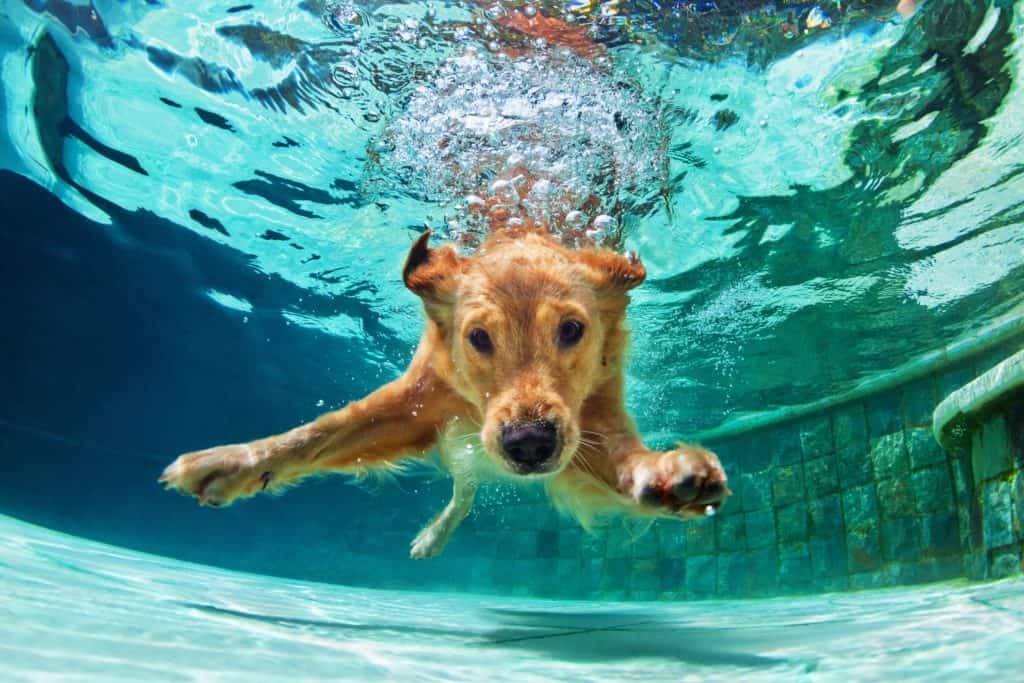
Dogs don’t regulate effort well, especially in exciting environments. They’ll swim until they can’t. So you need to be the one who calls time.
Watch for these signs of overexertion: lagging, struggling to keep their head up, wide eyes, slowed paddling, excessive panting after exiting, or wobbling on the pool deck. Any of these means stop immediately.
For most healthy adult dogs, twenty to thirty minutes of active swimming is a solid workout. Puppies and senior dogs should max out at ten to fifteen minutes, with plenty of rest breaks. High-drive breeds like retrievers will push harder than their bodies can handle, so time them regardless of how enthusiastic they seem.
Fresh water breaks matter too. Dogs swallow pool water while swimming, and even if it’s not enough to make them acutely ill, it’s not hydration. Keep a bowl of fresh water poolside and encourage them to drink before and after.
Post-swim care: ears, eyes, and coat
The swim isn’t over when your dog climbs out. Post-swim care helps prevent many common problems.
Ears are the biggest concern. Dog ear canals trap moisture, creating the perfect environment for bacterial and yeast infections. Dry your dog’s ears thoroughly after every swim. Use a clean towel and gently wipe as far in as your finger comfortably reaches.
For dogs who swim frequently, ask your vet about a drying ear solution. Ear infections in dogs are among the most common reasons for vet visits, and they’re largely preventable with this one step. Watch for signs of infection, such as head shaking, redness inside the ear, ear scratching, or a bad odor.
If you notice any of these symptoms, contact your vet as soon as possible.
Eyes can get irritated from chlorine or salt. If your dog’s eyes look red or they’re pawing at them after swimming, rinse with clean water. Persistent redness warrants a vet call.
Coat needs a rinse after every pool session, especially for dogs in chlorinated water. Chlorine strips coat oils over time, leading to dry, itchy skin. A quick freshwater rinse and a thorough towel dry make a big difference.
For heavily coated breeds, proper dry-down prevents hot spots from developing under wet fur.
A final word on supervision
No safety measure replaces eyes on your dog. Pool fences, life jackets, exit training, and chemical balance all reduce risk. None of them eliminate it.
Whenever your dog is near the pool, someone who can actually help in an emergency should be watching, not glancing over at a phone screen every so often. Watching.
If your dog shows signs of struggling or panic in the water, stay calm and act quickly. Call your dog to the nearest exit. If they can’t reach it, use the life jacket handle or a pole to help guide them without jumping in unless necessary.
Only enter the water yourself if you can do so safely. Supporting their chest as you guide them to the steps can make it easier for them to swim out. After retrieving your dog, look for signs of distress, unusual breathing, or injuries, and contact your veterinarian if you’re concerned.
Pool covers deserve a special mention here. A floating safety cover can trap a dog beneath it if it falls in. Only use a solid, motorized safety cover that supports weight, or keep the pool fenced off when it’s covered. Mesh covers are not safe for dogs.
Want to keep your dog thriving through summer beyond the pool? Check out our guides on hot-weather safety for dogs and the best exercises to keep them active, cool, and happy all season long.
The pool can be one of the best parts of your dog’s summer. Given the proper preparation, it will be.
Sara B. Hansen has spent 20-plus years as a professional editor and writer. She’s also the author of The Complete Guide to Cocker Spaniels. She created her dream job by launching DogsBestLife.com in 2011. Sara grew up with family dogs, and since she bought her first house, she’s had a furry companion or two to help make it a home. She shares her heart and home with Nutmeg, a Pembroke Welsh Corgi. Her previous dogs: Sydney (September 2008-April 2020), Finley (November 1993-January 2008), and Browning (May 1993-November 2007). You can reach Sara @ editor@dogsbestlife.com.