
Discover why your dog pulls and simple steps you can take to stop it
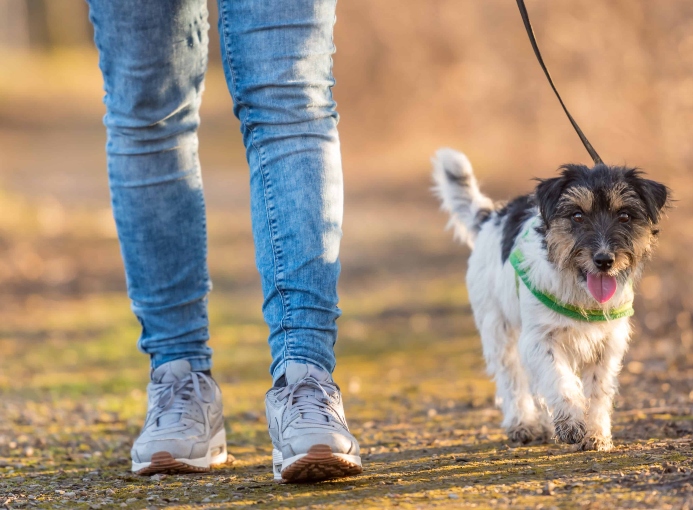
Your arm is sore. Your dog is thrilled. Sound familiar?
Every walk feels like war, and you might be dreading it even more than your dog looks forward to it.
The good news is that pulling isn’t a character flaw. It’s a mix of physics, habit, and a bit of miscommunication. And you can fix it.
But first, it’s important to figure out what problem you’re really dealing with. Not every dog that pulls on the leash has the same reason, and using the same approach for all of them can make things worse.
Two very different dogs, two very different plans
Some dogs pull because walks are the highlight of their day and they’re keen to get moving. Sniffing, chasing squirrels, and seeing other dogs are all exciting for them. This is mainly a training issue.
Other dogs pull, lunge, or bark because something on the walk feels scary, like a stranger, a bike, or another dog. Their leash manners disappear as soon as a trigger shows up, even if they’re usually well-behaved.
That isn’t excitement—it’s reactivity. This needs a gentler and more thoughtful approach.
Many caring owners get stuck by mixing up these two problems. You can’t use the same training for fear as you would for excitement.
So, let’s break this into two parts: one for pullers and one for reactive dogs. Read whichever fits your dog best, or both if you’re unsure.
If your dog is both happy and sometimes reactive, you are not alone. Plenty of dogs pull out because of excitement most of the time, but then react strongly to specific triggers like other dogs or bikes.
In these situations, use the excited-puller training for most of your walk. When you see something that triggers your dog, switch to the gentler, trigger-focused reactivity steps.
Think of it like having a flexible toolkit. Use consistency and training for excitement, and patience and distance for fear or reactivity. With time, your dog will learn how to handle different situations.
Why dogs pull in the first place
There’s something important many people don’t know: dogs have an opposition reflex. If you pull on their neck or chest, their instinct is to pull back. This isn’t defiance.
It’s just biology. When your dog leans into the leash and you pull back, you’re actually teaching them to pull even harder.
Most dogs never learn that staying close to you is rewarding, so it’s no surprise they end up pulling like sled dogs on every walk.
Pulling works for them because it gets them where they want to go faster. Unless you change that, they have no reason to stop.
Equipment: Set your dog up to succeed
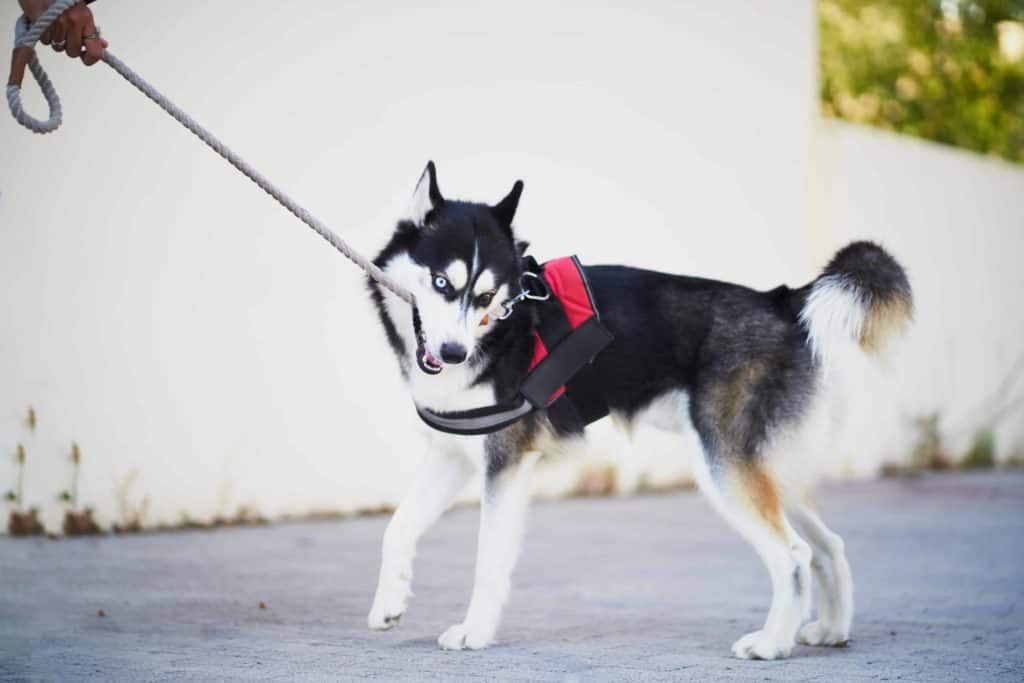
Gear alone won’t solve pulling, but the right setup can make training much easier. Think of it as training wheels, not a complete solution.
Front-clip harness. The leash attaches at the chest, so when your dog pulls, they get gently turned back toward you instead of hurling forward. Great for most pullers.
One downside is that some dogs can still pull if they’re strong or if the harness is too loose. When picking a front-clip harness, choose one that fits your dog’s size and can be adjusted. Go for a snug, secure fit for big or determined dogs, and look for padded straps if your dog is sensitive or small.
If your dog is anxious or easily startled, a lightweight harness with less bulk can help them feel more at ease.
A flat collar is simple and familiar, but it attaches at the neck, which is where the opposition reflex kicks in. It’s fine for dogs who already walk well, but not great for strong pullers since it puts pressure where they naturally resist.
A head halter guides the head, and usually the body follows. It’s helpful for strong dogs, but it takes time for them to get used to wearing it. If you rush the introduction, your dog might spend the whole walk pawing at their face instead of focusing on you.
None of these tools is a magic fix or a replacement for training. They make it a bit easier while you work on the real training.
The step-by-step method for loose-leash walking
This is the track for the excited puller, the dog who wants to get where they’re going.
1. Stop and stand still.
As soon as the leash gets tight, stop walking. Don’t pull or say anything—stand still. Wait for any slack in the leash, even if your dog glances back at you. Once the leash is loose, start walking again. Keep repeating this process.
If your dog never looks back or loosens the leash, no matter how long you wait, don’t worry. Some dogs are very determined or easily distracted so that progress might feel slow.
In these situations, try taking a few slow steps backward to get your dog to turn or look at you. You can also use a squeaky toy or treat to get their attention for a moment.
Reward any sign of a loose leash or attention from your dog, even if it’s small. With patience and some creativity, even stubborn pullers will start to improve.
This process can feel slow at first, and some walks might only go half a block. But you’re teaching a clear rule: a tight leash means you stop, and a loose leash means you keep going. Dogs are smart—they’ll get it.
2. Change direction often.
Don’t just stop—change direction. Walk the other way without warning. This helps your dog pay attention to where you are instead of just pulling ahead. It also interrupts the habit of pulling before it gets worse.
3. Build engagement before you even leave the house.
If your dog is used to checking in with you indoors, they’ll do it outside too. Practice short “look at me” exercises in your yard or living room, and reward your dog for making eye contact or staying close. Walks are much easier when checking in is already a habit.
If you use all three steps together, most dogs will start to improve within a few weeks of short, regular training sessions.
The gentler protocol for leash reactivity
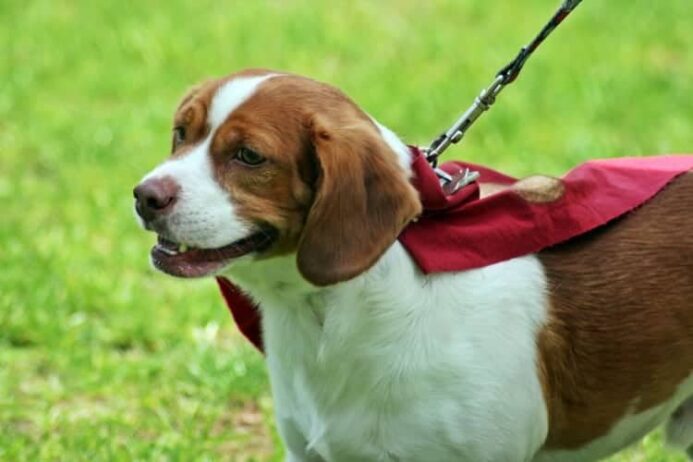
If your dog barks, lunges, or freezes when they see a trigger, skip the stop-and-stand method for now. Reactive dogs aren’t being bad—they’re just overwhelmed. The goal is to help them feel better, not just act differently.
Find the threshold distance.
Every reactive dog has a distance where they can see a trigger and still stay calm. Get too close, and they lose control. That calm distance is called the threshold. Do your training there. If your dog starts barking or lunging, you’re too close—move back until they can relax.
Try BAT (behavior adjustment training).
The main idea is simple: let your dog see the trigger from a safe distance, then reward them for staying calm or move away as a reward. Over time, your dog will learn that seeing a trigger means they get space and calm, not stress. This process is slow and steady, but it helps change how your dog feels, not just how they act.
Master the U-turn.
Sometimes the best thing you can do is avoid a meltdown. If you see a trigger coming and know your dog isn’t ready, turn around cheerfully before things get worse. This isn’t giving up—it’s protecting the progress you’ve made. Every successful U-turn is practice for staying calm.
Play “look at that.”
Point out the trigger, and as soon as your dog notices it without reacting, reward them.
It might seem simple, but it teaches your dog that seeing a trigger means they should look at you, not get upset. Over time, the trigger itself becomes a signal to stay calm.
Working on reactivity takes time. Progress might look like your dog handling a trigger from a little closer, recovering a bit faster, or reacting less. Celebrate these little steps.
When it’s more than just pulling
Sometimes leash problems are a sign of something else. If your dog suddenly starts reacting when they didn’t before, check for pain, a sore hip, dental issues, or an old injury. These can all make your dog irritable on walks.
A vet visit is never a bad first step.
If your dog hasn’t been socialized enough, especially as a puppy, reactivity can show up as fear that looks like aggression.
Noticing these warning signs early can make a big difference in how things turn out.
And if your dog’s reactivity is aimed at people rather than other dogs, that’s its own animal, worth reading up on specifically. Check out our guide on dog aggression toward strangers for a deeper dive.
If you’re unsure, a certified trainer or veterinary behaviorist can save you a lot of time and frustration. There’s nothing wrong with asking for help. It’s not failure—it’s just being a good advocate for your dog.
A realistic timeline
Here’s the truth: one walk won’t fix this, and one week probably won’t either. For excited pullers, loose-leash walking usually starts to work after two to four weeks of steady practice.
Working on reactivity can take months, or even longer, depending on your dog’s past and how strong their fears are.
Sometimes it’s best to get help sooner. If your dog’s pulling or reactivity is getting worse, you feel frustrated or overwhelmed, your dog shows aggression, freezes, shuts down on walks, or you don’t see progress after a few weeks, contact a certified trainer or veterinary behaviorist.
Getting help early might save you and your dog a lot of stress and help you both enjoy walks again sooner.
That’s not a failure on your part. That’s just how learning works for both dogs and people. You wouldn’t expect to run a marathon after one training session, and it’s the same here.
Be patient and consistent. Short, frequent training sessions are better than one long, frustrating walk.
Keep building the foundation
Loose-leash walking is just one part of building a strong relationship with your dog. If you want to learn more, from basic obedience to building trust, check out our dog training 101 guide.
Sara B. Hansen has spent 20-plus years as a professional editor and writer. She’s also the author of The Complete Guide to Cocker Spaniels. She decided to create her dream job by launching DogsBestLife.com in 2011. Sara grew up with family dogs, and since she bought her first house, she’s had a furry companion or two to help make it a home. She shares her heart and home with Nutmeg, a Pembroke Welsh Corgi. Her previous dogs: Sydney (September 2008-April 2020), Finley (November 1993-January 2008), and Browning (May 1993-November 2007). You can reach Sara @ editor@dogsbestlife.com.