
Health alert: 5 questions that expose if your dog is exercise-deprived

Your dog just destroyed another couch cushion. And you’re standing there, staring at the carnage, wondering if you’re the worst dog owner on the planet.
Maybe you’re thinking: “I walked him this morning. I threw the ball for 20 minutes. Why is he still acting like a caffeinated tornado?”
Here’s the thing—that guilt you’re feeling?
It’s not because you’re failing. It’s because nobody ever told you that a 20-minute walk is like giving a Border Collie a single potato chip and calling it dinner.
You’re not doing it wrong. You didn’t get the manual that explains how much exercise your dog needs.
The uncomfortable truth about dog exercise
- The uncomfortable truth about dog exercise
- Energy level assessment quiz
- Breed-by-breed exercise requirements
- Working breeds (60-90 minutes, but it’s complicated)
- Adapt exercise to the weather
- Signs your dog is under-exercised
- Signs your dog is over-exercised
- The Goldilocks Principle: Get exercise just right
- Tools and tech that help
- Common exercise challenges (and how to solve them)
- Create your dog’s custom exercise plan
- The permission you didn’t know you needed
Here’s what most dog training books won’t tell you: the amount of daily exercise your dog needs isn’t just about how much exercise your dog needs in general.
It’s about what breed is living in your house, what their ancestors were designed to do, and whether you’ve accidentally adopted an athlete when you thought you were getting a couch companion.
A Greyhound and a Husky both need exercise.
But the dogs need it in entirely different ways, for various durations, and with different intensities.
If you give them the same exercise routine, one will be perfectly content while the other plots your demise through strategic furniture destruction.
Energy level assessment quiz
Before we dive into breed-specific requirements, let’s figure out where your dog actually falls on the energy spectrum.
Answer these questions honestly—no judgment, just data.
1. When you come home, your dog:
A) Wags their tail, says hello, then goes back to napping
B) Greets you enthusiastically for a minute or two, then settles
C) Acts like you’ve been gone for 17 years and bounces off the walls for 20+ minutes
D) Literally cannot contain themselves and may actually vibrate with energy
2. After a 30-minute walk, your dog:
A) Is ready for a solid nap
B) Seems content and relaxed
C) Still has energy but isn’t destructive
D) Acts like you just did a warm-up and is ready for the real exercise
3. Your dog’s default state during the day is:
A) Sleeping or lounging 80% of the time
B) Resting but alert, occasional play
C) Frequently checking in with you, looking for activities
D) Constantly moving, pacing, or seeking stimulation
4. Without enough activity, your dog:
A) Sleeps more
B) Gets a little restless but manageable
C) Whines, paces, or becomes attention-seeking
D) Becomes destructive, hyperactive, or develops behavior problems
5. Your dog’s breed background is:
A) Companion or toy breed
B) Working breeds with moderate energy (retrievers, some terriers)
C) Herding or sporting breed
D) High-drive working breed (Malinois, Cattle Dogs, Huskies)
Your Results:
Mostly A: Low Energy (30-60 minutes daily)
Your dog is a couch potato with legs. Think Bulldogs, Basset Hounds, Shih Tzus, and senior dogs. They’re happy with leisurely walks and low-impact activities.
Mostly B: Moderate Energy (60-90 minutes daily)
Your dog needs regular exercise, but won’t lose their mind if you skip a day here and there. Many Labradors, Beagles, and Cocker Spaniels fall here.
Mostly C: High Energy (90-120 minutes daily)
Your dog was built to work. Border Collies, Australian Shepherds, and Vizslas live here. They need both physical and mental exercise.
Mostly D: Extreme Energy (2+ hours daily)
You’ve got an athlete. Belgian Malinois, German Shepherds, and Siberian Huskies need serious, structured exercise or they’ll redecorate your home with their teeth.
Breed-by-breed exercise requirements
Let’s get specific. Because “take your dog for a walk” is about as helpful as “eat food” when you’re trying to figure out dinner.
Low energy breeds (30-60 minutes daily)
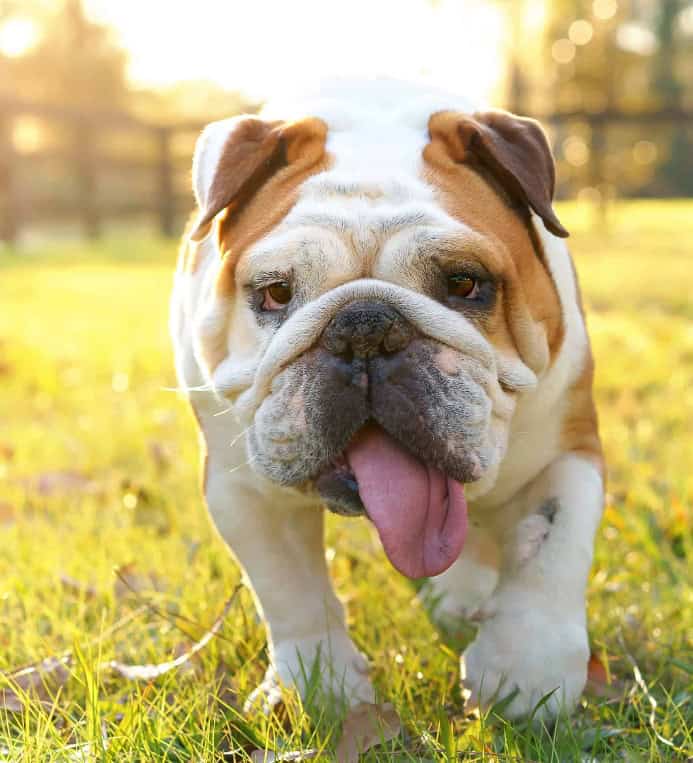
Bulldogs (English & French)
Exercise needs: Two 15-minute walks, gentle play
What they need: Short bursts, avoid heat
Red flag: They overheat easily—panting excessively means stop immediately
Basset Hounds
Exercise needs: 30-45 minutes of sniffing walks
What they need: Mental stimulation through scent work
Perfect for: Owners who want companionship without marathon training
Shih Tzus, Maltese, Cavalier King Charles Spaniels
Exercise needs: 30 minutes of gentle activity
What they need: Indoor play, short walks, companionship
Bonus: They’re happy to match your energy level
Pugs
Exercise needs: Two 15-20 minute walks
What they need: Temperature-controlled exercise (no extreme heat)
Watch for: Breathing difficulties during activity
Moderate energy breeds (60-90 minutes daily)
Labrador Retrievers
Exercise needs: 60-90 minutes of varied activity
What they need: Swimming, fetch, walks with purpose
Reality check: That “lazy” Lab destroying your house isn’t lazy—they’re under-exercised
Golden Retrievers
Exercise needs: 60-90 minutes, including mental work
What they need: Retrieving games, swimming, training sessions
They’re happiest: When exercise includes a job to do
Beagles
Exercise needs: 60 minutes minimum, scent-focused
What they need: Long sniff walks, tracking games
Warning: A bored Beagle will howl, dig, and escape
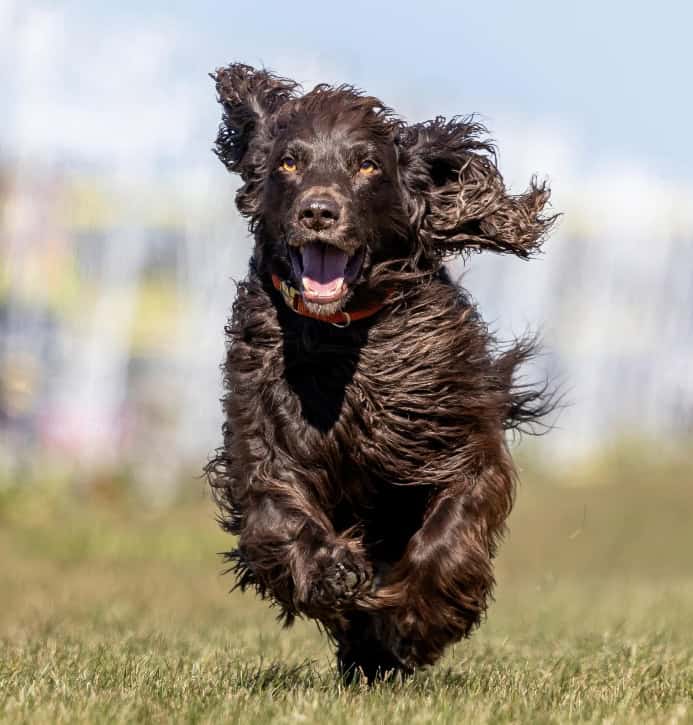
Cocker Spaniels
Exercise needs: 60 minutes of moderate activity
What they need: Walks, gentle hikes, fetch
Sweet spot: Enough to tire them but not extreme endurance
Boxers
Exercise needs: 60-90 minutes of vigorous activity
What they need: Running, playing, high-energy games
They’re perpetual: Puppies until age 3, need consistent outlets
High energy breeds (90-120+ minutes daily)
Border Collies
Exercise needs: 2+ hours of physical AND mental exercise
What they need: Agility, herding activities, advanced training, problem-solving
Harsh truth: A walk won’t cut it. They need jobs.
Australian Shepherds
Exercise needs: 90-120 minutes of intense activity
What they need: Running, hiking, dog sports, trick training
Without it: They’ll herd your children, cats, and furniture
German Shorthaired Pointers and Vizslas
Exercise needs: 90-120 minutes of running
What they need: Off-leash sprinting, hiking, and swimming
They’re built: For endurance hunting—your jog is their warm-up
Siberian Huskies and Alaskan Malamutes
Exercise needs: 2+ hours, preferably pulling or running
What they need: Mushing, bikejoring, long-distance running
Non-negotiable: They were bred to run 100+ miles. Act accordingly.
Jack Russell Terriers
Exercise needs: 60-90 minutes of high-intensity activity
What they need: Fast-paced games, digging opportunities, chase activities
Small but mighty: Don’t let their size fool you—they’re tireless
Belgian Malinois
Exercise needs: 2-3 hours of intense, structured work
What they need: Protection training, agility, advanced obedience, and real jobs
Real talk: If you’re not experienced, reconsider this breed
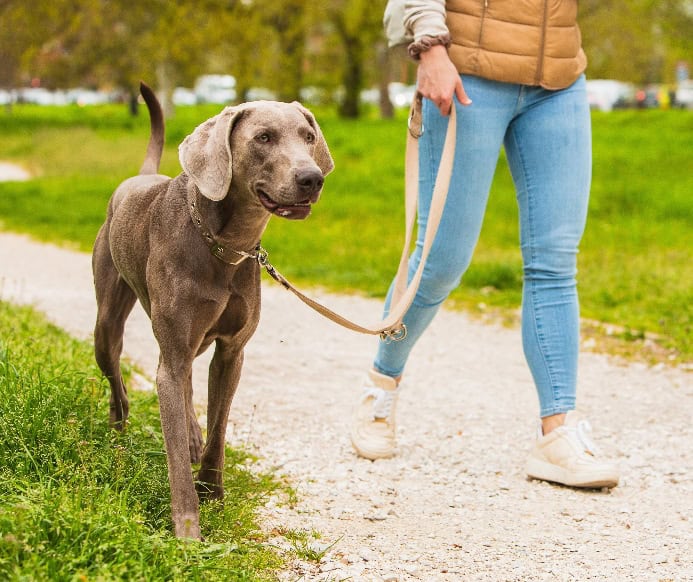
Weimaraners
Exercise needs: 90-120 minutes of vigorous exercise
What they need: Running, hunting activities, constant companionship
Nickname: “Velcro dogs” who need both exercise and attention
Dalmatians
Exercise needs: 90+ minutes of running
What they need: Long-distance running (they were bred to run alongside carriages)
Not ideal: For apartment living or sedentary owners
Working breeds (60-90 minutes, but it’s complicated)
Rottweilers
Exercise needs: 60-90 minutes of purposeful activity
What they need: Structured walks, weight pulling, training
Important: Mental stimulation matters as much as physical
Great Pyrenees and livestock guardians
Exercise needs: 45-60 minutes of patrolling-style walks
What they need: Space to roam and survey, not intense cardio
Unique: They’re marathoners, not sprinters—bred for endurance, not speed
German Shepherds
Exercise needs: 90+ minutes, including training
What they need: Variety—walks, runs, obedience, problem-solving
They excel: When exercise includes a purpose or job
Adapt exercise to the weather
Your adult dog still needs exercise in extreme weather. But the rules change.
Hot weather (above 80°F)
Pavement test: If you can’t hold your hand on it for 7 seconds, it’s too hot for paws.
Exercise early morning or late evening. Cut duration in half for flat-faced breeds.
Swimming is ideal—exercise without overheating.
Danger signs: Excessive drooling, bright red tongue, stumbling. Stop immediately.
Cold weather (below 32°F)
Small dogs and short-coated breeds need jackets. Protect paws from salt with booties or balm.
Shorter, frequent outings beat one long frozen walk.
Watch for limping, shivering, or reluctance. Dry them thoroughly after the snow.
Rainy day alternatives
Your high-energy dog doesn’t care about rain. Get creative: indoor fetch, treadmill training, nose work games, or obstacle courses with furniture.
Rainy day sessions: Tire your dog mentally. Flirt poles let them chase indoors.
Extreme weather isn’t an excuse to skip exercise. It’s a reason to get creative.
Signs your dog is under-exercised
Your dog is trying to tell you something. Here’s how to decode the message.
Behavioral red flags:
- Destructive chewing (furniture, shoes, walls)
- Excessive barking or whining without a clear cause
- Hyperactivity that doesn’t decrease with age
- Attention-seeking behaviors that escalate
- Pacing or restlessness throughout the day
- Digging (inside or outside)
- Escaping or fence jumping
- Aggression or reactivity that seems to worsen
- Inability to settle even when you’re home and calm
Physical signs:
- Weight gain despite normal eating
- Decreased muscle tone
- Stiffness when they do exercise (from inconsistent activity)
- Excessive energy late at night (the “zoomies” every single evening)
The guilt-free truth:
If you’re seeing these signs, it doesn’t mean you’re a terrible person.
It means you now have information you didn’t have before. That’s different.
Signs your dog is over-exercised
Yes, this is a thing. And it’s more common than you think, especially with high-energy breeds where owners believe “more is always better.”
Physical warning signs
- Excessive panting that doesn’t resolve with rest
- Limping or stiffness after exercise
- Reluctance to exercise (refusing walks, lagging behind)
- Worn or damaged paw pads
- Extreme fatigue that lasts for days
- Muscle soreness (yelping when touched)
- Dehydration (dry gums, excessive thirst)
Behavioral warning signs
- Irritability or aggression (pain-related)
- Sleeping excessively (more than normal for their breed)
- Decreased appetite after exercise
- Withdrawing from activities they usually enjoy
The danger zone
- Heatstroke symptoms: Heavy panting, drooling, red gums, vomiting, collapse
- Joint damage: Especially in young dogs whose growth plates haven’t closed
- Chronic stress: Elevated cortisol from never having true rest days
Who’s most at risk
- Puppies under 18 months (growth plates still developing)
- Brachycephalic breeds (Bulldogs, Pugs—breathing issues)
- Senior dogs (arthritis, reduced stamina)
- Dogs in extreme weather (heat above 80°F, cold below 20°F)
The Goldilocks Principle: Get exercise just right
So how do you know if you’ve hit the sweet spot? Your dog should:
- Settle calmly after exercise within 30-60 minutes
- Sleep soundly without restless pacing
- Show enthusiasm for the next walk or activity
- Maintain healthy weight and muscle tone
- Display good behavior throughout the day
- Recover quickly (not limping or exhausted the next day)
It’s not just duration, it’s quality
Here’s what makes the difference between exercise that actually works and exercise that’s just going through the motions:
Mental stimulation counts as exercise. A 20-minute training session can tire a Border Collie more than an hour-long walk, during which their brain is on autopilot.
Sniffing is exercise. Letting your Beagle sniff on a walk engages their brain and satisfies their instincts. It counts.
Variety matters. The same route every day becomes background noise. Switch it up.
Intensity beats duration sometimes. Ten minutes of fetch can accomplish more than thirty minutes of slow walking for some breeds.
Rest days are essential. Even high-energy dogs need recovery time. Muscles grow during rest, not during work.
Tools and tech that help
You don’t need fancy gadgets. But if you thrive on data or accountability, these help.
Activity trackers like FitBark, Whistle, and Fi monitor activity levels and sync to your phone. Best for data-driven owners.
Training apps like Dogo and Puppr offer structured exercises that mentally tire dogs.
Interactive toys—automatic ball launchers, flirt poles, puzzle feeders—supplement exercise when you can’t actively engage.
The reality: No tracker walks your dog for you. But they reveal patterns and hold people accountable.
Common exercise challenges (and how to solve them)
What if my dog refuses to exercise?
Some dogs are genuinely stubborn. Others are bored, in pain, or overheated.
Check for health issues first. Then make exercise more appealing: switch routes, bring high-value treats, invite a dog friend, or try a different activity entirely. Sometimes “stubborn” means “this isn’t working for me.”
What if I have multiple dogs with different energy levels?
Exercise them separately when possible. Your Husky needs a run, while your senior Pug needs a gentle stroll—forcing them into the same routine serves neither. Alternatively, tire the high-energy dog first, then take a calmer walk with both.
What if my dog is recovering from injury or surgery?
Follow your vet’s guidance strictly. Start with short, controlled leash walks. Avoid jumping, running, or rough play.
Mental stimulation becomes critical—puzzle toys, gentle training, and sniff work tire them without physical strain. Boredom during recovery leads to setbacks.
What if I’m physically unable to meet my dog’s exercise needs?
Hire a dog walker, use doggy daycare, or enlist a friend or neighbor. Flirt poles, fetch, and treadmill training let dogs exercise hard while you stay stationary. Mental enrichment also counts—a tired brain is a tired dog.
What if my dog gets enough exercise but still acts hyper?
You might be over-stimulating without providing rest. Dogs need downtime to process and recover. Teach “settle” or “place” commands.
Create a calm environment. Sometimes the problem isn’t too little exercise—it’s too little sleep.
Create your dog’s custom exercise plan
Take your breed requirements, factor in your dog’s age and health, and build something sustainable for your life.
Low-energy breeds
- Two short walks daily
- Indoor play sessions
- Gentle mental enrichment
Moderate-energy breeds
- One longer walk (30-45 minutes)
- One shorter walk or play session
- Weekly swimming or hiking
High-energy breeds
- Morning run or intense play (45-60 minutes)
- Evening walk or training (30-45 minutes)
- Daily mental work (puzzle toys, training)
- Weekend adventure (hiking, dog sports)
Extreme-energy breeds
- Morning structured exercise (60+ minutes)
- Midday mental stimulation
- Evening physical activity (45+ minutes)
- Regular participation in dog sports or working activities
The permission you didn’t know you needed
You don’t have to be perfect. You don’t have to run marathons with your dog every single day.
Don’t feel guilty on the days when life gets in the way, and the walk is shorter than ideal.
What you do need to do is understand your dog’s specific needs, create a realistic plan that works for both of you, and adjust when you notice signs that something’s off.
Your dog isn’t judging you for not being enough. They’re just asking, in the only language they have, for what their genetics are demanding.
Now you know how to answer.
Sara B. Hansen has spent 20-plus years as a professional editor and writer. She’s also the author of The Complete Guide to Cocker Spaniels. She decided to create her dream job by launching DogsBestLife.com in 2011. Sara grew up with family dogs, and since she bought her first house, she’s had a furry companion or two to help make it a home. She shares her heart and home with Nutmeg, a Pembroke Welsh Corgi. Her previous dogs: Sydney (September 2008-April 2020), Finley (November 1993-January 2008), and Browning (May 1993-November 2007). You can reach Sara @ editor@dogsbestlife.com.