
Hidden household dangers for your dog: A room-by-room safety guide

You childproofed the outlets. You moved the cleaning spray under the sink to a higher shelf. You think you have this entire “safe home” thing handled.
But here’s the unpleasant truth: your dog is basically a furry toddler with worse impulse control and a much better sense of smell. And your house? It’s full of things that could hurt, sicken, or even kill them, hiding in plain sight.
This isn’t meant to scare you into a panic spiral. It’s meant to wake you up. Because the dog parents who think “my house is totally safe” are often the ones googling emergency vet numbers at 2 a.m. Let’s walk through your home, top to bottom and room by room, and find the dangers before your dog does.
The kitchen is more of a minefield than you realize
You probably already know chocolate is bad for dogs. Gold star. But the kitchen has a whole lineup of villains that don’t get nearly enough attention.
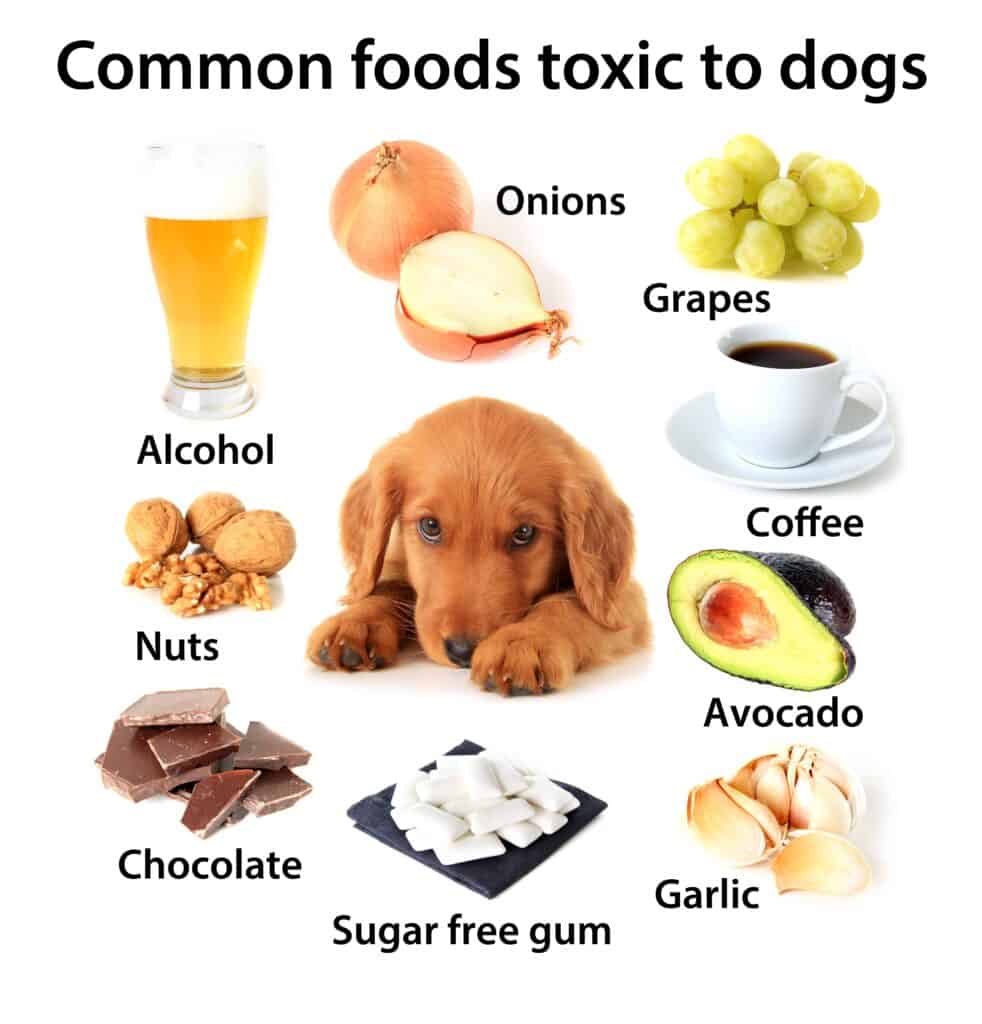
Xylitol should genuinely terrify you. This sugar substitute hides in peanut butter, sugar-free gum, certain vitamins, and even some toothpaste.
A tiny amount can cause a dangerous drop in blood sugar and liver failure in dogs, sometimes within thirty minutes. Thirty minutes.
That’s barely enough time to finish your coffee, let alone notice something’s wrong. Always check the label before you let your dog lick that peanut butter spoon.
Surprising toxin: xylitol
It’s not just in gum anymore. Read the ingredients on your peanut butter jar right now. Seriously, go check.
Grapes and raisins are another quiet menace. Nobody fully understands why they cause kidney failure in some dogs, but the unpredictability is exactly what makes them dangerous. One dog eats a handful and is fine. Another eats two grapes and ends up in the ER.
Why gamble? If your dog eats grapes or raisins, watch for early signs like vomiting, lethargy, or loss of appetite—these can appear within a few hours and are your cue to take your dog to the vet immediately.
Onions and garlic, whether raw, cooked, or powdered, damage red blood cells over time. That seemingly harmless bit of seasoned chicken you dropped on the floor? Not so harmless.
And macadamia nuts cause weakness, vomiting, and tremors that can knock a healthy dog off its feet within hours.
Then there’s the stuff that isn’t food at all. Cleaning products under the sink smell like nothing to you, but to a dog’s nose, they might as well be a dinner bell. Use a lidded trash can.
Non-food hazards and counter surfing

Store cleaners up high, not just behind a cabinet door your dog could nose open. Treat your kitchen like the danger zone it actually is.
And don’t let counter surfing fool you into thinking it’s just a cute quirk. You know the move: your dog stands on their hind legs, eyeing whatever’s on the counter like it’s their personal buffet.
Without supervision, that buffet can include anything from a stick of butter to an overlooked bottle of pills.
The good news? You can teach your dog to stay off the counters with a few simple techniques. Start by never feeding your dog from the counter or table, so they learn that nothing good comes from jumping up.
If you catch them in the act, calmly redirect them to a different behavior, such as sitting or going to their bed, and reward them when they do so. You can also set them up for success by keeping counters clear and providing puzzle toys or chews to keep them busy elsewhere.
Train your dog to stay off counters, and keep food pushed back rather than perched on the edge as an invitation.
The living room: Not the cozy bubble you assume
This is the room where you relax, and it’s also the room where your guard tends to drop the most.
Houseplants are a classic trap. That gorgeous pothos or peace lily on your windowsill? Toxic to dogs. So are lilies, poinsettias, philodendrons, and several other common decorative plants.
Before you bring home a new plant, ask yourself: is this worth a possible visit to the vet?
If you’re not sure, look it up first. If you want to add some greenery without worrying about your dog’s safety, consider spider plants, Boston ferns, African violets, or prayer plants. These are generally considered non-toxic to dogs and can brighten your space without hidden risks.
Electrical cords are another underrated hazard. Puppies in particular love to chew, and a mouthful of live wire can cause burns or worse. Tuck cords away, use cord protectors, or redirect your pup to a preferred chew toy the moment you catch them eyeing the wires. It takes five minutes and saves you a nightmare.
Small toys and choking hazards deserve a hard look too. That stray Lego, the rubber band, the kids’ action figure with the detachable head.
Dogs don’t read warning labels. If it fits in a mouth, assume it’s fair game. Keep a tidy, designated toy zone and regularly sweep the floor for anything small enough to get swallowed.
Beware potential fire hazards
Candles deserve a mention too. A curious tail swipe near an open flame is how house fires start, and the wax itself can upset a dog’s stomach if ingested. Use flameless candles when your dog has the run of the room, or keep real ones well out of reach.
Open windows and balconies round out the list of living room blind spots. Dogs can leap further than you’d expect or lose their footing, and a fall from height is no small thing.
Secure screens on every window your dog can reach, and use baby gates or barriers to block unsupervised access to the balcony.
While we’re on the subject of comfort, think about your fireplace or space heater too.
Dogs love to lie near warmth, but getting too close means real burn risk. Install a gate or screen, and don’t let “cozy” turn into “careless.”
The bathroom: Hides more danger than the kitchen
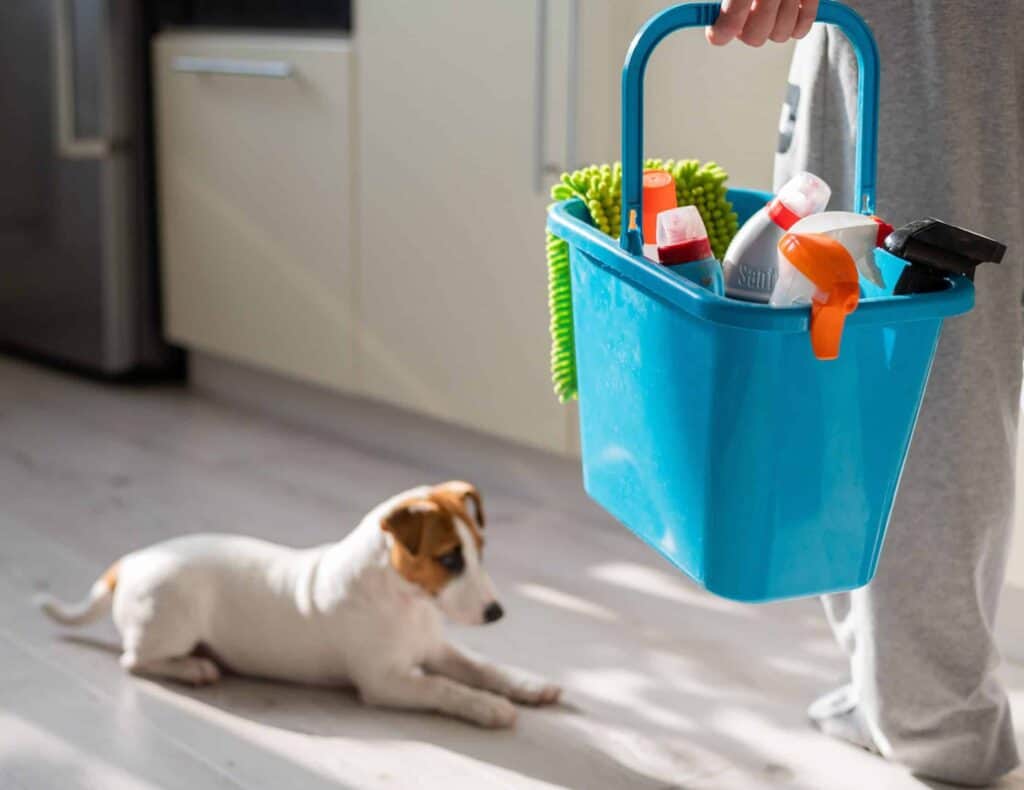
Here’s where things get genuinely scary, because bathrooms are full of small, potent items designed for human bodies, not 60-pound ones with completely different metabolisms.
Medications are public enemy number one. Tylenol and Advil are common painkillers in human medicine cabinets, and both are seriously toxic to dogs. Even a single tablet can cause liver damage or worse, depending on your dog’s size.
Never assume “it’s just one pill, what’s the harm.” The harm is real, and it happens fast. The same goes for prescription medications left on a counter after a sick day. Keep everything on a high shelf or in a locked cabinet, and make it a routine, not an afterthought.
Toilet bowl cleaners are another sneaky threat. Some dogs treat the toilet like a personal water fountain (we’ve all seen it, we’ve all cringed). If you use bleach-based or chemical cleaners, that “fountain” becomes a toxic soup. Keep the lid down. It’s a small habit that prevents a big problem.
Razors, bobby pins, and floss might seem too minor to mention, but think about it: would you want your dog swallowing a sharp blade or a string that can wrap around their intestines? Didn’t think so. Close those drawers.
Button batteries deserve a special callout here, too, since many end up loose in bathroom drawers alongside hearing aids, thermometers, and other small electronics.
They look harmless, but if swallowed, they can cause severe internal burns fast. Store batteries somewhere your dog can’t sniff them out, and check again before handing over any battery-powered gadget as a chew toy.
The garage: A chemistry lab your dog shouldn’t enter
If there’s one room that deserves a giant caution sign, it’s the garage.
Antifreeze is the single most dangerous substance most people keep at home, and here’s the catch: it tastes sweet to dogs. They’ll lap it up willingly, not knowing it’s shutting down their kidneys as they drink.
Even a small puddle on the garage floor can be lethal. Clean up spills immediately and store antifreeze in a sealed, high container your dog can’t reach, no exceptions.
Motor oil, pesticides, and rodenticides round out the garage’s rogues’ gallery. These chemicals are designed to be deadly to pests, and a dog’s body doesn’t know the difference between “pest” and “pet.” Store them in locked cabinets, not just on a shelf.
And don’t forget the tools themselves: sharp edges, small screws, nails on the floor. A garage is a workspace built for humans, not a play area for paws. If your dog has access to the garage, treat it like a hazard zone, because that’s exactly what it is.
The backyard: Looks innocent, but don’t be fooled
Fresh air and green grass feel safe, right? Wrong. Yards are loaded with risks that masquerade as harmless scenery.
Sago palms are deceptively pretty and devastatingly toxic. Every part of the plant is dangerous, but the seeds are especially potent and can cause liver failure.
Azaleas and tulip bulbs are equally concerning, capable of causing everything from vomiting to heart problems depending on how much your dog eats. Before you plant anything, do a quick search for whether it’s toxic to dogs. It takes thirty seconds and could save you an emergency vet bill.
Fertilizers and lawn treatments are another hidden trap. They might make your grass look magazine-worthy, but many contain chemicals that irritate paws and, if licked off or ingested directly, cause much bigger problems. Always check how long you need to keep your dog off treated grass.
Standing water, whether it’s an abandoned bucket, a stagnant birdbath, or a puddle near a chemical spill, harbors bacteria, parasites, or toxins.
Dogs aren’t picky about where they drink when they’re thirsty. Empty standing water regularly and give them a clean bowl instead.
The laundry room: Small but underestimated
Nobody thinks of the laundry room as dangerous. That’s exactly the problem.
Detergent pods are one of the biggest, most overlooked threats in the whole house. They’re colorful, squishy, and look almost like a chew toy to a curious dog.
A bite releases concentrated chemicals that can cause chemical burns in the mouth and throat, plus vomiting and breathing difficulty.
Store them in a closed cabinet, not in a basket on the floor where a wagging tail constantly brushes past.
Fabric softener sheets seem harmless, almost like fabric. They’re not. They contain cationic detergents that can cause oral and stomach irritation if chewed or swallowed. Keep the box closed and out of paw’s reach.
It’s a small room, but don’t let its size fool you into thinking it’s low risk. Sometimes the smallest spaces hold the sneakiest dangers, and that goes for chemical spills generally.
Even a small puddle of cleaner or detergent left on the floor anywhere in the house deserves an immediate cleanup, not a “I’ll get to it later.”
Don’t forget the human factor
Not every danger is a substance or an object. Sometimes the risk is simply a lack of eyes on the situation. Leaving a dog unattended with young kids or other pets can quickly spiral out of control, even with the best-behaved animals.
Excitement builds, boundaries blur, and accidents happen. Supervise interactions, especially with young children, and step in before things escalate rather than after.
It’s also worth thinking through the unthinkable: what would happen if a fire broke out while you were away?
Include your pets in your household emergency plan. Make sure smoke detectors work, practice an evacuation route that accounts for your dog, and consider posting a window decal to alert firefighters that a pet is inside.
A few minutes of planning now could make all the difference later.
You could also purchase a product like the Rescue Retriever smoke detector, which emits a strobe light to help firefighters locate your dog in thick smoke.
What to do if your dog eats something dangerous
Stay calm. Panicking helps nobody, least of all your dog. If you catch your dog eating or licking something questionable, call for help immediately rather than waiting to see what happens.
Emergency contact
ASPCA Animal Poison Control: (888) 426-4435
Have this number saved in your phone right now. Not “I’ll do it later.” Now. While you’re thinking about it.
When you call, have the product packaging or plant name on hand, along with your dog’s weight and the time elapsed since exposure.
Don’t try to induce vomiting unless a professional specifically tells you to, since some substances cause more damage coming back up than staying down. Time matters more than almost anything else in these situations, so don’t wait around hoping it resolves on its own.
If you can’t reach a vet or poison control right away, keep your dog calm, prevent them from eating more of the substance, and don’t offer food or water unless directed otherwise.
Gather any remaining packaging or evidence, and monitor your dog closely for changes in behavior or symptoms. If your dog’s breathing, consciousness, or ability to walk seems affected, get them to the nearest open veterinary clinic as quickly as possible.
Your quick home safety audit
Want to know if your home actually passes the test? Walk through it right now with these questions in mind.
- Is the trash can lidded and out of nose range?
- Are cleaning products, medications, and detergent pods stored in closed, high cabinets rather than just tucked behind a door?
- Have you checked every houseplant and yard plant against a list of dog-safe options?
- Are electrical cords managed, and are candles kept out of reach of paws and tails?
- Are windows screened, and are balconies blocked off to prevent unsupervised access?
- Is antifreeze sealed and stored well above ground level?
- Do you keep the toilet lid down, and are batteries stored somewhere your dog can’t reach?
- Is your yard free of standing water and recently treated grass?
- Does your family have an emergency plan that includes your dog?
If you answered no to even one of these, you’ve got a project for this weekend. And that’s OK.
Final thoughts on in-home dangers
Nobody gets this perfect on the first try.
The goal isn’t to achieve some impossible standard of flawless dog-proofing. The goal is to notice the risks, fix what you can, and stay alert to the rest.
Every minor change you make makes your dog’s home safer, and that really does add up. Celebrate every improvement—your efforts matter far more than perfection.
Your dog trusts you completely. They have no idea that the antifreeze puddle is dangerous or that the grape on the floor could hurt them.
They see their world, and they assume it’s safe because you’re in it. That trust is kind of a big deal, isn’t it? So do the walkthrough.
Lock the cabinets. Move the cords. Save the number in your phone. It’s a small effort that stands between an ordinary Tuesday and a terrifying trip to the emergency vet.
Your home can absolutely be a haven. It just takes a little intention to get it there.

Sara B. Hansen has spent 20-plus years as a professional editor and writer. She’s also the author of The Complete Guide to Cocker Spaniels. She decided to create her dream job by launching DogsBestLife.com in 2011. Sara grew up with family dogs, and since she bought her first house, she’s had a furry companion or two to help make it a home. She shares her heart and home with Nutmeg, a Pembroke Welsh Corgi. Her previous dogs: Sydney (September 2008-April 2020), Finley (November 1993-January 2008), and Browning (May 1993-November 2007). You can reach Sara @ editor@dogsbestlife.com.