
Don’t make 7 spring cleaning mistakes that put your dog in danger

Ever find yourself standing in the cleaning aisle, staring down at a bottle of lemon-scented floor cleaner and thinking, “This stuff will make my house sparkle—but what is it safe for my dog?”
Keeping your home spotless while keeping your pup safe feels a lot like walking a tightrope with a mop in one hand and a ball of anxiety in the other. It’s a mess of worry, guilt, and a desperate hope that you’re not making things worse with every swipe of the sponge.
Here’s the deal: you want a clean house. You want a healthy, happy dog.
But the two goals? Sometimes, they’re at war. It’s exhausting, right? You might catch yourself thinking, “Am I the only one who feels like a terrible dog parent for wanting to bleach my bathroom?”
You’re definitely not alone. We’re all just muddling through the same mess, hoping not to screw it up along the way.
Let’s get real about spring cleaning dangers for dogs.
We’ll tackle the big mistakes, shoot straight about what’s risky, and—yes—offer up ways to keep your house fresh without endangering the one who thinks your smelly socks are the best thing ever. Here’s what you need to know, and what to do next.
Importance of safe spring cleaning with dogs at home
- Importance of safe spring cleaning with dogs at home
- Mistake 1: Using toxic cleaners around pets
- Mistake 2: Not properly storing cleaning products
- Mistake 3: Leaving cleaners within reach of dogs
- Mistake 4: Using harsh chemicals on surfaces that dogs contact
- Mistake 5: Ignoring pet safe product options
- Mistake 6: Not rinsing surfaces thoroughly after cleaning
- Mistake 7: Not knowing what to do if your dog gets into something dangerous
- Pet poisoning warning signs
- Create a dog-safe cleaning routine
- Avoid making spring cleaning mistakes
- Spring cleaning doesn’t have to threaten your dog
Spring cleaning isn’t just about sparkling windows and air that smells like fresh linen. It’s about establishing a space where you—and your dog—can breathe easy.
But here’s the catch: most of those “miracle” cleaning products? They weren’t made with your dog in mind.
The stuff that blasts through soap scum and annihilates kitchen grease? It might just nuke your dog’s health, too.
Your dog’s world is closer to the floor. Their nose is a thousand times more powerful than yours.
Their tongues? Always on standby for a lick test. That means what’s left behind after cleaning isn’t just a residue—it’s a potential hazard, a quiet threat with a cherry scent.
So, safe spring cleaning isn’t just “nice to have.” It’s non-negotiable if you want to avoid a trip to the vet that ends with you Googling, “emergency pet poison hotline.”
Mistake 1: Using toxic cleaners around pets
Let’s call it what it is: most cleaning products are chemical cocktails. Bleach, ammonia, phenols—these are not dog-friendly.
They’re not even human-friendly in large doses. But for dogs? A little goes a long way, straight to disaster.
Maybe you like that squeaky clean smell.
But if you’re using products with words like “hazardous,” “corrosive,” or “fatal if swallowed,” you’re gambling with your dog’s health.
Even “green” cleaners aren’t all safe—some essential oils are toxic to dogs. Think tea tree, pine, and citrus.
So, check those labels. If you can’t pronounce it, there’s a good chance your dog’s liver can’t process it.
What to do instead? Look for pet-safe cleaning products or whip up a DIY cleaner.
Try mixing 1 cup of white vinegar with 1 cup of water in a spray bottle. For extra cleaning power, sprinkle baking soda on tough messes before spraying and wiping clean.
This simple blend lifts dirt and neutralizes odors—no harsh chemicals needed, and it’s safe for your dog’s paws and nose.
Mistake 2: Not properly storing cleaning products
You have that moment when you get interrupted mid-clean and leave a bottle of cleaner sitting on the counter? Or maybe you keep your sprays under the sink, doors wide open, trusting your dog won’t get curious.
Spoiler: Dogs are curious. And bored. And sometimes, just plain trouble.
Even a tightly sealed bottle isn’t dog-proof.
Chewers can gnaw through plastic. Leaks happen. And a nosy snout can find its way into all sorts of trouble.
The solution? Store all cleaning supplies up high or behind latched doors. Keep them out of sight. Out of sniffing range. Out of your dog’s life.
Mistake 3: Leaving cleaners within reach of dogs
Dogs don’t read warning labels. If it’s on the ground, it’s fair game.
That spray bottle you left by the toilet? It could become a chew toy.
The bucket of mop water you turned your back on? It could be a water bowl.
Don’t underestimate your dog’s ability to get into things—especially when you’re distracted.
Always keep bottles, sponges, and buckets out of reach. For the love of dogs, never leave a room with toxic stuff lying around. It only takes a second for disaster to strike.
Mistake 4: Using harsh chemicals on surfaces that dogs contact
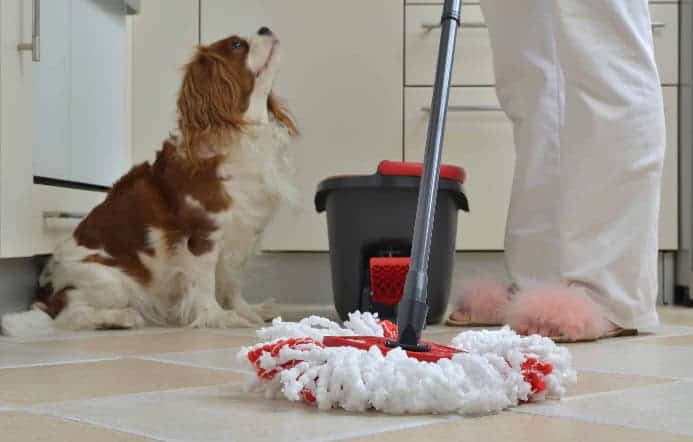
Here’s a gut punch: that shiny, streak-free floor might look amazing, but if you used ammonia, bleach, or strong disinfectants, it’s now a landmine for your dog’s paws and belly.
Dogs walk, sit, and sprawl right where you clean. Then they lick their paws. The result? Poison ingestion by paw.
Swap out the harsh stuff for gentle, pet-safe alternatives.
And remember, “hospital-grade” doesn’t mean “safe for dogs.” It just means it kills germs. Sometimes, it can do a number on your best friend, too.
Mistake 5: Ignoring pet safe product options
There’s a reason pet-safe cleaners exist. They’re not just a marketing gimmick. They’re actually formulated to be safer for animals who live on the floor and taste-test everything.
So if you’re skipping these because you think they’re not tough enough—think again.
Most pet-safe products can handle the messes dogs dish out. And if you’re not sure, test them on a small patch first.
Don’t let perfectionism get in the way of your dog’s safety. A little more elbow grease is a small price to pay for peace of mind.
Mistake 6: Not rinsing surfaces thoroughly after cleaning
Even with a safer product, residue is still a thing.
If you mop and let it dry without rinsing, there’s a film left behind—one your dog will walk on, roll in, and lick off later. It’s invisible, but not harmless.
Always follow up with a rinse of plain water. Yes, it’s an extra step. Yes, it’s a pain. But it could be the difference between a healthy pup and a midnight emergency.
Mistake 7: Not knowing what to do if your dog gets into something dangerous
Let’s say the worst happens. You turn your back for a minute, and your dog licks up a puddle of cleaner or chews a cap off a bottle.
Panic sets in. Time slows down. What now?
First, don’t wait for symptoms. Call your vet or the Animal Poison Control Center immediately. Have the product label handy.
Don’t try to make your dog vomit unless your vet tells you to. And whatever you do, don’t go down the Google rabbit hole. Time is of the essence.
While you’re at it, keep the number for animal poison control on your fridge.
Program it into your phone.
Hope you never need it, but be glad you have it if you do.
Pet poisoning warning signs
Be on the lookout for these signs of poisoning if you think your dog may have come into contact with a toxic cleaner:
- Excessive drooling
- Vomiting or diarrhea
- Lethargy or sudden weakness
- Loss of appetite
- Unsteady walking or tremors
- Excessive paw licking or face rubbing
- Seizures
- Trouble breathing
If you notice any of these signs, contact your vet or Animal Poison Control immediately. Acting quickly can make all the difference.
Create a dog-safe cleaning routine
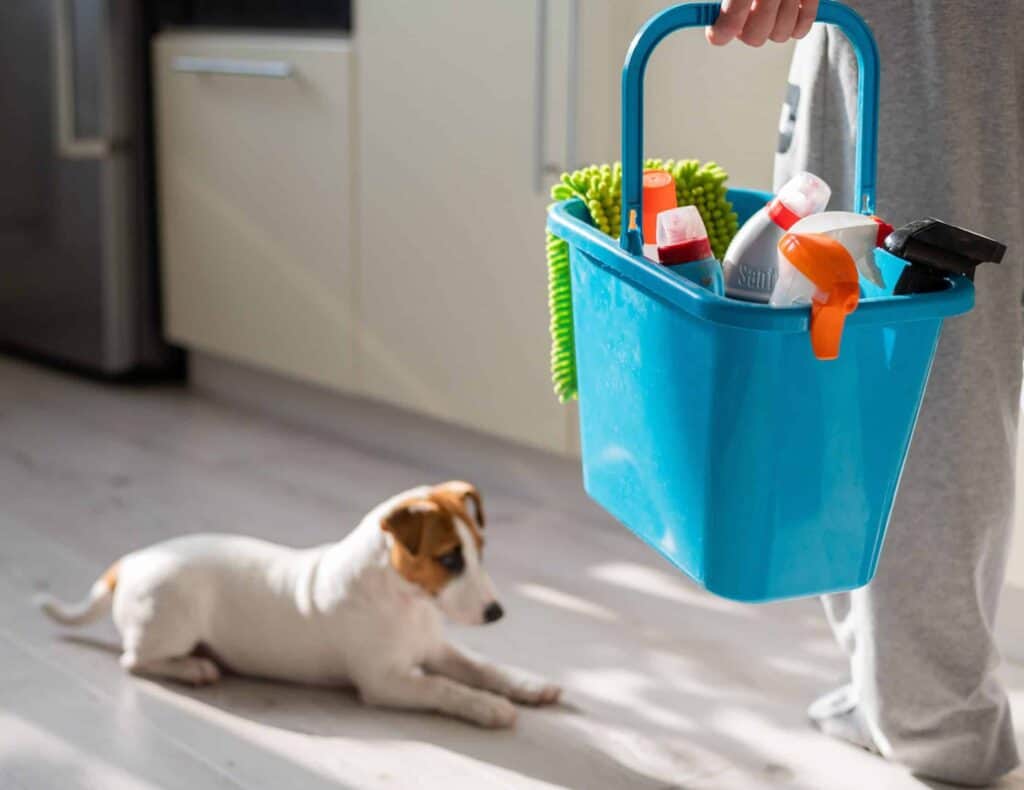
Consider designating certain rooms as “dog-free zones” during cleaning.
Before you start, set up a cozy space in another room with your dog’s favorite toys, treats, or a food puzzle to keep them happily distracted.
If possible, enlist a family member to take your pup for a walk or playtime outside while you clean.
For bigger jobs, schedule cleaning when your dog is at daycare or with a trusted friend.
Blocking off cleaned areas until everything is dry and safe prevents accidental exposure—and gives you peace of mind.
Avoid making spring cleaning mistakes
✅ Using toxic cleaners around pets
✅ Not properly storing cleaning products
✅ Leaving cleaners within reach of dogs
✅ Using harsh chemicals on surfaces that dogs contact
✅ Ignoring pet-safe product options
✅ Not rinsing surfaces thoroughly after cleaning
✅ Not knowing what to do if your dog gets into something dangerous
Keep this checklist handy or share it with fellow dog lovers to help keep every pup safe during spring cleaning.
Spring cleaning doesn’t have to threaten your dog
You’re not a bad dog parent for wanting a clean home. You’re just trying to do right by your dog in a world that makes it way harder than it should be.
The good news? With a few smart swaps and some common sense, you can have a fresh house and a safe, happy pup.
Remember, a spotless home isn’t the goal—creating a safe, happy space for you and your dog is what truly matters.
Cleaning using pet-friendly options done with love and care, even if it’s imperfect, is more than enough.
Give yourself credit for showing up and doing your best—your dog already thinks you’re perfect.
Sara B. Hansen has spent 20-plus years as a professional editor and writer. She’s also the author of The Complete Guide to Cocker Spaniels. She created her dream job by launching DogsBestLife.com in 2011. Sara grew up with family dogs, and since she bought her first house, she’s had a furry companion or two to help make it a home. She shares her heart and home with Nutmeg, a Pembroke Welsh Corgi. Her previous dogs: Sydney (September 2008-April 2020), Finley (November 1993-January 2008), and Browning (May 1993-November 2007). You can reach Sara @ editor@dogsbestlife.com.