
Which dog food wins? Raw vs. fresh vs. kibble battle
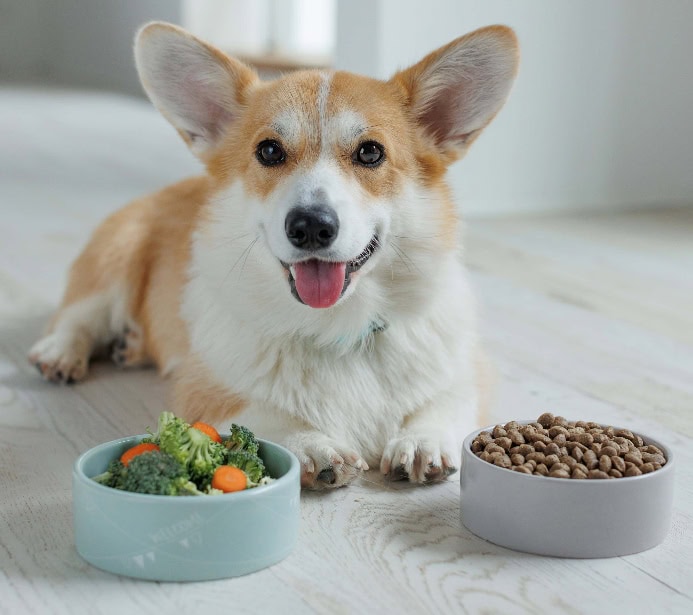
Your dog just stared at their bowl again. Sniffed it. Walked away.
And you’re standing there in your kitchen, wondering if you’re slowly poisoning your best friend with those little brown pellets that promised “complete nutrition” on a pet food bag covered in wheat fields and happy golden retrievers.
That knot in your stomach? It’s real. It matters.
Because here’s the thing—you’ve probably been lying awake at night, scrolling through conflicting articles about grain-free diets causing heart disease, or raw diets being basically salmonella bombs, or dry food being nothing but cereal for dogs.
One minute, you’re convinced you need to start grinding organic chicken at 5 AM. Next, you’re thinking maybe your dog’s ancestors ate garbage scraps for thousands of years and turned out fine, so what’s the big deal?
I get it. I really do.
The guilt is suffocating. Every time your dog scratches their skin raw or has another bout of diarrhea or looks at you with those eyes that seem to say “really, this again?”—you wonder if you’re failing them. If the one job you have, the single most basic responsibility of keeping them alive and healthy, is something you’re screwing up three times a day.
And the worst part? Everyone has an opinion. Your vet says one thing. The breeder says another. That person at the dog park with the shiniest coat you’ve ever seen swears by freeze-dried medallions that cost more than your own groceries. Your mom doesn’t understand why you’re questioning the same Purina she fed dogs for 40 years.
You want the truth. You want someone to tell you what actually works without trying to sell you something or make you feel like a terrible person.
So let’s talk about it. All of it. The good, the bad, and the expensive.
The kibble reality check
- The kibble reality check
- The raw food revolution (and why it scares people)
- Fresh food: The middle ground that’s taking over
- The cost analysis nobody wants to do (but should)
- What about mixing? Is that cheating?
- DIY fresh feeding: How to start
- The transition: how not to wreck your dog’s gut
- When food goes wrong: Emergency response guide
- What about puppies? Older dogs? Health issues?
- The ingredients that actually matter
- The environmental piece nobody talks about
- The guilt, the judgment, and letting it go
- So what’s the actual answer?
- Quick reference: Dog food comparison
- Cheat sheet: Which diet is right for you?
- The bottom line on raw vs. kibble vs. fresh food
Kibble is convenient. Let’s not pretend otherwise.
You open a bag, you scoop, and you pour. Done.
No prep time or refrigeration dramas. No wondering if you’re creating a bacterial nightmare in your kitchen.
For most people, most of the time, for most of the last 70 years, kibble has been the default.
And plenty of dogs have lived decent lives eating it.
But here’s where it gets uncomfortable. Kibble is processed. Heavily processed. We’re talking cooked at temperatures so high that most of the original nutrients get destroyed, then sprayed back on in synthetic form. It’s shelf-stable because it has to be—imagine leaving fresh chicken on your counter for six months.
The ingredients? They’re cost-driven. Corn, wheat, soy, meat meals, by-products. These aren’t evil, exactly. They’re not what a wolf would choose at a buffet. And yeah, your dog isn’t a wolf. We’ve been through that argument. But their digestive system didn’t get a memo about the agricultural revolution.
Most kibble is high in carbohydrates. Dogs don’t need carbs. They can use them for energy, sure. But they’re designed to run on protein and fat. Feeding a carnivore a diet that’s 40-50% carbohydrates is like eating nothing but bread and pasta. You’d survive. You wouldn’t thrive.
The quality varies wildly, too. You’ve got bottom-shelf brands that are basically the dog food equivalent of gas station hot dogs. Then you’ve got premium kibbles that cost a small fortune and contain better ingredients, sure, but they’re still cooked to oblivion and compressed into little pellets.
And then there’s the recall situation. Every few months, another brand. Salmonella. Mold. Toxic levels of Vitamin D. Euthanasia drugs. Yeah, that last one actually happened.
Does this mean kibble will kill your dog tomorrow? No. Does it mean it’s optimal? Also no.
The raw food revolution (and why it scares people)

Raw feeding sounds primal. Ancestral. Right.
The idea is simple: feed dogs what they’d eat in nature. Raw meat. Bones. Organs. Maybe some vegetation from the stomach contents of prey animals.
The benefits people report are almost cult-like in their enthusiasm—shinier coats. Cleaner teeth. Smaller, less horrifying poops. More energy. Better muscle tone. Cleared-up skin issues.
Dogs are excited about meals again.
And research shows that fresh food diets—including raw—can add over three years to your dog’s life. Three years. That’s hundreds of extra walks—thousands of tail wags. Entire seasons you’d otherwise miss.
But raw feeding is controversial. And expensive. And terrifying if you’ve never done it.
The bacteria thing is real. Raw meat contains pathogens. Salmonella. E. coli. Listeria.
Your dog’s stomach acid is stronger than yours—they’re better equipped to handle it. But you’re not. Your kids aren’t. Your immunocompromised grandmother definitely isn’t.
Cross-contamination is a legitimate concern.
Then there’s the balance issue. You can’t just throw chicken breasts at your dog and call it a day. They need the correct ratios of muscle, organ, and bone.
Too much bone? Constipation and potential blockages. Too little? Nutritional deficiencies. Get the calcium-to-phosphorus ratio wrong, and you’re looking at skeletal problems, especially in puppies.
It’s also time-consuming. You’re sourcing meat, portioning it, freezing it, thawing it, and cleaning up after it.
And the cost? If you’re buying human-grade meat and organs, you’re easily spending $3-$5 per pound, sometimes more. For a 60-pound dog, that’s $150-300 a month.
Maybe you can find deals. Perhaps you’ve got a hunter friend or a butcher connection.
The raw food community is intense. Mention you’re nervous about bacteria, and someone will tell you that you’re overthinking it, that dogs have been eating raw meat forever, which is true.
But dogs have also been dying of preventable diseases for a long time, so “natural” isn’t always synonymous with “best.”
Fresh food: The middle ground that’s taking over
Fresh food is cooked, minimizing bacterial concerns. The food is made from whole ingredients—real meat, real vegetables, real nutrients. It’s portioned and balanced by people who actually understand canine nutrition.
And it comes in a format that doesn’t require you to become a part-time butcher.
Companies like The Farmer’s Dog, Ollie, Nom Nom—they’ve turned fresh feeding into a subscription service.
You answer questions about your dog. They formulate recipes. They ship it frozen to your door. You thaw and serve.
Dogs love it. The ingredients are recognizable. Chicken. Sweet potato. Spinach. Things you’d eat yourself. The food smells like food, not like the inside of a cardboard factory.
The health benefits mirror many of the things raw feeders report. Better digestion. Healthier skin and coat. More energy.
Weight management becomes easier because the food is lower in calories and more satiating than kibble.
And that study about dogs living 3.1 years longer? That was specifically about fresh food diets.
But—and there’s always a but—it’s expensive.
For that same 60-pound dog, you’re looking at $200-400 a month, depending on the company and your dog’s needs.
It also requires freezer space—lots of it. If you’ve got a Great Dane, you might need a separate chest freezer for dog food. If you live in a tiny apartment, this becomes a logistical nightmare.
The convenience is there, but it’s not kibble-level convenient. You have to remember to thaw meals and refrigerate open containers. You can’t just leave it in a bowl all day if your dog’s a grazer—it’ll spoil.
And if you travel? If you need to board your dog or have a pet sitter? You’re either shipping frozen food ahead or hoping your caretaker is willing to deal with the routine.
The cost analysis nobody wants to do (but should)
Let’s get specific. Because the money matters. Pretending it doesn’t is privileged nonsense.
Kibble:
- Low-end (Pedigree, Purina): $30-50/month for a 60-lb dog
- Mid-range (Blue Buffalo, Taste of the Wild): $60-100/month
- Premium (Orijen, Acana): $100-150/month
Raw:
- DIY raw (if you’re sourcing well): $100-200/month
- Pre-made raw (commercial blends): $200-350/month
- Freeze-dried raw: $300-500/month
Fresh food services:
- The Farmer’s Dog, Ollie, Nom Nom: $200-400/month for a 60-lb dog
So yeah. There’s a massive range. You could spend $30 a month or $500 a month feeding the same-sized dog.
But here’s what that doesn’t account for: vet bills.
If your dog develops chronic skin issues due to food sensitivities, you’re looking at repeated vet visits, medications, and special shampoos.
If they develop pancreatitis from a low-quality, high-fat kibble, that’s an emergency vet visit that’ll cost you thousands if they develop obesity-related issues—diabetes, joint problems, heart disease—the long-term costs are astronomical.
Prevention isn’t just emotionally smart. It’s financially savvy.
That said, not everyone can afford fresh food delivery. That’s reality. And feeding a premium kibble is infinitely better than feeding fresh food while drowning in credit card debt and stress.
What about mixing? Is that cheating?
No. It’s not cheating. There are no rules here except “feed your dog something nutritious.”
Plenty of people do a hybrid approach. Kibble as a base with fresh toppers. Kibble during the week, raw on weekends. Rotating between kibble and fresh. Half and half.
Does this give you all the benefits of full fresh or raw feeding? Probably not. Does it offer you benefits while managing costs and convenience? Absolutely.
Your dog’s digestive system can handle variety. In fact, it’s probably better for them than eating the same thing every single day for 10 years.
Just make sure you’re not accidentally overfeeding. Calories still count. If you’re adding fresh food to kibble, reduce the kibble amount accordingly.
DIY fresh feeding: How to start
Fresh food delivery is excellent. But spending $300 a month? Not everyone can swing that.
The good news: you can make fresh food at home. The catch: you need to do it right.
Throwing together chicken and rice isn’t a complete diet. Your dog needs specific ratios of protein, fat, carbs, vitamins, and minerals. Wing it, and you’ll create deficiencies that won’t show up for months. By then, the damage is done.
Before you do anything, consult a veterinary nutritionist. Not just your regular vet, but someone who can formulate a balanced recipe for your dog’s age, weight, and health status.
A starter framework for balanced, homemade, fresh food:
40-50% protein: Lean meats like chicken, turkey, beef, or fish. Rotate for variety.
30-40% carbohydrates: Sweet potatoes, brown rice, quinoa, oats. Dogs don’t need carbs, but they provide fiber and affordability.
10-20% vegetables: Carrots, green beans, spinach, zucchini, peas. Avoid onions, garlic, and grapes.
5-10% fats and supplements: Fish oil for omega-3s, calcium (ground eggshell or bone meal), and a multivitamin for homemade dog food.
Cook everything thoroughly. Portion based on caloric needs—use an online calculator or ask your vet. Batch-cook a week’s worth, freeze portions, and thaw as needed.
Resources: Balance.IT offers vet-formulated recipes and supplements. PetDiets.com provides custom plans. “Unlocking the Canine Ancestral Diet” by Steve Brown has science-backed recipes.
The cost? Buy in bulk, use sales, and choose affordable proteins—you can feed a 60-pound dog for $100-150 per month. Less than delivery, more than kibble, way more work.
If you’ve got the time and space, it’s empowering. You know exactly what’s in your dog’s body. No recalls. No mystery ingredients.
Just make sure you’re doing it right. Good intentions don’t fix nutritional imbalances.
The transition: how not to wreck your dog’s gut
Switching foods abruptly is a great way to create a diarrhea crime scene in your living room.
Dogs’ digestive systems need time to adjust. The gut bacteria that break down kibble are different from the ones that handle raw meat or fresh food.
Standard transition protocol:
- Days 1-3: 75% old food, 25% new food
- Days 4-6: 50% old food, 50% new food
- Days 7-9: 25% old food, 75% new food
- Day 10+: 100% new food
Some dogs have iron stomachs and can switch overnight. Others need two weeks or more. Watch their poop. Seriously. It’s your best indicator of how they’re handling the change.
Loose stools? Slow down the transition. Add a little pumpkin or probiotics. Give their system more time.
If you’re switching to raw, some people recommend fasting for 12-24 hours first. The idea is that raw digests faster than kibble, and you don’t want them mixing in the stomach. The science on this is debated, but it’s common practice.
When food goes wrong: Emergency response guide
You switched your dog’s food. Or they got into something they shouldn’t have. Or maybe the raw chicken you’ve been feeding didn’t sit right.
Now they’re sick. And you’re panicking.
Here’s what to watch for and what to do.
Food poisoning symptoms in dogs
- Vomiting (especially repeated or projectile)
- Diarrhea (watery, bloody, or black and tarry)
- Loss of appetite or refusal to eat
- Lethargy or weakness
- Fever (normal dog temp is 101-102.5°F; above 103°F is concerning)
- Abdominal pain (hunched posture, whining when touched)
- Excessive drooling or difficulty swallowing
Salmonella and bacterial infections can also cause these symptoms in dogs, though they’re often asymptomatic carriers.
The bigger risk? You and your family get sick from contaminated surfaces or handling infected stool.
What to do immediately
- Stop feeding the suspected food. Remove it entirely. If it’s a new food, revert to what they were eating before if possible.
- Offer water, but don’t force it. Dehydration is a risk with vomiting and diarrhea, but if they’re refusing water or vomiting it back up, that’s a vet-now situation.
- Monitor closely. One episode of vomiting or soft stool? Probably okay to watch and wait. Multiple episodes, blood, or signs of pain? Time to call the vet.
- Don’t give human medications. No Pepto-Bismol, Imodium, or Tylenol without explicit vet approval. Some are toxic to dogs.
When to call the vet
- Vomiting or diarrhea lasting more than 24 hours
- Blood in vomit or stool
- Signs of dehydration (dry gums, sunken eyes, skin that doesn’t bounce back when pinched)
- Extreme lethargy or collapse
- Refusal to drink water
Puppies, older dogs, or dogs with existing health conditions—call sooner. They decompensate faster.
What the vet will likely do
- Physical exam and history. They’ll want to know what your dog ate, when symptoms started, and any other exposures.
- Fecal test to check for parasites or bacterial infections.
- Bloodwork is needed if dehydration or organ function is a concern.
- Fluid therapy (subcutaneous or IV) to rehydrate.
- Anti-nausea medication and possibly antibiotics, depending on the cause.
Preventing food-related illness
- Transition foods gradually (see earlier section).
- Practice food safety: wash hands, clean bowls daily, sanitize prep areas, especially with raw feeding.
- Store food properly: keep kibble sealed, refrigerate fresh food, freeze raw immediately.
- Check expiration dates and recall lists regularly.
- Watch for individual sensitivities. Some dogs can’t handle specific proteins or ingredients.
The bottom line: trust your gut. If something feels wrong, call your vet. You know your dog better than anyone.
And when it comes to their health, it’s always better to overreact than to wait too long.
What about puppies? Older dogs? Health issues?
Puppies need specific nutrient ratios for growth. If you’re doing raw or fresh, make sure you meet AAFCO standards for development. This isn’t the time to wing it. Use a formulated recipe or a commercial puppy product.
Older dogs often do great on fresh food—lower calorie needs, easier to digest, and gentle on aging organs. Just watch the protein levels if there’s kidney disease.
Dogs with health issues? This is where fresh food really shines. You can customize. Low-fat diet for pancreatitis. Limited ingredients for allergies. Low-phosphorus diet for kidney disease. Prescription kibbles exist, sure. But fresh food gives you more control.
Always consult your vet before making significant dietary changes if your dog has a medical condition. And if your vet dismisses fresh or raw feeding entirely without discussion, consider getting a second opinion from a veterinary nutritionist.
The ingredients that actually matter

Whether you’re choosing kibble, raw, or fresh, here’s what to look for:
Protein source as the first ingredient. Named meat. “Chicken” or “beef,” not “meat meal” or “by-product.”
Minimal fillers. Corn, wheat, soy—they’re cheap. They’re not evil, but they’re not optimal.
Healthy fats. Omega-3s from fish oil or flaxseed. Not just generic “animal fat.”
Whole food ingredients. Things you recognize. Sweet potatoes, not “potato product.” Blueberries, not “fruit flavoring.”
No artificial preservatives. BHA, BHT, ethoxyquin—these are controversial at best.
Appropriate life stage formulation. Puppies, adults, and older dogs all have different needs.
If you’re reading a kibble label and it sounds like a chemistry experiment, that’s a red flag.
The environmental piece nobody talks about

Your dog’s carbon pawprint is real. If you care about sustainability—and a lot of pet owners increasingly do—it’s worth understanding how different feeding choices impact the planet. This isn’t about guilt. It’s about awareness.
Kibble production is energy-intensive. High-heat extrusion requires massive amounts of electricity. Ingredients like corn, soy, and meat by-products come from industrial agriculture, which carries environmental costs: pesticides, monoculture farming, and livestock emissions.
But kibble has one advantage: shelf stability. No refrigeration during transport or storage means lower energy use, and its calorie density can mean less packaging waste.
Raw feeding has a complex footprint. Human-grade meat contributes to industrial meat production, one of the most significant sources of climate change. Beef, especially, carries significant costs: water use, methane emissions, and land degradation.
But some raw feeders source locally or use organ meats that might otherwise go to waste, lightening their footprint.
Fresh food delivery sits in between. Whole ingredients often mean better sourcing, but constant refrigeration and frozen shipping use significant energy.
All that dry ice and insulated packaging adds up. Some companies offset this with recyclable packaging and carbon-neutral shipping, but it varies by brand.
The most sustainable option? Probably locally sourced, DIY feeding using regeneratively raised meat. But that’s not realistic for most people. The point isn’t shame—it’s acknowledging that everything has a cost to your dog’s health, your wallet, and the planet. You decide which trade-offs you’re willing to make.
The guilt, the judgment, and letting it go
Here’s the truth that nobody says out loud: you’re doing your best.
Maybe your best option right now is a premium kibble because it fits your budget and schedule. That’s okay.
Maybe your best is raw feeding because you’ve got the time and the freezer space, and it makes you feel connected to your dog’s health. That’s okay too.
Maybe your best is a fresh food service, even though it’s stretching your budget, because your dog has allergies and this is the only thing that works. Also okay.
The dog food debate has become weirdly moralistic. People act like feeding kibble is abuse. Or like raw feeders are reckless. Or like fresh food, people are just buying into marketing hype.
It’s all noise.
Your dog doesn’t care about the internet arguments. They care that you’re trying. That you’re thinking about their well-being. That you’re reading articles like this at 11 PM because you want to do right by them.
That already makes you a good dog owner.
So what’s the actual answer?
If you want optimal nutrition and can manage the cost and logistics, choose fresh food or properly balanced raw.
The research is there. The anecdotal evidence is overwhelming. Dogs thrive on fresh, whole-food diets. They live longer. They’re healthier. The quality of their life improves.
If you can’t swing fresh-food delivery but you’re willing to put in the effort, DIY raw or home-cooked meals using veterinary nutritionist-approved recipes.
This requires research. It requires precision. But it’s doable and more affordable than commercial fresh food.
If you need convenience and cost-effectiveness, high-quality kibble, preferably supplemented with fresh toppers.
Look for brands with meat as the first ingredient, minimal fillers, and a good reputation. Rotate proteins. Add some fresh vegetables, a little bit of cooked meat, and some bone broth. You’re not going whole fresh, but you’re improving what’s in the bowl.
If your dog has specific health issues, work with a veterinary nutritionist to create a customized plan.
This might be prescription kibble. It might be a specialized fresh food formula. It might be a carefully balanced home-cooked diet. Don’t guess. Get expert help.
Quick reference: Dog food comparison

Kibble | Cost: $30-150/month
Pros: Convenient, affordable, long shelf life, widely available
Cons: Heavily processed, high carbs, fillers, recall risk
Health: Adequate for survival, not optimal. It can contribute to obesity and allergies.
Raw food | Cost: $100-500/month
Pros: Species-appropriate, maximum nutrients, dental benefits, better digestion, shiny coat
Cons: Bacteria risk, time-consuming, balancing tricky, expensive, and needs freezer space
Health: Potentially optimal when done right. It can add years to lifespan. Risks if improperly balanced.
Fresh food| Cost: $200-400/month
Pros: Complete nutrition, whole ingredients, digestible, adds 3+ years to lifespan, no bacteria risk
Cons: Expensive, needs freezer space, requires thawing, and travel challenges
Health: Optimal for most dogs. Extends lifespan, improves coat, supports healthy weight.
Hybrid | Cost: $80-200/month
Pros: Affordable upgrade, improved nutrition, flexible, variety
Cons: Partial benefits, calorie management needed
Health: Better than kibble alone. Good middle ground.
Cheat sheet: Which diet is right for you?
Choose kibble if:
- Budget is tight ($30-100/month)
- You need maximum convenience
- You travel frequently with your dog
- Storage space is limited
→ Pick premium brands with meat as the first ingredient, minimal fillers
Choose raw if:
- You have time for prep and research
- You have freezer space and sourcing options
- Your dog has chronic issues that haven’t improved on other diets
- You’re committed to learning proper balancing
→ Work with a veterinary nutritionist or use pre-made commercial raw
Choose fresh food if:
- Budget allows ($200-400/month)
- You want optimal nutrition without DIY effort
- Your dog has allergies or sensitivities
- You have freezer space
→ Try services like The Farmer’s Dog, Ollie, or Nom Nom
Choose hybrid if:
- You want better nutrition than kibble, but can’t afford complete fresh food
- You’re transitioning between diets
- You want flexibility
→ Use quality kibble as base, add 25-50% fresh toppers (cooked meat, vegetables, bone broth)
Choose DIY homemade if:
- You want fresh food benefits at a lower cost
- You enjoy cooking and meal prep
- You’re willing to follow a veterinary nutritionist’s recipes
→ Use BalanceIT.com or PetDiets.com for formulated recipes
The bottom line on raw vs. kibble vs. fresh food
Your dog is going to eat roughly 20,000 meals in their lifetime.
Every single one of those meals is either contributing to their health or detracting from it. There’s no neutral.
Kibble can keep a dog alive. Fresh food can help them thrive.
Raw feeding can be incredible—or it can be risky if you don’t know what you’re doing.
The best diet is the one that’s nutritionally complete, that fits your life, and that your dog actually eats.
Stop feeling guilty because you’re not doing what some stranger on the internet says you should do.
Start where you are. Use what you have. Do what you can.
Maybe that’s switching to a better kibble this month. Perhaps it’s adding fresh food toppers next month.
Maybe six months from now, you’re full raw feeding and loving it. Perhaps you’re not. Maybe you find a hybrid that works and stick with it forever.
Your dog doesn’t need you to be perfect. They need you to be present, informed, and trying.
The fact that you care enough to research, to question, to lose sleep over whether you’re feeding them the right thing—that’s what matters.
Sara B. Hansen has spent 20-plus years as a professional editor and writer. She’s also the author of The Complete Guide to Cocker Spaniels. She decided to create her dream job by launching DogsBestLife.com in 2011. Sara grew up with family dogs, and since she bought her first house, she’s had a furry companion or two to help make it a home. She shares her heart and home with Nutmeg, a Pembroke Welsh Corgi. Her previous dogs: Sydney (September 2008-April 2020), Finley (November 1993-January 2008), and Browning (May 1993-November 2007). You can reach Sara @ editor@dogsbestlife.com.