
Parasite prevention playbook: Protect your dog from fleas, ticks, and mosquitoes

Every summer, millions of dogs get bitten, scratched, and sickened by parasites their owners never saw coming. Not because those owners didn’t care. Because they guessed.
You don’t have to guess. This is the updated parasite prevention playbook.
The parasite landscape: What’s changed
- The parasite landscape: What's changed
- Tick species and the diseases they carry
- Comparing prevention methods: Pros, cons, and costs
- Oral vs. topical: What vets actually say
- Natural and low-chemical options
- Post-walk tick checks: a step-by-step routine
- What to do if you find a tick attached
- Flea infestations: treating the house, not just the dog
- The bottom line on parasite prevention for your dog
The bad news first. Tick populations continue to expand their range northward and into higher elevations, driven by milder winters and shifting wildlife patterns.
Species that used to live in the Southeast are now appearing in the Midwest and the Northeast. Mosquito season starts earlier and ends later than it did a decade ago. Fleas are developing resistance to some older pesticide classes.
The good news? Prevention science has kept pace. Oral isoxazoline medications have been a genuine game-changer since their introduction.
Veterinary understanding of regional parasite threats continues to improve.
And the data on tick-borne disease transmission has sharpened, which means better guidance for dog owners who want to make smart decisions without going overboard.
Here’s the thing to know: the CDC recently expanded its tracking of tick-borne diseases in dogs, and the geographic spread is bigger than most vets were warning about even three years ago.
If you live anywhere with a real winter that’s gotten noticeably milder, your local tick risk has likely risen.
Tick species and the diseases they carry
Not all ticks are the same, and the species in your yard determines the specific threats your dog faces.
Here’s a quick breakdown by region:
- Blacklegged tick (deer tick): Found throughout the Northeast, Midwest, and upper South. Transmits Lyme disease, anaplasmosis, and babesiosis. This is the tick that warrants the most concern in most of the country.
- American dog tick: Widespread east of the Rockies and on the Pacific Coast. Transmits Rocky Mountain spotted fever and tularemia. Larger and easier to spot than the deer tick, but no less dangerous.
- Lone star tick: Expanding rapidly from the Southeast into the Midwest and Northeast. Transmits ehrlichiosis and tularemia. Also linked to alpha-gal syndrome in humans, though dog-specific research is ongoing.
- Brown dog tick: Found throughout the U.S., especially in kennels and homes. Transmits Rocky Mountain spotted fever. Unique because it can complete its entire life cycle indoors.
- Gulf Coast tick: Primarily in coastal areas. Transmits hepatozoonosis, a serious and sometimes fatal disease in dogs.
Wondering if your area has seen recent tick activity?
The Companion Animal Parasite Council maintains updated prevalence maps that let you search by state and county.
Just enter your zip code to see current risks in your specific area. Worth checking every spring.
Comparing prevention methods: Pros, cons, and costs

There’s no single right answer here.
The best prevention method for your dog depends on your dog’s health history, your lifestyle, your climate, and your personal comfort with different types of products.
Here’s an honest breakdown.
Oral medications (isoxazolines)
Products like Bravecto, NexGard, Simparica, and Credelio belong to this class. They work by circulating in your dog’s bloodstream and killing parasites when they bite.
- Pros: Highly effective against fleas and multiple tick species. No residue on fur, no risk of washing off, no concerns about kids or cats touching your dog.
- Cons: Prescription required. The FDA has flagged that a small number of dogs experience neurological side effects, including muscle tremors and seizures, especially in dogs with a history of seizures. Not recommended for dogs with epilepsy without careful vet consultation. If you notice any unusual behavior, muscle tremors, or seizures after giving your dog an oral preventive, stop the medication and contact your veterinarian immediately. Quick action ensures your dog gets the care they need and helps your vet decide on the best next steps.
- Cost: Roughly $50 to $80 per dose, depending on the brand and your dog’s weight. Bravecto covers 12 weeks; others cover 30 days.
Topical spot-on treatments
Products like Frontline Plus, Advantage II, and K9 Advantix II fall into this category. You apply a small amount to the skin at the back of the neck.
- Pros: No prescription needed for most—lower upfront cost. K9 Advantix II also repels mosquitoes, which matters for heartworm prevention.
- Cons: Can wash off with frequent bathing or swimming. It can be transferred to other pets or children before drying. Some flea populations are resistant to older pyrethroid-based formulations.
- Cost: Roughly $15-$25 per month.
The Seresto collar stands out from older collar technology. It releases low doses of imidacloprid and flumethrin continuously for up to eight months.
Flea and tick collars
- Pros: Long-lasting, cost-effective when you do the math over eight months, effective against both fleas and ticks.
- Cons: Some pet owners have reported skin irritation at the collar site. The EPA has received incident reports related to Seresto, though the agency concluded that the benefits outweigh the risks for most dogs. Still worth discussing with your vet if your dog has sensitive skin.
- Cost: About $50 to $60, or roughly $6 to $7 per month.
Mosquito prevention
This one gets underplayed. Mosquitoes transmit heartworm, a deadly disease.
Prevention here means monthly heartworm preventives like Heartgard or Interceptor Plus, not topical products alone.
K9 Advantix II helps repel mosquitoes, but it doesn’t replace a heartworm preventive.
Oral vs. topical: What vets actually say

Most veterinarians have shifted toward recommending oral isoxazolines for dogs in high-tick areas, and the reason is simple: efficacy.
Topicals require the tick to survive long enough after biting to absorb enough of the compound. Orals kill faster and more reliably.
That said, plenty of vets maintain that topicals are the right choice for healthy dogs in lower-risk areas, especially if cost is a real factor or the dog has a history of seizures.
The conversation worth having with your vet isn’t “which is better” but “which is better for this dog in this place.”
Bring your zip code, your dog’s health history, and your lifestyle. Do you hike? Does your dog swim a lot? Do you have kids in the house who wrestle with the dog? All of that changes the equation.
To get even more from your vet visit, come prepared with questions like:
- What are the main parasite risks in my area?
- If my dog’s breed or health history changes, which prevention method works best?
- Are there any newer resistance patterns I should know about locally?
- Is it safe to combine parasite preventives if needed?
- What signs should I watch for if my dog has a reaction?
Asking specific questions helps your vet give you advice tailored to your dog and your daily life.
Natural and low-chemical options
This is where it gets complicated. The market for natural flea and tick prevention is enormous, and the gap between what’s marketed and what’s proven is equally enormous.
What has real evidence behind it:
- Cedar oil-based sprays can repel ticks and fleas on contact and are generally safe for dogs. They don’t offer the same residual protection as prescription options, but they’re a reasonable supplement.
- Diatomaceous earth (food grade) disrupts the exoskeletons of fleas in the environment when applied to carpets, bedding, and yard areas. It doesn’t prevent bites, but it helps break the cycle of infestation.
- Regular grooming and inspection are genuinely protective. A flea comb through a short-coated dog catches a lot.
What doesn’t have reliable evidence:
- Garlic as a flea deterrent. The doses needed to have any effect on parasites are also high enough to cause toxicity in dogs. Skip it.
- Essential oil blends marketed for tick prevention. Some oils, including tea tree, clove, and pennyroyal, are actually toxic to dogs in concentrated form. Read labels carefully.
- Brewer’s yeast supplements. Popular claim, very thin evidence.
The honest take: natural options can supplement but shouldn’t replace conventional prevention if you live in a high-risk area.
Along with cedar oil sprays, regular yard maintenance—such as mowing grass short, clearing brush, and removing leaf litter—can help reduce tick and flea habitats around your home.
Keeping your dog’s bedding clean and trimming dense vegetation in outdoor areas are also safe, practical steps. If ticks in your region carry Lyme disease, garlic tea isn’t a reasonable substitute for Bravecto.
Post-walk tick checks: a step-by-step routine
This takes two minutes. It should become as automatic as wiping muddy paws.
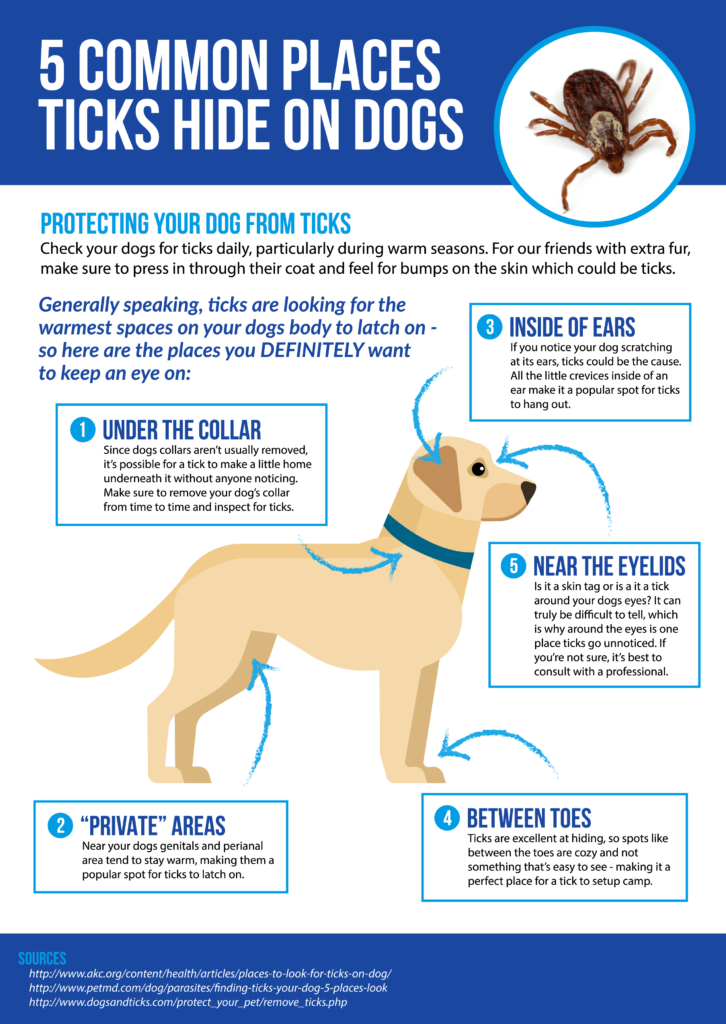
- Run your fingers slowly through your dog’s coat against the grain, feeling for small bumps. Don’t rush this.
- Focus on high-risk spots: between the toes, under the collar, around the ears (inside and behind), in the groin area, under the tail, and around the eyelids.
- If you find a tick that hasn’t attached, remove it and drop it in soapy water.
- If you find an attached tick, don’t panic. But do act quickly.
For dogs who hate being handled, turn tick checks into a treat-rewarded grooming session. After a few repetitions, most dogs start offering themselves up for inspection.
What to do if you find a tick attached
Stay calm. The transmission window for most tick-borne diseases requires the tick to be attached for 24 to 48 hours, though some pathogens can be transmitted more quickly.
Speed still matters, but panicking leads to mistakes.
- Use fine-tipped tweezers or a dedicated tick removal tool. Do not use your fingers, petroleum jelly, nail polish, or a hot match.
- Grasp the tick as close to the skin’s surface as possible.
- Pull upward with steady, even pressure. Don’t twist or jerk.
- Drop the tick into rubbing alcohol or a sealed bag. Don’t crush it with your fingers.
- Clean the bite area and your hands with rubbing alcohol or soap and water.
- Note the date and monitor your dog for symptoms over the next two to four weeks.
Symptoms to watch for include lethargy, joint pain, loss of appetite, fever, and unusual neurological signs. Contact your vet promptly if you notice any of these symptoms.
Some vets recommend saving the tick for identification. Apps like TickSpotters or Tick ID can help, or bring the specimen to your vet.
Flea infestations: treating the house, not just the dog
Here’s the part most people miss. If you’re treating your dog but still seeing fleas, you’re fighting the wrong battle.
Adult fleas make up only about five percent of a flea infestation. The other 95 percent, which includes eggs, larvae, and pupae, live in your home. They hide in carpets. In upholstery. In the cracks between floorboards. Treating your dog eliminates the fleas you see, while the nursery in your living room carpet keeps producing new ones.
A real flea protocol looks like this:
- Treat every pet in the household simultaneously. In multi-pet homes, check that the products you use are labeled safe for each species. Some flea and tick products for dogs contain ingredients that are dangerous or even fatal to cats, so always read packaging carefully and never use dog-specific products on cats.
- Wash all bedding, including the dog’s bed and any blankets the dog uses, in hot water.
- Vacuum thoroughly and frequently, including under furniture and along baseboards. Empty the vacuum immediately outside.
- Use an indoor flea spray or fogger that contains an insect growth regulator (IGR). IGRs break the reproductive cycle by preventing larvae from developing into adults.
- Treat the yard if your dog spends time outside, focusing on shaded, moist areas where fleas thrive.
- Repeat treatment after 2 weeks, as eggs may hatch during the first treatment.
For severe infestations, consult your vet about faster-acting options. Capstar, for example, kills adult fleas within 30 minutes and is safe to use while a longer-acting preventive kicks in.
The bottom line on parasite prevention for your dog
Parasites are opportunists. They don’t care how much you love your dog. They care whether your dog has protection.
The good news is that the options available are the best they’ve ever been. Consistent prevention, the right product for your specific situation, a solid tick-check habit, and a house that doesn’t become a flea incubator, that’s the whole playbook.
Talk to your vet. Pick a method and commit to it. Mark the calendar for next month’s dose.
Your dog doesn’t have to suffer for you to learn this lesson the hard way.
Sara B. Hansen has spent 20-plus years as a professional editor and writer. She’s also the author of The Complete Guide to Cocker Spaniels. She decided to create her dream job by launching DogsBestLife.com in 2011. Sara grew up with family dogs, and since she bought her first house, she’s had a furry companion or two to help make it a home. She shares her heart and home with Nutmeg, a Pembroke Welsh Corgi. Her previous dogs: Sydney (September 2008-April 2020), Finley (November 1993-January 2008), and Browning (May 1993-November 2007). You can reach Sara @ editor@dogsbestlife.com.