
How one simple change stops sleep problems and injuries in dogs
When we added a dog to the house for the first time, we were intent on doing everything right in all the ways we’d always heard mattered: long walks every day, new squeaky and rolly toys, training sessions with treats and soft praise. It felt like the heart of caring for a dog was movement, interaction, and stimulation.

And it was terrific, for a time. Yet, little by little, almost imperceptibly, the nights revealed something the days didn’t. The quiet hours found the dog tired but unable to surrender to sleep. He would circle a few times, lie down, get up again, and wander as though in search of something he couldn’t name.
It was when we inspected his resting spot more closely that things started to fall into place.
His bed was an afterthought, a thing placed where space was available, rather than where he truly felt comfortable. We replaced that bed with a supportive one we had selected after visiting Snuggles Beds.
The shift didn’t happen dramatically; it happened gently. His body softened differently. He didn’t collapse into rest; he entered it. His breathing changed. His face relaxed in a way that we hadn’t noticed was missing before.
Mornings felt easier, his walk fluid, his mood more even. It taught us that the care of a dog is not only about movement but also about stillness that restores.
Why the resting spot deserves more attention
Dogs tend to sleep much more than we do, and even far more than we acknowledge. Somewhere between 12 and 18 hours each day, their bodies and minds slip into different levels of rest.
And rest isn’t just downtime; it’s the place where repair happens: cells regenerate, muscles recover, the nervous system settles, and their emotional world rebalances.
Research shared through the National Library of Medicine describes how deep, consistent sleep supports mental clarity and emotional stability in dogs.
In deep sleep, patience extends, reactions become gentler, and learning sets more easily into memory.
Dogs sleeping shallowly or restlessly may come across as “hyper,” stubborn, clingy, irritable, or easily startled—not because they need more activity, but because their bodies haven’t had a chance to release the last round of stimulation fully.
In this way, the sleeping place is more than just a place on the floor; it forms part of the emotional architecture of their lives.
Smarter bed placement to avoid Injury
It’s those little injuries, though-the ones the dogs experience, really-and they don’t happen in the dramatic moments: not in the sprint of the yard, nor in the jump for the toy, but in quiet moments when the body changes from rest to movement.
When a bed slides even slightly on wooden floors, the paws try to grip. If the surface is hard or uneven, the joints brace before lowering. If the space is busy or unpredictable, the muscles never really let go.
Value in a deliberate resting place choice includes consideration of how it feels to move towards it.
Will the floor be solid? Does the air feel nice? Is this a spot where footsteps and noise are constantly passing through? Does the dog need to think before he lies down?
The safest place of rest is the one where the body doesn’t plan; it just arrives.
Environmental design to reduce stress
Dogs do pick up the emotional tone in spaces without analyzing them.
Creating a resting spot for your dog helps lower cortisol and regulate emotional rhythms.
A room with laughter differs from one that carries tension. A corner where people sit softly in the evenings is different from one where doors open and close constantly.
Your dog’s bed should be like a little pocket of peace, familiar, unchanging, predictable.
A dog needs to know a place where they rest will not surprise them-no sudden hands, no jarring noise, no movement that isn’t predictable.
Something as simple as a familiar scent on a blanket or the hum of a fan can tell the nervous system, “You are safe to let go.”
Only when the dog believes it’s a safe place does the body follow.
How poor sleep affects safety
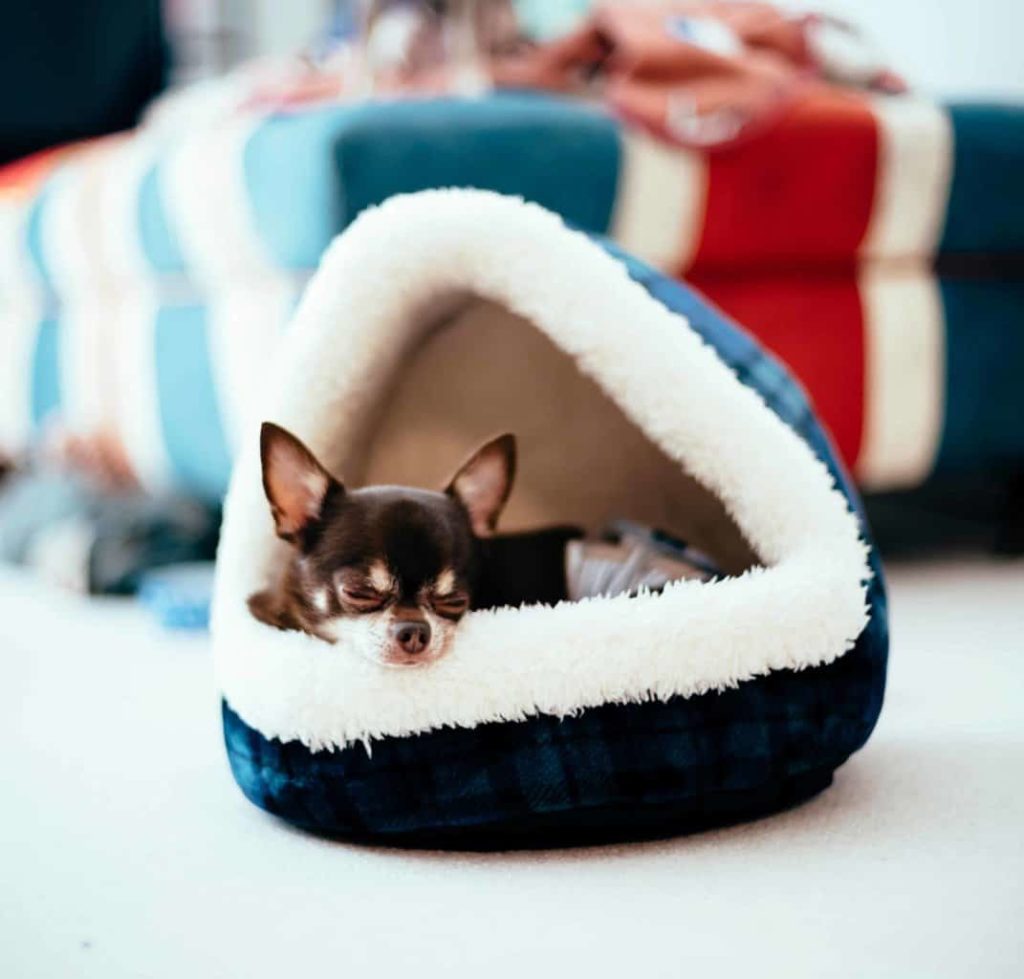
Deep rest impacts coordination and judgment. A poorly rested dog will misjudge the leap onto the couch, misstep off a stair, or knock into furniture, which it usually passes with ease.
The body hesitates. The mind stutters. It’s just as we feel when our own sleep is poor, except dogs can’t describe it. Sometimes, the signs are irritable. Sometimes they’re clingy.
Sometimes, it’s settling in strange spots around the house, almost as if in search of the right place to rest. These are not quirks; these are messages. When rest is guaranteed, motion becomes beautiful again.
Choosing the right bed for comfort and longevity
The shapes are myriad, materials multiple, but the most crucial criterion is that it supports the dog’s natural posture. Puppies snuggle up and like to be warm.
Adult dogs need sufficient firmness without allowing the spine to sag. An older dog and/or dogs with stiff joints do best if the bed allows the body to sink in enough to take some of the pressure off, but not so much that it sags into too-soft foam.
Snuggles Beds are built with a durable, supportive structure that holds up over time, not losing shape after only a few months.
It is the kind of detail you don’t always notice right away, but you feel it gradually, day after day, in the way the dog lies down without hesitation and rises without strain. Comfort is not indulgence; it is care manifested.
Importance of cleanliness and maintenance
The dog’s resting spot is tied in with his scent identity, and without washing, it becomes an even more inviting gathering spot for dust, oils, and all the minuscule particles a dog brings home from the world.
Regular mild detergent washing, occasional sun-drying, and checking the cushion to make sure it offers even support keep it both inviting and restorative.
A clean resting area doesn’t just look better; it even feels better for the dog and the room where it’s resting.
Integrating rest into daily safety routines
There is a rhythm in a dog’s day: outward motion, inward motion. When the ambient environment around the home signals softly and says it is time to soften, the dog naturally obeys.
The resting spot becomes the quiet punctuation mark at the end of each chapter in the day. Rest is not separate from play, learning, or bonding; it is what allows those experiences to integrate and become meaningful.
Home safety isn’t just about closing doors and tucking away hazards, but also about creating an environment where the body knows how to release the day.
An intentionally placed, treated-as-sanctuary supportive resting space, like those from Snuggles Beds, provides the dog permission and, therefore, comfort.
Permission to stop holding themselves together. Permission to breathe fully. Permission to feel safe. When a dog rests deeply, for them, the entire world becomes easier to meet.
Lisa Thomas has a soft spot for animals, especially dogs. When she’s not writing for PressWhizz, she enjoys nature and taking walks with her rescue beagle, Daisy. Passionate about pet care and positive training, Lisa shares practical tips to strengthen the bond between owners and their furry companions.