
Why do dogs hump? How can you stop this embarrassing behavior?

When your dog humps, it may make you and all the other humans around feel uncomfortable. Dog humping is instinctual, but understanding what’s behind that drive and how to kindly correct your dog are crucial components of creating well-behaved, well-socialized dogs.
Your dog often seems to act normally—walking around, sniffing, or playing. When you least expect it (often in the middle of a conversation), you’ll hear something off or notice a motion in your peripheral vision.
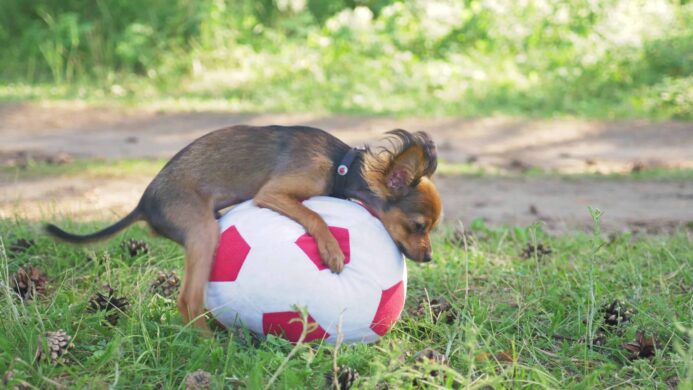
Behold the scene of your dog mounting an unsuspecting pillow, another dog, their favorite toy, the air, your leg, or even your human company.
It’s essential to understand what motivates your dog before you can develop a strategy to prevent unwanted dog behaviors, such as humping.
Humping is about dominance, not just sex
Humping behavior is usually not about sex or procreation. Mounting is generally about dominating an object, being, or situation.
Like humans, when dogs interact with other living beings and objects in their environment, they do so to establish their sense of place.
For dogs, this is often simply about taking control. Play fighting, like when dogs interact at the dog park, can quickly become mounting.
You may notice that your dog humps people, other dogs, or objects after they’ve been playing, which usually indicates overstimulation.
At other times, your dog might hump after being confined for a while and presented with numerous play options.
Think about it as your dog trying to take control of a challenging situation.
Humping is something dogs can do to focus themselves and guide the situation at that moment.
Humping can indicate stress
Humping is a dog behavior that can frequently be a sign of stress or anxiety.
This behavior can arise in situations when a dog is excited, overwhelmed, or feels threatened.
Recognizing that humping is not just playful but can reflect underlying emotional challenges is crucial for responsible dog ownership.
Recognize stress and anxiety in dogs
Context matters: Observe the circumstances under which your dog engages in humping. If it occurs in stressful environments (e.g., around loud noises, new people, or other aggressive animals), it may indicate anxiety rather than playfulness.
data-preserver-spaces=”true”>Body language: Pay attention to your dog’s body language. Signs of stress can include flattened ears, tucked tails, excessive panting, or lip licking. If your dog exhibits these behaviors alongside humping, it’s a strong indication of anxiety.
Behavioral changes: Look for other signs of stress, such as withdrawal, destruction of household items, or accidents in the house. If humping has suddenly increased or coincides with other behavioral changes, it might point to an underlying issue.
Address underlying issues
Identify triggers: Document when and where the humping occurs to identify specific triggers. Once you know what causes the behavior, you can work on modifying the environment or situation.
Redirect the behavior: When you notice your dog starting to hump, try to redirect their attention to a toy or engage them in a different activity, like fetch or obedience training. Understand that humping can be a self-soothing behavior, so using positive reinforcement to reward your dog for engaging in appropriate behaviors can be helpful.
Provide stress relief: Ensure your dog has plenty of physical and mental stimulation. Regular exercise, interactive toys, and training sessions can help alleviate anxiety. Consider incorporating calming activities, such as puzzle toys or taking long walks, to help release excess energy.
Create a safe space: If your dog feels overwhelmed, provide a designated quiet area where they can retreat to feel secure. This space should be comfortable with familiar toys and bedding.
Consult a professional: If humping persists despite your efforts, consider seeking help from a veterinarian, a certified professional dog trainer, or a certified applied animal behaviorist. They can provide targeted strategies and, if necessary, evaluate for any underlying medical conditions that may contribute to anxiety.
Your dog may hump due to a medical problem
While humping dogs are usually overstimulated by their favorite toys or by working out some stress, the excessive humping also could indicate a medical issue.
If your dog has an infection in the groin area or is experiencing irritation, it may hump to scratch the itch and provide relief. For example, it’s never pleasant when a dog decides to urinate on poison ivy.
All dogs can get urinary tract infections or experience other medical problems in the groin region.
Male dogs can also get prostate and priapism problems, so if the humping is excessive or new, consult your veterinarian immediately.
When is it OK for your dog to hump?
Humping is typical canine behavior. The occasional mounting may occur when dogs get excited while they’re playing.
Mounting and masturbation can cause conflict between dogs when they play or socialize, as some dogs prefer not to be mounted. A dog will communicate this with growls and snaps.
Unfortunately, if other dogs don’t help correct that mounting behavior, your dog may not recognize it’s inappropriate and could continue to exhibit it.
Positive reinforcement training prevents dog mounting
Preventing your dog from humping or mounting is easier if you catch the behavior early.
Once humping becomes enshrined as acceptable behavior, it will be harder for the dog to unlearn this behavior.
This presents a better opportunity for you if you’re working with a puppy or young adult, but older dogs can also learn to curb the impulse to mount or hump.
Consider why your dog humps
Identify the sources of stress and overstimulation that affect your dog.
Is something bothering them or preventing impulse control? Did you add another dog to the household?
Is there a new situation, person, toy, or change that could be causing your dog to hump?
Sometimes, a change in routine or something new in the environment can upset a dog, as they are creatures of habit and appreciate having a predictable schedule.
Do a visual examination of the dog’s groin to identify any apparent infection or irritation. If you suspect any medical issues or find any abnormalities, contact your dog’s veterinarian.
Train your dog to stop mounting
Once you’ve removed any sources of overstimulation or stress and have ruled out a medical issue, you can use positive reinforcement training to encourage your dog to cease its impolite habit.
In addition to redirecting your dog’s mounting behavior, positive reinforcement training reinforces your authority and establishes a clear relationship between you and your dog. It’s less critical that your dog sees you as a boss but more crucial that it sees you as having the situation under control.
This can lessen your dog’s stress and reduce the need to assert dominance.
Redirection is vital to prevent your dog from humping.
Now is the perfect time to enroll in an introductory training class with your dog.
Not only will it redirect attention from mounting and more potentially destructive behaviors, but it will also strengthen your bond.
Even if your dog knows a basic command like “sit,” you can use this as a redirect:
- When you observe your dog humping, don’t yell or provide negative attention.
- Ask your dog to do something else, such as sit, fetch, or lie down.
- Reward your dog when it performs the positive behavior as requested.
- Repeat to lessen the likelihood that your dog will go back to humping.
Exercise and mental stimulation can also help your dog avoid the urge to hump or draw its attention if it’s already mounting something it shouldn’t.
Final thoughts on dog humping
Additionally, you can remove tempting features, such as pillows, and consider having male and female dogs spayed or neutered to lessen their tendency to hump.
Neutering is especially helpful for male dogs. A spayed or neutered dog is less likely to get excited and misbehave.