
Sleep peacefully: Train your dog to sleep in their own space
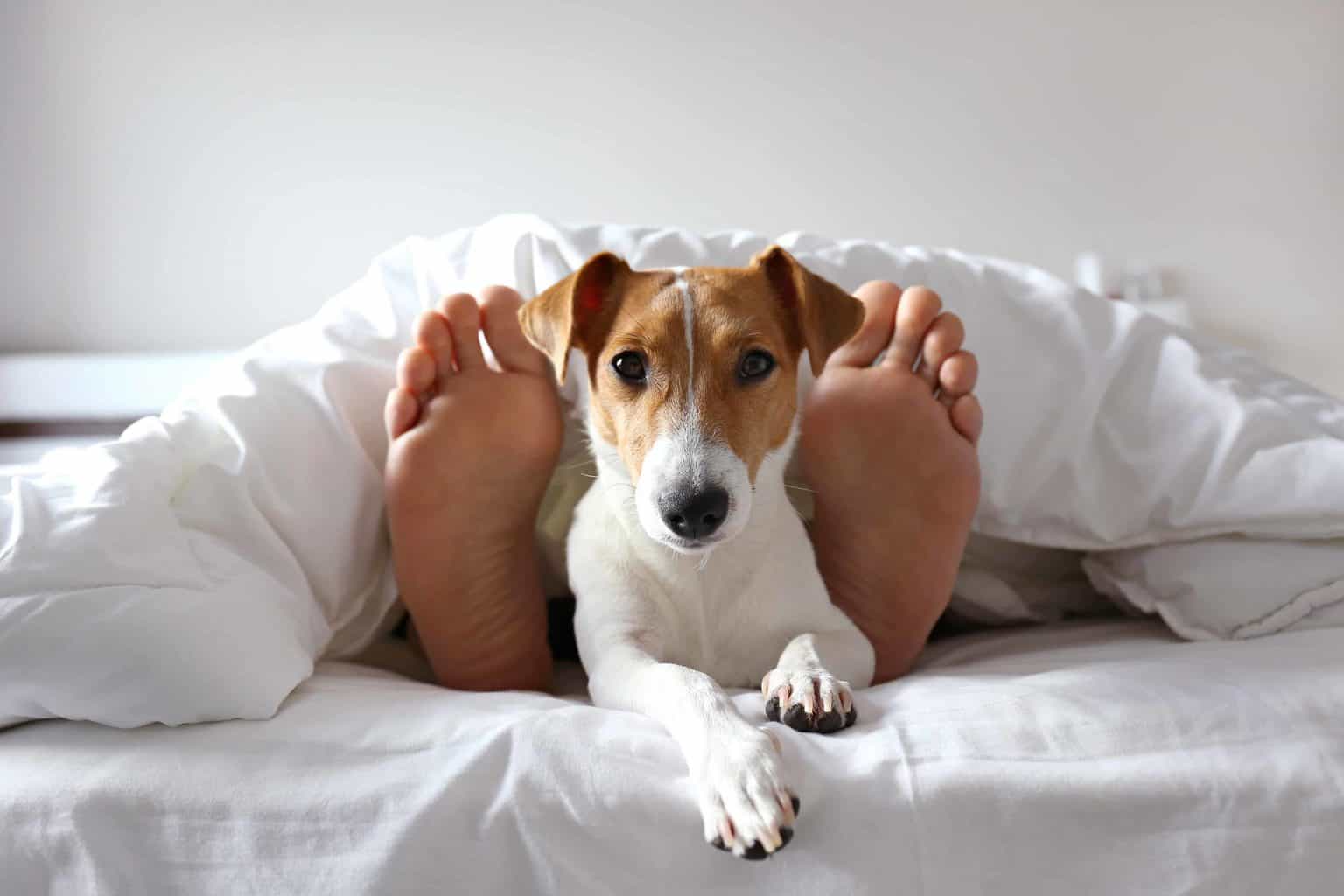
Dogs are great companions and excellent pets for your home. So naturally, these animals will spend as much time with you as possible. Unfortunately, your dog may develop a habit of sleeping on your bed.
Having your dog join you in bed is not an issue for some dog owners, and that’s great. However, pet owners who are light sleepers may find that their dog wakes up too early, is too big, takes up too much space, or needs their bed back.
Restless sleepers may also discover that tossing and turning disrupts their dogs’ sleep.
People with allergies may also be uncomfortable sleeping with their dogs.
When this happens, it is time to invest in finding ways to stop your dog from sleeping on your bed.
Breaking this habit will require consistent effort to retrain your dog to sleep independently.
Here are some things you can implement to help you train your dog to stop sleeping on your bed.
Get the right bed for your dog
- Get the right bed for your dog
- Make your dog's bed attractive
- Play with your dog
- Incorporate commands
- Make getting on your bed difficult
- Changing your dog's sleeping spot
- Ease anxiety
- Comfort your dog during the transition
- Be consistent
- Health benefits for your dog
- Choose a dog-safe bed
- Troubleshooting tips
- Final thoughts: Sleeping on your bed
The first step in breaking your dog’s habit of sleeping in your bed is to get an alternative bed.
Start by studying your dog’s sleeping habits and positions. Knowing where your dog loves to sleep will help you get a more suitable bed.
For example, a regular rectangular pet bed will do if your dog stretches a lot. However, an oval bed will be a more practical investment if your dog tends to sleep in a curved position. The point is to invest in a bed that makes your dog comfortable and embrace it as its own.
Before choosing a bed, measure your dog to ensure you get the right size. Take a measuring tape, measure from the tip of your dog’s nose to its tail, and add more inches to give it extra room.
Be sure you choose a bed that meets your dog’s needs.
For instance, your dog could enjoy the warmth of your bed. Therefore, investing in a heated bed to meet your dog’s needs will make the transition easier.
Make your dog’s bed attractive
Getting the right pet bed will not matter much if you can’t get your dog onto it and have it start to be comfortable on it.
Make your dog cozy with different pillows and soft sheets before putting it on its new pet bed. This is an excellent way of making its bed fluffy and more comfortable than yours.
Adding your dog’s favorite toys could make the bed more appealing. Toys help lure your dog into the pet bed and help it get acquainted with its new sleeping area.
Consider having a dedicated dog blanket for the couch. It provides warmth and comfort, offering your furry friend a cozy, relaxing spot.
Moreover, it safeguards your furniture against spills and accidents, making cleaning a breeze.
Opt for a premium blanket crafted from a specialized multi-layered fabric that ensures unparalleled coziness and softness for your beloved furbaby.
Gradually, you can start moving the blanket to other preferred spots.
Play with your dog

A great way to train your dog to start sleeping on its pet bed is to drain its energy during play and direct it to its bed to rest.
However, using this dog training method may be tricky if your dog has a lot of energy to expend.
If you have an energetic dog, it may take extra time to tire it out. When your dog is tired, bring it home and use the leash to lead it to the pet bed.
Once on the pet bed, give your dog a healthy treat and let them get comfortable. This will make it more difficult to leave its bed in such a worn-out state.
If your dog gets out of its bed and goes to your bed, don’t force it back to its bed.
Doing that will lead your dog to associate it with an unpleasant experience it will strive to avoid. Therefore, you may undermine your efforts to get your dog to stop sleeping in your bed.
Incorporate commands
Dogs respond well to commands and are very obedient when told to do or not do something, provided they are well-trained.
Puppies get easier after six months, allowing you to train your dog to understand and follow commands like “no” or “off,” etc.
These bedtime commands will help train your dog to stop sleeping on your bed. Study your dog’s behavior. When it jumps on your bed, immediately command it to get off.
A simple command such as “off” will tell your dog you don’t want it on your bed. However, you’ll have to do this a few times, since your dog may jump back onto your bed.
You may consider treating your dog when it gets off and placing it on its pet bed. Over time, your dog will get used to its pet bed and go straight into it.
You must switch things up if your dog associates getting off your bed with treats.
Mix up your commands and delay the treats to avoid encouraging your dog to think treats come automatically.
Make getting on your bed difficult
Block your bed so it’s difficult for your dog to jump on it. That will make it easier to help your dog sleep on its bed.
If you are sleeping in the same room as your dog, you may need to invest in adding barriers around your bed.
This will make it difficult for your dog to jump on your bed. You could also consider adding a pet-friendly gate around your dog’s bed. A barrier around your dog’s bed is an excellent idea to ensure your dog stays in his bed.
If you want to lure your dog to the bed, make it more appealing by adding some toys. Making it harder for your dog to get on your bed is a great strategy and may help retrain your dog more efficiently.
Remember that your dog will whine and throw tantrums, especially when you block access to your bed.
If that happens, try to avoid responding and ignore it, since it is a way for your dog to get your attention and get back on your bed.
Keep a close eye on your dog and see how it responds to the new arrangements over time.
Changing your dog’s sleeping spot
Moving to a new sleeping area can be stressful for dogs who have been sleeping with their owners.
Like humans, dogs form strong emotional attachments to their sleeping areas, and changing them can cause anxiety and confusion.
Dogs are creatures of habit. They thrive on routine and familiarity, so that sudden changes can be unsettling.
Moving their sleeping area disrupts their established routine and undermines their sense of security.
Dogs may feel anxious or even scared in a new environment, making settling down and sleeping peacefully difficult.
Additionally, dogs have an acute sense of smell, significantly affecting how they perceive their surroundings.
Moving them to a new sleeping area removes familiar scents and introduces new ones, which can overwhelm your dog.
This can lead to feelings of discomfort or insecurity, making your dog restless at night.
Some dogs associate particular objects with security and comfort when sleeping.
For example, your dog may have a favorite blanket or toy they always cuddle with while sleeping. When moving them to a new sleeping area without these familiar objects, they may struggle to relax and fall asleep.
Ease anxiety
Introduce the change gradually to reduce anxiety and ensure your dog’s comfort and security.
Start by placing your pet’s bed or crate in the desired location during daytime naps so that they can get used to the new space before bedtime.
Place familiar objects, such as toys or blankets, in the new sleeping area for comfort.
Maintain a consistent bedtime routine and give your dog plenty of reassurance and love during this transition. Help them feel safe and secure in their new sleeping space.
Crate training can help your dog stay calm.
Comfort your dog during the transition
Switching to a new bed can be stressful for you and your dog.
But with patience, consistency, and plenty of love and reassurance, you can help your furry friend feel comfortable.
Choose a designated sleeping area. This could be a corner of your bedroom or a separate room. Ensure the space is warm, quiet, and free from distractions that may keep your dog awake at night.
Next, gradually introduce your dog to its new sleeping space. Place your dog’s bed or crate in the chosen area and let your dog explore it.
Encourage them by placing favorite toys or treats in the area.
Establish a bedtime routine once your dog becomes familiar with the space. Dogs thrive on routine, so having a consistent bedtime ritual will help them feel more secure and relaxed.
Your routine could include taking them for a walk before bed or playing calming music while they settle into their sleeping spot.
During this transition, remain calm and patient. If your dog shows signs of anxiety or discomfort, such as pacing or whining, reassure them with gentle words and strokes.
Avoid scolding or punishing them if they don’t immediately adapt to their new sleeping arrangement, as this will only increase their stress levels.
Leave an item of clothing with your scent near your dog’s bed or crate to provide comfort and remind them of you during the night.
Try not to give in to your dog’s attention-seeking during the night.
While it may seem like tough love, giving in will only reinforce unwanted behavior and make it harder for you and your pup in the long run.
Be patient. It may take time for your dog to adjust to sleeping independently, and there may be some setbacks along the way.
Be consistent
To teach your dog to sleep in a new spot, be consistent.
Consistency is vital for enforcing any new rule or routine, including training your dog to sleep in their own space.
Letting your furry friend join you in bed occasionally may seem tempting, but doing so will only confuse them and make the training process more difficult.
If you let your dog into bed with you one night but not the next, they will become confused and may continue pushing boundaries in hopes of being allowed back in.
Inconsistency can lead to behavioral issues such as separation anxiety, which could cause destructive behavior or excessive barking.
By consistently enforcing the new sleeping arrangements with your dog, they will learn that this is their designated sleeping space and will feel secure knowing what you expect at night.
Dogs respond well to positive reinforcement. If they consistently receive praise and rewards for sleeping in their designated spot without fussing or whining, they will continue doing so.
Health benefits for your dog
Training your dog to sleep in their bed can have several potential health and behavior benefits.
First, it can promote better hygiene and cleanliness, reducing the risk of spreading allergens and germs from your dog’s sleeping area to other parts of the house.
Additionally, having a designated sleeping space can give your dog a sense of security and comfort, potentially leading to better behavior and less anxiety.
It can also establish boundaries and structure.
Training your dog to sleep in their bed can contribute to a happier, healthier coexistence for you and your furry friend.
Choose a dog-safe bed

Troubleshooting tips
If your dog keeps whining at night
If your dog escapes their bed repeatedly
If you have multiple pets
If your dog seems anxious or distressed
Final thoughts: Sleeping on your bed
Nicole McCray is a die-hard animal lover who has worked in pet care for years. She is a former vet technician and a dog mom to her two rescue pups. Nicole grew up living and working at her family’s pet boarding facility. She loves using her writing talents to share insights she’s gained throughout her career, hoping her knowledge can help other pet parents.