
Why happy puppies need to learn gentle play and bite control
You don’t need to strong-arm, pin, or even reprimand puppies to teach them to gentle play.
All it takes is for you to behave like another puppy and teach your puppy to control its bite.
You are reinforcing a behavior they are already familiar with. Their littermates did the same thing when their playtime got too rough.
Your goal is to help your puppy associate the force of their jaws and bite with the length of human playtime, too.
Even though this method works at any age, it is most effective when the puppy is under 12 weeks.
That’s because puppies or young dogs can more easily associate it with playtime with their littermates, and their jaws have not developed to the point where the pressure of a bite is painful.
Set expectations for gentle play
First, you must let your puppy know they are hurting you in a way they can relate to from that experience.
Puppies need to learn appropriate biting behavior, or puppy bite inhibition. They have sharp teeth, and even play bites can hurt.
Bite inhibition is a critical social skill puppies typically learn from their littermates.
When one puppy bites too hard during play, the injured sibling yelps and stops playing, teaching the biter to soften their jaw pressure.
By the time puppies leave the litter at 8-12 weeks, they haven’t fully mastered this skill. That’s where you come in.
By mimicking the same yelp-and-withdraw response their siblings used, you’re speaking a language your puppy already understands.
You’re not teaching something new—you’re continuing a lesson that nature already started.
Rather than reprimanding, removing, or restraining your pup, it is usually more effective to let them know immediately that they have hurt you by giving a loud yelp or crying “OUCH.”
Usually, they will back off, and you can avoid the risk of a hard bite.
Next, give your pup a minute or two to process what has just happened. Then call the dog back to you. The puppy must earn your pardon by following a simple command such as “sit.”
When they try to “make up” with you by licking, acting submissive, or trying to resume playing, allow them to show you they are sorry.
Then resume playing.
While nipping is often considered everyday puppy play, puppies must learn not to put their teeth on human skin.
Use appropriate discipline
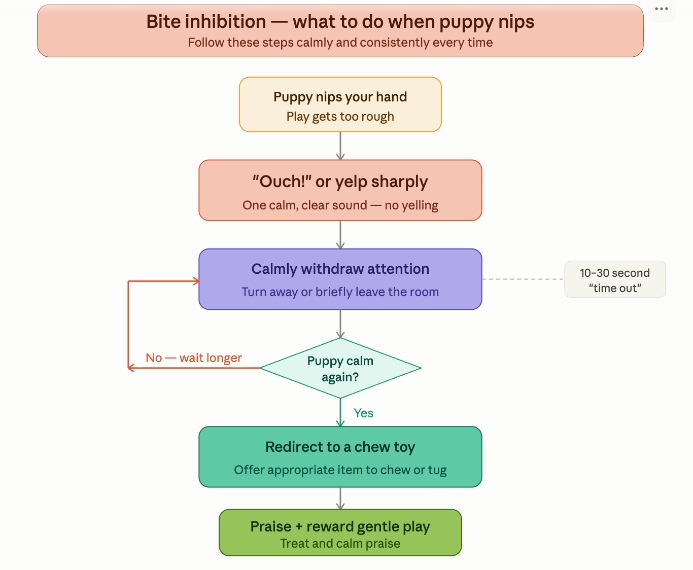
If your biting puppy does not back off when you yelp, cry “OUCH,” or immediately returns to playing too hard, stand up, firmly say “ENOUGH,” leave the room, and close the door behind you.
When outside, firmly say “ENOUGH” and walk away.
If possible, go inside and leave your pup outside for a minute or two so they can make the association that when they hurt you, they have no one to play with. Return and call the dog back to you.
Again, they must earn your pardon by following a simple command such as “sit.”
When they try to “make up” with you by licking, acting submissive, or trying to resume playing, allow them to show they are sorry and continue playing.
Teach puppies to play gently
Teaching a puppy to play gently can be a rewarding experience.
Positive reinforcement is a powerful tool that encourages desired behaviors through rewards.
Here are some practical examples of how to use positive reinforcement to promote gentle play:
Reward calm behavior
When your puppy plays with toys or interacts with you without nipping or being overly excitable, immediately reward them with praise, treats, or a favorite toy.
This helps them associate calm and gentle behavior with positive outcomes.
Teach a “gentle” command
Introduce a verbal cue or calming signal, such as “gentle” or “easy,” when your puppy starts to play rough.
When they respond by lowering their intensity or playing softly, give them a treat and lots of praise.
This reinforces the idea that gentle play is what you want.
Redirect and reward
If your puppy plays too roughly, redirect their attention to a toy or an appropriate chew toy.
Once they gently engage with the toy, offer treats and praise.
This teaches them what to play with and how to play gently.
Use controlled play sessions
Organize short play sessions to monitor your puppy’s energy levels. If they start to get too rough, take a break.
When they settle down, offer high-value treats and gentle praise. This teaches them that playtime continues when they remain calm.
Use soft toys
Encourage gentle play using soft toys or plush items. When your puppy successfully engages with these toys without being rough, reward it. Over time, it will learn to associate gentleness with these specific toys.
Encourage interactions with other pets
If you have other pets, monitor their playtime. When your puppy plays gently with them, reward the puppy with treats or praise.
This social reinforcement helps them understand the importance of being gentle with all household members.
Know the signs your puppy is playing too roughly
Watch for these body language cues that indicate play is becoming too rough:
• Stiff or tense body posture
• Growling that sounds serious or threatening (not playful)
• Intense, fixed staring or “hard eyes”
• Raised hackles along the back or neck
• Pinned-back ears or a tucked tail
• Snapping or biting without releasing
• One puppy trying to escape or hide
• Yelping, whining, or crying out in distress
• Play that doesn’t include “breaks” or pauses
Recognizing these signs early allows you to intervene before play escalates into genuine aggression or fear, keeping interactions positive and safe for everyone involved.
Common training challenges or mistakes
Teaching a puppy gentle play can be challenging.
Several common mistakes can hinder progress and lead to confusion.
Here are some challenges you may encounter and mistakes to avoid:
Overexcitement
Puppies often get overly excited during playtime, which can lead to rough behavior. This excitement can make it difficult for both the puppy and the owner to establish boundaries.
Inconsistent training
Consistency is vital. If different family members respond to the puppy’s play style differently, it can confuse the puppy and send mixed messages about acceptable behavior.
Puppy energy levels
Puppies have high energy levels, leading to bursts of enthusiasm that may turn into boisterous play. Managing this energy appropriately is vital to ensuring gentle play.
Lack of socialization
Puppies that haven’t been properly socialized may struggle to understand boundaries and appropriate play styles with other dogs or people.
Don’t encourage rough play
Avoid engaging in rough play or allowing others to do so. Wrestling games, tug-of-war, or encouraging biting can reinforce aggressive tendencies.
Neglecting shaping behavior
Instead of just telling your puppy to be gentle, it’s crucial to shape their behavior by rewarding calm interactions. Use treats, praise, or toys when they play gently.
Using negative reinforcement
Physical punishment or harsh corrections can lead to fear or aggression. It’s more effective to redirect their energy positively rather than punish unwanted behavior.
Ignoring signs of stress or overstimulation
Pay attention to your puppy’s body language. If it appears overwhelmed or stressed, it’s essential to take breaks and calm it down rather than pushing through the play session.
Failing to provide appropriate outlets
Puppies need appropriate outlets for their energy, such as chew toys or interactive games. Failing to provide these can lead to undesirable behaviors during playtime.

Be patient and consistent
Training a puppy to play gently requires both consistency and patience.
Here are some tips to help you navigate this process:
Set clear expectations
Define what “gentle play” means for your puppy. This could include soft mouthing, controlled movements, and no jumping on people. Be specific about the behaviors you want to encourage.
Use positive reinforcement
Reward your puppy with treats, praise, or playtime whenever it exhibits gentle behavior. This creates a positive association with gentle play and encourages the puppy to repeat the behavior.
Establish consistent commands
Use the same words and tones for commands such as “gentle” or “easy.” Consistency in your language helps your puppy understand what you expect from them.
Monitor play sessions
Keep an eye on playtime with other dogs or with people. While social interaction is vital, you must be cautious.
If things get too rough, intervene calmly and redirect your puppy to a gentler activity. This helps them learn boundaries.
Practice regularly
Incorporate gentle play into your daily routine. Short, frequent training sessions are often more effective than long, infrequent ones. This helps reinforce lessons without overwhelming your puppy.
Model gentle behavior
Show your puppy what gentle play looks like. Use your hands and body to demonstrate soft interactions. This will help them learn through observation.
Be patient
Understand that every puppy learns at their own pace. If your puppy struggles to grasp gentle play, remain calm. Patience is necessary to foster a trusting relationship.
Recognize triggers
Pay attention to what excites your puppy too much, which may lead to rough play. By identifying these triggers, you can manage the environment better and reduce overstimulation.
Take breaks
If playtime becomes too rambunctious, don’t hesitate to take breaks. A few minutes away from the play can help your puppy calm down and reset.
Involve others
Ensure everyone in your household is on the same page with training methods. Consistency among different people helps reinforce your bite-control lessons.
Implementing these tips can help your puppy learn to play gently while fostering a strong, trusting bond.
Get professional help
While most puppies respond well to consistent training, some may need extra support.
Consider consulting a certified dog trainer or veterinary behaviorist if your puppy displays:
• Persistent aggressive biting that intensifies despite training efforts
• Biting that breaks skin or causes injury regularly
• Extreme fearfulness or anxiety during everyday interactions
• Growling or snapping when approached or handled
• No improvement after several weeks of consistent training
• Behavior that seems to worsen rather than improve
Early intervention with a professional can address underlying issues and prevent problems from becoming ingrained.
A qualified expert can assess your puppy’s specific needs and create a tailored training plan that sets you both up for success.
The bottom line on gentle play for puppies
Teaching puppies gentle play and bite control is a rewarding endeavor that fosters a deeper bond between you and your furry friend.
You can create an environment where gentle play is encouraged and celebrated by employing positive reinforcement strategies such as rewarding calm behavior and introducing verbal cues.
It’s essential to set clear boundaries, remain consistent, and be patient, as this process can take time.
Consistency is the foundation of successful training.
The bite control and gentle play skills you’re teaching now aren’t just for puppyhood—they’re lifelong lessons that shape your dog’s behavior for years to come.
Every time you respond the same way to rough play, you’re strengthening your puppy’s understanding and building trust.
The patience and dedication you invest today will reward you with a well-adjusted, joyful companion who knows how to play safely and interact gently with everyone they meet.
Remember to manage your puppy’s energy levels and ensure proper socialization to help them thrive in various interactions.
By avoiding rough play and responding appropriately to their behavior, you can instill the importance of gentleness during playtime and throughout their lives, fostering a well-adjusted, happy companion.
Karen A. Soukiasian owns Good Dog! — Dog Training in St. Augustine, Florida. You can follow Karen on Facebook.