
When will your rescue dog finally relax? The 3-3-3 answer

You brought home a dog with an unknown past. One who flinches at loud noises, refuses to eat, or won’t stop pacing. In your mind, a quiet thought nags: What if I’m not enough for this dog?
That thought? It’s more common than you think.
And it doesn’t make you a bad owner. It makes you a human one.
Understanding your rescue dog’s adjustment period
Here’s something you might not hear at the shelter: rescue dogs don’t just settle in right away. They go through a difficult emotional transition, and it takes real time. Not just a weekend or a week, but months.
The 3-3-3 rule offers a practical way to think about your rescue dog’s adjustment. The idea is simple: the first three days, the first three weeks, and the first three months each represent a distinct stage of settling in.
Every stage comes with its own emotional terrain — for your dog and for you.
Knowing what to expect at each point makes it easier to stay patient and respond well.
The 3-day mark: initial shock and immediate needs
Think about the last time your life got completely flipped upside down.
New city, new job, new home, new everything. Remember that first week? The disorientation. The exhaustion. The way everything looked slightly wrong, even when nothing technically was.
That’s your rescue dog on day one.
It’s not a sign of behavior issues. During those first 72 hours, your dog is operating on pure instinct. They are adjusting to new surroundings. The smells are unfamiliar. The sounds are unpredictable.
They have no way of knowing whether you’re trustworthy or whether this place will last. Their entire focus is simply on making it through.
Some dogs withdraw — hiding in corners, skipping meals, barely lifting their heads. Others seem to run on nervous energy, unable to settle. Both responses are different expressions of the same thing:
Both simply show that your dog is overwhelmed.
In these first three days, the goal is low pressure. Hold off on introducing friends, pushing affection, or starting any formal training. Your dog doesn’t need stimulation right now — they need space to breathe and begin to feel safe.
Most anxious behaviors are normal, but call your vet if your dog refuses water, vomits repeatedly, seems very lethargic, or has diarrhea lasting more than a day. When in doubt, ask a professional. Your caution matters.
That said, some situations go beyond routine vet advice and require immediate action. Seek emergency care right away if your dog shows any of the following:
- Difficulty breathing or choking
- Severe or unprovoked aggression that puts people at risk
- Sudden collapse or loss of consciousness
- Seizures
- Signs of extreme pain, such as crying out, inability to move, or a rigid body
Trust your instincts. If something appears seriously wrong, don’t wait.
Phase 1: The first 3 days — shock and survival
✅ Dos
- Do set up a quiet, dedicated space (crate, bed, or calm corner) before your dog arrives
- Do keep the home calm and noise levels low
- Do stick to a simple, consistent schedule for feeding and bathroom breaks
- Do let your dog explore at their own pace
- Do speak softly and move slowly around them
- Offer water frequently and monitor intake
- Do call your vet if your dog refuses water, vomits repeatedly, or has diarrhea lasting more than a day
- Do seek emergency care immediately for seizures, collapse, difficulty breathing, or signs of extreme pain
❌ Don’ts
- Don’t invite friends or family over to meet the dog
- Don’t push affection or force physical contact
- Don’t start any formal training
- Don’t punish accidents — clean up and move on
- Don’t hover or follow your dog from room to room
- Don’t introduce other pets without slow, supervised transitions
- Don’t overwhelm them with toys, treats, or attention all at once
Common challenges during the first 3 days

The first three days can throw you some real curveballs.
Not eating. It’s alarming, but it’s normal. Stress suppresses appetite. As long as your dog is drinking water, give it time.
Accidents. Even a house-trained dog can regress under stress. Don’t punish. Just clean up and move on.
Hiding or freezing. Your dog may pick one spot and stay there. Let them. That’s their safe zone.
Excessive whining or barking. Anxiety is loud. Your dog isn’t being difficult — they’re communicating the only way they know how.
The biggest mistake new rescue owners make? Trying too hard. Too much affection and stimulation can slow the adjustment process. Sometimes the kindest thing you can do is stay calm and simply be there.
Give your dog a dedicated space — a crate, a bed in a calm corner, or a separate room. Make it theirs and keep it away from busy areas. If you have other pets, keep introductions slow and supervised. Don’t rush contact. Everyone adjusts better with space.
Set realistic expectations. Keep your home calm and predictable. Stick to a regular feeding and walking schedule, speak gently, and avoid hovering. Let your dog come to you when they’re ready.
The 3-week phase: building trust and routine
Somewhere around the three-week mark, something changes. It starts small — a tail that lifts when you walk through the door, a nose that follows a treat, a moment of genuine curiosity about a sound outside. These aren’t dramatic breakthroughs, but they signal something important: your dog is beginning to believe this place might actually be okay.
That said, relaxing a little is not the same as being fully settled. At three weeks, your dog is still figuring out the rules of this new environment, testing what’s allowed, and working through whatever they brought with them from before. This is also when behaviors masked by the initial shock begin to emerge.
For example, a quiet dog might start guarding resources, a calm dog might pull on the leash, or a “perfect” dog might jump on furniture.
If these behaviors become too much, feel unsafe, or put others at risk, it’s completely fine to ask a professional trainer or behaviorist for help.
Getting support shows you care about your dog’s long-term success.
This isn’t backsliding. This is your dog finally shedding their armor, revealing the delicate hope inside.
Phase 2: The first 3 weeks — trust and routine
✅ Dos
- Do establish a consistent daily routine (walks, meals, bedtime)
- Do begin short, positive training sessions (5–10 minutes)
- Do reinforce good choices immediately with treats, calm praise, or a gentle touch
- Do celebrate small milestones — a wag, a sigh, a moment of play
- Do set clear, gentle boundaries around furniture, food, and space
- Do reach out to the rescue or shelter for background information on your dog
- Do contact a trainer or behaviorist if behaviors feel unsafe or unmanageable
- Do give your dog a consistent sleeping spot
❌ Don’ts
- Don’t panic if new behaviors emerge — this is normal and expected
- Don’t mistake testing behavior for regression or failure
- Don’t use punishment-based training methods
- Don’t skip the routine on hard days — consistency is the point
- Don’t rush socialization with strangers or other dogs
- Don’t expect a linear path — some days will feel like steps backward
Behavioral changes to expect
At the three-week mark, anticipate a mix of progress and pushback. Your dog might start:
- Testing limits around food, toys, or space
- Showing more energy, and sometimes it might feel like too much.
- Becoming more vocal or more reactive on walks
- Displaying separation anxiety when you leave
These aren’t red flags. They’re signs of a dog who feels safe enough to have needs. Your job is to meet those needs consistently, not with frustration.
And while you’re managing the harder moments, don’t miss the small ones. A relaxed sigh after dinner. A soft, lingering gaze. A tail that finally wags.
These tiny milestones are easy to miss, but they matter enormously. Celebrate them. Screenshot them. Write them down. When the journey seems slow, those small wins are proof that something is working.
Tips for consistent training and bonding
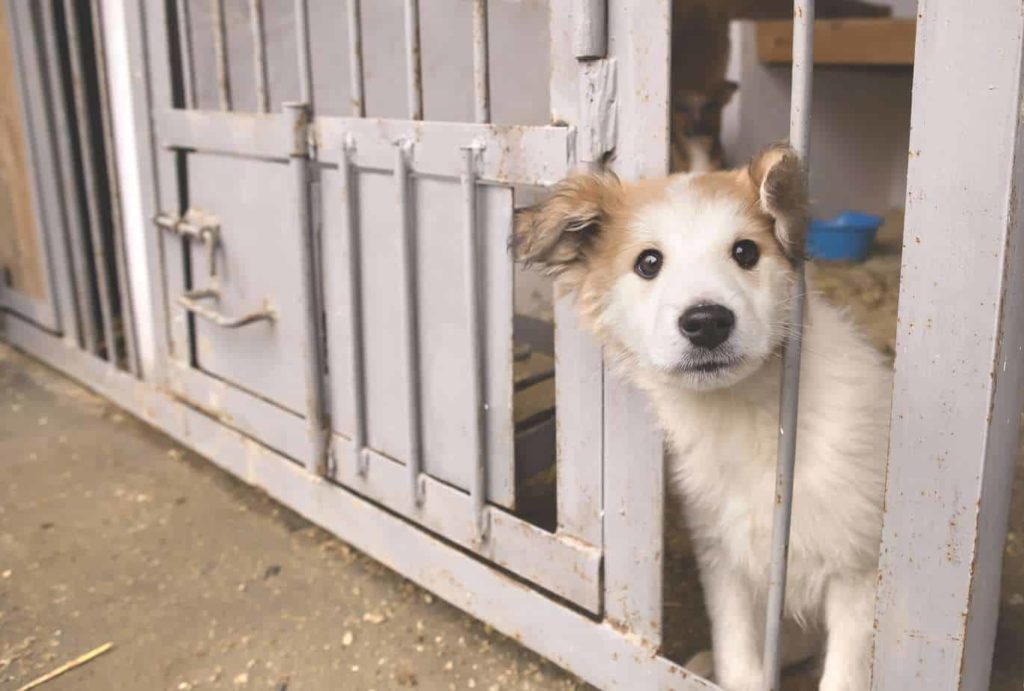
Start with the basics. Teaching your dog simple cues like sit, stay, and come gives them a clear language for what you need from them. Keep sessions short — five to ten minutes — and keep the energy positive. Brief, focused practice builds confidence without tipping into overwhelm.
Reinforce what you want more of. The moment your dog makes a good choice, acknowledge it — a treat, a calm word, a soft touch. Positive reinforcement doesn’t just shape behavior; it builds the kind of trust that punishment can never create.
Build your bond through routine, not big gestures. Walk together every morning. Sit in the same spot each evening. Be present and consistent. That’s how you form a strong relationship with a rescue dog.
One often-overlooked resource during this phase: the rescue or shelter your dog came from. The people who cared for your dog before you know their quirks, fears, and history better than anyone.
Don’t hesitate to reach out with questions about behavior, background, or what worked in the past.
Most rescues are happy to help, and that knowledge can make a real difference in how you connect with your dog.
The 3-month milestone: long-term adjustment and relaxation
By the three-month mark, the anxiety that defined those early weeks has largely faded. Your dog knows the rhythms of your household — when you wake up, when walks happen, even the particular sound of your footsteps. Things that once triggered wariness now barely register.
This is when your dog stops merely enduring and starts inhabiting their life with you. Their personality comes into full view — the quirks, the preferences, the sense of humor some dogs seem to have. And the relationship, which once took real effort to tend, starts to feel natural.
None of this arrives all at once. It’s built from the accumulated weight of small, unremarkable moments: the walks you took even when they were hard, the boundaries you held even when it felt easier to let things slide, the evenings you simply sat nearby and let your dog decide when to close the distance. Those moments compound quietly until one day, you realize something has changed.
Phase 3: The first 3 months — settling and true bonding
✅ Dos
- Do build on training with more advanced skills (impulse control, tricks, nose work)
- Do gradually broaden socialization in calm, controlled settings
- Do schedule a full vet checkup around the three-month mark
- Do discuss spaying or neutering with your vet if not yet done
- Do stay curious — personality and quirks will keep emerging
- Do bring in a trainer if new challenging behaviors arise
- Do acknowledge and enjoy how far you’ve both come
❌ Don’ts
- Don’t assume the work is done just because things feel easier
- Don’t ignore late-emerging behaviors — address them early with professional help if needed
- Don’t stop the routine now that your dog seems settled — it’s what got you here
- Don’t push socialization too fast just because your dog seems confident
- Don’t forget to take care of yourself — the adjustment period is demanding for owners too
Signs your dog is settling in
You’ll know your dog has turned the corner when you see:
Relaxed body language. Loose, wiggly movement, a tail that wags from the whole back end, not just the tip.
Seeking your company — not from anxiety, but genuine desire.
Playfulness. Bringing a toy, starting a game, or just being a dog who feels safe.
Sleeping deeply. Belly up, fully relaxed. That’s the payoff.
Common myths vs. realities
Even with the best intentions, a lot of well-meaning advice floating around the rescue world is flat-out wrong. These misconceptions can make owners panic unnecessarily or, worse, give up too soon. Here’s what’s actually true.
Myth: “If we don’t bond in the first few days, they never will.”
Reality: Many rescue dogs take weeks or even months before showing real affection. The 3-3-3 rule exists precisely because bonding is a slow, nonlinear process. A dog who seems indifferent on day two might be sleeping with their head in your lap by week six.
Myth: “Ignoring bad behavior is cruel.”
Reality: Ignoring certain behaviors — like jumping, whining for attention, or pawing — is actually a well-established training technique. It removes the reward (your attention) and teaches your dog that calm behavior gets results. Ignoring is not neglect. It’s a strategy.
Myth: “A dog who was abused will always be aggressive or fearful.”
Reality: Past trauma shapes behavior, but it doesn’t define it. With patience, consistency, and sometimes professional support, many dogs with difficult histories go on to become confident, joyful companions.
Myth: “You shouldn’t crate a rescue dog — it feels like punishment.”
Reality: When introduced properly, a crate becomes a sanctuary, not a sentence. Many rescue dogs actively seek out their crate because it’s the one space that’s entirely theirs.
Myth: “If my dog was fine at the shelter, they should be fine at home.”
Reality: Shelter behavior is a survival mode, not a full personality. Some dogs are calmer in structured shelter environments and need time to decompress at home. Others seem shut down at the shelter but bloom once they feel safe.
Knowing what’s real helps you stay grounded when things feel uncertain — and keeps you from measuring your dog’s progress against the wrong yardstick.
A note on your own well-being

Caring for a rescue dog is emotionally demanding. The uncertainty, the setbacks, the constant reading of signals — it adds up. It’s okay to feel drained. But self-care during this period isn’t a luxury. It’s part of the job.
Here are a few ways to take care of yourself while you’re taking care of your adopted pet.
Set realistic daily goals. Instead of “my dog will be fully settled this week,” try “today I’ll take one calm walk and stick to the feeding schedule.” Small, achievable goals reduce overwhelm and help you recognize progress.
Build in short mindfulness moments. Even five minutes of deep breathing before your morning walk can shift your nervous system into a calmer state — and dogs pick up on that calm. Apps like Calm or Insight Timer offer quick, guided sessions that fit into any routine.
Connect with a rescue community. Online forums, local adoption groups, and social media communities for rescue dog owners are full of people who genuinely understand what you’re going through. Sharing a frustrating moment or a small win with people who get it is more restorative than you’d expect.
Let yourself feel the hard days. Some days will be discouraging. Acknowledge it without catastrophizing. One rough day doesn’t erase the progress you’ve made.
Lean on your support system. Talk to a friend, partner, or therapist about the emotional weight of this transition. You don’t have to process it alone.
A calmer, steadier you is one of the best things you can offer your dog. When you regulate yourself, you help regulate them.
My dog’s 3-3-3 journey
Tracking checklist
Dog’s Name: ___________________________ Adoption Date: ___________________________
Breed/Mix: ___________________________ Age: ___________________________
Rescue/Shelter: ___________________________
Phase 1: Days 1–3 — shock and survival
Date Range: _________________ to _________________
Milestone tracker
- Dog arrived home safely
- Dedicated quiet space set up (crate, bed, or calm corner)
- Dog drank water within the first 24 hours
- Dog ate something within the first 48 hours
- No emergency health concerns observed
Behavior log
Check all that apply and add notes:
- Hiding or freezing — Where? ___________________________
- Refusing food — How many meals skipped? _______________
- Accidents in the house — Frequency: ___________________
- Excessive whining or barking
- Nervous energy / unable to settle
- Calm and quiet (shutdown behavior)
- Other: ___________________________
Notes & observations
Vet questions
(Write down anything you want to ask at your first appointment)
Rescue/Shelter questions
(Background, history, what worked before)
Phase 2: Weeks 1–3 — trust and routine
Date Range: _________________ to _________________
Milestone tracker
- Consistent daily routine established (meals, walks, bedtime)
- Dog accepts treats from my hand
- Dog makes eye contact with me
- First tail wag observed — Date: ______________________
- First moment of play or curiosity observed — Date: ______________________
- Dog seeks proximity or contact voluntarily
- Basic training sessions begun (sit, stay, come)
- Dog sleeps through the night
Behavior log
Check all that apply and add notes:
- Resource guarding (food, toys, space) — Describe: ___________________
- Leash pulling or reactivity — When/where: ______________________
- Jumping on furniture or people
- Separation anxiety when I leave — Severity (mild/moderate/severe): ______
- Increased vocalization
- New energy or playfulness emerging
- Other: ___________________________
Small wins
(Write down the moments worth celebrating)
Trainer or behaviorist questions
Phase 3: Months 1–3 — settling and bonding
Date Range: _________________ to _________________
Milestone tracker
- Dog knows and responds to their name reliably
- Dog follows basic cues (sit, stay, come) consistently
- Relaxed body language observed regularly (loose wiggles, belly-up sleeping)
- Dog seeks my company — not from anxiety, but genuine desire
- Dog shows playfulness (brings toys, initiates games)
- Dog comfortable with household routine and sounds
- Full vet checkup completed — Date: ______________________
- Spay/neuter discussed with vet — Decision: ______________________
- Dog introduced to at least one new environment calmly
Behavior log
Check all that apply and add notes:
- Full personality starting to emerge — Describe: ___________________
- Late-emerging behaviors to address: ___________________________
- Challenges still present: ___________________________________
- Improvements since Phase 1: ________________________________
Biggest changes since day 1
Vet (questions 3-month checkup)
Trainer questions (Next steps)
Notes & reflections
What has been hardest so far?
What has surprised me most?
What has worked best?
What do I want to focus on next?
Remember: Progress is rarely linear. Every dog moves at their own pace — and so do the people who love them.
Life after three months: what comes next
Reaching the three-month mark is a genuine milestone — but it’s also a beginning. Your dog has found their footing. Now comes the work of building on it.
Deepen training. Move beyond the basics with impulse control, nose work, agility, or trick training. Mental stimulation strengthens your bond in ways a daily walk simply can’t.
Broaden socialization gradually. Introduce new environments, people, and animals in a controlled way — dog-friendly patios, quiet parks, or a calm playdate can help your dog build real-world confidence.
Schedule a full vet checkup. Three months in is a natural time for a comprehensive exam covering weight, dental health, parasite prevention, and any behavioral concerns.
Address spaying or neutering if not yet done. Most organizations recommend waiting until a dog is settled, which they likely are by now. Your vet can advise on timing.
Watch for late-emerging behaviors. New behaviors — good and challenging — can surface well past the three-month mark. Stay curious, stay patient, and bring in a trainer if something difficult arises.
The 3-3-3 rule gives you a map for the first chapter. What comes after is the rest of the story — and it’s one worth sticking around for.
When you strip it all back, your rescue dog isn’t asking for perfection. They’re asking for consistency — someone who shows up the same way, day after day, even when things are messy or slow. Setbacks will happen. They don’t mean you’re failing. They mean you’re in the middle of something real.
You already care enough to wonder if you’re doing it right. That’s exactly the kind of owner a rescue dog needs.
The 3-3-3 rule isn’t magic. It’s a map. Now you have it.
Sara B. Hansen has spent 20-plus years as a professional editor and writer. She’s also the author of The Complete Guide to Cocker Spaniels. She created her dream job by launching DogsBestLife.com in 2011. Sara grew up with family dogs, and since she bought her first house, she’s had a furry companion or two to help make it a home. She shares her heart and home with Nutmeg, a Pembroke Welsh Corgi. Her previous dogs: Sydney (September 2008-April 2020), Finley (November 1993-January 2008), and Browning (May 1993-November 2007). You can reach Sara @ editor@dogsbestlife.com.