
10 warning signs your dog is in pain (and what to do about it)

Your dog can’t tell you where it hurts, but their body gives clues. Many owners miss the warning signs that their dog is in pain until the problem gets worse. Learning to spot them early can make a big difference.
Dogs are good at hiding pain. This isn’t a flaw, but a survival instinct. In the wild, showing weakness can be dangerous. That’s why dogs often act normal, even when they’re hurting.
Often, by the time owners notice a problem, it has been building for days or weeks.
This guide on how to tell if your dog is in pain helps you move from just detecting something is wrong to knowing when to call the vet.
Some signs can be observed for a short time, while others require immediate action. Knowing which is which can save your dog’s life.
Here are 10 warning signs your dog is in pain, what they could mean, and advice on when to contact your vet.
1. Sudden changes in behavior or personality
- 1. Sudden changes in behavior or personality
- 2. Excessive licking, chewing, or scratching one area
- 3. Limping or favoring one leg
- 4. Changes in eating, drinking, or bathroom habits
- 5. Unusual vocalizations — whimpering, howling, or yelping
- 6. Changes in posture or gait
- 7. Heavy or labored breathing at rest
- 8. Reluctance to move, jump, or climb stairs
- 9. Squinting, tearing, or pawing at the eyes or face
- 10. Trembling or shaking without being cold
- What to do when you spot warning signs your dog is in pain
This warning sign often catches people off guard. A dog who is usually playful and friendly may suddenly want to be alone. A gentle dog might start snapping when touched, or stop greeting you at the door.
Pain changes personality. Full stop.
If your dog becomes withdrawn, irritable, or suddenly aggressive, don’t ask yourself, “What did I do wrong?” Instead, ask, “Where does it hurt?” Dogs can’t tell you, “I have a headache, leave me alone,” so they show it through their actions.
Look for signs such as hiding in unusual places, flinching when touched, growling when handled, or low energy. These are not attitude problems; they are warning signs.
2. Excessive licking, chewing, or scratching one area
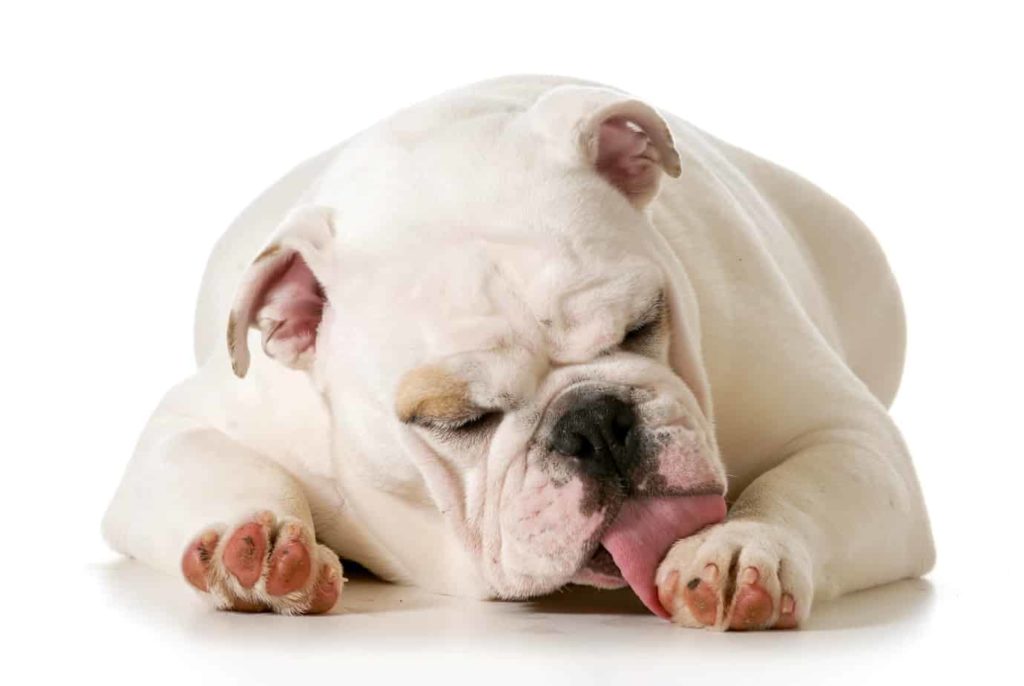
Dogs comfort themselves by licking, much like people rub sore muscles without thinking. This instinct can also show up with internal pain. For example, a dog with an upset stomach might keep licking their belly or sides, even if you can’t see anything wrong.
Before you assume it’s just allergies or boredom, notice where your dog is licking. If they keep licking the same paw, it could be a thorn, a cyst, or joint pain.
If they chew on their lower back, it might be a spine or hip problem. Repeatedly scratching one ear could indicate an ear infection, which can be very painful.
Allergies are real and can cause itching, but they usually affect several areas and often come with other skin symptoms or follow seasonal patterns. If your dog keeps focusing on one spot, it’s different. This is their way of telling you something is wrong.
Do a quick check at home: gently look at the area your dog is licking for wounds, swelling, redness, or anything stuck in their fur or skin. If you see sores, pus, swelling, or if your dog seems in pain when you touch the area, call your vet.
If the behavior lasts more than a day or you can’t find a clear reason, don’t wait. Ask your vet to examine for hidden injuries or infections.
3. Limping or favoring one leg
Limping might seem obvious, but it’s often misunderstood. Some people see their dog limp after a walk and think, “He’s just tired.” Others notice their older dog moving stiffly and assume it’s just age.
You should always pay close attention to limping.
A mild limp after exercise might get better with a day or two of rest. But if the limp lasts more than 2 days, gets worse, or is accompanied by swelling, heat, or your dog avoids putting weight on the leg, see your vet.
For older dogs, what looks like “slowing down” is often due to joint pain, such as arthritis, hip dysplasia, or ligament issues. These problems are much easier to manage if you catch them early, but they get harder to treat when ignored.
Don’t ignore a limp. Look into the cause.
4. Changes in eating, drinking, or bathroom habits
Pain can disrupt your dog’s appetite, digestion, and daily routine. If your dog skips one meal, it’s not always an emergency. But if they refuse food for more than 24 hours or drink much less than usual, it’s time to pay closer attention.
Stomach pain shows up in special ways: hunching over the food bowl, walking away from food, retching without relief, a swollen belly, or straining to go to the bathroom. These are not just quirks; they could mean anything from ulcers to serious emergencies, such as bloat.
Indoor accidents are another sign that’s easy to miss. If a house-trained dog starts having accidents, they aren’t being stubborn.
They might be in too much pain to go outside, or they could have a nerve or urinary problem. This isn’t your fault, and your dog isn’t doing it on purpose.
Don’t punish them. Instead, comfort your dog, keep things calm, and try to reduce their stress until you find out what’s wrong. Look for the cause.
5. Unusual vocalizations — whimpering, howling, or yelping
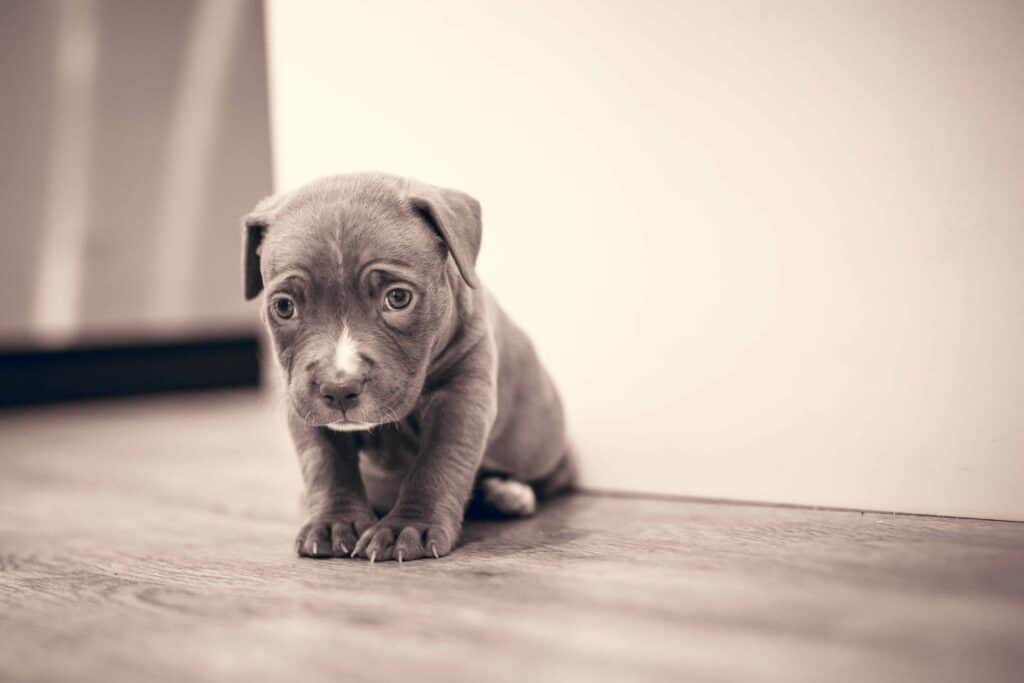
If your dog yelps suddenly during a walk, when getting up, or when touched, it’s a clear sign of pain. Don’t ignore it.
A dog who goes silent may hurt just as much. Some vocalize, some don’t. Silence, especially with other changes, is also telling.
Context is important. A dog whining for dinner will stop once they’re fed.
But if your dog whimpers when changing position at night, it’s not just for attention. Pain-related sounds frequently happen without warning and get worse over time.
Trust the yelp. It means something.
6. Changes in posture or gait
These changes often happen slowly, so they’re easy to miss. But your dog’s posture can give you important clues.
A hunched back can mean belly or spine pain. If your dog suddenly tucks their tail, it might be a hip or lower back problem. A stiff walk can point to joint or muscle trouble.
Watch how your dog moves when they think you aren’t watching. Do they hesitate turning, shift weight oddly, or struggle to settle when lying down?
It’s easy to miss these small changes and think, “She’s just getting older.” That might be true, or she could be in pain and has learned to cope. Both are possible, but only pain can be treated.
7. Heavy or labored breathing at rest
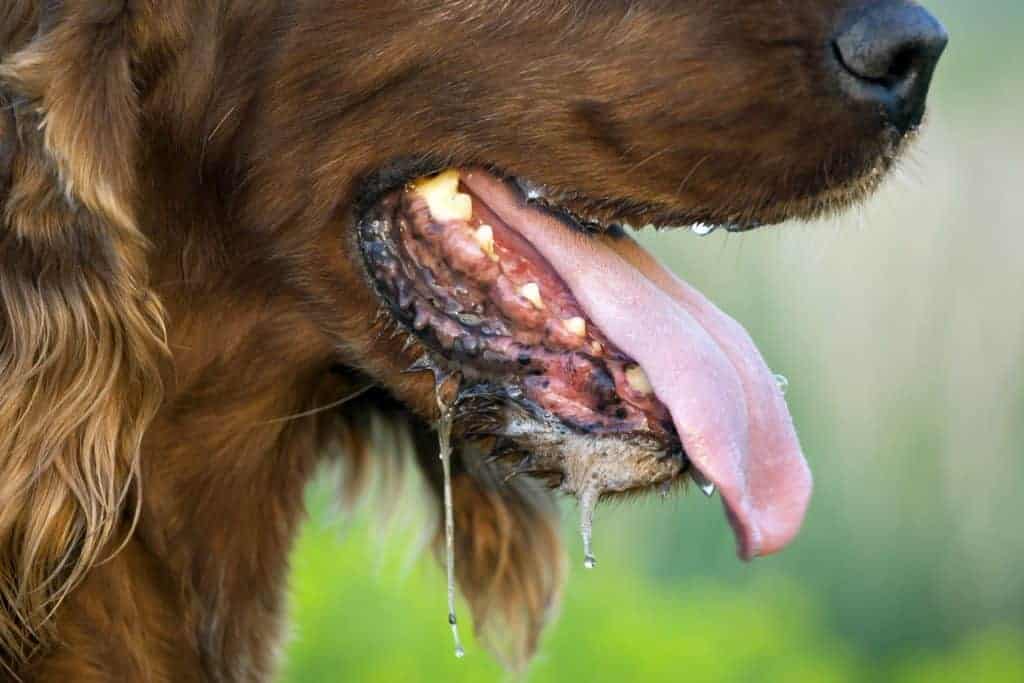
Panting after exercise, when it’s hot, or when your dog is excited, is normal. But if your dog pants while resting in a cool, calm room, it could be a sign of pain.
Pain triggers stress. It leads to rapid, shallow breathing, even at rest. A dog panting heavily while lying down may be in pain.
How your dog looks when panting is important. Panting from heat is open-mouthed, relaxed, and comes with a loose tongue.
Panting from pain usually looks more forced. The dog seems uncomfortable, can’t settle, and breathes with effort.
If you also see pale or blue gums, shallow, rapid breathing, or your dog guarding their chest, treat it as an emergency. Internal injuries and chest pain can look like this.
8. Reluctance to move, jump, or climb stairs
Think back to when your dog used to jump onto the couch easily. If they now hesitate or refuse to jump, something has changed. It’s probably not a lack of excitement.
When a dog doesn’t want to move, it often means pain in their muscles or joints, like arthritis, IVDD, or sore muscles. In large breeds, hip dysplasia can first show up as hesitation to climb, not as sudden collapse.
Don’t confuse caution with laziness. If a dog who loves fetch now stops after one throw, they’re not bored. If a dog who used to race you now lags, they’re not being stubborn. They’re trying to avoid pain.
Catching problems early makes a big difference. Arthritis, for example, can be managed with medication, joint support, and lifestyle changes if you catch it early enough.
9. Squinting, tearing, or pawing at the eyes or face
Pain in the face is often missed, but it’s more common than many people think. Eye problems, dental disease, ear infections, and sinus issues can all cause discomfort, and dogs often exhibit similar behaviors in response to each.
If your dog is squinting, tearing up, or has red or cloudy eyes, it could be a scratch or glaucoma. If your dog suddenly develops severe eye pain, is squinting or pawing at the eye, and the eye looks red or cloudy, get them to the vet the same day. Glaucoma can get worse quickly, and waiting can lead to permanent vision loss.
Dental pain is very common and often overlooked, so it deserves special attention. Most dogs over 3 years old have some form of dental disease. Signs include pawing at the mouth, dropping food, chewing on one side, worsening bad breath, or not wanting their face touched. Dental pain is real and treatable, but only if you catch it.
The good news is you can do a lot to prevent dental problems. Make dental care part of your routine by brushing your teeth regularly at home, using dental chews, and scheduling dental checkups with your vet. Even brushing a few times a week helps.
Taking care of your dog’s teeth not only keeps their smile healthy but also helps prevent pain and other health problems.
10. Trembling or shaking without being cold
It’s normal for dogs to shiver when they’re cold or scared. But trembling without a clear reason is not normal.
Shaking for no clear reason can mean several serious problems, like pain (especially in the belly or muscles), poisoning, low blood sugar, nerve issues, or Addison’s disease. All of these need quick attention.
Here’s how to tell what’s going on. If your dog is shaking but still alert, responsive, and has no other symptoms, they may be in pain or anxious.
But if your dog is trembling, seems confused, has glassy eyes, drools a lot, or collapses when trying to walk, that’s an emergency. Don’t wait—call an emergency vet right away.
Tremors caused by nerve problems have a certain pattern. They are rhythmic, often affect just one part of the body, and may be accompanied by other signs such as head tilting or loss of coordination. If you see this kind of shaking, get help quickly.
What to do when you spot warning signs your dog is in pain
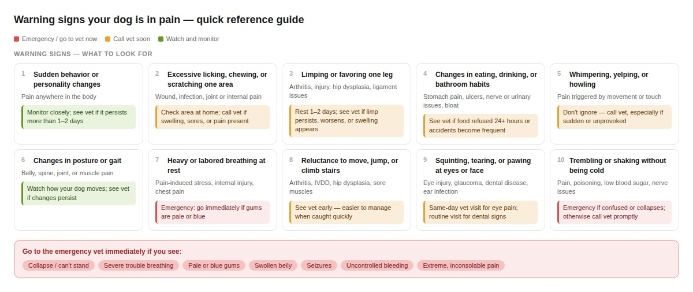
One sign alone might have a simple cause. But if you see two or more signs at once, your dog is giving you a clear warning.
The best thing you can do is act early. Pain that’s treated right away is much easier to manage than pain that’s been going on for months. Vets can help with slow, hidden problems—not just emergencies.
If you see two or more of these signs at the same time, don’t wait for things to get worse. Make a vet appointment. Tell your vet exactly what you’ve noticed, when it started, and how often it happens. This information is very helpful and can speed up the process of finding the problem.
Some signs mean you need emergency care right away. Go to an emergency vet clinic immediately if your dog collapses, can’t stand, has sudden or severe trouble breathing, is in extreme pain (crying, yelping, or can’t get comfortable), has pale or blue gums, keeps vomiting and can’t keep water down, has a swollen belly, is having seizures, or is bleeding heavily and you can’t stop it. If you’re not sure, call your vet or an emergency clinic for advice.
Your dog can’t speak for themselves. That’s where you come in. By reading this, you’re already showing you care and are paying attention.
Sara B. Hansen has spent 20-plus years as a professional editor and writer. She’s also the author of The Complete Guide to Cocker Spaniels. She created her dream job by launching DogsBestLife.com in 2011. Sara grew up with family dogs, and since she bought her first house, she’s had a furry companion or two to help make it a home. She shares her heart and home with Nutmeg, a Pembroke Welsh Corgi. Her previous dogs: Sydney (September 2008-April 2020), Finley (November 1993-January 2008), and Browning (May 1993-November 2007). You can reach Sara @ editor@dogsbestlife.com.