
Spring hiking with dogs: The safety checklist you need to hit the trail

Picture this: your dog has been restless since February, nose pressed to the window, watching the world stay frozen. One morning, the sun returns, mud appears, and you grab the leash. The tail goes wild.
Spring hikes with your dog are wonderful, but early-season trails can conceal serious hazards beneath melting snow, in tiny organisms, or among dangerous plants.
Prepare ahead so you and your dog avoid accidents and enjoy safe adventures. Don’t overlook these risks.
Get your dog “trail-ready” before the first hike
Make sure your dog is truly ready for the trail—not just excited to go.
Schedule a vet visit. Winter inactivity affects dogs the same way it affects us. If your dog is older, carries a few extra pounds, or has joint issues, check with your vet before hitting a strenuous trail. It’s also the right time to confirm that vaccinations are up to date.
Ask about the leptospirosis vaccine specifically. Lepto is a bacterial illness spread through wildlife urine that can contaminate outdoor water sources. Spring is the prime exposure season. If your dog isn’t vaccinated, talk to your vet about whether it’s worth getting it vaccinated.
Ensure heartworm and flea/tick prevention. Do not skip heartworm and flea/tick prevention before your first hike. Early tick season can bring immediate danger to your dog. The season is with a long, challenging hike. Instead, gradually increase the distance over a few weeks. Your dog’s muscles, joints, and paw pads need time to adjust.
Avoid long or strenuous trails if your puppy is under a year old, as their bones are still developing, and rough terrain can cause lasting harm. Instead, take your puppy on short walks on grass or dirt, or choose quiet, flat paths for gentle outings. Keep walks brief, allow plenty of sniffing, and include gentle play in secure, enclosed spaces. This gradual approach helps puppies experience new environments while protecting their growing bodies.
Check your dog’s ID. Make sure the microchip is registered and up to date, and that ID tags are attached and easy to read before you head out.
What makes spring trails different (and more dangerous)
Spring hiking comes with unique risks. Watch for these hazards.
Ticks
Ticks become much more common in spring. Start prevention before your first hike. After each outing, check your dog’s ears, between their toes, around the collar, under the tail, and in the groin, since these are common places for ticks to hide.
If you find a tick, use tweezers to pull it straight out without twisting. If the area becomes inflamed or your dog shows signs of fever or tiredness in the days after, contact your vet.
Water dangers
Spring water looks refreshing. Spring water may look enticing, but it can be dangerous, carrying hidden toxins or strong currents that can seriously harm your dog. Lots may contain de-icing chemicals. Even a small amount can upset your dog’s stomach or cause more serious problems.
Standing water and slow creeks can expose your dog to life-threatening leptospirosis. Fast streams from melting snow can sweep your dog away in seconds. Avoid letting them drink from natural sources. This greatly reduces trail risks in spring.
Paw hazards
As snow melts, sharp rocks, broken branches, and hidden debris can cause sudden, painful paw injuries for your dog. Try the 5-second test: press your hand to the surface. If it feels too hot after 5 seconds, it’s too hot for your dog’s paws.
Consider paw wax or dog boots for rocky terrain.
Choose paw wax made from natural ingredients that offers strong protection and is easy to use.
For boots, pick ones with a secure, adjustable fit and non-slip soles. Brands like Ruffwear and Muttluks are good options.
Let your dog try boots or wax at home before the hike so they can get used to them.
Unpredictable weather
Spring weather, especially in the mountains, can change quickly. A sunny morning can turn into a hailstorm by afternoon.
Bring a light jacket for short-haired dogs and learn the signs of hypothermia: shivering, tiredness, and stiff muscles. If your dog shows any of these, warm and dry them right away.
Wildlife
Spring is breeding and denning. Spring means breeding and denning for wildlife, making animals in these areas more aggressive, territorial, and unpredictable. Encounters can be dangerous. At dusk, when animals are most active. Keep your dog on a leash in areas with lots of wildlife, since even a calm dog can provoke a coyote, bear, or snake.
The spring trail kit: What to pack for your dog
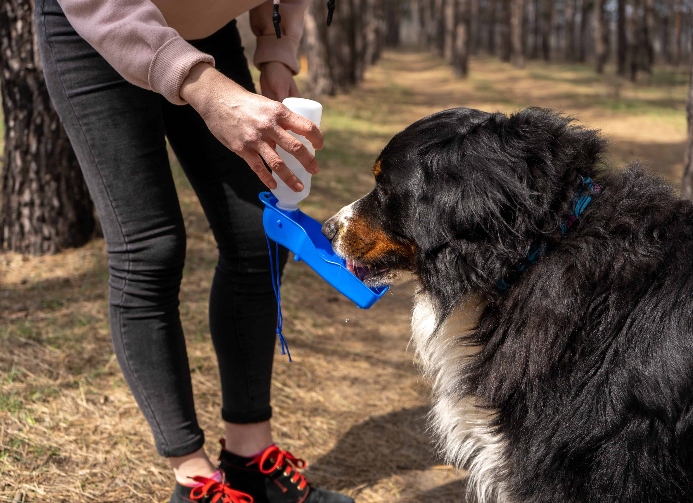
Here’s what to pack so your dog is prepared for spring hikes.
Must-haves:
- Fresh water — at least 8 ounces per mile, and more if it’s warm, and a bowl
- Dog-safe first aid kit (tweezers, antibacterial wipes, gauze)
- Poop bags (always pack out your dog’s waste)
- Extra leash
- The dog’s ID tags and a photo of vaccination records on your phone
Nice to have:
- Paw wax or dog boots for rocky terrain
- Dog-safe sunscreen for pink-nosed, light-haired, or short-haired breeds
- Emergency dog sling (the Fido Pan). An emergency dog sling can be a lifesaver for remote or long hikes—if your dog gets injured far from the trailhead, you need to act fast. Without a sling, quickly improvise a stretcher using a jacket and trekking poles, carry small dogs, or wrap the limb and call for help as soon as you have service, fast in an emergency.
On the trail: How to read your dog and hike responsibly
Your dog can’t say when they’re tired, so it’s up to you to notice the signs.
Keep your dog on a leash unless the trail clearly allows off-leash hiking and your dog always comes when called. Before you go, check the leash rules for your trail. You can find this information on park websites, at trailhead signs, or by asking a ranger. Most public lands and all national parks require leashes for safety.
Yield on narrow trails. Step aside for other hikers and equestrians. Not everyone, or every dog, wants to say hello, and that’s OK.
Take rest breaks. If you’re feeling tired, your dog probably is too, even if they don’t show it right away.
Know when it’s time to turn back. Never ignore these critical warning signs during a hike: limping, constant heavy panting, lagging, or refusal to move. Stop and turn back at the first sign of trouble—a delay can cause serious harm.
Post-hike actions
Post-hike actions matter as much as trail safety itself.
Do a tick check before the dog gets in the car. It takes two minutes, and it’s far easier to find ticks in daylight than to discover one later.
Check your dog’s paws for cuts. Inspect your dog’s paws thoroughly for cuts, thorns, or embedded plant material. Foxtails and grass awns are especially dangerous—they can burrow deep and cause severe infection if missed. Remove hazards immediately.
Let them rest. Dogs might not show they’re tired until after the hike, so don’t be fooled by any bursts of energy.
Give them a bath or a thorough brushing. After each hike, wash or brush your dog thoroughly to catch any hidden dangers.
Watch closely for signs of illness or injury (vomiting, unusual tiredness, limping, or excessive water intake) in the next 24 to 48 hours.
These can indicate a serious medical issue—contact your vet immediately if you see any warning signs.
Final thoughts on spring hiking with dogs
Being with a well-prepared dog is one of the best parts of being a dog owner.
Muddy paws, wagging tails at every new scent, and the way your dog looks back at you on a long climb to check if you’re keeping up—these moments are hard to beat.
A little preparation goes a long way. Bookmark this guide for the season, book a vet visit, and find a trail.
Your dog has been waiting long enough.
Sara B. Hansen has spent 20-plus years as a professional editor and writer. She’s also the author of The Complete Guide to Cocker Spaniels. She created her dream job by launching DogsBestLife.com in 2011. Sara grew up with family dogs, and since she bought her first house, she’s had a furry companion or two to help make it a home. She shares her heart and home with Nutmeg, a Pembroke Welsh Corgi. Her previous dogs: Sydney (September 2008-April 2020), Finley (November 1993-January 2008), and Browning (May 1993-November 2007). You can reach Sara @ editor@dogsbestlife.com.