
Why 8 in 10 dog parents feel deeper love for pets than partners

An Honest Kitchen survey of 2,000 dog owners in serious relationships found that 80% feel a deeper and more immediate emotional connection with their pets.
In contrast, only 69% reported a similar immediate bond with their partners.
Regarding “love at first sight,” 87% of dog owners believed they experienced this feeling with their pets, compared to 62% who felt it with another human being.
Despite these glowing sentiments, unfortunately, not every dog adoption is a perfect match from the start.
About 19% of respondents indicated they needed time to build a deep bond with their dog.
Among those who took longer to connect, 20% expressed doubts about whether they made the right choice in adopting a pet.
The survey, commissioned by The Honest Kitchen and executed by Talker Research, asked dog owners what they wish they had known before adoption.
A notable number of survey insights focused on food, revealing that 76% of dog parents view food as their pet’s “love language,” over half (53%) admitted they feed their dogs better than themselves.
Love at first sight
The survey results underscore the powerful bonds that can form between dogs and their owners.
A whopping 80% of dog owners reported an instant connection with their pets.
This statistic emphasizes the immediate embrace of love that accompanies adoption.
An eye-opening 87% of dog owners believe they’ve encountered love at first sight with their pets.
Compared with the 62% who felt similarly about their partners, the numbers reveal a clear trend: dogs are often seen as more straightforward to love unconditionally and instinctively, reflecting the nature of their companionship.
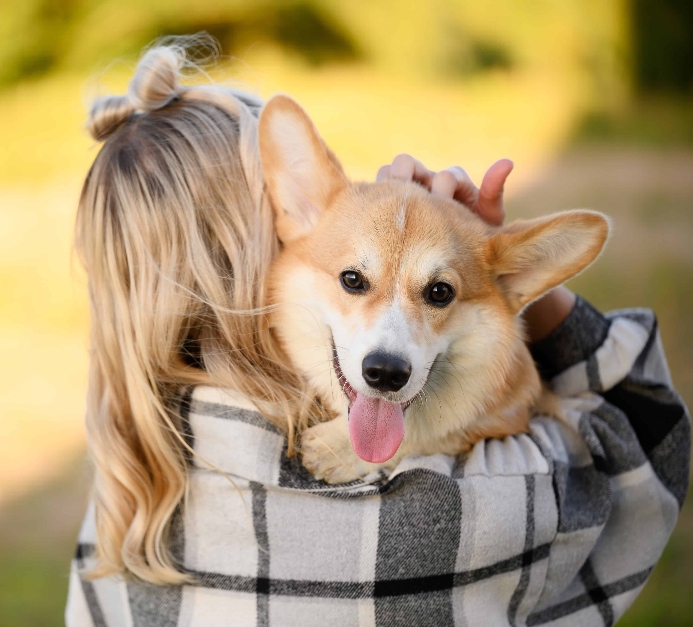
Instant emotional connection
The emotional bond between pet parents and their dogs can often surpass the connections formed with human partners.
Several psychological factors contribute to this phenomenon, making pets a significant source of emotional support and companionship.
Unconditional love: Pets offer unconditional love and acceptance, particularly dogs and cats.
Unlike human relationships, where betrayal, misunderstanding, or performance expectations can create barriers, pets provide a consistent, non-judgmental presence.
This can lead to feelings of safety and trust, fostering a deep emotional bond.
Non-verbal communication: Pets communicate through body language and sounds rather than verbal language, which can simplify interactions.
This non-verbal communication often feels more genuine and immediate, allowing for a connection that transcends complex human communication intricacies.
People may find solace in the straightforward emotional exchanges with their pets, feeling understood without needing words.
Stress relief: Interacting with pets has been shown to reduce stress levels and promote happiness.
Physical touch, such as petting a dog or cuddling a cat, releases oxytocin, a hormone that promotes bonding and affection. It can also improve cardiovascular health and provide mental health benefits.
This response may be more readily accessible in pet interactions than human relationships, where conflict or emotional baggage can complicate physical affection and comfort.
Shared experiences: Pets often accompany their owners through life’s ups and downs, experiencing joyous and challenging moments together.
This shared journey can create a unique bond, making pets feel like trusted companions who have been there for every step, unlike human partners who may come and go.
Projection of emotions: Humans often project their feelings onto their pets, perceiving them as emotional mirrors that reflect their states of being.
This projection can deepen the emotional connection, as owners seek solace and understanding from their pets during distress, reinforcing their bond.
Building bonds
Although most connect immediately, 19% required bonding time with their dog.
This highlights a crucial aspect of pet ownership—not every connection is instantaneous, and sometimes it takes patience and understanding to foster a deep emotional relationship.
Among those who took longer to connect, 20% worried about whether they had made the right adoption decision.
Here are some tips to help you create that strong connection and improve the pet ownership experience:
Establish routine and structure: Dogs thrive on routine. By setting a consistent schedule for feeding, bathroom breaks, walks, and playtime, you help your new pet feel secure in their environment.
Engage in playtime: Play is a great way to bond with your dog. To foster engagement, use toys, balls, or even a simple game of fetch.
Choose interactive toys that match your dog’s age, breed, and energy level.
Positive reinforcement training: Training your dog using positive reinforcement techniques can significantly enhance your bond.
Reward your dog with treats, praises, or affection when they follow commands or exhibit good behavior.
Explore new environments together: Take your dog on new adventures, such as walking in a nearby park or visiting a pet-friendly café.
Exposing your dog to new environments makes them feel more secure and helps them associate you with enjoyable experiences.
Quality one-on-one time: Spend dedicated quality time with your dog.
Whether grooming, cuddling, or simply lying together, being present with your dog strengthens your emotional connection.
Establish communication: Learn to read your dog’s body language and vocalizations.
Understanding their excitement, discomfort, or relaxation signals can strengthen your relationship.
Communicating effectively with them leads to trust, as they feel understood and valued.
Create a safe space: Designate a comfortable space where your dog can retreat when it needs rest or feels overwhelmed.
This helps them feel secure and understand that your well-being is your priority.
Socialization: Gradually introduce your new dog to various people and other well-behaved dogs.
Socialization builds confidence and helps them develop positive interactions, reinforcing that you are their protector and partner in new experiences.
Patience: Lastly, be patient. Building a strong bond takes time, especially if your dog has had a challenging past.
Give your dog space and time to adjust at their own pace while providing love and support.

Food as a “Love Language”
An astounding 76% of dog owners believe that food is their dog’s primary love language, indicating a strong correlation between feeding practices and emotional bonding.
This connection allows owners to express their affection through care and attention to quality nourishment.
What’s even more revealing is that 53% admitted they prioritized their dog’s diet over their own, suggesting that the love for pets can lead to self-neglect or at least a questioning of priorities in self-care.
Final thoughts on emotional connections with pets
The findings of The Honest Kitchen survey illuminate a profound truth about pet ownership: the connection we share with our dogs can often feel more immediate and more intense than that with our human partners.
This doesn’t negate the value of human relationships but emphasizes the distinctive role dogs play in our lives.
They offer unconditional love, companionship, and an ability to make us feel cherished in ways that sometimes elude our human connections.
 Sara B. Hansen has spent 20-plus years as a professional editor and writer. She’s also the author of The Complete Guide to Cocker Spaniels. She decided to create her dream job by launching DogsBestLife.com in 2011. Sara grew up with family dogs, and since she bought her first house, she’s had a furry companion or two to help make it a home. She shares her heart and home with Nutmeg, a Pembroke Welsh Corgi. Her previous dogs: Sydney (September 2008-April 2020), Finley (November 1993-January 2008), and Browning (May 1993-November 2007). You can reach Sara @ editor@dogsbestlife.com.