
Learn to understand 8 dog body language styles
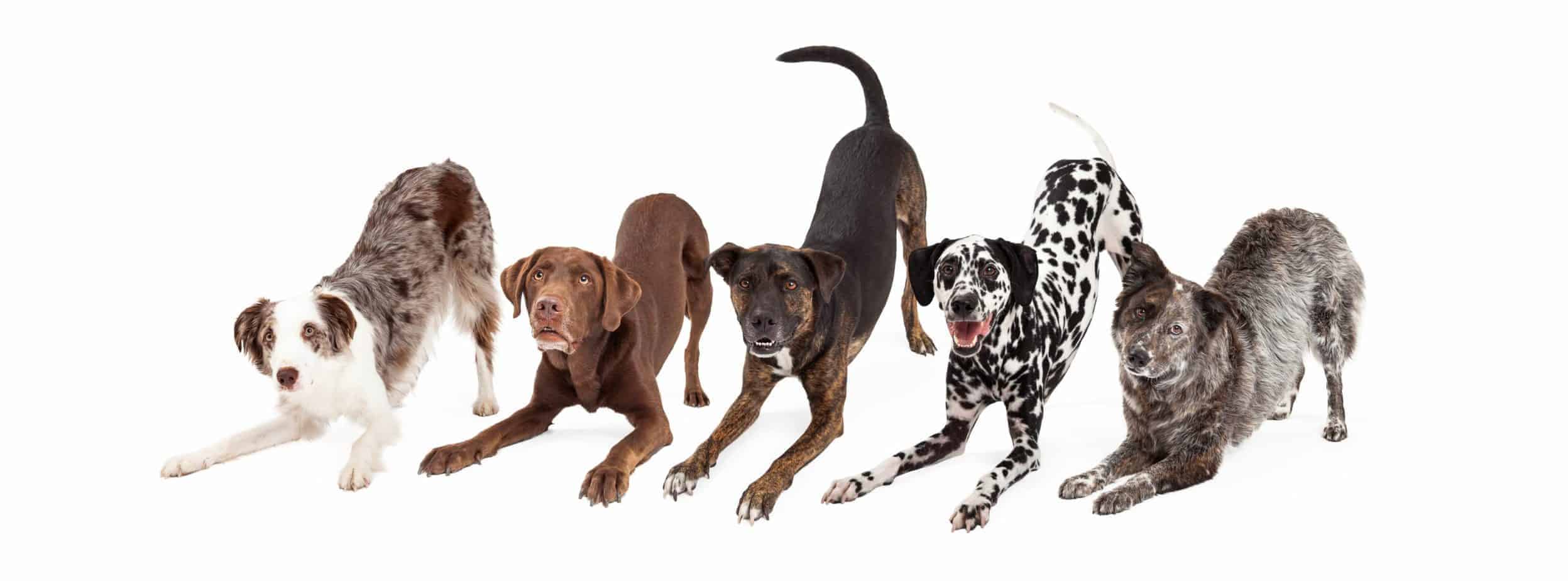
Even though dogs do use sounds and cues, they’ll often convey most of the information through their body language. Moreover, this takes the form of facial expressions and body postures. This is why dogs are commonly used as emotional support animals.
Understanding how your dog communicates and what it’s saying can help you gain useful information. It allows you to know when the dog is spooked or nervous — especially about what’s going on. Otherwise, when your dog is on edge and perhaps might be preparing to snap at someone.
Often, all you need to do is observe the dog’s facial expressions or note its body language. And to help you understand this subject better, we’ve created a guide to help you interpret the most common and important messages your dog may be sending you.
Body language basics
- Body language basics
- A relaxed and approachable dog
- An alert dog
- A dominant, aggressive posture
- A fearful or aggressive stance
- A stressed or distressed dog
- Fearful or worried dog
- Extreme fear or total submission
- Playfulness
- Read the full picture: Tail, posture, and ears together
- Quick tips for owners: Dos and don’ts
- Dog body language cheat sheet
- Bottom line on dog body language
How can you communicate with your dog? Start by understanding that animal communication is more than words. Dogs do talk, but they have a distinct way of passing information to their owners and other dogs.
Most dog owners will acknowledge that their four-legged family members voice their concerns through their bodies. Typically, these dog body signals include:
Face — A dog may wrinkle or straighten its forehead when it wants to express confusion or determination.
Eye cues — A dog’s eyes will light up when it looks at someone or another animal it considers friendly. Conversely, the dog’s pupils will dilate, and the whites of its eyes will show when the dog is afraid.
Lips, teeth, tongue signals — Assuming your dog is happy or desires to play, it’ll routinely pull its lips back and display its teeth (in what apparently could be a smile). Regardless, this gesture is reserved for human-dog communication; in fact, a dog won’t behave the same way as other dogs.
Ears — What should a dog’s raised ears tell you? This pose indicates the dog’s relaxed nature. Likewise, it could convey that the dog is attentively listening. But if the ears are turned backward, this might be a sign of submission.
Tail — The way a dog wags its tail demonstrates how it feels. If the dog wags its tail more to the right, this could signal positive feelings. Alternatively, if it wags its tail to the left side with moderate frequency, this probably indicates negative emotions.
Also, it’s essential to understand the following behavioral cues you’re likely to encounter during your interactions with a dog.
A relaxed and approachable dog

Features:
- Ears up (not forward)
- Head high
- Mouth slightly open, with the tongue exposed
- Loose stance, with the dog’s body weight flat on its feet
- Tail down and relaxed.
Usually, the dog is relaxed and reasonably content. Aside from the dog appearing unconcerned, it also seems unthreatened by the activities in its immediate surroundings and is therefore generally approachable.
An alert dog
Features:
- Ears forward-oriented (may twitch almost as if it’s trying to catch a sound)
- Eyes wide in appearance
- Smooth nose and forehead
- Often, the mouth is closed
- Front limbs are slightly forward-leaning, and the dog stands tall on its toes
- The dog’s tail is horizontal (not stiff or bristled).
If the dog detects something of interest or an unknown subject, these hints indicate that it’s now alert and attentive. Here, the dog assesses the situation to identify potential threats or determine whether action is necessary.
A dominant, aggressive posture
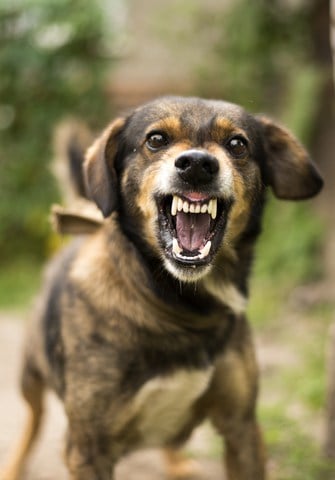
Features:
- Ears forward and may appear to spread slightly to the side, forming a wide V shape
- Usually, the forehead may divulge vertical wrinkles
- A dog’s nose may show wrinkles
- Its lips appear curled
- Visible teeth (and sometimes also the gums)
- The mouth is open (C-shaped), and the corner of the mouth has a forward orientation
- Stiff-legged upright pose, with the dog’s body leaning slightly forward
- Its tail is stiff, yet you may notice the tail quivering or vibrating from side to side
- The dog also seems to raise its tail, and often the tail bristles
- Hackles have a raised appearance.
In this instance, the dog is establishing its dominance while also exhibiting confidence. Besides being an expression of social dominance, this stance indicates a perceived threat, and the dog may act aggressively at the slightest provocation.
By understanding how your dog behaves when it perceives a challenge (whether dominant or submissive), you may find a way to guide your relationship with the dog.
Besides, it gives you a level of awareness that helps you evaluate how your dog behaves around people and other dogs.
A fearful or aggressive stance
Features:
- Ears have a backward appearance
- Eyes with dilated pupils
- Wrinkled nose
- Slightly curled lips (somewhat visible teeth)
- The corner of the mouth pulled back
- The dog tucks its tail (little to no movement)
- The dog’s body lowered
- Hackles seemingly raised.
The dog is frightened. Regardless, the dog might not be submissive and can attack when pressed. Usually, a dog will give these indicators when directly facing a threatening subject.
A stressed or distressed dog
Features:
- Ears have a backward orientation
- Usually, the eyes have dilated pupils, but the whites are also visible, which is known as whale eyes
- Rapid panting (corner of the mouth back)
- A dog sweats through its pads
- The dog’s tail is down
- It lowers its body.
Fearful or worried dog
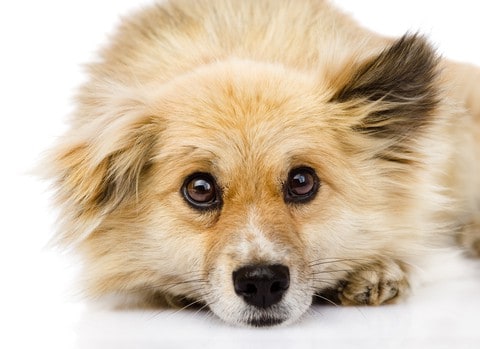
Features:
- A smooth forehead
- Ears backward
- Brief and indirect eye contact
- Repeated yawn
- May lick the face of another dominant dog or else the air
- Corner of the mouth back
- Raised paws
- Often, the dog may leave behind sweaty footprints
- Its tail is down and may wag slightly
- The dog lowers its body.
Such a dog is somewhat fearful. Likewise, it could be displaying signs of submission. Such signs are intended to appease the subject the dog perceives as having a higher social status or as a potential threat. Overall, these characteristics indicate the dog is opposed to further challenges or wants to avoid conflict.
Pay close attention to these signs, as the dog may be communicating discomfort in its current environment, and you may need to assuage it to relieve its anxiety.
Extreme fear or total submission
Features:
- The dog turns its head to avoid any form of direct eye contact
- Partly closes its eyes
- Its nose and mouth have a smooth complexion
- Corner of the mouth back
- Sometimes the dog may sprinkle drops of urine
- The dog tucks its tail
- A dog rolls on its back, exposing its stomach and throat
- Flat ears and backward.
These characteristics in a dog indicate total surrender or submission. The dog is trying to communicate its acceptance of lower status by cowering before a higher-ranking subject or threatening individual while attempting to avoid any physical confrontation.
Playfulness
Features:
- The dog’s tail is up and may broadly wave
- Its ears are up
- Dilated pupils
- Mouth open with the tongue usually exposed
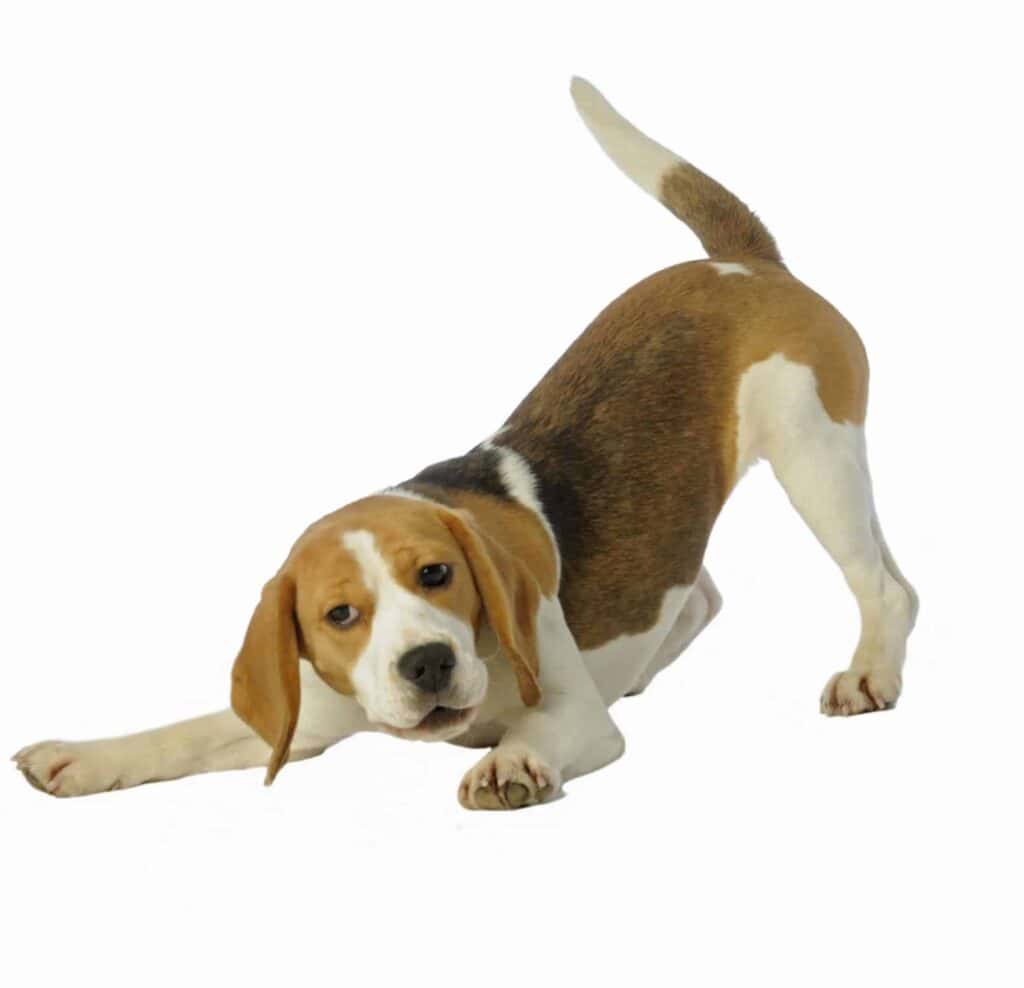
- A dog lowers its front limbs by bending its forepaws
- Often, the dog may hold this stance only briefly before breaking into a quick run in a random direction.
This attribute is an invitation to play from a happy, relaxed dog. Apart from excited barks, playful attacks or retreats may also accompany the stance. Even so, it could also mean any previous supposed rough behavior wasn’t a threat or a challenge.
Read the full picture: Tail, posture, and ears together
Tail wagging broadly + relaxed, loose posture + ears up = Happy / Playful
- Your dog is comfortable and inviting interaction. This is the green light to engage, play, or introduce a new person or pet.
Tail tucked + lowered, crouched posture + ears back = Stressed / Fearful
- Your dog feels threatened or overwhelmed. Give it space, speak calmly, and remove it from the stressor if possible.
Tail stiff and raised + upright, forward-leaning posture + ears forward = Dominant / Potentially aggressive
- Proceed with caution. Avoid direct eye contact, do not approach, and give the dog room to de-escalate.
Tail horizontal + still, attentive posture + ears pricked forward = Alert / Assessing
- Your dog has noticed something new and is deciding how to respond. Watch for which direction the signals shift — toward relaxed or toward tense.
Tail low with a slight wag + crouched posture + ears back = Submissive / Appeasing
- Your dog is signaling that it means no harm. Avoid looming over it; crouch to its level and let it approach you on its own terms.
Quick tips for owners: Dos and don’ts
Knowing what a dog’s body language means is only half the equation — knowing how to respond is what keeps both you and the dog safe.
- Do approach a dog that shows a relaxed posture, a broadly wagging tail, and soft, forward-facing ears. These are clear signals that the dog is comfortable and open to interaction.
- Do let the dog come to you. Extend your hand low and allow it to sniff before attempting to pet. This puts the dog in control and builds trust.
- Do speak in a calm, low, steady voice. Loud or high-pitched tones can startle a dog that is already on edge.
- Do crouch to the dog’s level if it appears submissive or fearful. Standing tall over a nervous dog can feel threatening to the animal.
- Do watch for shifting signals. A dog can move from calm to stressed quickly — keep reading the full trio of tail, posture, and ears throughout any interaction.
- Don’t approach a dog with a stiff, raised tail, forward-leaning posture, or bared teeth. These are warning signs, not invitations.
- Don’t make prolonged direct eye contact with an unfamiliar or tense dog. To a dog, a hard stare reads as a challenge or threat.
- Don’t reach over a dog’s head to pet it. This looming motion is instinctively unsettling for most dogs, even friendly ones.
- Don’t disturb a dog that is eating, sleeping, or caring for puppies, regardless of how relaxed it normally is.
- Don’t punish or raise your voice at a dog showing fear signals. Stress responses need calm redirection, not pressure — escalating the situation can push a fearful dog toward defensive aggression.
Dog body language cheat sheet
Use this at-a-glance reference to quickly identify what your dog — or any dog — is communicating.
Happy / Playful
Relaxed / Approachable
Alert / Assessing
Dominant / Aggressive
Fearful / Aggressive
Stressed / Distressed
Fearful / Submissive
Extreme Fear / Total Submission
Bottom line on dog body language
Bradley Aron is the head of content for the EzCare clinic, a medical facility that provides world-class healthcare services. He has been associated with the health care industry for 10+ years and specializes in medical and health care content.
Unleash your puppy’s full potential with our comprehensive puppy training guide ?