
What makes Bergamasco Sheepdogs special? The complete breed guide

Many people haven’t heard of the Bergamasco Sheepdog, but it’s a hidden gem for dog lovers.
Golden Retrievers and French Bulldogs often get most of the attention, but the Bergamasco Sheepdog stands out for its intelligence and unique look, even though it’s not as well-known.
People have often overlooked and misunderstood this breed, but it truly deserves more recognition.
The Bergamasco Sheepdog’s shaggy coat often surprises people seeing it for the first time and piques their curiosity about the breed.
The coat might look hard to care for, but it’s actually practical and was developed over many generations. It protects the dog and is easier to manage than you might think.
History and origin of the breed
- History and origin of the breed
- Physical characteristics and appearance
- Comparison with similar breeds
- Temperament and personality traits
- Health conditions common in Bergamasco Sheepdogs
- Training challenges and tips
- Grooming requirements
- Common misconceptions
- Suitability as a family pet
- Rescue and adoption help
- Finding a Bergamasco
- Final thoughts on the Bergamasco Sheepdog
The Bergamasco Sheepdog comes from the Italian Alps, where it helped shepherds by working independently in harsh weather and guarding livestock.
This breed’s history goes back thousands of years to herding dogs from Persia that made their way to Europe.
Over time, the Bergamasco became tough and smart, developing its special felted coat for protection against the weather and predators.
After World War II, the number of Bergamasco Sheepdogs declined sharply because of societal and economic changes. Dr. Maria Andreoli helped bring the breed back, and it was officially recognized by the American Kennel Club in 2015.
Physical characteristics and appearance
The Bergamasco’s coat has three types of hair that slowly mat together, forming flat, felted layers called “flocks.” These layers protect the dog from weather and injury.
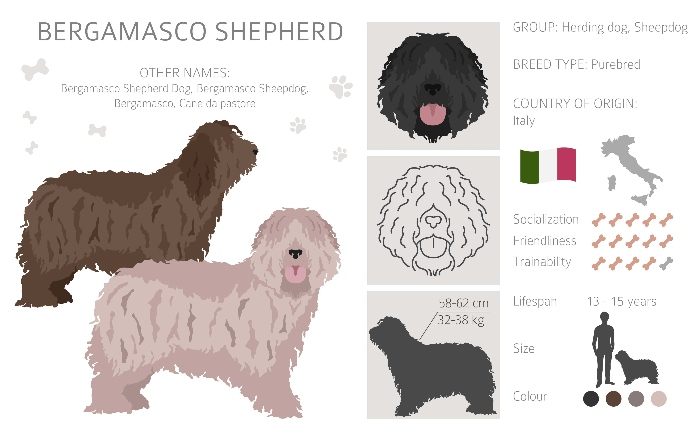
The full coat forms by the time the dog is five or six years old. Underneath, the Bergamasco is a sturdy, medium-sized dog weighing between 57 and 84 pounds, with eyes partly hidden by hair.
Most Bergamascos have grey or black coats, though other colors can appear.
Comparison with similar breeds
When comparing the Bergamasco Sheepdog to other herding or large dog breeds, some key differences stand out.
While Komondors and Old English Sheepdogs also have long, protective coats, the Bergamasco’s unique felted “flocks” are distinct in texture and care.
Unlike the Komondor’s corded coat or the Old English Sheepdog’s fluffy fur, the Bergamasco’s coat mats into flat layers that are easier to maintain once formed.
Bergamascos are known for their calm intelligence and independent thinking. They tend to be less boisterous than Old English Sheepdogs and more people-oriented than the aloof Komondor.
Their strong bonds with family and watchful, gentle nature make them a great fit for owners seeking a loyal companion with a rare, ancient heritage.
Temperament and personality traits
The Bergamasco Sheepdog may look calm, but it’s very smart and independent. Its background as a herding dog taught it to make decisions on its own.
Bergamascos form close bonds with their families. They’re patient with kids, gentle with older people, and quietly watchful around strangers. By nature, they’re calm and perceptive.
The Bergamasco does best with clear, steady guidance and trust, not harsh discipline. With patience, it becomes a loyal companion.
Health conditions common in Bergamasco Sheepdogs
The Bergamasco Sheepdog is a healthy breed because it was bred to survive harsh conditions, but, like all breeds, it can have health problems.
Some health issues in this breed include hip dysplasia, certain eye conditions such as progressive retinal atrophy, and bloat. Good breeding methods and regular vet visits help prevent and catch these early.
Bergamascos usually avoid many of the serious genetic health problems seen in other breeds. With good care, they often live 13 to 15 years.
This breed needs moderate exercise. Daily walks and mental challenges keep them happy, but they don’t need constant activity.
Bergamascos enjoy activities that work both their bodies and minds, such as playing scent games, using puzzle toys, learning new tricks, or participating in basic agility exercises.
Herding games, hide-and-seek, and interactive toys that dispense treats are also great ways to help them stay engaged and fulfilled.
Regular walks, safe off-leash play, and activities like agility or herding help keep the Bergamasco happy and well-balanced.
If a Bergamasco gets bored, it may become withdrawn. That’s why regular mental and physical activity is so important for their well-being.
Training challenges and tips
Training a Bergamasco takes patience and an understanding of its independent streak. They learn fast, but may only follow commands they think make sense.
Their independence shows how smart they are, a trait shaped by generations of working alone as herding dogs.
Training works best with positive reinforcement and a strong bond. Short, varied sessions and early socialization help your dog grow up well-adjusted.
Harsh or very strict training can hurt the trust and bond you need for success with this breed.
Grooming requirements
It might be surprising, but the dreadlock look of the Bergamasco’s coat is easier to care for than it seems.
After the puppy coat mats form, it needs little brushing, sheds little, and doesn’t smell. At first, owners need to help separate the mats so they form correctly.
To do this, gently pull the hair sections apart into individual mats, starting close to the skin and working outward with your fingers.
You can use a detangling spray and your hands, avoiding brushes and combs, which can damage the coat’s texture. Begin mat separation when the dog is about 8-12 months old, and repeat the process every few weeks until all mats are well-formed.
Set aside short sessions to keep your dog comfortable, and reward them with treats and praise to make grooming a positive experience.
Once the coat is mature, you mostly just need to bathe the dog occasionally and separate mats when needed. Professional grooming is rarely needed.
The biggest challenge is how slowly the coat develops and how much regular attention it needs at first. Many owners find that caring for the coat early on helps them bond with their dog.
Common misconceptions
There are a few persistent myths about the Bergamasco Sheepdog.
One common misconception is that their coat is dirty, smelly, or extremely hard to care for. In reality, once the flocks are fully formed, the dog is relatively low-maintenance because its coat sheds little, holds minimal odor, and requires less care than many other long-haired breeds.
Another misunderstanding is that Bergamascos are aggressive or unfriendly because of their serious appearance.
However, they are gentle, patient, and form strong bonds with their families.
Finally, some believe that the breed is too rare to find or unsuitable for families, when in fact, with the right environment, Bergamascos thrive as loving companions.
Suitability as a family pet

In the right home, the Bergamasco Sheepdog makes a wonderful family pet. It’s patient, gentle, and often picks up on the mood in the house. Many owners love its calm presence with both kids and adults.
The Bergamasco needs structure, engagement, and a clear bond with its family. It doesn’t do well if left alone for long stretches or in busy, chaotic homes.
This breed does best in homes with space to roam, like a yard or access to open areas, and with owners who want an active, hands-on relationship.
However, Bergamascos can adapt to apartment living if they get plenty of daily exercise and mental stimulation.
Regular walks, play, and time outdoors are especially important for them to stay happy and healthy in smaller living spaces.
Rescue and adoption help
For those interested in giving a Bergamasco Sheepdog a home, consider breed-specific rescues as well as breeders.
Several organizations and rescue groups specialize in finding homes for Bergamascos in need, both in the United States and internationally.
Adopting through a rescue can be a fulfilling option and supports the breed community. You can also connect with the Bergamasco Sheepdog Club of America or similar groups to learn about available dogs and adoption events.
Finding a Bergamasco
If you’re looking for a Bergamasco Sheepdog puppy, seek out reputable breeders who prioritize health, temperament, and breed standards.
Visit the breeder, meet the parent dogs, and ask about health testing for common conditions such as hip dysplasia and eye conditions.
Reputable breeders should be open and knowledgeable, provide references, and support you throughout your dog’s life.
Avoid buying from pet stores or online sellers who cannot provide detailed background or health information. It’s also wise to check with breed clubs and rescue groups for additional guidance and potentially available dogs.
Final thoughts on the Bergamasco Sheepdog
Owning a Bergamasco Sheepdog takes dedication, regular involvement, and patience to build trust with this smart, independent breed.
In return, you get a loyal, intelligent dog with a unique look and a fascinating history. For the right owner, it’s a rewarding companion.
While many people choose well-known, popular dog breeds, the Bergamasco Sheepdog stands out as a unique and uncommon alternative.
If you want a distinctive and remarkable companion, the Bergamasco Sheepdog is an excellent choice.
Sara B. Hansen has spent 20-plus years as a professional editor and writer. She’s also the author of The Complete Guide to Cocker Spaniels. She created her dream job by launching DogsBestLife.com in 2011. Sara grew up with family dogs, and since she bought her first house, she’s had a furry companion or two to help make it a home. She shares her heart and home with Nutmeg, a Pembroke Welsh Corgi. Her previous dogs: Sydney (September 2008-April 2020), Finley (November 1993-January 2008), and Browning (May 1993-November 2007). You can reach Sara @ editor@dogsbestlife.com.