
Why your dog’s super senses are more powerful than you think

Think you know your dog’s senses? Researchers do too, and every few years they discover something that makes us rethink the whole picture.
Dogs don’t just experience a bigger, louder version of our world. They experience a completely different one.
A nose that reads the world like a book
We smell a pot of soup. Our dog smells the chicken, the celery, the salt, the water, and the memory of whoever last touched the ladle. That’s not an exaggeration. It’s just physics and biology.
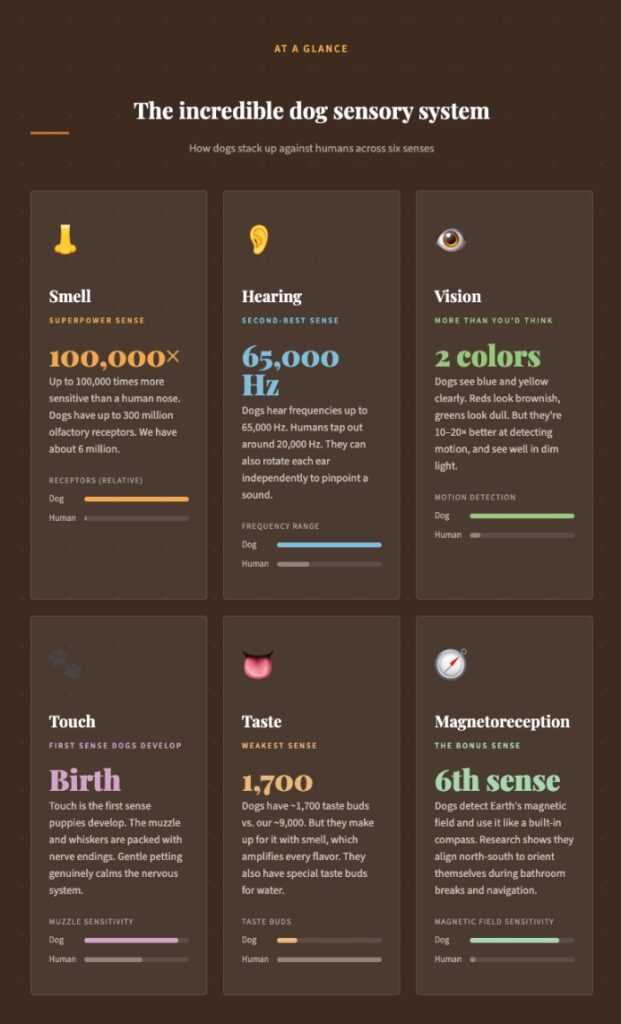
Dogs have up to 300 million olfactory sensors in their noses. We have about 6 million. The part of their brain dedicated to analyzing scent is roughly 40 times larger (proportionally) than ours. Put everything together, and dogs can detect odors anywhere from 10,000 to 100,000 times better than we can.
New research update: Recent studies show dogs can detect not just drugs and explosives but also instant emotional shifts in humans and changes in cellular metabolism linked to diseases, including COVID-19, cancer, and Parkinson’s. Their noses outperform many laboratory instruments.
When your dog sniffs another dog’s backside, they’re not being rude. They’re reading a full biography: sex, age, health status, diet, mood, and identity. A quick sniff delivers more information than a handshake and a LinkedIn profile combined.
Dogs also breathe differently from us. A fold of tissue inside their nostrils separates the act of smelling from the act of breathing for oxygen. So while they inhale, they’re simultaneously processing thousands of scent molecules without losing airflow. It’s a biological multitasking system we can’t touch.
Put that nose to work
- Hide treats around the yard for a scent-seeking session. Indoors, try ‘find the toy’—hide your dog’s favorite toy and encourage them to sniff it out. Puzzle feeders that require your dog to search, paw, or nose around to release food are perfect for engaging their problem-solving skills and sense of smell. You can also play shell games with cups or teach your dog to search for a specific scent using household objects. Rotating between these sniffing games keeps things fresh, fun, and mentally challenging.
- Let your dog sniff freely on walks. It’s genuinely enriching, not just dawdling.
- Consider nose work classes to channel their sniffing into fun challenges.
Ears that hear what we never will

Ever whisper “want a cookie?” from another room and watch your dog’s head snap up? That’s not luck. Dogs can hear up to 65,000 Hz. We stop at around 20,000 Hz. They can also hear sounds from roughly four times farther away than we can.
Their ears aren’t just sensitive, they’re directional. Dogs have more than 18 muscles controlling each ear independently. They aim each one like a little satellite dish, zeroing in on the precise source of a sound without turning their head. That’s why your dog can be asleep across the house and still know the exact moment you open the treat cabinet.
Keep this in mind: Because dogs hear so much more than we do, loud environments, blasting music, or shouting can genuinely stress them out. If your dog looks anxious at home, the noise level might be the culprit.
You can help by taking simple steps to reduce household noise: try white-noise machines or calming background music to mask sudden sounds, keep your dog’s favorite retreat room away from street-facing windows, and close windows or curtains during loud events like fireworks.
Even applying an extra layer of curtains can help absorb outside noise, creating a more peaceful space for your dog.
Hearing also shaped how we bred dogs. Guard dogs got sharper hearing through selective breeding. Hunting dogs were matched to specific sonic environments.
This sensitive hearing, you love when your dog “knows” you’re home? It comes with a price for some breeds: noise reactivity, storm anxiety, and a hair-trigger startle response.
Protect those ears
- Keep TVs and speakers at a moderate volume when your dog is around.
- Use consistent verbal commands so familiar sounds feel safe.
- During fireworks or thunderstorms, create a quiet, buffered space for your dog to retreat to
Color vision: more than we thought
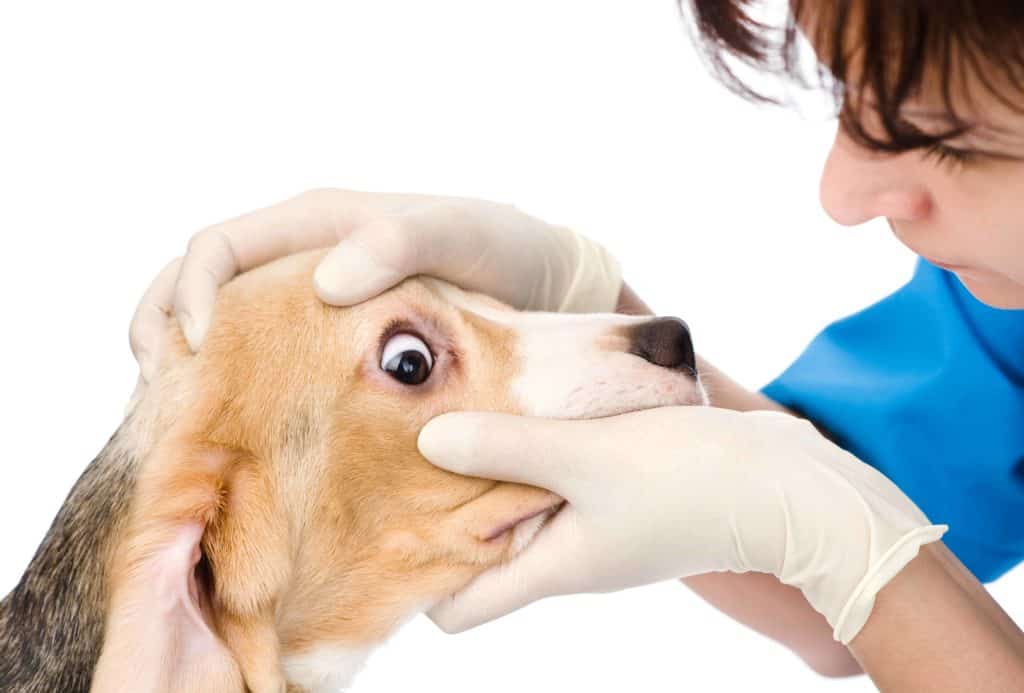
For decades, the common wisdom was that dogs see in black and white. That’s not quite right, and recent science keeps clarifying the picture. Dogs see in color. Just not ours.
Dogs have two types of color-sensing cells (called cones) in their eyes, compared to our three. That makes them dichromatic, like a person with red-green color blindness.
Blues and yellows come through clearly. Reds look brownish. Greens and oranges appear dull or gray. It’s not a black-and-white world.
It’s just a different palette. If you want toys that really stand out for your dog, pick blue or yellow ones, especially for outdoor play on grass. Red or orange toys blend in and are much harder for dogs to spot.
What’s changed: New behavioral research suggests dogs actively rely on color as a cue more than we previously assumed.
Earlier studies dismissed color as unimportant for dogs, but rigorous experiments show they use color information during decision-making and learning, especially blue and yellow.
Where do dogs genuinely shine visually? Motion detection and low-light performance. They’re 10 to 20 times better at sensing movement than we are.
And a reflective layer behind their retinas, called the tapetum lucidum (which’s what makes their eyes glow in photos), bounces light back through the photoreceptors, giving them excellent night vision. They can also dilate their pupils more fully than we can.
Dogs can also recognize one person from another. They’ll notice a different hairstyle, a change in gait, or an unfamiliar silhouette. Their eyes aren’t as detail-sharp as ours in bright daylight, but in low light and in motion, they’d leave us behind.
Design for dog vision
- Choose toys in blue or yellow; red and orange toys can be hard for dogs to see against grass.
- Use high-contrast signals in training when color might be a factor.
- Don’t assume your dog “knows” what that orange ball is from a distance.
Touch: the first language
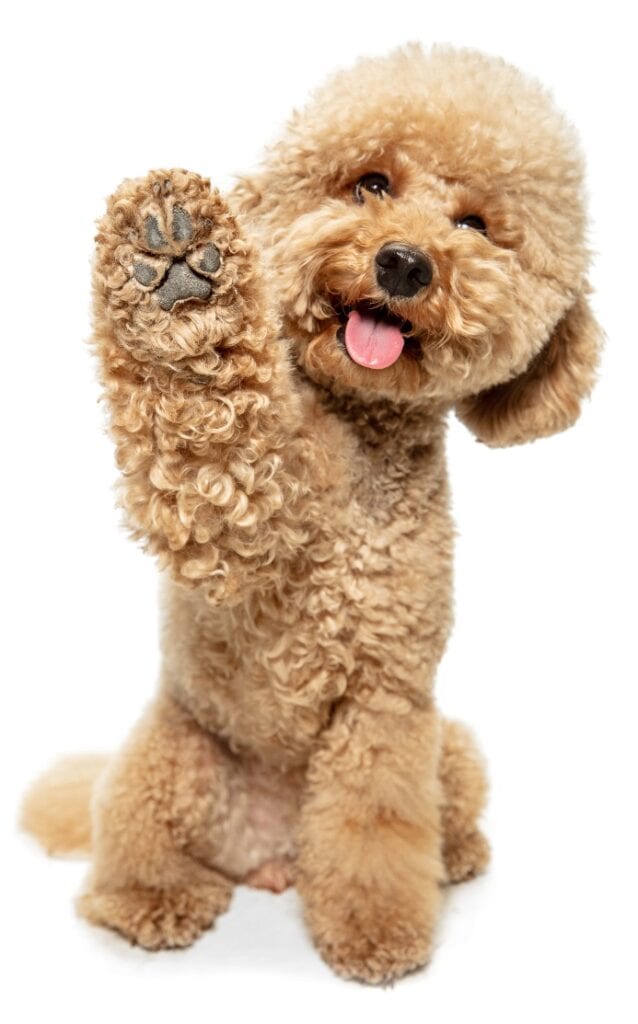
Touch isn’t just comfort. It’s the first sense puppies develop, and it stays one of their most emotionally loaded throughout life.
A mother’s lick activates newborn nerve endings, gets blood flowing, and may register something close to what a hug feels like for a human.
The muzzle is where dogs “handle” the world. It’s loaded with sensory nerve endings.
Their whiskers, called vibrissae, pick up even tiny air movements and feed spatial information straight to the brain. A dog uses its muzzle the way we use our hands.
Paws have nerve endings, too, which are especially useful for navigating surfaces and terrain.
The least sensitive area? The back. Which, ironically, is where most of us pet them. Dogs still love it, but they light up more when you scratch around the ears, chest, or base of the tail.
Science backs up what you already feel: Gentle, consistent touch genuinely calms the canine nervous system.
It lowers cortisol and can build trust. Rough or unpredictable handling, on the other hand, can create stress and affect behavior in the long term.
Taste: the weakest link (but not really)

With only about 1,700 taste buds to our roughly 9,000, dogs don’t taste the way we do.
They can detect sweet, sour, salty, and bitter, but the subtleties we obsess over in food? Those mostly pass them by.
Here’s the twist: dogs don’t really need great taste buds. Their sense of smell does most of the flavor-processing for them.
An enticing aroma to a dog creates a full sensory sensation that taste alone never could. It’s why a hungry dog inhales their food and why the smell of your dinner pulls them across the house faster than anything else.
Dogs also have taste receptors specifically tuned to water, which we don’t. These water-sensitive buds sit at the tip of the tongue and become especially active after a salty or sweet meal, which makes sense: both those things are dehydrating. Their bodies are built as a signal to drink.
The sense nobody expected: magnetoreception
Here’s the one that seems like science fiction but isn’t. Dogs can detect Earth’s magnetic field.
Studies published in the journal eLife tracked dozens of dogs with GPS collars through hundreds of off-leash runs in the woods.
When dogs took a new route home instead of backtracking, they almost always began with a short north-south run, which researchers called a “compass run.” It’s not random.
Dogs use Earth’s geomagnetic axis to reset their position before choosing the most efficient path home.
The poop connection: You may have noticed your dog circling before they go. A 2013 study found that dogs overwhelmingly prefer to relieve themselves aligned along the north-south magnetic axis, but only during magnetically calm conditions. When the field fluctuates, that preference disappears. Your dog is checking the compass calibration before squatting.
How do they do it? Research points to cryptochrome 1, a light-sensitive molecule found in dog eyes that reacts to magnetic fields when activated by light. Birds use the same mechanism for long-distance migration. Dogs appear to have inherited a version of this same ancient biological GPS.
This sense isn’t the same as the exaggerated “sixth sense” people sometimes claim dogs have about earthquakes or disasters. But it does mean their sensory world includes an entire dimension we can’t perceive at all.
Humans shaped these senses on purpose
Thousands of years of selective breeding gave us dogs whose senses are tuned to specific jobs.
Bloodhounds carry over 300 million scent receptors and can follow a trail that’s days old. Greyhounds and Afghan hounds have developed keen long-distance vision to track prey across open plains.
German shepherds have acute hearing for police and military work. Retrievers got dulled skin sensitivity, so they’d jump into icy water without hesitation.
The tradeoffs are real.
Hounds who can’t stop following a scent.
Border Collies who overreact to anything that moves oddly. Barkers with a hair-trigger.
Labs who don’t feel the leash. These aren’t behavior problems in isolation. Their senses turned up too high for modern suburban life.
Understanding what your dog’s breed was built to do helps you understand what they’re experiencing every time they hit the park, the backyard, or the kitchen.
Work with your dog’s senses, not against them.
- Let scent-driven breeds sniff on walks instead of rushing them.
- Give sight hounds visual challenges and open spaces to scan
- Give high-energy, hearing-sensitive dogs a quiet decompression space at home.
- Enrich your dog’s environment to engage their dominant sense, not just their energy
The bottom line on dog senses
Your dog isn’t just an animal who lives with you. They’re a sophisticated sensory instrument walking through a world you’ll never fully perceive.
Every walk is a novel. Every sniff is a conversation. Every trip home is a navigation exercise using senses that predate our own by millions of years.
Just as with people, though, those senses can change over time: sight, hearing, and even a sharp sense of smell may fade as your dog ages.
Pay attention to subtle changes in how your dog interacts with their world. If they seem to startle more easily, hesitate in dim light, or miss signals they once responded to, they might be experiencing sensory decline.
A little patience and a few simple accommodations can help senior dogs stay confident and comfortable as they move through the world with aging senses.
The more we learn, the more we realize: we’re not just pet owners. We’re companions to creatures whose sensory lives dwarf our own.
That’s worth a moment of respect the next time your dog stops, tilts their head, and stares at something you can’t see, hear, or smell.
They’re not confused. They’re just reading a page you can’t access.
Sara B. Hansen has spent 20-plus years as a professional editor and writer. She’s also the author of The Complete Guide to Cocker Spaniels. She created her dream job by launching DogsBestLife.com in 2011. Sara grew up with family dogs, and since she bought her first house, she’s had a furry companion or two to help make it a home. She shares her heart and home with Nutmeg, a Pembroke Welsh Corgi. Her previous dogs: Sydney (September 2008-April 2020), Finley (November 1993-January 2008), and Browning (May 1993-November 2007). You can reach Sara @ editor@dogsbestlife.com.