
Why most dogs fear storms and 7 simple ways to build their confidence
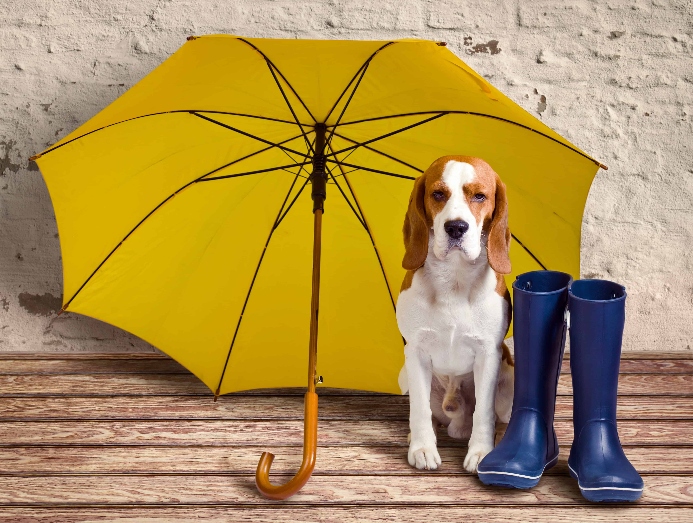
Summer is just around the corner. Along with warmer weather come thunderstorms, which can transform even the most relaxed dog into a nervous, trembling bundle, trying to squeeze into the smallest spaces for comfort.
Thunderstorm anxiety isn’t a quirk. It’s not your dog being dramatic. It affects roughly 40% of dogs, and it spikes hard every summer.
The problem is that most pet parents only seek help when the storm is already overhead, and their dog is mid-meltdown. That’s the worst possible time to start.
Instead, let’s look at what you can do in advance so you and your dog can face storm season more calmly, rather than struggling through each storm as it happens.
Why storms terrify so many dogs
- Why storms terrify so many dogs
- Anxiety vs. mild discomfort
- Counter-conditioning and desensitization
- Pressure wraps: Helpful tool or overhyped gimmick?
- Vet-approved calming options
- Creating the perfect storm refuge
- Use storm forecasting apps to get ahead of the game
- When to call in the professionals
- Start now, not when the sky turns green
Before you can fix a problem, you need to understand it. And this one runs deeper than you might think.
Dogs don’t just hear thunderstorms. They experience them.
The low-frequency rumbles travel through walls and floors. The barometric pressure drops before a single raindrop falls.
Static electricity builds up in the air and, for many dogs, causes uncomfortable, even painful, shocks through their fur, especially long-haired or double-coated breeds.
Some dogs even sense the electromagnetic changes in the environment.
To help reduce static during storms, try increasing your home’s humidity with a humidifier, or lightly mist your dog’s coat with water.
You can also use pet-safe anti-static sprays or wipes. These small steps can make a real difference in your dog’s comfort when the air gets charged.
Put simply, your dog can sense an approaching storm before you are aware of it. The physical and emotional sensations can be intense and overwhelming for them.
Add in the flashes of lightning, thunder, and unusual smells in the air, and all the senses are overloaded. Understandably, so many dogs become extremely anxious during storms.
Genetics contributes as well. Breeds such as Border Collies, Australian Shepherds, and other herding, sporting, or working dogs are often extra sensitive.
If your dog is already prone to anxiety, storms can make things much worse for them.
Anxiety vs. mild discomfort
Not every dog that dislikes thunder has a clinical anxiety problem. There’s a spectrum, and knowing where your dog falls helps you choose the right approach.
Signs of mild discomfort include your dog seeking your company more than usual or hiding in quieter spots, such as under the bed.
Although unsettled, they can still accept treats, respond to their name, and calm down after a while.
More severe anxiety may appear as panting, pacing, drooling, shaking, destructive actions, escape attempts, or being unable to relax or eat. Some dogs may even hurt themselves trying to get out, or lose control of their bladder.
Dogs experiencing intense anxiety are not acting out on purpose. Their nervous system is overwhelmed, and simply comforting them or ignoring the behavior is unlikely to resolve the problem. In fact, ignoring it can sometimes make things worse.
Understanding your dog’s typical behavior helps you select the right strategies and recognize when extra support is needed.
Counter-conditioning and desensitization
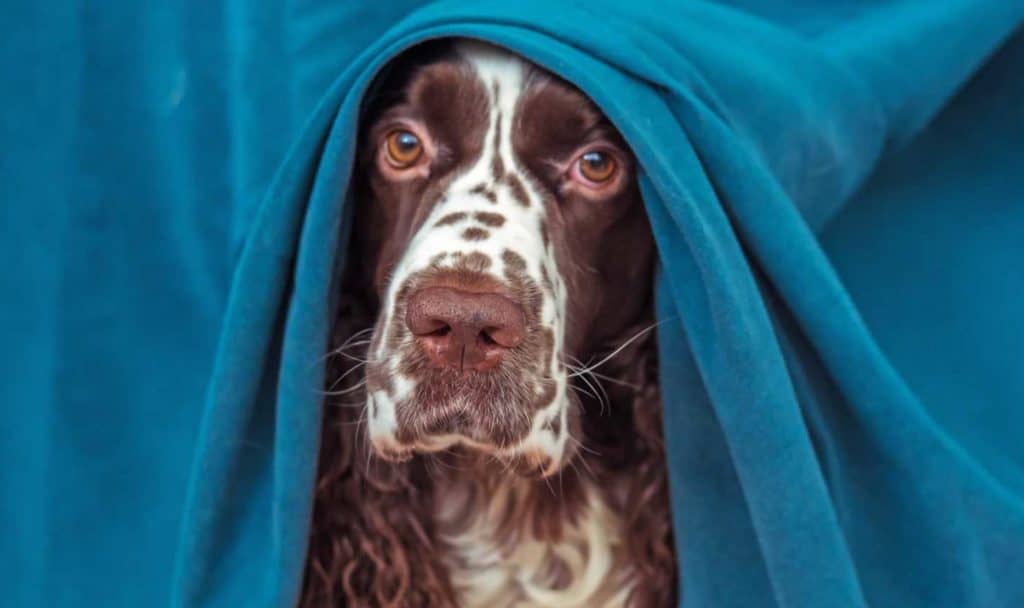
This approach is backed by research and requires patience, but it can be very effective for storm anxiety.
Counter-conditioning helps your dog form a positive association with storm sounds. Instead of thinking thunder means something scary, the goal is for your dog to link those sounds to good things.
Desensitization involves playing storm sounds at a very low volume and gradually increasing the volume over time to help your dog get used to the noise.
Here’s how to start:
Look for a good thunderstorm soundtrack online, such as on YouTube or Spotify. Play it very softly while your dog eats, works on a puzzle toy, or chews something they enjoy.
Gradually increase the volume over days or weeks, always keeping your dog comfortable. The goal is to associate storm sounds with positive experiences.
Take your time. This kind of training may take weeks or even a few months, depending on your dog.
Consistency and patience help your dog learn that these sounds are not a threat.
The keyword is gradually. If your dog shows any sign of stress, you’ve gone too fast. Drop the volume back down. This isn’t a rush job.
Real storms involve physical factors that recordings cannot replicate, so this method may not fully alleviate anxiety in all dogs.
However, it often helps reduce the severity of anxiety, and for some dogs with mild symptoms, it can make a big difference. Starting before storm season gives you and your dog time to practice.
Want to go deeper on behavior training? Check out DogsBestLife.com’s training guides for step-by-step resources.
Pressure wraps: Helpful tool or overhyped gimmick?
You’ve probably heard of ThunderShirts and similar pressure wraps. Maybe you’ve tried one. The science is complicated.
The theory is solid: gentle, steady pressure triggers the nervous system’s calming response, similar to swaddling an infant. Some dogs respond really well. Others couldn’t care less.
The research is mixed. Several studies show modest reductions in anxiety in some dogs, but effect sizes vary widely, and there’s no reliable way to predict which dogs will respond.
What we do know is that pressure wraps are safe, affordable, and worth trying.
If you go this route, fit matters a lot. A wrap that’s too loose does nothing—too tight causes discomfort.
Follow the manufacturer’s sizing guide carefully, and introduce it before storm season so it’s not a new, strange sensation during an already stressful event.
Put it on during calm moments first so your dog associates it with neutral, non-stressful experiences.
Don’t rely on it as your only tool. Think of it as one layer in a multi-layered strategy.
Vet-approved calming options
Let’s be honest. For dogs with moderate to severe anxiety, behavior modification and pressure wraps alone often aren’t enough. That’s not a failure. That’s biology.
Supplements are a reasonable starting point for mild to moderate cases, but talk to your veterinarian first before adding anything new to your dog’s routine.
Your vet can help you choose safe products and make sure there are no interactions with other medications. Look for products containing:
- L-theanine: An amino acid found in green tea that promotes relaxation without sedation. Found in products like Composure and Zylkene.
- Melatonin: Some dogs respond well, especially to storm anxiety. Dosing matters, so ask your vet before you start.
- Valerian root and passionflower: Common in blended calming formulas, with some evidence of mild anxiolytic effects.
- Adaptil (DAP): A synthetic version of the pheromone that nursing mother dogs release. Available as a diffuser, collar, or spray. Works well for some dogs, not at all for others.
Prescription medications are appropriate for dogs with significant anxiety. Two options your vet may discuss:
- Sileo (dexmedetomidine oromucosal gel): FDA-approved specifically for noise aversion in dogs. Applied to the gums, it works quickly and wears off within a few hours. It’s not a sedative; it takes the panic edge off while keeping dogs functional.
- Trazodone or alprazolam: Both can be prescribed for situational anxiety. These are given before a predicted storm event and are most effective when combined with behavior work.
The critical thing to know: you can’t just grab a pill an hour before a storm and expect magic.
Many medications need time to reach therapeutic levels, and your vet may want to do a trial run before storm season hits.
Book that appointment now, not in July when everyone else is scrambling.
Creating the perfect storm refuge

Dogs are den animals. When the world gets scary, they want somewhere enclosed, dark, and insulated. Give them that.
Pick a spot in your home that’s interior (fewer windows), preferably on a lower floor (less thunder resonance), and away from exterior walls.
A walk-in closet, an interior bathroom, or a spot under a staircase can all work perfectly. If you live in an apartment or have limited space, a cage draped with a blanket can offer a safe, den-like retreat, or you can use a corner of a room with improvised barriers and cozy bedding.
The goal is to give your dog a sense of enclosure and comfort, no matter the size of your living space.
Set it up before storms arrive:
- Add your dog’s bed or a pile of their favorite blankets.
- Include a worn piece of your clothing (your scent is calming)
- Keep a long-lasting chew or stuffed Kong in there.
- Consider a white noise machine or a calming music playlist (Through a Dog’s Ear is specifically designed for anxious dogs)
- An Adaptil diffuser plugged in nearby can help too.
Introduce this space in calm weather so your dog can discover and claim it on its own. Don’t push them in. Let them explore. Feed them treats in there. Make it the best room in the house.
When a storm hits, that space is their sanctuary. And knowing it’s there? That’s a gift you’ve already given them.
Use storm forecasting apps to get ahead of the game
One of the most underrated pieces of storm prep has nothing to do with your dog directly. It’s about you being ready.
When you’re caught off guard by a sudden storm, your own stress goes up. Dogs read us with unsettling accuracy.
Your tight jaw, your quickened breath, your tense energy all communicate to your dog that there’s something to worry about.
Forecasting apps give you a heads-up so you can be calm and prepared. Try:
- Weather Underground: Hyper-local forecasting down to the neighborhood level, with storm alerts
- MyRadar: Clean, real-time radar with storm tracking and lightning detection
- Dark Sky (integrated into the iPhone weather app): Known for minute-by-minute precipitation forecasts
Set storm alerts. When you know a storm is two hours out, you can get your dog’s refuge set up, start a calming playlist, pull out that stuffed Kong from the freezer, give a supplement if you’re using one, and meet the storm prepared instead of panicked.
That buffer time is priceless.
When to call in the professionals
There’s no shame in needing backup. Thunderstorm anxiety at a certain level is a medical and behavioral issue, not a training failure.
Call your vet if:
- Your dog’s anxiety is severe (escape attempts, self-injury, loss of bladder/bowel control)
- They can’t be distracted with food or toys during storms
- Their anxiety seems to be getting worse every season
- You’ve tried multiple over-the-counter options without any results
Consider a certified veterinary behaviorist if:
- Anxiety goes beyond storms to other loud noises or general situations.
- You want a comprehensive, individualized behavior modification plan.
- Medication alone isn’t doing the job.
Veterinary behaviorists are the gold standard for complex anxiety cases. They’re not just trainers. They’re veterinarians with advanced specialty training in animal behavior, and they can prescribe and adjust medications as part of a behavior program.
Find a board-certified veterinary behaviorist through the American College of Veterinary Behaviorists.
Start now, not when the sky turns green
Here’s the hard truth: storm anxiety doesn’t fix itself. Left unmanaged, it often gets worse over time. Dogs become sensitized, not desensitized, through repeated traumatic experiences.
But with the right tools, the right prep, and a little lead time, most dogs can get through storm season with significantly less suffering.
Your dog trusts you to keep them safe. Start today. Set up the refuge. Book the vet appointment. Download the weather app. Pull up a thunderstorm soundtrack and turn it on low while your dog eats dinner tonight.
Small steps now mean a calmer summer for both of you.
Sara B. Hansen has spent 20-plus years as a professional editor and writer. She’s also the author of The Complete Guide to Cocker Spaniels. She created her dream job by launching DogsBestLife.com in 2011. Sara grew up with family dogs, and since she bought her first house, she’s had a furry companion or two to help make it a home. She shares her heart and home with Nutmeg, a Pembroke Welsh Corgi. Her previous dogs: Sydney (September 2008-April 2020), Finley (November 1993-January 2008), and Browning (May 1993-November 2007). You can reach Sara @ editor@dogsbestlife.com.