
Why these 8 odd dog behaviors are secret pleas for help

Your dog is trying to tell you something every single day. Are you missing the message?
Here’s the uncomfortable truth: most of us are. Not because we don’t care, obviously you care, you’re reading this, but because dogs speak a language that nobody formally teaches us to understand.
You probably already know “sit,” “stay,” and the tail-wagging joy of a happy pup.
But the subtler signals, the ones that actually matter most, those are easy to miss, easy to dismiss, and sometimes dangerous to ignore.
Maybe you’ve noticed your dog doing something weird lately and thought, Ugh, she’s just being dramatic again.
Or maybe you’ve written off a strange behavior as “just a phase.” That impulse is so human, and it makes complete sense. You’re busy, your dog seems fine overall, and it’s tempting to assume everything’s okay.
But what if it’s not? What if that “drama” is actually your dog doing the only thing she can, trying to get your attention in the only language she has?
Dogs can’t text you. They can’t leave a voicemail.
They communicate through their bodies, their behaviors, and their patterns, and learning to read those signals isn’t just heartwarming, it’s genuinely life-changing for both of you.
Here are eight things your dog does that might look like quirks, but are actually cries for help.
1. Excessive yawning when they’re not tired
- 1. Excessive yawning when they're not tired
- 2. Licking their lips repeatedly with no food around
- 3. Turning away or showing you their back
- 4. Pawing at you constantly
- 5. Eating grass and vomiting
- 6. Sleeping more than usual — or restlessly
- 7. Sudden clinginess or velcro dog behavior
- 8. Scooting or dragging their bottom
- Start paying attention to dog behavior warning signs
- Protect your furry friend with our optimal dog health guide?
You’re at the vet, or maybe a friend’s crowded party, and your dog yawns, big, slow, dramatic. You think, Aww, someone needs a nap. Not quite.
Yawning is a calming signal, a form of body language dogs use to communicate stress, discomfort, or the need to de-escalate a tense situation.
It’s your dog saying, I’m not OK with this. Watch for it during vet visits, when strangers approach too quickly, or when there’s tension in the household.
Context is everything. One yawn? Probably fine. Repeated yawning in an unfamiliar or uncomfortable environment? Your dog is waving a white flag.
Take it seriously.
Create space, remove them from the stressor if you can, and pay attention to what triggers it. You’re not overreacting by noticing.
2. Licking their lips repeatedly with no food around

Lip licking is another one that looks innocent, even cute, until you realize what it often signals.
When there’s no food in sight, and your dog keeps licking their lips over and over, they’re likely experiencing anxiety or nausea.
Think of it as the canine equivalent of that nervous gulp humans do before a big presentation. It’s a stress response. It can also indicate gastrointestinal discomfort.
Nausea in dogs often shows up as lip licking, drooling, or grass eating (more on that later).
If your dog is also restless, reluctant to eat, or seems off in their energy, the lip licking might be telling you something physical is going on.
Don’t confuse this with anticipatory licking, the frantic lip smacking that happens when you’re cutting up chicken. That’s excitement.
Stress licking is slower, more repetitive, and often accompanied by a lowered head or avoidant gaze. Learn the difference. It matters.
3. Turning away or showing you their back
This one stings a little, doesn’t it? You call your dog over for a cuddle, and they turn their back to you.
Your first thought might be Rude.
Your second might be Did I do something wrong?
Neither of those interpretations is quite right. Turning away is another calming signal; dogs use it to communicate that they’re overwhelmed, uncomfortable, or need space. It’s not rejection. It’s communication.
A dog that shows you its back is often saying, “I need a minute.” I’m feeling a lot right now.
This happens a lot when dogs get pushed past their comfort zones, too much rough play, too many strangers, too much noise.
Respecting this signal, rather than pushing through it, builds trust.
Force a hug on a dog that’s showing disengagement, and you erode that trust bit by bit. Let them come to you, and watch how quickly they do.
4. Pawing at you constantly
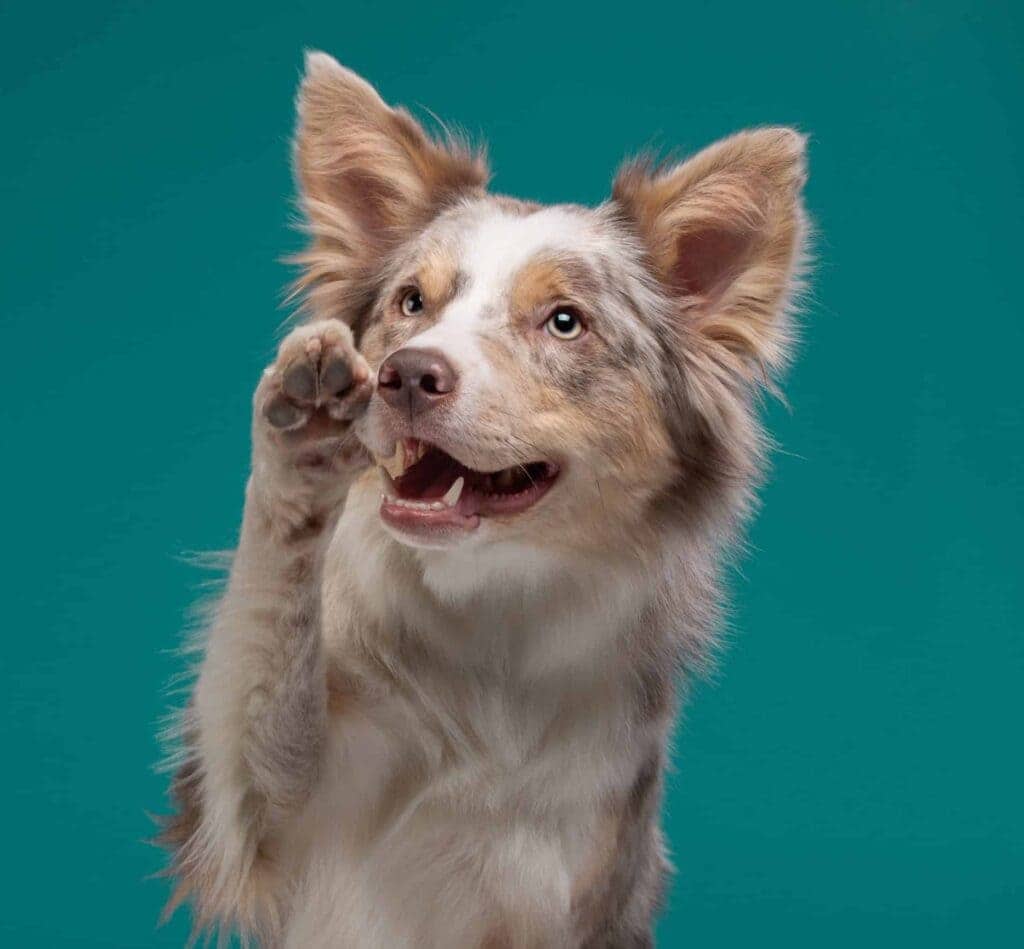
Persistent pawing usually gets dismissed as attention-seeking, and sometimes it is. But constant, insistent pawing that doesn’t stop even after you’ve given your dog attention?
That’s worth paying closer attention to.
Pawing can signal pain. It can signal anxiety. It can mean your dog desperately needs to go outside, and you’ve missed the subtler hints.
A dog in discomfort will often paw as a way of literally reaching out to the person they trust most. They can’t point to what hurts. Pawing is their way of saying, something’s wrong, and I need you to figure out what.
Ask yourself: Is this new behavior or has it escalated recently? Is it happening at unusual times, late at night, first thing in the morning, right after eating?
Pair that with your observations about their appetite, mobility, and mood. Don’t just tell them to stop. Listen first.
5. Eating grass and vomiting
Almost every dog owner has seen this, and almost every dog owner has googled it at midnight in a mild panic. Here’s what’s actually happening.
Grass eating is complex. Sometimes dogs eat grass because they’re bored. Sometimes it’s a dietary deficiency nudging them toward fiber or certain nutrients.
Sometimes, probably the most common reason, they eat it because their stomach hurts and they’re attempting to self-soothe or induce vomiting to feel better. It’s primal. It’s also usually fine in small amounts.
But here’s when to pay attention: if your dog is eating grass frantically and urgently (rather than leisurely grazing), if the vomiting is frequent, or if there’s blood involved, call your vet.
Also consider your lawn. Pesticides, herbicides, and fertilizers on grass can be genuinely toxic to dogs.
If your dog loves grazing, make sure they do it only on treated-free turf, or grow a small patch of dog-safe grass indoors.
6. Sleeping more than usual — or restlessly

Lethargy is one of the most dismissed early warning signs of illness in dogs, mostly because it seems so benign.
She’s just tired. It was a big week.
Maybe. But sudden changes in sleep patterns, sleeping significantly more than usual, or conversely sleeping fitfully and restlessly, are your dog’s body waving a flag.
How much sleep is normal? Puppies can sleep 18–20 hours a day. Adult dogs average 12–14 hours. Senior dogs sleep more, too. So baseline matters.
The keyword here is sudden. A dog who’s always been a champion napper and still is? Fine. A dog who’s suddenly disinterested in walks, skipping meals, and spending the whole day horizontal when that’s new? Not fine.
Trust the change. Changes in sleep patterns often precede other symptoms of illness by days or even weeks. Catching them early can make all the difference.
7. Sudden clinginess or velcro dog behavior
One day, your independent, self-sufficient dog starts following you to the bathroom. They shadow your every move. They press themselves against your legs and won’t budge. What gives?
A quick shift to velcro behavior can signal several things, none of which you should brush off.
Dogs sometimes become intensely clingy when they’re in pain or feeling unwell — they seek comfort from the person they love most. It also happens with anxiety: storm anxiety, separation anxiety that’s escalating, or environmental stress they can’t process alone.
And here’s the fascinating part: dogs can sometimes detect illness in their humans before any diagnosis has been made.
Their olfactory systems are extraordinary. They can detect chemical changes in the body associated with certain diseases. So if your dog is suddenly glued to you and you can’t figure out why, it might be worth a check-in with your own doctor, not just theirs.
Don’t push clingy dogs away. Lean in, observe, and if it persists for more than a few days without explanation, call your vet.
8. Scooting or dragging their bottom
It looks ridiculous. It might even make you laugh. But scooting, when your dog drags their rear end along the floor, is almost always a sign of a real physical problem, and it needs your attention fast.
The most common culprit is anal gland issues. Dogs have two small glands on either side of their rectum that can become impacted, infected, or overfilled.
When that happens, it’s uncomfortable, sometimes intensely painful, and scooting is their way of trying to relieve the pressure.
Other causes include intestinal worms (which are absolutely treatable but need diagnosis) and skin irritation or allergies around the tail area.
Signs that anal gland impaction has moved from uncomfortable to serious include swelling near the base of the tail, a foul smell that’s worse than usual, or your dog obsessively licking the area.
That warrants a vet visit, not next week.
These situations can quickly escalate into abscesses, and nobody wants that for their dog.
Start paying attention to dog behavior warning signs
Learning your dog’s language is a lifelong practice. It’s not something you master in a weekend, and there’s no final exam.
But the more fluent you become in what they’re actually saying, with their eyes, their posture, their behaviors, the faster you’ll catch problems before they snowball into something serious.
If you want to keep building your knowledge, check out resources like “The Other End of the Leash” by Patricia McConnell, or consider an online course through trusted sites like the American Kennel Club or Fear Free Pets. Spending time learning more will simply strengthen the bond you share with your dog.
Your dog isn’t dramatic. They’re not misbehaving for fun.
They’re communicating with everything they have, using the only tools available to them. Every yawn, every paw, every scoot, every clingy shadow is a sentence in a language they’ve been speaking all along.
You have to decide to listen.
Sara B. Hansen has spent 20-plus years as a professional editor and writer. She’s also the author of The Complete Guide to Cocker Spaniels. She created her dream job by launching DogsBestLife.com in 2011. Sara grew up with family dogs, and since she bought her first house, she’s had a furry companion or two to help make it a home. She shares her heart and home with Nutmeg, a Pembroke Welsh Corgi. Her previous dogs: Sydney (September 2008-April 2020), Finley (November 1993-January 2008), and Browning (May 1993-November 2007). You can reach Sara @ editor@dogsbestlife.com.