
How to create a dog emergency kit: Essential supplies checklist

You know that feeling when the weather alert goes off on your phone, and your stomach drops? Yeah, that one.
In those moments, you may realize you have no plan for your dog, no bag packed, and no idea what to take if you need to leave quickly.
Here’s the thing: You’re probably thinking, “I’m a terrible dog parent. Everyone else has their stuff together, and I’m over here scrolling through Amazon at 11 p.m., overwhelmed by where to even start.”
Stop right there. That guilt? That nagging feeling that you should’ve done this six months ago? It’s actually proof that you’re a good dog owner. Bad dog owners don’t lose sleep over this. You do.
And that matters more than having the perfect dog emergency kit.
Look, we all know we should be prepared for an emergency. Depending on where you live, that could be flooding, hurricanes, wildfires, or earthquakes.
But between work, life, and everything else, assembling an emergency kit feels like one more thing on an impossible to-do list.
So it doesn’t happen. Until the power goes out for three days. Or the evacuation order comes through at dawn. Or your dog steps on glass at 2 a.m. and you’re frantically Googling what to do.
Let’s fix that. Right now.
Assessing your dog’s specific needs
- Assessing your dog’s specific needs
- Essential supplies for natural disasters
- Food and water
- Medications and supplements
- First aid essentials for dogs
- Bandages, antiseptics, and other medical items
- Preparing for power outages
- Lighting, warmth, and comfort items
- Evacuation planning with your dog
- Leashes, collars, ID tags, and carriers
- Managing stress during emergencies (for both of you)
- Keep your kit updated
- Final thoughts about creating a dog emergency kit
- Dog emergency kit checklist
Before you start panic-buying stuff off some random checklist, pause. Your dog isn’t generic—they’re YOUR dog.
With their own baggage, quirks, and needs. And that changes everything about what goes in this kit.
Do you have a senior dog with arthritis who can’t move quickly or a puppy learning basic commands? What about a reactive dog who panics during storms or around strangers?
These details help determine whether your kit saves the day or becomes dead weight you’re hauling around in a crisis.
Consider what makes your dog unique. Their daily medication. Any triggers that send them into a spiral. That threadbare stuffed animal they’ve carried for years and won’t settle without.
Document everything while you’re thinking clearly. This isn’t overthinking or paranoia—it’s the difference between a kit that functions under pressure and one that exists solely to ease your conscience.
Essential supplies for natural disasters
Natural disasters don’t care about your schedule. They don’t wait until you’re ready or give you a week’s notice. They show up uninvited and demand immediate action.
Your kit needs to match that urgency, not your wishful thinking.
Start with the documentation: copies of your dog’s medical records, vaccination history, and current prescriptions sealed in a waterproof bag or document holder.
Not just photos of your dog—photos of you WITH your dog. If you get separated, you’ll need proof they’re actually yours.
Throw in your vet’s contact info, plus backup emergency vet numbers. And a list of pet-friendly hotels or shelters within a 50-mile radius.
Make that list now, not when you’re evacuating.
Here’s what most people forget: a week’s worth of supplies. Not two days. Not “enough for now.” A full week. Because disasters don’t wrap up neatly in 48 hours, no matter what we’d like to believe.
Food and water
Your dog needs one gallon of water per day. Period. Not “probably” or “roughly.” One gallon.
That’s seven gallons for a week, and yep, it’s heavy. Get collapsible water containers—they’ll save your back and your space. Store some in your car, some in your kit.
For food, stick with what your dog already eats. This isn’t the time to experiment with new brands or “see how they do” with something different.
Stress already wreaks havoc on your dog’s digestive system—unfamiliar food compounds the problem. Store food in airtight, waterproof containers to prevent spoilage and pest contamination.
If you’re using canned food, pack a manual can opener and keep it attached to your kit with a carabiner. Electric openers are useless when the power’s out, and good luck finding one at a store when everyone else is panic-buying.
Pack portable bowls—the collapsible silicone ones work great. And here’s a pro tip: rotate the food every few months. Expired kibble won’t help anyone.
Medications and supplements
If your dog takes daily medication, you need at least two weeks’ worth. Not one week. Two. Minimum.
Call your vet and explain you’re building an emergency kit. Most vets will work with you on this; if they won’t, push back. This isn’t optional.
Don’t forget flea and tick prevention, heartworm medication, and any supplements your dog takes regularly. Label everything clearly with dosage instructions. Because when you’re stressed and exhausted, you won’t remember if it’s half a pill or a whole one.
Got a prescription? Keep a copy. Some emergency vets or shelters might need to see it.
First aid essentials for dogs
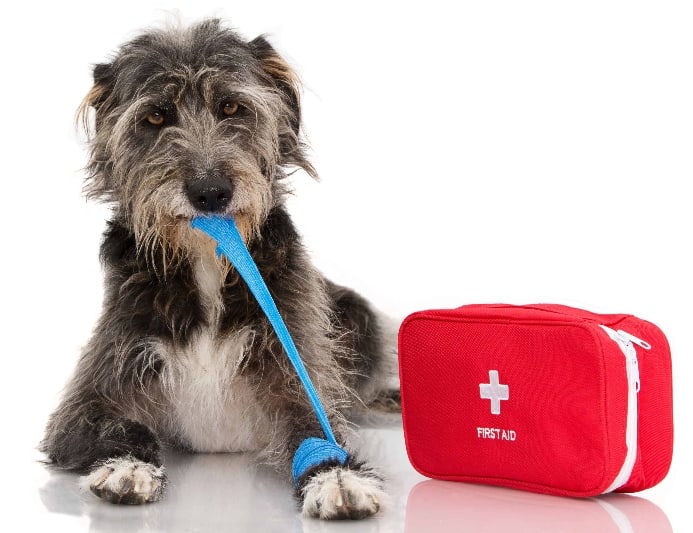
Assemble a separate first-aid kit for your dog. Your human kit won’t cut it—dogs need different supplies and dosages.
Start with the essentials: gauze pads, adhesive tape, scissors, tweezers, and a digital thermometer.
Add hydrogen peroxide (in case your vet recommends inducing vomiting, but never do this without calling first), antibiotic ointment, and styptic powder for nail bleeds.
Throw in an emergency blanket, a muzzle (even the sweetest dog might bite when injured or scared), and disposable gloves. You’ll want to protect both of you.
Bandages, antiseptics, and other medical items
Stock various sizes of gauze rolls and pads—minor cuts need different coverage than large wounds. Self-adhering bandages work better on dogs than regular tape because they stick to themselves rather than fur.
For antiseptics, stick with chlorhexidine or povidone-iodine solutions. Skip the alcohol—it stings, and your dog won’t forget it. Add saline solution for flushing wounds or eyes.
Don’t forget a tick remover, cortisone spray for hot spots, and eye wash. These seem minor until you desperately need them at midnight, when no stores are open.
Preparing for power outages
Power outages mean no heat, no AC, no lights. Your dog still needs all three. And they can’t tell you when they’re too cold or too hot until it’s already a problem.
Battery-powered or hand-crank lights are non-negotiable. Flashlights work, but headlamps keep your hands free so you can manage your dog. Pack extra batteries—more than you think you’ll need.
For warmth, include blankets, a dog sweater or coat, and those disposable hand warmers. They’re cheap, last for hours, and can be tucked into bedding.
In summer, cooling mats and a battery-powered fan become lifesavers.
Lighting, warmth, and comfort items
Comfort isn’t luxury during emergencies—it’s a necessity. A stressed dog is more complicated to manage, and you’ve got enough to handle.
Pack your dog’s favorite blanket or portable bed. That familiar smell matters more than you’d think.
Add a few beloved toys and some long-lasting chews. Boredom plus anxiety equals destruction or escape attempts.
Consider calming aids like a Thundershirt, calming treats, CBD chews, or pheromone spray. Bring whatever usually helps your dog relax. These extras aren’t for spoiling your dog; they’re thoughtful planning.
Evacuation planning with your dog
Evacuation means moving fast with a panicked dog who doesn’t understand what’s happening. Not ideal. Not fun. Planning fixes that.
Know your routes—plural. Have a primary path and two backups. Identify pet-friendly hotels along each route and save their numbers in your phone. Not all shelters accept pets, so research beforehand. The middle of an evacuation, when you’re already stressed, and traffic is hell, isn’t research time.
Practice loading your dog into the car with their carrier or crate. Make it normal, not scary. Because when you’re actually evacuating, you need them to cooperate immediately.
Leashes, collars, ID tags, and carriers
Two leashes. Not one—two. Plus an extra collar with current ID tags attached. Tags should have your cell number and an out-of-area emergency contact. If local networks go down, that backup number becomes critical.
Your dog should be microchipped, and that chip should have current information. Check it right now. Seriously, stop reading and verify it. Call the registry. Most people’s microchip info is outdated or still has their old address from three moves ago.
For carriers, bigger is better. Your dog should be able to stand up and turn around comfortably. Add absorbent pads to the bottom and secure them properly in your vehicle. An unsecured carrier becomes a projectile in an accident.
Managing stress during emergencies (for both of you)
Emergencies wreck your mental state, and your dog reads every bit of your anxiety. When your heart races and your hands shake, they feel your cortisol spike, hear the tension in your voice, and see the jerky movements. Then they mirror it back, creating a panic feedback loop.
Controlled breathing helps because it physiologically lowers your stress response. Four counts in, hold for four, four counts out. Do this before approaching your dog during a crisis. They’ll notice the difference.
For your dog, pressure works. Thundershirts, weighted blankets, or your hand firmly on their chest activate the parasympathetic nervous system—the one that signals safety. Calming music designed for dogs reduces canine anxiety through specific frequencies and tempos. Download a playlist now and keep it offline on your phone.
Create a “safe zone” when sheltering—even just a corner with their bed and a blanket draped over a chair. Dogs need a den when the world feels chaotic.
Here’s what nobody says: You don’t have to be the calm, collected hero. You need to be functional enough to execute your plan. Not perfection—function. If you’re struggling, the SAMHSA Disaster Distress Helpline (1-800-985-5990) is free, confidential, and available 24/7.
Your dog needs you to be steady, not perfect. Remember that when guilt creeps in.
Keep your kit updated

You built the kit. Great. Now, don’t let it turn into a time capsule of expired medication and disconnected phone numbers.
Set a recurring reminder on your phone—twice a year, minimum. Spring and fall work well. When that alarm goes off, actually do the check. Don’t snooze it for three weeks until you forget entirely.
Start with expiration dates. Food, medication, water purification tablets, batteries—everything expires. Toss what’s expired and replace it immediately. Not “when you get around to it.” Now.
Check your emergency contact information. Is your veterinarian’s number current? Did your backup contact move? Update your dog’s ID tags if your phone number changed. Verify your microchip information is accurate—this takes five minutes and matters enormously if you get separated.
Rotate your dog’s comfort items. That favorite toy from six months ago might not be their favorite anymore. Your dog’s needs change as they age—adjust the kit accordingly. Senior dogs need different supplies than puppies.
Test your equipment. Dead flashlight batteries won’t announce themselves during an emergency. Make sure your portable charger holds a charge. Confirm your can opener works.
Here’s what people skip: Actually use this stuff occasionally. Take the collapsible bowls on a hike. Let your dog eat from the emergency food supply, so you know they’ll actually eat it under stress. Practice loading them into their carrier.
Preparedness isn’t a one-time achievement. It’s a system that only works if you maintain it. Your future panicked self will thank you for putting in the work on a disaster kit now.
Final thoughts about creating a dog emergency kit
Look, you’re still going to feel that stomach drop when the alerts go off. That doesn’t go away. Emergencies are scary, and pretending otherwise is bullshit.
But here’s what changes: You won’t feel helpless. You won’t be frozen, wondering what to grab. You won’t be frantically throwing random stuff in a bag while your dog picks up on your panic and loses it.
You’ll know precisely where your kit is. You’ll know what’s in it: your routes, your backup plans, your emergency contacts. And when you reach for that bag, your hands won’t be shaking because you forgot something critical. They’ll be steady because you did the work.
Start with one section today. Just one. Water and food. Tomorrow, add the medications—the day after, first aid supplies. You don’t have to do this all at once. You have to start.
That guilt you’ve been carrying? The one that says you’re not prepared enough, not doing enough? It’s about to get lighter. Not because you’re suddenly perfect, but because you’re finally doing something.
Your dog trusts you completely. They trust you to feed them, protect them, and keep them safe, no matter what happens. Now you’ll actually be able to follow through on that trust even when everything goes sideways.
That’s worth the effort. Your dog thinks so. Deep down, you know it too.
Dog emergency kit checklist
Print this. Tape it inside your closet. Check items off as you go.
Documentation (Keep in a waterproof folder, bag, or container)
□ Medical records and vaccination history
□ Current prescriptions and dosage instructions
□ Photos of you WITH your dog (proof of ownership)
□ Vet contact info + backup emergency vet numbers
□ List of pet-friendly hotels/shelters within a 50-mile radius
□ Microchip registration number and registry contact
Food and water (1-week supply minimum)
□ 7 gallons of water (1 gallon per day)
□ Collapsible water containers
□ Dog’s regular food (airtight, waterproof containers)
□ Manual can opener (attached to kit with carabiner)
□ Collapsible bowls (2)
Medications and supplements (2-week supply)
□ Daily medications with dosage labels
□ Flea and tick prevention
□ Heartworm medication
□ Supplements
□ Copy of prescriptions
First aid items
□ Gauze pads and rolls (various sizes)
□ Self-adhering bandages
□ Adhesive tape
□ Scissors and tweezers
□ Digital thermometer
□ Hydrogen peroxide (call vet before using)
□ Antibiotic ointment
□ Styptic powder (for nail bleeds)
□ Chlorhexidine or povidone-iodine solution
□ Saline solution (for wounds/eyes)
□ Emergency blanket
□ Muzzle (even sweet dogs bite when hurt)
□ Disposable gloves
□ Tick remover
□ Cortisone spray
□ Eye wash
Power outage supplies
□ Battery-powered or hand-crank lights
□ Headlamp (hands-free)
□ Extra batteries (more than you think you need)
□ Blankets
□ Dog sweater or coat
□ Disposable hand warmers
□ Cooling mat (for summer)
□ Battery-powered fan
Comfort and calming
□ Favorite blanket or portable bed
□ Beloved toys (2-3)
□ Long-lasting chews
□ Thundershirt or anxiety wrap
□ Calming treats or CBD chews
□ Pheromone spray
□ Dog-specific calming music playlist (downloaded offline)
Evacuation essentials
□ Two leashes (not one—two)
□ Extra collar with current ID tags
□ Out-of-area emergency contact on tags
□ Carrier or crate (dog can stand and turn around)
□ Absorbent pads for the carrier bottom
□ Carrier securing straps for the vehicle
Maintenance schedule
□ Set phone reminder: Check kit twice yearly (spring/fall)
□ Verify microchip registration is current
□ Update emergency contact list
□ Rotate food supply
□ Check all expiration dates
□ Test batteries and equipment
□ Update comfort items as the dog’s preferences change
Start date: _______________
Last updated: _______________
Next check: _______________
Sara B. Hansen has spent 20-plus years as a professional editor and writer. She’s also the author of The Complete Guide to Cocker Spaniels. She created her dream job by launching DogsBestLife.com in 2011. Sara grew up with family dogs, and since she bought her first house, she’s had a furry companion or two to help make it a home. She shares her heart and home with Nutmeg, a Pembroke Welsh Corgi. Her previous dogs: Sydney (September 2008-April 2020), Finley (November 1993-January 2008), and Browning (May 1993-November 2007). You can reach Sara @ editor@dogsbestlife.com.