
Why your dog needs these simple enrichment activities pet parents swear by
Your dog is bored. Really bored.
And it’s not because you’re a bad dog owner. It’s because your dog’s brain is designed to work for a living, and you’ve given them a life of leisure they never asked for.
Your golden retriever? Bred to hunt waterfowl for hours.
Your terrier? Engineered to chase rats through tunnels.
Your corgi? Bred to herd cattle. Even your mutt has centuries of working-dog DNA.
And what do they do all day? Lie on your couch. Wait for you to come home. Repeat.
You’ve seen the destroyed throw pillows—the incessant barking. The kitchen cabinets, they’ve learned to open just for something to do.
You feel guilty, but you’re working long hours, living in a one-bedroom where “fetch” means throwing a ball eight feet. Maybe you’ve thought, “I shouldn’t have gotten a dog.”
Stop right there. That guilt? It’s proof you’re a great dog owner.
Bad owners don’t worry about this. They don’t read articles like this.
You care about your dog’s boredom. And that matters.
Here’s what nobody tells you: dog enrichment isn’t about having more space or more time. It’s about working smarter, not harder.
Turn mealtime into game time
Start with the easiest thing in the world: feeding time.
Right now, you probably dump kibble in a bowl, your dog inhales it in 30 seconds, and that’s that.
Boring. Wasteful. A missed opportunity.
Instead, make your dog work for their food.
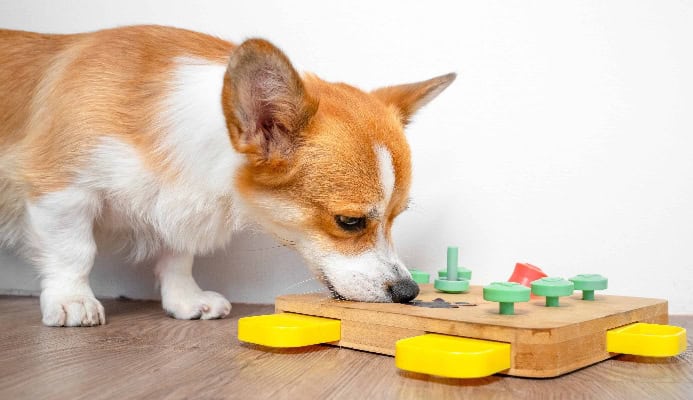
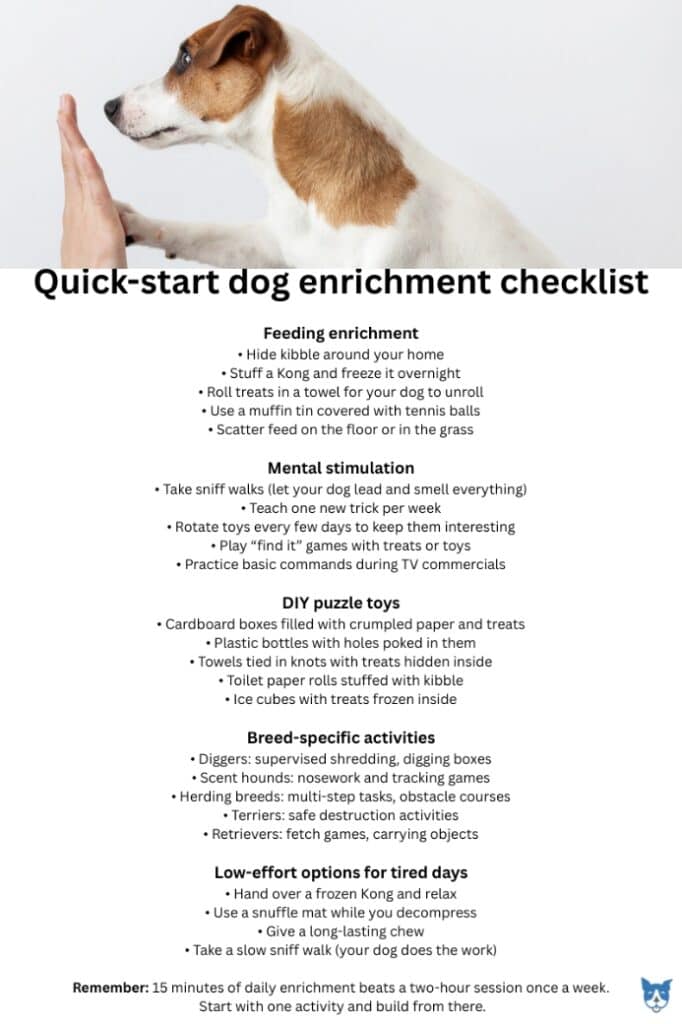
Hide kibble around your apartment. Stuff it in a Kong.
Scatter it across a towel and roll it up so they have to unroll it. Freeze it in ice cubes. Put it in a muffin tin and cover each cup with tennis balls.
Is this more work for you? Yes.
About three extra minutes of work. And those three minutes will give your dog 15-30 minutes of mental stimulation.
Food enrichment offers a pretty good return on investment.
The sniff walk: Your secret weapon

Here’s another one: the sniff walk. You know how you’re always rushing your dog along on walks because you’ve got places to be?
Stop doing that. Just for one walk a day, let your dog sniff whatever they want for as long as they wish.
Let them be the GPS. Be patient while they investigate every single blade of grass if that’s what they’re into.
You’re not being inefficient. Sniffing, or environmental enrichment, lets your dog read its neighborhood newspaper.
You’re allowing your dog to gather information about their environment in a way their brain can process it.
Twenty minutes of sniffing is more enriching than an hour of brisk walking where you’re dragging them along.
And it doesn’t take any extra time, since you were going to walk them anyway.
See how this works? You’re not adding more to your plate. You’re just doing what you’re already doing differently.
Puzzle toys: Store-bought or DIY
Let’s talk about toys, because you’ve probably wasted money on approximately 700 squeaky toys that your dog played with for five minutes and then ignored.
Stop buying regular toys.
Start buying puzzles. Food-dispensing toys. Toys like a lick mat that make your dog think.
You don’t need a lot of them. You need three or four good ones that you rotate. You can also mix in slow feeder bowls that make it more challenging to eat your dog’s food.
Dogs get bored with the same toys, but if you put a toy away for a week and bring it back out? It’s like Christmas morning. New and exciting all over again.
Can’t afford puzzle toys? Make them. Seriously. Put treats in a cardboard box and let your dog tear it apart.
Poke holes in a plastic bottle, fill it with kibble, and let them roll it around.
Tie knots in an old towel with treats tucked inside.
Your dog doesn’t know the difference between a $30 puzzle toy and a toilet paper roll stuffed with treats. They know they’ve got a problem to solve, and giving them problem-solving opportunities helps keep them engaged.
Training is enrichment (Yes, really)
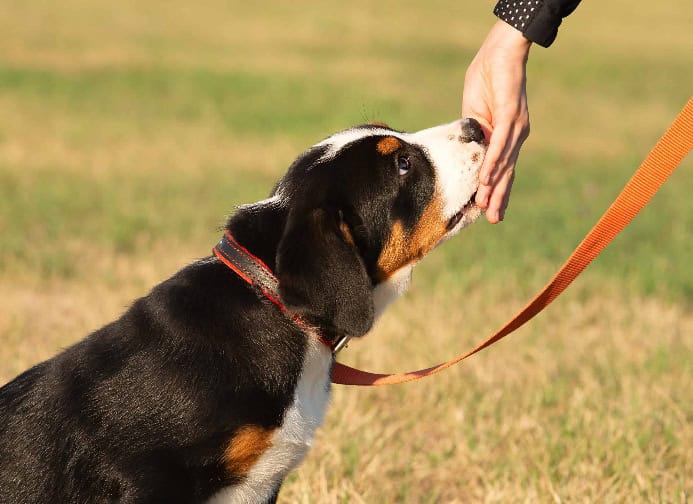
And here’s something that’ll blow your mind: training is enrichment.
Every time you teach your dog something new, you’re creating new neural pathways in their brain.
You’re giving them a job and or making them think.
It doesn’t have to be complicated.
Teach them to touch your hand with their nose.
Train them to spin in a circle.
Teach them the names of their toys.
Five minutes of training before you leave for work can set the tone for the entire day.
Give your dog choices (This one’s underrated)
You know what else enrichment is?
Letting your healthy dog make choices. This sounds weird, but bear with me. Your dog spends most of their life being told what to do and where to go.
They don’t have much agency. So give them some.
Hold up two toys and let them choose which one to play with.
Offer two different walking routes and let them choose which one to take.
Put down two different treats and let them pick.
These tiny moments of choice give your dog a sense of control over their environment, and that’s enriching in a way that’s hard to quantify but easy to see.
The small space myth
Let’s address the elephant in the room: your apartment is small. Or you live in a house, but have a tiny yard.
So you think that means you can’t provide adequate enrichment.
Wrong. Dead wrong.
Actually, easier, because there are fewer rooms to cover. Training? Requires about six square feet.
Puzzle toys? Your dog can do those in their bed.
The big yard thing is a myth we tell ourselves. Sure, yards are great for exercise, but they’re actually pretty terrible for enrichment.
You know what most dogs do when you put them in a yard? They lie down, get bored, and bark at squirrels. A yard without interaction is just a bigger cage.
Your small space isn’t the problem. The problem is thinking your small space is a problem.
But I don’t have time (Or do you?)
Now let’s talk about time, because I know what you’re thinking. “This all sounds great, but I barely have time to shower, let alone play elaborate enrichment games with my dog.”
Fair. Completely fair.
But here’s the thing: enrichment doesn’t require big chunks of time. It requires tiny moments sprinkled throughout your day.
Three minutes while your coffee brews. Five minutes before you leave for work. Ten minutes while you’re watching TV at night.
You’re not adding dog enrichment to your schedule. Instead, you’re weaving it into the life you’re already living.
Feed your dog from a puzzle toy while you’re getting ready in the morning.
Practice training commands during commercial breaks.
Play a quick game of “find it” before you leave for work.
Freeze a Kong the night before and give it to your dog when you walk out the door.
None of these things requires you to carve out dedicated enrichment time. They need you to think differently about the time you already have.
And here’s something nobody talks about: consistency matters more than intensity.
Fifteen minutes of enrichment every single day is infinitely better than a two-hour enrichment marathon once a week.
Your dog’s brain needs regular stimulation, not sporadic bursts of activity followed by days of nothing.
You can do 15 minutes. You already spend more time than that scrolling on your phone.
When you’re too exhausted to try
Let’s get honest about something else: you’re tired. You work hard. You’re stressed.
The last thing you want to do when you get home is be a dog entertainer. And sometimes, you want to collapse on the couch and zone out.
That’s OK. That’s human. You’re allowed to have limits.
But here’s the beautiful part: enriching your dog’s life doesn’t have to drain yours.
Many enrichment activities require minimal involvement from you. Stuff a Kong, hand it over, and sit on your couch.
Scatter kibble, let your dog hunt, and watch from the sidelines.
Set up a snuffle mat and let them go to town while you decompress.
You don’t have to be “on” all the time. Set your dog up for success and then let it do its thing.
And on the days when you truly have nothing left to give?
That’s what frozen Kongs are for. It’s what long-lasting chews are for.
That’s what sniff walks are for, because your dog does the work and you hold the leash.
Permit yourself to do the bare minimum sometimes. The bare minimum is still something. And something is always better than nothing.
Match enrichment to your dog’s personality
Not all enrichment ideas work for all dogs. Your dog has preferences and instincts that make certain activities more appealing. You also need to find activities to manage your dog’s energy levels.
Diggers who destroy cushions? Give them safe digging opportunities. Bury treats in towels or cardboard boxes filled with paper.
Scent fanatics? Hide treats around the house. Play “find it” games.
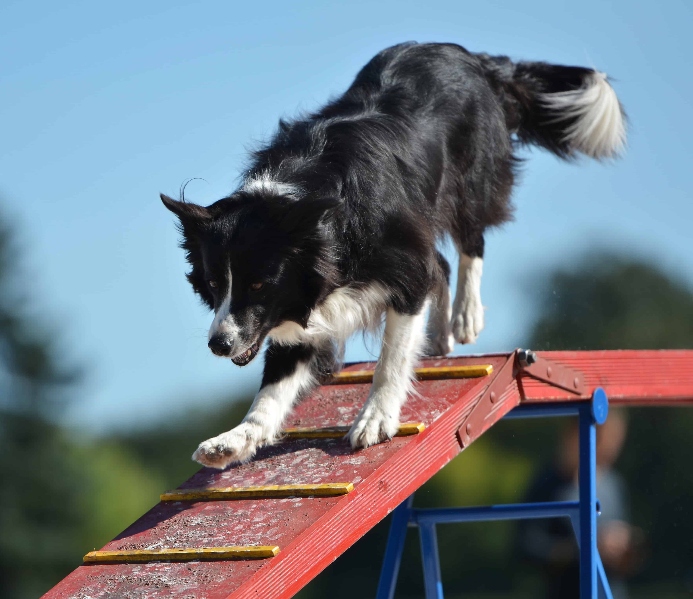
Herding breeds? They need complex problems. Teach them to put toys away or set up obstacle courses.
Hounds? Let them track treats dragged across the floor or “hunt” for their dinner.
Terriers? Give them safe destruction: cardboard boxes, paper towel rolls stuffed with treats.
Retrievers? Teach them to fetch specific items by name or give them something to carry during walks.
Mutts? Watch what they gravitate toward naturally and follow their lead.
Match enrichment to instinct, and everything clicks.
What this is really all about
Here’s what enrichment really comes down to: it’s about respecting your dog’s nature. Your dog isn’t a stuffed animal.
Dogs aren’t a decoration. They’re a thinking, feeling creature with instincts and drives that need an outlet.
When you provide enrichment, you’re not just keeping your dog busy. You’re honoring who they are.
You also acknowledge that their breed was created for a purpose, and even though they no longer need to do that job, the desire to do so is still hardwired into their DNA.
A herding dog needs to problem-solve and control movement.
Your hound needs to follow scents.
A retriever needs to carry things in their mouth.
Your terrier needs to dig and destroy.
When you give them appropriate outlets for these drives, everything gets easier.
The barking decreases, destructive behavior stops, and the anxiety lessens. Your dog settles more easily. They sleep better. They’re calmer. Happier. More fulfilled.
And you get to stop feeling guilty. You get to stop comparing yourself to other dog owners. Best of all, you get to stop wondering if you’re enough.
Because you are enough, you’ve always been enough. You just needed to know that enrichment isn’t about perfection. It’s about progress. It’s about doing what you can with what you have.
Your dog doesn’t need a perfect life. They need a rich life. And you can provide that in a small apartment with a busy schedule and limited resources. You really can.
Why do enrichment activities matter
And here’s something that doesn’t get said enough: enrichment isn’t just about tiring your dog out or preventing destructive behavior.
It’s bonding time.
Every puzzle you solve together, every game of hide-and-seek, every training session where they finally get it and look at you with pure joy—that’s your relationship deepening.
Your dog isn’t just exercising neurons. They’re learning to trust you more, to look to you for fun and guidance, to see you as the most interesting thing in their world.
That connection, that trust, that love?
It grows stronger with every moment you spend engaging their mind. And honestly, that emotional payoff might be the best part of all this. You’re not just creating a well-behaved dog.
You’re creating a partnership. A bond that makes everything else worth it.
Start small, start now
Pick one thing and try it tomorrow. Hide your dog’s breakfast. Take a sniff walk. Freeze a Kong.
Build slowly. Create a routine that works for your life.
Your dog doesn’t need a professional trainer or unlimited resources. They need you to show up and try.
You’re already here, learning, trying to do better. That’s everything.
Your dog is lucky to have you. Even on your worst days. Even in your smallest apartment.
You’re doing better than you think.
Your dog deserves a life that’s as interesting as they are. And you deserve to stop feeling guilty and start feeling proud.
Your dog’s brain is waiting. You’ve got this.
Sara B. Hansen has spent 20-plus years as a professional editor and writer. She’s also the author of The Complete Guide to Cocker Spaniels. She decided to create her dream job by launching DogsBestLife.com in 2011. Sara grew up with family dogs, and since she bought her first house, she’s had a furry companion or two to help make it a home. She shares her heart and home with Nutmeg, a Pembroke Welsh Corgi. Her previous dogs: Sydney (September 2008-April 2020), Finley (November 1993-January 2008), and Browning (May 1993-November 2007). You can reach Sara @ editor@dogsbestlife.com.