
Hospice for dogs: Support your dog through a terminal diagnosis

You sat in the vet’s office and heard words that changed everything.
Terminal. Advanced. No curative options.
Maybe you drove home in a daze. Maybe you cried before you even made it to the car.
Whatever you felt, whether it was grief, fear, guilt, or helplessness, it makes complete sense. Your dog is not merely a pet. They are a member of your family, a source of unconditional love, and one of the most important relationships in your life.
A terminal diagnosis doesn’t mean your time together is over. It means that time has become precious, and how you spend it matters more than ever. That’s exactly what pet hospice care is designed for.
This guide will lead you through what pet hospice is, how to know if it’s right for your dog, what day-to-day care looks like, and how to take care of yourself throughout the way.
What is pet hospice care?
Pet hospice, sometimes called veterinary palliative care, is a philosophy of care focused on comfort, dignity, and quality of life for animals with serious or terminal illnesses.
It does not aim to cure the disease. Instead, it aims to manage pain and symptoms so your dog can live as fully and comfortably as possible in the time they have left.
It’s important to distinguish between a few related terms:
- Palliative care focuses on relieving symptoms at any stage of illness. It can be provided alongside curative treatment.
- Hospice care typically begins when curative options are no longer pursued and focuses entirely on comfort and quality of life.
- Euthanasia is a separate, humane option to end suffering when quality of life can no longer be maintained. Hospice care is not a rejection of euthanasia. It is an alternative path that some families choose, and it can also help you recognize when euthanasia may be the most compassionate final gift.
One of the most important things to understand is that choosing hospice is not giving up. It is choosing to be present, to focus on your dog’s comfort, and to give them a peaceful final chapter surrounded by people they love.
Pet hospice can take place at home, which is the most common and often most comforting setting for dogs, or through a veterinary hospice program that provides support and frequent check-ins.
Some families combine both, working with a home-visit vet while also leaning on their usual veterinary clinic.
Is pet hospice right for my dog?
There is no single answer. The right path depends on your dog’s specific illness, their personality, your family’s circumstances, and your own values around end-of-life care.
Pet hospice is commonly considered for dogs with:
- Cancer (particularly when surgery, chemotherapy, or radiation are declined or no longer effective)
- Congestive heart failure
- Chronic kidney disease in advanced stages
- Liver failure
- Degenerative neurological conditions such as degenerative myelopathy
- Severe arthritis or orthopedic conditions limiting mobility and comfort
A good candidate for hospice is a dog whose illness cannot be reversed but whose symptoms, such as pain, nausea, breathlessness, or anxiety, can be meaningfully managed. The goal is not length of life but quality of life.
Questions to ask your veterinarian

- What symptoms can we expect as the disease progresses, and how can we manage each one?
- What does a realistic timeline look like?
- Are there pain medications or other treatments that would keep my dog comfortable without extending suffering?
- How will I know if my dog’s quality of life is declining?
- Are there veterinary hospice specialists or palliative care programs in our area?
- What should I do if my dog is in distress after hours?
Not every veterinarian is trained in hospice and palliative care.
If your vet is not familiar with this approach, consider seeking a consultation with a specialist through the International Association for Animal Hospice and Palliative Care, which maintains a directory of certified practitioners.
You can also find local help by asking your primary veterinarian for recommendations, searching online for hospice-trained vets or pet loss support groups in your area, or contacting local animal shelters or rescue organizations for additional resources and referrals.
What does pet hospice look like day-to-day?

Hospice care is not one dramatic moment. It is a series of small, loving decisions made every single day. Here is what that tends to look like in practice.
Pain and symptom management
This is the foundation of hospice. Your veterinarian may prescribe one or more of the following:
- NSAIDs or other pain relievers appropriate for your dog’s condition and organ function
- Gabapentin or similar medications for nerve pain
- Anti-nausea medications to maintain appetite and comfort
- Steroids to reduce inflammation or stimulate appetite
- Anxiety medications for dogs who become restless or distressed
Never adjust medications without your vet’s guidance. What helps one dog may harm another, especially when organ disease is at play.
Food, water, and environment
A sick dog may lose interest in their regular food. This is normal. Try:
- Warming food slightly to enhance the aroma.
- Offering small, frequent meals rather than one or two large ones.
- Experimenting with soft or wet food if chewing is painful.
- Offering favorite treats or “forbidden” foods with your vet’s blessing. This is not the time for strict dietary rules.
- Keeping fresh water nearby and accessible, using a low bowl if bending is difficult.
Create a comfortable, safe place for your dog. A soft orthopedic bed in a quiet, warm spot. Make sure they have easy access to their favorite resting places; use ramps or steps if they struggle to climb. Keep their space calm. Many sick dogs become more sensitive to noise and disruption.
Managing mobility and skin care
Dogs who can no longer move easily are at risk of developing pressure sores. If your dog is spending most of their time lying down:
- Gently reposition them every few hours.
- Use memory foam or thick orthopedic bedding.
- Keep their coat clean and dry, as moisture and soiling accelerate skin breakdown.
- Check pressure points (hips, elbows, shoulders) daily for redness or sores.
- Ask your vet about physical therapy or gentle massage to maintain comfort and circulation.
Daily comfort care checklist
☐ Medications given on schedule
☐ Food and fresh water offered and intake noted
☐ Pressure points and skin checked
☐ Repositioned if needed
☐ Gentle interaction: touch, voice, calm presence
☐ Brief outdoor time or fresh air if tolerated
☐ Elimination needs managed (diapers, pads, or assisted trips outside)
☐ Observed for changes in pain level, breathing, or behavior
Keeping your dog engaged and loved
A dog in hospice still needs connection. They may not be able to go on long walks or play fetch, but they can still experience joy, peace, and love.
Spend time lying with them. Talk to them softly. Let them sniff a garden or feel the sun on their face if they are able.
Follow their cues, such as a wagging tail or a sigh of contentment, which tells you everything.
Finding pet hospice support
You do not have to figure this out alone, and you should not have to.
Finding a specialist
The IAAHPC is the professional organization for veterinary hospice and palliative care. Their member directory lets you search for certified practitioners by location. A hospice-trained vet can help you create a structured comfort care plan, provide home visits, and guide you through end-of-life decision-making.
If no specialist is nearby, ask your regular veterinarian whether they are willing to collaborate on a palliative care plan. Many general practitioners are open to this, particularly with specialist guidance via telehealth.
What to expect from a hospice consultation
A first consultation typically covers:
- A thorough review of your dog’s diagnosis, test results, and current symptoms
- A quality-of-life assessment
- A pain management plan with specific medications and dosages
- A care plan customized to your dog’s condition and your home situation
- Clear guidance on warning signs and what to do if symptoms worsen
Cost factors
The cost of pet hospice varies widely depending on the complexity of care, the medications required, and whether you work with a specialist or your general vet. If you are concerned about expenses, ask your veterinary team about financing plans or sliding-scale fees.
Some nonprofit organizations and animal welfare groups may offer financial aid programs or grants to assist with hospice or palliative care. Local humane societies or pet-related charities might also be able to connect you with resources to help reduce the financial burden.
Ongoing palliative medications may run from $50 to several hundred dollars per month. Home visit vets typically charge $150–$400 per visit.
Ask about telehealth options, which can reduce costs while still delivering expert guidance. Some veterinary schools also offer palliative care services at reduced rates.
Knowing when it’s time: Identifying the end of life
One of the hardest parts of hospice care is knowing when comfort can no longer be maintained. This is not a failure. It is an honest reckoning with your dog’s reality, and it is one of the most loving things you can do.
Signs that a dog may be entering the final stage
- Persistent refusal to eat or drink, even favorite foods
- Labored or uneven breathing
- Inability to stand, walk, or maintain basic mobility
- Loss of bladder or bowel control without distress
- Extreme lethargy or unresponsiveness
- Signs of pain that medications can no longer control
- Loss of interest in interaction, surroundings, or activities they once loved
The HHHHHMM quality-of-life scale
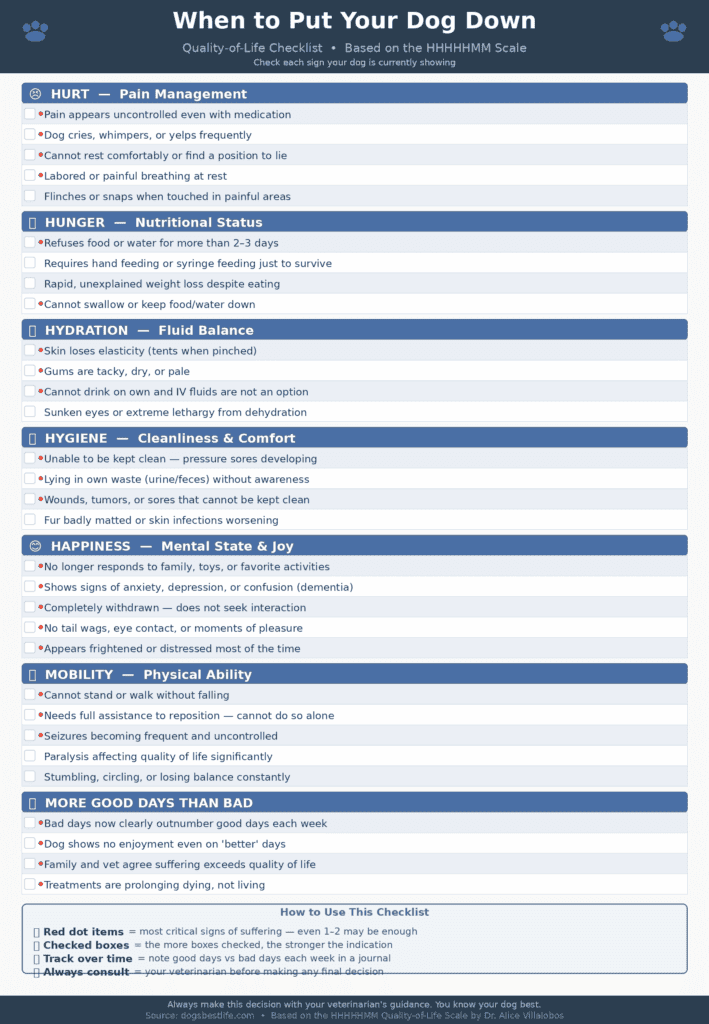
Developed by veterinary oncologist Dr. Alice Villalobos, the HHHHHMM scale gives families a structured way to assess quality of life. It evaluates seven criteria, each scored 1–10:
- Hurt: Is pain successfully controlled?
- Hunger: Is the dog eating enough to maintain strength?
- Hydration: Is the dog adequately hydrated?
- Hygiene: Is the dog kept clean and free from sores?
- Happiness: Does the dog express interest, joy, or affection?
- Mobility: Can the dog move enough to satisfy basic needs?
- More good days than bad: Overall, is the dog experiencing more good days than bad?
A total score below 35 often suggests that quality of life is significantly compromised. This is a tool for reflection, not a verdict, but it can help you and your vet have an honest, grounded conversation.
A bad day vs. a consistent decline
Every dog in hospice will have bad days. A single difficult day, such as reduced appetite, more sleepiness, or less enthusiasm, does not necessarily mean the end is near. What matters is the pattern over time.
Keeping a simple daily journal can help. Note your dog’s appetite, mobility, comfort level, and times of happiness. Over time, you’ll be able to see whether the trajectory is stable or declining. This record is just as invaluable when talking to your vet.
When you are unsure, call your vet. That is what they are there for. A good hospice vet will help you read the signs without judgment, and when the time comes, they will help you understand your options, including euthanasia, with compassion and clarity.
Taking care of yourself too
Caring for a dying dog is one of the most emotionally exhausting experiences a person can go through. Anticipatory grief, grieving a loss before it happens, is real, and it is heavy.
Caregiver burnout is also real. Broken sleep, persistent vigilance, and the emotional pressure of watching your dog decline can take a physical and psychological toll. Please permit yourself to:
- Ask for help from family, friends, or a pet sitter so you can rest
- Eat, sleep, and move your own body — your dog needs you well
- Cry when you need to, and not apologize for it
- Seek support from others who understand pet loss
Pet loss support resources
- Many veterinary schools operate pet loss support hotlines staffed by trained counselors. Cornell, Tufts, and UC Davis are among those that provide free or low-cost services.
- The Association for Pet Loss and Bereavement offers an online community and therapist referrals.
- Pet loss grief groups, both face-to-face and online, connect you with others who understand the extent of what you’re going through.
Talking to children and other pets
If children are part of your family, honest, age-appropriate conversations about your dog’s illness can help them process grief rather than be surprised or confused by it.
Depending on their age, they may want to participate in care, such as offering treats, gentle petting, or simply sitting quietly, which can be meaningful for both child and dog.
There are also thoughtful resources created to help children understand and cope with pet loss. Books like “The Goodbye Book” by Todd Parr and “When a Pet Dies” by Fred Rogers offer comforting stories and simple language for kids.
Organizations such as the Association for Pet Loss and Bereavement (APLB) guide families and may recommend additional grief materials for children. Reading these books together or investigating these resources as a family can help your child express their feelings and ask questions in a safe, supportive way.
Other pets in the household may also sense changes. They may become more attentive, clingier, or quieter. Maintain their routine as much as possible and allow them to spend time with your sick dog if all parties are comfortable.
After your dog passes, surviving pets may grieve in their own ways, such as searching for their companion or displaying changes in appetite or behavior.
Supporting them by maintaining consistent daily routines, offering extra comfort, and giving them gentle attention can help many pets adjust to loss. If you notice ongoing signs of anxiety or distress among your other pets, contact your veterinarian for advice on additional support.
Give your dog a great last chapter
A terminal diagnosis is not the story. It is a chapter, and you get to help write what that chapter looks like.
Pet hospice is an act of love. It is staying present when it would be easier to look away. It is learning to measure your dog’s life not in days remaining but in tail wags, sun-soaked naps, gentle pats, and the quiet comfort of your nearness.
You know your dog better than anyone. Trust that knowledge. Lean on your veterinary team. Accept help. And know that the care you are providing right now — however hard it is — is one of the most profound expressions of the bond you share.
Your dog is lucky to have you.
Medical disclaimer: This article is intended for informational purposes only and does not constitute veterinary advice. Always consult a licensed veterinarian for diagnosis and treatment of your pet’s health conditions. Veterinary care recommendations vary based on individual animal needs.
Sara B. Hansen has spent 20-plus years as a professional editor and writer. She’s also the author of The Complete Guide to Cocker Spaniels. She created her dream job by launching DogsBestLife.com in 2011. Sara grew up with family dogs, and since she bought her first house, she’s had a furry companion or two to help make it a home. She shares her heart and home with Nutmeg, a Pembroke Welsh Corgi. Her previous dogs: Sydney (September 2008-April 2020), Finley (November 1993-January 2008), and Browning (May 1993-November 2007). You can reach Sara @ editor@dogsbestlife.com.