
How to decode dog howling: The secret language every owner must know

As you know, your dog is nothing more than a wolf in your living room. And it is genetically programmed for dog howls for a few good canine reasons.
It’s an ancient memory. Your dog probably doesn’t know why it’s howling, but something deep inside tells it to do so.
In the wild, wolves howl to communicate with each other. It’s a way to let each other know how they feel. They also use it to locate each other when separated.
And there are those occasions when it’s nothing more than one big sing-along; that’s fun and feels good. Everyone in the pack joins in.
Domesticated dogs have carried on the howling gene and tradition for 60,000 years.
Why is your dog howling?
Pay attention.
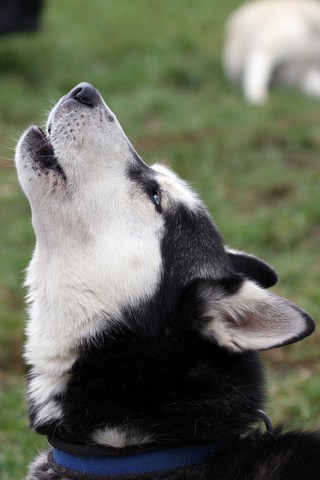
If your dog’s howl is mournful, likely, he’s outside, suffering from separation anxiety and howling because he feels lonely.
Your dog wants you to come out and play, so it’s giving you an attention-seeking howl.
If your dog howls when it hears a passing siren, it is howling to let them know it’s there. The dog is talking back.
It could have heard other dogs howling in the distance and wanted to chat.
It’s a canine version of a conference call, and a way for your dog to connect with a fellow pack member.
Maybe the kid next door is learning to play the clarinet or flute. That weird sound can trigger howling in dogs, who usually never think about howling, chiming in, or testing their pipes.
If your dog’s howling is disturbing, ignore it. Bring the dog inside when it stops.
You do not want your dog to learn to associate, “Whenever I howl, they let me inside.”
What dog breeds howl
The instinct to howl varies among dog breeds, primarily influenced by their instincts and lineage.
Hound breeds like Beagles and Bloodhounds tend to howl frequently due to their history as scent trackers, using howling to communicate progress to their human handlers.
In contrast, companion breeds like the Cavalier King Charles Spaniel and the Pomeranian are more inclined to bark or whine.
Working breeds, such as Siberian Huskies or Malamutes, are known for their vocal nature; their history as sled dogs drives them to howl for communication with their pack or to express excitement.
Overall, howling reflects each breed’s heritage and purpose, helping owners better understand and communicate with their pets.
Follow barking rules
The same rule holds for barking. When your dog is quiet, reward him and let him inside.
If he is outside alone, provide him with enough toys and items to keep him busy. Challenge his brain.
By keeping him preoccupied, he is less likely to howl. Bored dogs get into trouble.
Exercise, exercise, exercise. Play with your dog.

Teach your dog how to howl
Teaching your dog to howl on command can be a fun trick to add to their repertoire.
Here’s a step-by-step guide:
Choose the right cue
First, decide on a command to encourage your dog to howl. Common cues include “howl,” “sing,” or “woo.” It’s best to use a single word or signal that’s distinct from other commands your dog knows.
Find a howling trigger
Dogs often howl in response to certain high-pitched sounds, such as sirens, musical instruments, or the howling of other dogs.
Observe what triggers your dog to howl. Once you’ve identified a sound that gets them howling, you can use it to reinforce the command.
Get your dog’s attention
When you’re ready to practice, find a quiet space with minimal distractions. Use the trigger sound to prompt your dog to howl. You might want to play a recording of howling or make the sound yourself to get your dog interested.
Use positive reinforcement
As soon as your dog howls in response to the trigger, immediately say your chosen command and reward them with praise or treats. This positive reinforcement will help them associate the sound with the command.
Practice
Repetition is necessary. Practice this several times a day for short bursts of about five to ten minutes. Be patient and keep the sessions fun. Gradually, your dog will begin to understand that howling is linked to your cue.
Slowly fade the trigger
Once your dog reliably howls in response to the trigger sound, start practicing without the sound. Use your command instead, and reward them for howling on cue.
Generalize the command
To ensure your dog can howl on command in different situations, practice in various locations and with distractions. This helps reinforce the behavior in multiple contexts.
Stay positive
Always keep training sessions positive and fun. If your dog seems frustrated or disinterested, take a break or switch to another command they enjoy to keep their spirits up.
Commonly asked questions about dog howls
Q: At what age do dogs start to howl?
A: Dogs can start at various ages, often around 6 to 12 months, when they reach maturity. However, some dogs may begin earlier or later, depending on their breed and personality.
Q: Why doesn’t my dog howl?
A: Not all dogs howl, and some breeds are less prone to this behavior. If your dog doesn’t, it might be due to their personality or the lack of triggers that typically evoke howling responses, such as sirens or certain types of music.
Q: Do certain songs make dogs howl?
A: Yes, certain songs or musical notes can trigger the behavior in some dogs. This response often relates to the pitch or tone of the music, and if it resembles sounds made by other dogs.
Q: What sounds trigger dogs?
A: Common sounds that can trigger howling include sirens, musical instruments, and even high-pitched noises. Many dogs have an instinctive response to these sounds, as they may mimic the calls of their ancestors.
Q: Should I encourage my dog to howl?
A: Whether to encourage your dog to howl is a personal decision. If you find it amusing and it’s not causing stress to your dog, you can engage with them using sounds or music that elicit howling. Always ensure that your dog is comfortable and not anxious.
Bottom line: Understand what dog howls mean
Howling sessions usually do not last long. Don’t try to stop howling unless the howling disturbs you or your neighbors.
Join him. It takes some practice to get it right. Nevertheless, your dog will be patient while you learn.
What a terrific way to bond with your dog. It’s a liberating, silly, fun time for you to share. Enjoy the call of the wild.
Karen A. Soukiasian owns Good Dog! — Dog Training in St. Augustine, Florida. You can follow Karen on Facebook.