
How to get a dog to stop jumping. Try 10 tips for good behavior
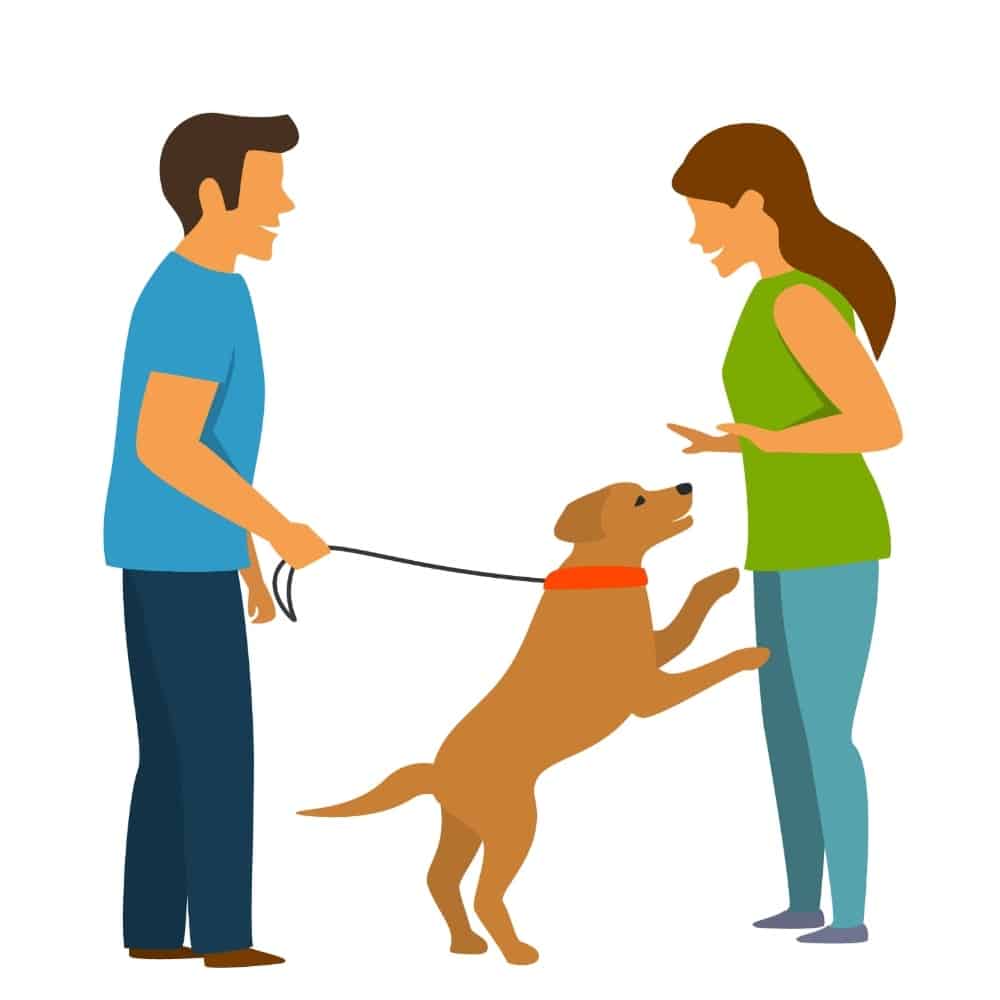
If you’ve ever had a dog, you know how frustrating it can be when it jumps up on visitors, furniture, and other surfaces.
Even if your dog is otherwise well-behaved, jumping can be an embarrassing and potentially dangerous habit.
But don’t worry. With the right tools and strategies, you can get your dog to stop jumping in no time.
Continue reading to discover effective ways to end this behavior and prevent your dog from jumping.
Understand why your pup jumps
First, it’s essential to understand dog behavior and the reasons behind their jumping.
Dogs love attention from their owners and others in general. This means that when they see someone they want to greet, they may jump up to show their excitement.
This is especially true for puppies, as jumping is an instinct when greeting a new person or someone familiar who has been away for a while.
Older dogs may have become conditioned to jump as a result of being rewarded with attention in the past for doing so.
Use baby gates strategically
Now it’s time to get your dog to stop jumping.
If you want to keep your pup from jumping up on people when they come into the house, consider using baby gates strategically around entrances to limit access, mainly before your dog has learned not to jump up on visitors.
This way, when guests come over, the baby gates will keep your dog corralled, and it won’t be able to jump up and greet the people at the door.
Put treats on the floor
Another helpful tip is to place treats on the floor near the entrance when guests arrive. This will give your dog something else to focus on rather than jumping up on visitors.
Make sure to reward your dog’s good behavior with treats only. If your dog starts to jump, bark, or whine, instead of focusing on the treat, take it away until it calms down.
Doing this consistently will encourage good behaviors and help your dog to focus on treats rather than jumping up when guests arrive.
Teach alternative behaviors
It is also essential to teach your pup an alternative behavior, such as using the sit command, that will replace its jumping on people behavior.
Teaching your dog to sit and lie down are good behaviors that can be used as alternatives to jumping up on people.
When guests come over, or you come home from work, ask your pup to perform either of these commands instead of allowing it to jump up.
Reinforce good behavior—treat and praise
Say goodbye to the days of punishing bad behavior — one key to successfully training your dog is positive reinforcement.
This means rewarding good behaviors with treats, praise, or playtime, rather than punishing destructive behaviors with scolding or other negative responses.
Rewards reinforce good behavior by showing your pup that it is being rewarded for doing what you ask.
When it comes to staying calm in the presence of guests, the reward should always come after all four paws are firmly planted on the ground.
Put your dog on a leash
Finally, one of the best ways to train a dog not to jump is by putting it on a leash whenever visitors arrive at your home.
This way, you can control your dog’s movements and prevent unwanted behaviors before they start.
When visitors arrive, have someone hold onto the dog’s leash while another person greets the visitor at the door.
That way, no matter how excited your pup gets when people enter the house, it won’t be able to jump up and greet them.
Use different techniques for different situations
It’s also important to remember that specific training techniques to get your dog to stop jumping may need to be tailored for each situation.
For example, a training method to get your pup to stop jumping on visitors may be different from one that helps it stop jumping on you when you get home from work.
Here’s how you could react if your dog jumps when you walk in the door to your home:
Keep greetings quiet
When you walk into the house, resist the urge to call out your pup’s name or talk excitedly. This is especially important if your dog is jumping because it’s excited to see you.
Even if your dog doesn’t jump, overly enthusiastic greetings can encourage it to do so in the future.
If your dog jumps on you, ignore it
If your dog does jump on you when you enter the house, ignore it. Make sure you don’t give it attention until its feet are on the floor.
Don’t scold or push your dog away; walk away and ignore it. The key here is consistency.
Try again
If ignoring your pup isn’t working, you can try the entrance again.
Turn around, walk outside, and try coming back in after a few seconds have passed.
You may need to repeat this process several times before your dog learns that it only receives attention when it keeps all its paws on the ground.
It’s important not to give up; with patience and consistency, you’ll be able to train your pup not to jump when you walk in the door.
Get everyone on board with training
One crucial step is ensuring that everyone who interacts with your pup is on board with the same rules. No matter how hard you try to teach your dog not to jump, be prepared for friends, family members, and strangers to encourage your dog to jump on people, thereby reinforcing this behavior.
Here’s how to get everyone on board with your training plan.
Set clear boundaries and expectations
Explain to people what behaviors are expected of your pup at home or in public. The first step is to ensure that everyone knows what you expect from them when interacting with your pet.
For example, if jumping is off-limits, ensure people know they should never encourage or reward that behavior.
Make sure everyone knows how to respond
When someone visits your home or meets your pup at the park, they may not know precisely how to respond when your pup jumps or barks.
Prepare them ahead of time by explaining what behaviors are acceptable and which ones aren’t. This will give them an idea of what they should do (or not do) when interacting with your dog.
Explain the reasons behind your techniques
It can be frustrating for people who don’t understand why you’re using specific commands or techniques with your dog, especially if they haven’t been raised around dogs or haven’t received training in animal behavior.
Take the time to explain why you handle things the way you do; not only will this help others understand better, but it will also help them remember what to do when your pup starts jumping.
Learn how to stop jumping

Training your dog to stop jumping can be tough, but with the right strategies, you can overcome obstacles.
Case study 1: Max the Labrador Retriever
Max, a 3-year-old Labrador, was known for jumping on guests in his home.
His owners worked with a professional dog trainer to teach him the “sit” command.
By rewarding Max for staying seated when guests arrived, he learned to greet visitors calmly.
Within a month, he was no longer jumping and received praise for his good behavior.
Case study 2: Bella the Border Collie
Bella, a lively 2-year-old Border Collie, jumped on everyone at the park, causing safety concerns.
Her owner enrolled her in a training class to focus on impulse control.
The trainer taught Bella the “down” command to redirect her energy towards fetching toys instead of jumping.
After consistent practice, Bella learned to greet people calmly, much to the delight of park visitors.
Case study 3: Charlie the Beagle
Charlie, a 4-year-old Beagle, jumped on strangers during walks, embarrassing his owner.
They worked with a trainer to teach Charlie to maintain eye contact and focus on his owner when approaching others.
With practice, Charlie learned to stay calm and no longer jumped, earning praise for his good behavior during encounters.
Case study 4: Daisy the Golden Retriever
Daisy, a gentle 5-year-old Golden Retriever, jumped on her neighbor.
Her owner taught her to lie down on a mat when someone arrived at the door.
With reinforcement, Daisy learned that staying on her mat was just as rewarding.
After a few months, she greeted visitors calmly from her spot instead of jumping.
Don’t get discouraged
Training your dog to stop jumping can be a challenging task.
It’s common to encounter obstacles along the way, but with the right strategies, you can overcome these setbacks.
Here are some tips to help you navigate the training process:
Stay consistent: Ensure everyone interacting with your dog knows the training rules for quicker learning.
Be patient: Progress may vary, so celebrate small victories and revisit basics if needed.
Manage expectations: Set realistic goals based on your dog’s age and personality to maintain a positive outlook.
Redirect energy: Use toys or engage in activities before greetings to help your dog calm down.
Use positive reinforcement: Reward good behavior with treats or praise to motivate your dog.
Practice controlled greetings: Teach the “sit” command and only allow greetings when your dog is calm.
Create a structured routine: A consistent training schedule provides your dog with security and helps reduce challenging behaviors.
Seek professional help if needed: Don’t hesitate to consult a professional trainer for tailored guidance.
Take breaks: If you feel frustrated, take a break and return with a fresh perspective.
Final thoughts on how to stop jumping
Training your dog to stop jumping up on people takes patience and consistency, but it can be done.
With these steps above and lots of practice, you should have an obedient dog in no time.
Remember that positive reinforcement is key here; rewarding good behavior will be much more effective than punishing bad behavior.
With enough repetition, your pup will learn that jumping up is not an acceptable way to greet people and will switch to more appropriate behaviors.
Unleash your puppy’s full potential with our comprehensive puppy training guide ?