
Meet the Saluki: Why this loyal, yet independent dog breed is gaining popularity
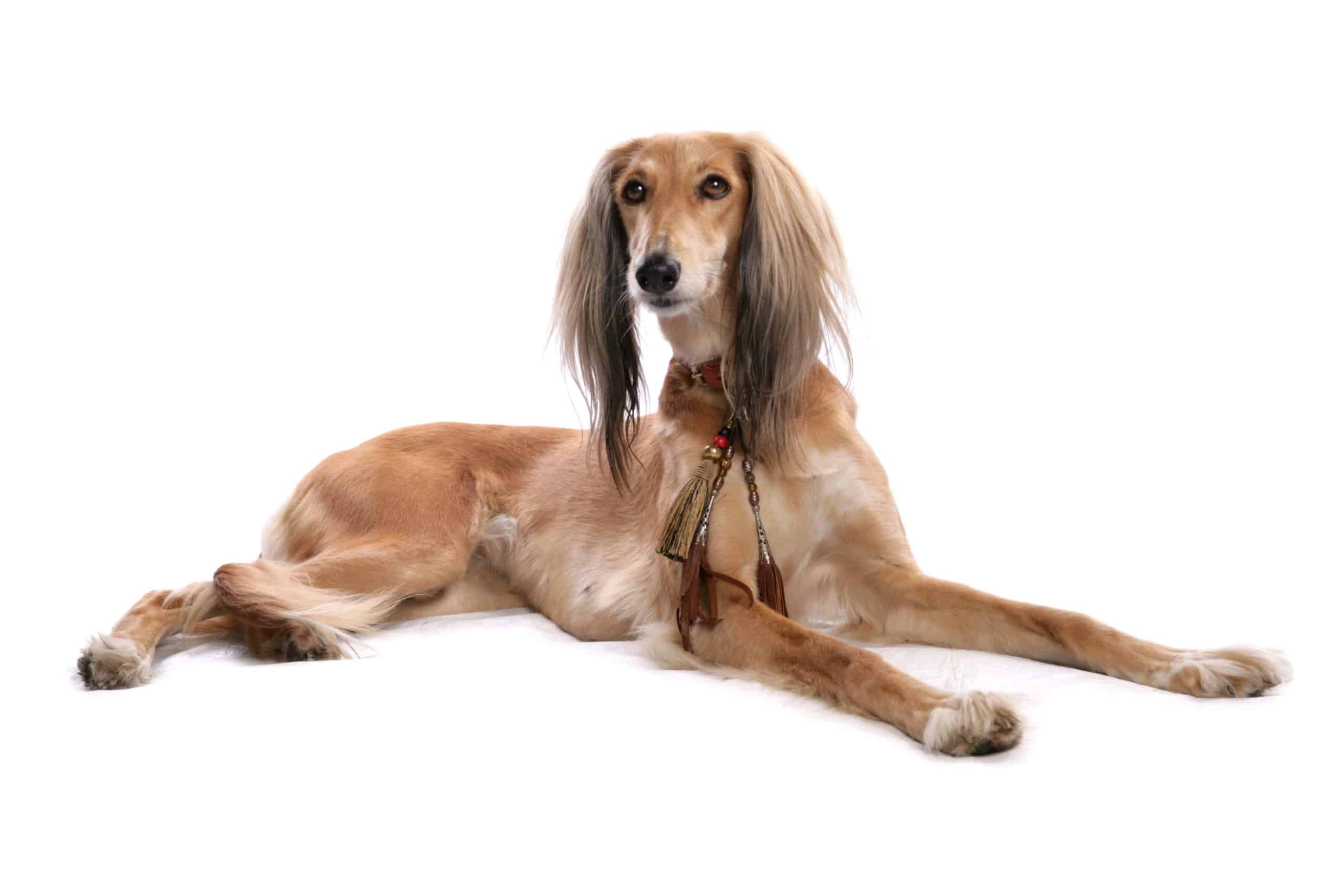
The Saluki, a breed with an air of aristocracy, captivates dog lovers with its graceful elegance and steadfast loyalty.
Renowned for its remarkable speed and agility, this regal companion has a rich heritage rooted in the ancient traditions of the Bedouins of southern Arabia.
A master hunter, the Saluki relies on keen eyesight rather than scent to chase down prey, showcasing its incredible athleticism and instinct.
With a temperament that embodies both sensitivity and devotion, this breed often forms a profound bond with its owner, making it not just a pet but a cherished companion.
For those fortunate enough to provide the Saluki with the spacious environment it thrives in, the rewards are boundless—a loyal friend and an impressive athlete ready to share adventures in the great outdoors.
History
The Saluki’s ancient origins lie in the Middle East. This breed was named after the Arabian city of Saluk, now vanished beneath the sands and is commonly known as the royal dog of Egypt.
Used by various nomadic desert people, Salukis spread from the Caspian Sea to the Sahara Desert. Saluki-like dogs are depicted on Persian pottery as early as 4200 BC.
Salukis originated as hunting dogs, specifically bred to track game in the harsh environments of the Middle East.
Their keen eyesight and incredible speed made them excellent at pursuing prey like hares and gazelles, which was a crucial skill for the survival of their owners in ancient cultures.
Pharaohs usually hunted with hawks on their wrists and Salukis on leads. Explorers found mummified remains of Salukis in Egyptian tombs.
Medieval Muslim huntsmen referred to this breed as “the sacred gift of Allah.” This religious connection made it permissible for Muslims to eat the game that these dogs captured, which would otherwise be considered unclean.
This breed is also known as the Persian Greyhound, Arabian Hound, and Gazelle Hound.
As its appearance suggests, it is closely related to another ancient breed, the Afghan Hound.
Temperament
The Saluki is an even-tempered, loyal, and sensitive dog, characterized by an aristocratic air.
Though the Saluki is a devoted pet who can become attached to only one person, they can also be emotionally distant, even with family members.
This breed is generally gentle and friendly. Most get along well with children, provided they don’t interact roughly. The Saluki breed is mild-mannered and happy.
Obedience training is required to maintain control over its natural hunting instincts.
Its owner must be calm and gentle, yet firm and consistent when training. Because this dog is sensitive, it does not adapt well to harsh discipline.
Once the dog recognizes its owner as a pack leader, it will feel secure in its environment.
Though it gets along well with people in general and Salukis, it tends to chase and kill non-canine pets. Once introduced to a family cat, it will not harm this feline. However, it is likely to chase down stray cats.
Although these quiet dogs rarely bark, the Saluki makes an excellent watchdog.
Appearance
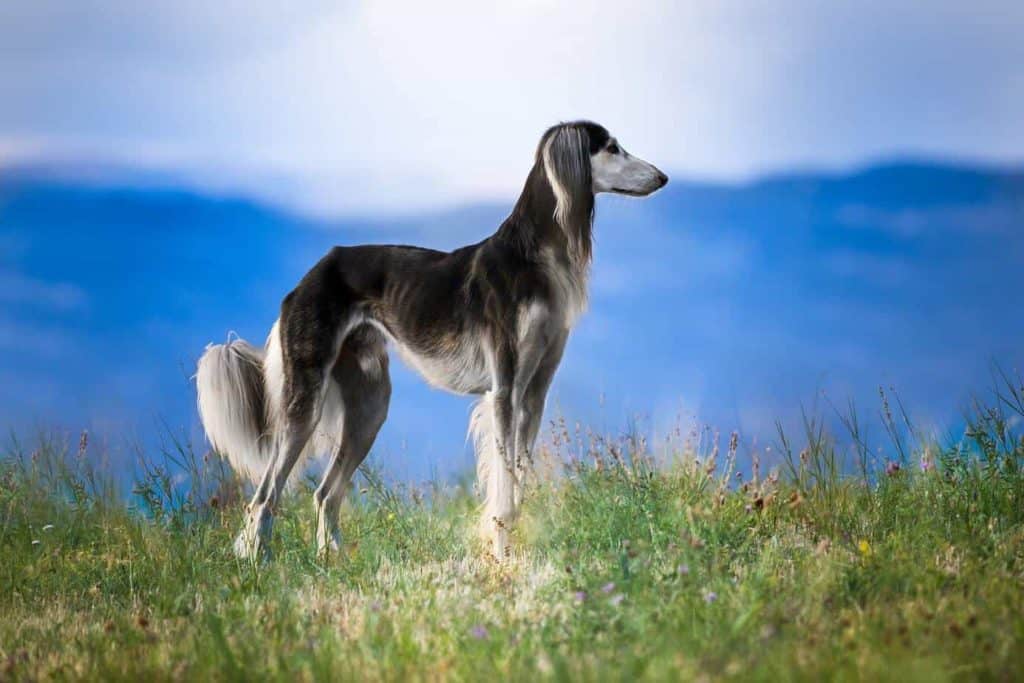
The Saluki’s body is finely shaped and muscular with a broad back and deeply recessed chest. There are two varieties of the Saluki, the feathered and the smooth-haired. The feathered Saluki displays light, silky feathering on the backs of its legs and thighs.

Both varieties have feathering on the underside and the tail. The colors of its coat vary, including white; a tricolor scheme of black, white, and tan; cream; red; golden; fawn; or black and tan.
Their legs are long and fine with well-muscled thighs, and their feet are moderately long and well arched with ample feathering between the toes. The tail is set low, long, gently curved, and feathered with long hair set on the underside.
This breed’s head is long and narrow, but fairly wide between the ears with characteristics as a sharp scissors-like bite with the upper teeth closely overlapping the lower teeth; eyes that are large, oval-shaped, and fazed to dark brown in color; a black or liver-colored nose; and ears that are long, covered with well-feathered, silky hair that hangs close to the face.
Health concerns
Salukis are generally healthy dogs, often living 12 to 14 years, but they can be prone to certain health problems.
Hip dysplasia: A genetic issue where the hip joint doesn’t fit properly, potentially leading to arthritis.
Progressive Retinal Atrophy (PRA): A degenerative eye disorder that can lead to blindness. Regular eye check-ups are essential.
Hypothyroidism: This condition arises from insufficient thyroid hormone production, leading to lethargy and skin problems.
Bloat (Gastric Dilatation-Volvulus): A serious condition in deep-chested breeds that requires immediate veterinary attention if symptoms like a swollen abdomen appear.
Heart disease: Conditions like dilated cardiomyopathy can affect Salukis, making routine heart health monitoring essential.
Skin conditions: Salukis may experience skin irritations due to their short coat, so regular grooming is necessary.
Sun danger: These delicate dogs can easily get sunburned, especially on the nose.
Maintaining a balanced diet, providing regular exercise, and ensuring routine veterinary care can help keep a Saluki healthy.
Grooming
Grooming a Saluki is relatively straightforward due to their smooth, short coats.
Here are some essential tips:
Brushing: Brush your Saluki once a week with a bristle brush or rubber mitt to remove loose hair and dirt. During shedding season, brush them twice a week.
Bathing: Bathe your Saluki every two to three months or as needed to avoid stripping natural oils from their coat. Use a gentle dog shampoo.
Ear care: Check their long ears weekly for dirt and clean with a vet-recommended ear cleaner to prevent infections.
Nail trimming: Trim nails every 3-4 weeks to avoid overgrowth. Consult a groomer or vet if you’re unsure how to trim them.
Dental care: Brush their teeth several times a week with dog-specific toothpaste and provide dental chews to promote oral health.
Health check: Use grooming time to check for any unusual lumps or skin issues, consulting your vet if needed.
Exercise needs
Salukis have high exercise needs that owners must meet to keep them physically and mentally stimulated.

Physical activity
The dogs typically require at least 60 to 90 minutes of exercise daily, which can include brisk walks, jogs, or engaging in activities that allow them to stretch their legs.
These agile sprinters thrive in open spaces where they can run freely, making dog parks, fields, or secure backyards ideal locations for their exercise routines.
Running: Salukis are known for their incredible speed and endurance. If you have access to a safe area with a fence, letting them run off-leash is one of the best forms of exercise.
Lure coursing: This activity mimics their original hunting purpose, providing both physical and mental stimulation. Many Salukis enjoy chasing a lure, and participating in organized lure coursing events can be a great way to fulfill their exercise needs.
Agility training: Engaging in agility courses or dog sports can be a fun way to keep Salukis active while also mentally challenging them. They enjoy navigating obstacles and learning new commands.
Playtime: Regular play sessions with toys or games of fetch can help burn off energy and strengthen your bond with your Saluki.
In addition to physical exercise, it’s essential to provide Salukis with mental challenges.
Puzzle toys, obedience training, and scent games can help keep their minds active and prevent boredom, which can lead to undesirable behaviors.
Training tips
Training Salukis effectively involves a combination of positive reinforcement, patience, and understanding their unique characteristics. Here are some valuable tips:
Start early: Begin training your Saluki as a puppy. Early socialization and basic obedience training are crucial to help them develop into well-mannered adults. Expose them to various environments, sounds, and people to help build their confidence.
Use positive reinforcement: Use treats, praise, and playtime to reward good behavior. This approach not only strengthens the bond between you and your dog but also encourages them to repeat desirable behaviors.
Be consistent: Consistency is vital. Use the same commands and cues for specific actions, and ensure all family members do the same. Consistency helps eliminate confusion and reinforces learning.
Keep it short and fun: Salukis can become bored if training sessions are too long or repetitive. Keep sessions short (10-15 minutes) and engaging. Incorporate games and varied activities to hold their interest and keep them motivated.
Utilize natural behaviors: Salukis have a high prey drive and a desire to chase. Incorporate activities that allow them to express these instincts, like lure coursing. Doing so not only positively channels their energy but also enhances their training by making it more enjoyable.
Be patient: Salukis can be independent and may not always be eager to please. If they seem disengaged, give them time to process what you’re asking.
Patience is essential, as they may take a little longer to learn specific commands compared to other breeds.
Socialize extensively: Encourage positive interactions with various people and other dogs. Socialization helps prevent shyness and builds a well-rounded dog. Consider enrolling in puppy classes or dog parks if your Saluki is comfortable with other dogs.
Be gentle: Due to their sensitive nature, harsh training methods can backfire. Always approach training with gentleness and understanding, avoiding any form of punishment or intimidation.
Focus on recall training: Given their chasing instinct, reliable recall is essential for Salukis, especially when off-leash. Practice in a safe, enclosed area and gradually introduce distractions to improve their responsiveness.
Enjoy the journey: Training should be an enjoyable experience for both you and your Saluki. Celebrate their progress, no matter how small, and make learning a pleasant part of your daily routine.
Perfect fit
The suitability of one of the world’s oldest dog breeds for your family can vary depending on the household dynamics.
Here are some considerations:
Families with children: Salukis can adapt to families with older children who understand how to interact with dogs respectfully, but likely will not be compatible with young children.
While the dogs are generally gentle and patient, they can be sensitive to rough play and may become skittish.
Families should teach children how to engage with the dog to foster a harmonious relationship properly.
Single-person households: For single individuals, the Saluki can be a loyal and devoted companion.
They require companionship and can become attached to their owners, making them great companions for pet parents who can spend quality time with them.
However, single owners need to be active and able to commit to regular exercise, as Salukis are high-energy dogs.
Active households: Active families that enjoy outdoor activities, such as running or hiking, will find the Saluki to be a perfect fit.
This breed has a strong prey drive and thrives in environments where it can run freely.
Access to a securely fenced area or the ability to go for long walks or runs is essential for keeping them happy and healthy.
Apartment living: While Salukis can adapt to apartment living, they must receive ample exercise daily.
A lack of physical activity can lead to behavioral issues, including restlessness and boredom.
If living in an apartment, owners should commit to taking their Saluki on frequent outings to meet their exercise needs.
Less active households: For older individuals or those with a more sedentary lifestyle, a Saluki may not be the most suitable choice.
While they are calm indoors, their energy levels and need for regular exercise might not align well with a more relaxed pace of life.
Less active households should consider breeds with lower exercise requirements to ensure a better match.
Commonly asked questions
Q: What is the difference between a Greyhound and a Saluki?
A: While both breeds are known for their speed and elegance, Greyhounds are typically stouter and have a more muscular build, while Salukis are more slender with a delicate frame.
Greyhounds have a short, smooth coat and are primarily bred for racing, whereas Salukis have a longer, silky coat since they initially hunted in desert climates.
Q: Is the Saluki dog breed closely related to the Borzoi?
A: Yes, the Saluki and Borzoi share some similarities as they are both members of the sighthound group.
However, they have different origins and appearances.
The Borzoi hails from Russia and has a more robust build, accompanied by a long, flowing coat, whereas the Saluki originates from the Middle East and features a more slender physique.
Q: Is the Saluki dog breed closely related to the Afghan Hound?
A: The Saluki and Afghan Hound are not directly related, but they do share a common ancestry within the sighthound category.
Both breeds exhibit long, flowing coats and possess a similar graceful appearance, though they were bred for different purposes and have distinct characteristics.
Q: Why do Salukis cry?
A: Salukis are known for their unique vocalizations, which can sometimes sound like crying.
This behavior can be a form of communication, whether expressing excitement, boredom, or a desire for attention.
Their vocalizations are often more pronounced when they feel neglected or if they seek companionship.
Q: What is the connection between the Saluki mascot and Southern Illinois University Carbondale?
A: The Saluki is the official mascot of Southern Illinois University Carbondale, representing the athletic teams and spirit of the university.
The choice of the Saluki as a mascot reflects the breed’s historical significance and qualities such as loyalty and endurance, which resonate with the values of the university community.
Final thoughts on adopting a Saluki
The Saluki is a graceful breed with a rich history and a strong bond with humans.
Known for their speed and even-tempered nature, they thrive in environments with plenty of space to run.
Gentle and consistent training is essential due to their sensitivity, but this devotion leads to a rewarding companionship.
With proper care, including attention to health and grooming, Salukis make excellent, loyal pets and hold a special place in the hearts of dog lovers.
If these qualities match your personality and lifestyle, search Petfinder or contact a reputable breeder like an American Kennel Club-approved reputable dog breeder for a Saluki.
Timothy M. Wilson works as a content provider for essay writing services. He is interested in self-development and spiritual awakening. He enjoys staying up-to-date with modern trends in personal development. It helps him plan and have time to do everything.