
Make simple diet changes to ease your dog’s sensitive stomach

Your dog just ate their food, the same food they’ve had for weeks, and 20 minutes later, you’re cleaning up a mess that would make a crime scene investigator wince. Sound familiar?
Here’s the thing nobody tells you upfront: a sensitive stomach isn’t just an inconvenience. It’s your dog’s body screaming for help in the only language it has.
And if you’ve been through the cycle of switching foods, Googling symptoms at midnight, and feeling like an absolute failure as a dog parent, you’re not alone. Not even close.
The good news? Sensitive stomachs are manageable, and with the right approach, many dogs go on to thrive and live happy, healthy lives.
There is real hope, and countless owners have already succeeded at turning things around for their pups.
That voice in your head saying, “Why can’t I just get this right?” That’s real. That guilt is real.
But here’s what’s also real: the fact that you’re searching for answers means you’re already doing better than most. You’re paying attention. You care. That matters more than you know.
Sensitive stomachs in dogs are more common than the pet food industry would like you to believe. Some dogs are just wired that way.
Others develop sensitivities over time. And some are reacting to the parade of mystery ingredients hiding in that colorful bag with the happy golden retriever on the front.
Whatever the cause, understanding it is the first step, and that’s exactly where we’re starting.
Common ingredient triggers to avoid
- Common ingredient triggers to avoid
- Quick-reference ingredient “Red Flag” cheat sheet
- Learn to read stool like a pro
- Common myths and misconceptions
- Overview of limited-ingredient diets
- Benefits of limited-ingredient diets for sensitive stomachs
- Tips for gradual dietary transitions
- Realistic expectations and timeline
- Easy DIY treats for dogs with sensitive stomachs
- Success stories: real-life examples
- Additional tips for managing your dog’s sensitive stomach
- When to consult a veterinarian
- Final thoughts on diets for dogs with sensitive stomachs
Not all dog food is created equal, and some ingredients are basically kryptonite for dogs with sensitive digestive systems. Knowing what to look for on a label can change everything.
Artificial additives are a big one. Preservatives like BHA, BHT, and ethoxyquin don’t belong in your dog’s bowl.
They extend shelf life at the expense of your dog’s gut health. If an ingredient sounds like something you’d find in a chemistry lab, that’s not an accident.
Corn, wheat, and soy are cheap fillers that manufacturers love and sensitive stomachs hate.
These high-glycemic, hard-to-digest grains can trigger inflammation, loose stools, and chronic gas.
That “premium” bag might still be loaded with them. Always read past the marketing copy on the front.
By-products and mystery meats cause problems, too. “Meat by-products” can mean almost anything, and that inconsistency is rough on a dog whose gut is already on edge.
Stick to named protein sources such as chicken, lamb, salmon, or venison, where you actually know what you’re feeding.
Dairy is another common culprit. Most adult dogs are lactose intolerant to some degree.
That cheese treat you’re using for training? It might be behind those after-dinner bloat sessions.
High-fat diets can overwhelm a sensitive digestive system, especially in dogs prone to pancreatitis.
Fat isn’t the enemy, but balance is everything. Food that is too rich can cause vomiting, diarrhea, and serious discomfort.
The bottom line: Read ingredient lists like your dog’s health depends on it, because it does.
Quick-reference ingredient “Red Flag” cheat sheet
- BHA/BHT/Ethoxyquin: Artificial preservatives, avoid entirely.
- Corn, wheat, and soy: Cheap fillers, difficult to digest for sensitive dogs.
- Meat by-products: Unspecified animal parts; inconsistent quality.
- Dairy: Most adult dogs are lactose intolerant.
- Excess fat: Look for moderate levels only, especially if your dog has a history of pancreatitis.
Print or save this cheat sheet on your phone for quick label-checking at the store.
Some ingredients, such as artificial preservatives (BHA, BHT, ethoxyquin) and unidentified meat by-products, are high-priority red flags and should always be avoided whenever possible.
Others, like corn, wheat, and soy, may not be hazardous for every dog but are best skipped for sensitive stomachs.
By comparison, moderate fat or the occasional dairy slip might be less urgent concerns, unless your dog is known to react badly.
If you spot more than one of these issues on a label, it is a strong sign to move on to another option.
Prioritizing the most worrisome ingredients first makes it easier to make quick, confident decisions, even when the choices seem overwhelming.
Learn to read stool like a pro
Dog poop is one of the best windows into gut health. Here’s a quick guide:
- Firm, log-shaped, chocolate brown: Ideal. Healthy digestion.
- Soft, shapeless, or pudding-like: Mild gut upset, common during transitions or after treats.
- Hard, dry, crumbly: Possible dehydration or too little fiber.
- Yellow or gray: May signal fat malabsorption or liver or pancreas issues. Call your vet.
- Black/tarry or red: Indicates bleeding in the GI tract. Seek veterinary help immediately.
- Mucus or visible undigested food: Gut irritation or food intolerance.
Keep a watchful eye. Subtle changes can reveal issues before symptoms become obvious.
When in doubt, bring a stool sample to your vet for analysis.
Common myths and misconceptions

Myth: Grain-free is always better.
In reality, many dogs tolerate certain grains (like rice or oats) perfectly well. Grain-free foods are often substituted with starchy vegetables, which can be just as problematic. The key is to find what your individual dog tolerates, not to avoid grains categorically.
Myth: All fats are bad.
Dogs need fat for healthy skin, coat, and energy. Problems arise with excess fat or poor-quality sources. Moderate, high-quality fat is beneficial. Just avoid overly rich formulas for sensitive dogs.
Myth: By-products are always nutritious.
By-products can include organs, feet, and beaks. It’s safer to opt for foods listing specific protein sources rather than generic by-products.
Understanding the facts helps you make more confident, informed choices for your dog.
Overview of limited-ingredient diets
Limited ingredient diets (LIDs) do exactly what the name suggests: they strip dog food down to its essentials. Fewer ingredients mean fewer potential triggers. Simple, right?
A true LID typically contains one protein source and one carbohydrate source. That’s it. No laundry list of additives, no four different types of grain, no cocktail of “natural flavors” that could mean anything. Just clean, identifiable food.
Novel proteins are a cornerstone of most LIDs. These are proteins your dog hasn’t eaten before and therefore hasn’t had the chance to develop a sensitivity to. Think duck, kangaroo, rabbit, venison, or wild-caught salmon. Pairing these with a single digestible carbohydrate, such as sweet potato, lentils, or peas, creates a meal that’s easy on the gut and easy to troubleshoot.
Grain-free LIDs have become popular, though it’s worth noting that grain-free doesn’t automatically mean better. Some dogs do brilliantly on specific whole grains, such as oats or brown rice. The goal isn’t necessarily grain-free; it’s trigger-free. And that looks different for every dog.
Hydrolyzed protein diets take things a step further. These formulas break proteins down into such small molecules that the immune system doesn’t recognize them as threats. They are often recommended for dogs with severe food allergies and are typically available only by prescription from a veterinarian.
Benefits of limited-ingredient diets for sensitive stomachs
The case for LIDs is pretty compelling once you understand the science behind them, and even more compelling when you see the results in real life.
Easier elimination of triggers. When a dog reacts to something in a standard kibble with forty ingredients, good luck figuring out what caused it. With a LID, you’re working with a short list. If something is wrong, you can actually pinpoint it.
Reduced gut inflammation. Fewer ingredients mean less work for the digestive system and fewer opportunities for the immune system to overreact. Many dogs on LIDs see a dramatic reduction in chronic inflammation within weeks.
Improved stool consistency. Yes, we’re talking about poop, because it matters. Healthy digestion produces firm, consistent stools. If your dog’s output resembles soft-serve, their gut is telling you something is off. LIDs often resolve this faster than owners expect.
Clearer skin and coat. Food sensitivities don’t just show up in the gut. Itchy skin, chronic ear infections, and a dull coat are often downstream symptoms of what’s happening in the digestive system. Fix the food, and you often fix the skin.
Better energy and mood. A dog that’s been chronically uncomfortable often seems lethargic or irritable. Once the digestive distress lifts, many owners report their dog becoming noticeably more playful and engaged. It’s like meeting a new dog, the one who was always there, just hiding behind the stomach pain.
Tips for gradual dietary transitions
Here’s where well-meaning dog owners make a critical mistake: they find a new food, get excited, and switch cold turkey.
The result? A digestive system in full revolt. Cramping, diarrhea, and vomiting, all of which get blamed on the new food, even though the new food might be perfectly fine.
The gut needs time to adjust.
The 7-to-10-day rule is your new best friend. Start with 75% old food and 25% new food for the first two to three days. Then move to a 50/50 split for another two to three days. Then 25% old and 75% new. Finally, full transition.
Watch for reaction signs. Loose stools during the transition can be normal as the microbiome recalibrates. But vomiting, blood in stools, or extreme lethargy are red flags.
Slow down or pause the transition if these appear. If these red-flag symptoms persist for more than a day or seem severe, contact your veterinarian right away.
Add a probiotic. Introducing a canine-specific probiotic during the transition period can significantly smooth the process. It supports the good bacteria in your dog’s gut while everything shifts. Think of it as a welcoming committee for the new food.
Keep a food journal. It sounds fussy, but tracking what your dog eats and how their digestion responds creates invaluable data. If something goes wrong weeks or months down the line, you’ll have a reference point.
Avoid treats that contradict the diet. What’s the point of a pristine diet if you’re still handing out treats packed with mystery ingredients?
Switch the treats, too. Your dog won’t miss the old ones. They care more about getting the treat than the specific flavor.
Realistic expectations and timeline
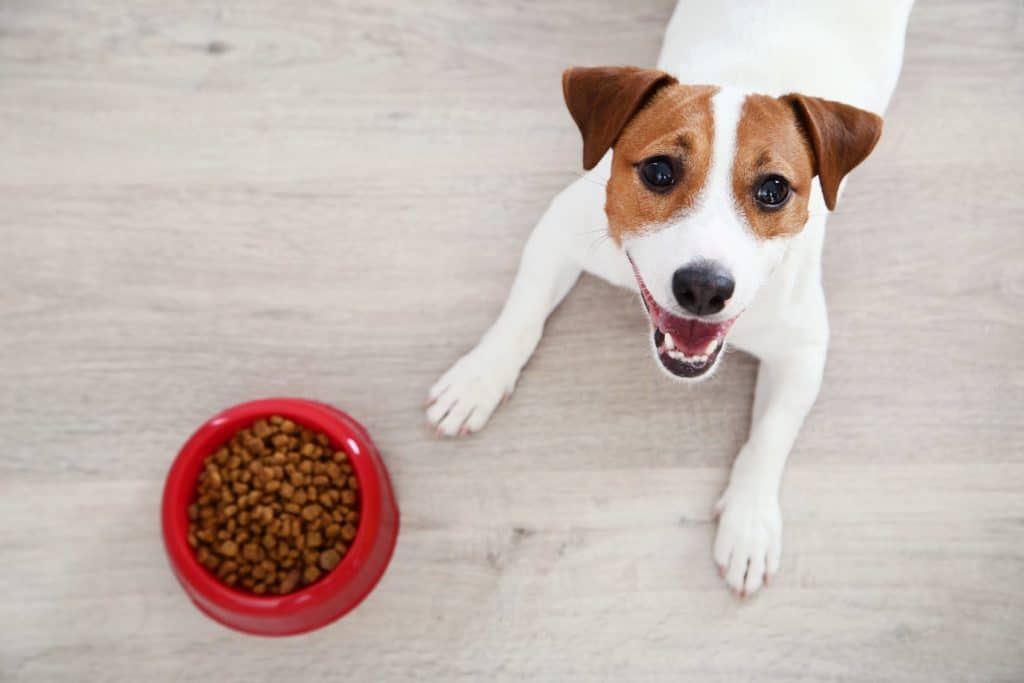
Switching diets can work wonders, but results aren’t always instant.
Here’s what to expect:
First few days: Mild digestive upsets (loose stool, gurgling) are normal as your dog adjusts.
1 to 2 weeks: You may see firmer stools, less gas, and improved appetite.
3 to 6 weeks: Skin and coat improvements become noticeable. Energy levels may rise.
6 to 12 weeks: Full benefits show. Weight stabilizes, and chronic issues like ear infections or itchiness often improve if food was the cause.
Remember: Be patient. Track symptoms and progress in a food journal to spot gradual changes.
Don’t panic over a single bad day; look for overall trends.
Easy DIY treats for dogs with sensitive stomachs
Finding store-bought treats that won’t upset your dog’s sensitive stomach can feel like searching for a unicorn.
The good news? Making your own treats at home gives you total control over the ingredients, so you can avoid common triggers and cater to your dog’s unique needs. Here are some simple, gentle recipes and guidelines:
Key principles for sensitive stomachs
- Stick to limited ingredients. Use one protein and one carb your dog already tolerates well.
- Skip the extras. No artificial flavors, colors, fillers, or added fats.
- Avoid common triggers. Stay away from wheat, corn, soy, dairy, and high-fat ingredients.
DIY treat ideas
- One-ingredient dehydrated meat: Slice lean chicken breast or turkey thin, lay on a baking sheet, and bake at 200°F (90°C) for 2–3 hours until dried. Let cool and break into small pieces. That’s it, no additives, just pure protein.
- Pumpkin and oat bites: Mix 1 cup pure canned pumpkin (not pie filling) with 2 cups rolled oats. Form into small balls and bake at 350°F (175°C) for 20–25 minutes. Pumpkin soothes digestion, while oats are easy on most sensitive tummies.
- Sweet potato chews: Slice sweet potatoes lengthwise into 1/4-inch planks. Bake at 250°F (120°C) for 2–3 hours, flipping halfway through. These are chewy, mildly sweet, and most dogs love them.
- Banana “Cookies”: Mash 2 ripe bananas and mix with 2 cups of oat flour. Spoon onto a lined baking sheet and bake at 325°F (160°C) for 15–20 minutes. Let cool completely before serving.
Tips for success
- Always introduce new treats one at a time and feed in small amounts to gauge your dog’s reaction.
- Store homemade treats in the fridge for up to a week, or freeze for a longer shelf life.
- When in doubt, consult your vet before trying new ingredients, especially if your dog has multiple sensitivities or underlying health conditions.
- Get veterinary input if your dog has a history of pancreatitis, chronic vomiting or diarrhea, sudden loss of appetite, significant weight loss, or any diagnosed medical issues like kidney or liver disease. These scenarios can make food choices riskier and require professional guidance to keep your dog safe.
Homemade treats don’t just reduce the risk of digestive upset—they let you spoil your dog with peace of mind.
Success stories: real-life examples
Numbers and science matter. But sometimes what you really need is proof that it actually works for real dogs, living real lives.
Take a standard scenario: a two-year-old Labrador with chronic loose stools and visible discomfort after every meal. The owner spent a year trying different mainstream brands, going to the vet repeatedly, and getting nowhere. A switch to a duck and sweet potato LID, after a proper ten-day transition, produced firmer stools within two weeks and a complete resolution of symptoms within six weeks. The dog started gaining appropriate weight, and the chronic skin itching that nobody had connected to food. Gone.
Or consider a small rescue terrier mix who vomited almost daily and had developed severe anxiety around mealtimes, likely because eating had become associated with discomfort. A hydrolyzed protein diet, recommended by a veterinary nutritionist, changed everything. Within a month, the vomiting stopped. Within two months, the dog was excited about mealtimes again.
These aren’t outliers. They’re what happens when the right food meets the right gut. The key in both cases wasn’t magic. It was consistency, patience, and paying close attention to what the dog’s body was communicating.
Additional tips for managing your dog’s sensitive stomach
Diet is the foundation, but it’s not the whole building. A few additional strategies can make a meaningful difference.
Feed smaller, more frequent meals. Instead of one or two large meals, split the daily portion into three or four smaller ones. This reduces the digestive load at any one time and keeps blood sugar steadier throughout the day.
Slow down eating. Dogs who inhale their food take in a lot of air, which causes bloating and discomfort. A slow-feeder bowl or a simple muffin tin can work wonders. Some dogs benefit from puzzle feeders that turn meals into a game and naturally extend mealtime.
Keep fresh water available always. Hydration supports digestion in ways people often underestimate. A dog that drinks too little can struggle with constipation and general gut sluggishness.
Minimize stress. The gut-brain connection is real, even in dogs. Chronic stress affects digestion directly. A dog who’s anxious or overstimulated at mealtimes may struggle to digest even the best food. A calm feeding environment matters.
Use digestive enzymes when needed. Some dogs with sensitive stomachs don’t produce enough digestive enzymes. A canine digestive enzyme supplement added to meals can significantly improve nutrient absorption and reduce GI distress.
Avoid table scraps entirely. This one’s non-negotiable. Human food, even the “safe” stuff like plain chicken or rice, can disrupt the stability of a carefully managed diet. And the unsafe stuff? It can cause real harm.
When to consult a veterinarian

Managing a sensitive stomach at home is possible, and many dogs thrive with dietary adjustments alone.
But there are times when professional guidance isn’t optional. It’s essential.
Seek veterinary attention if your dog shows any of the following:
Blood in vomit or stool is always an emergency. So is prolonged vomiting or diarrhea lasting more than 24 to 48 hours. Significant weight loss, lethargy, or a distended abdomen all warrant immediate attention.
If your dog doesn’t improve after a proper food elimination trial (typically eight to 12 weeks on a strict LID), a veterinary nutritionist can conduct more targeted testing.
Allergy panels, endoscopy, and biopsy can identify conditions such as inflammatory bowel disease, small intestinal bacterial overgrowth, or exocrine pancreatic insufficiency that may present as a garden-variety sensitive stomach but require specific medical management.
If you visit the vet, here’s what to expect: your veterinarian will ask for a detailed history, possibly perform a physical exam, and may suggest tests such as bloodwork, stool analysis, allergy testing, or imaging (such as ultrasound or X-ray).
In some cases, they might recommend an endoscopy or biopsy to get a closer look at the digestive tract.
Treatment can include prescription diets, medications to calm inflammation or reduce symptoms, or supplements to support digestion, depending on the diagnosis. Being aware of these next steps can help you feel more prepared and less anxious about the process.
Don’t wait too long to ask for help. An untreated sensitive stomach isn’t just uncomfortable. Over time, chronic inflammation can damage the gut lining and create new problems that didn’t exist before.
Final thoughts on diets for dogs with sensitive stomachs
Managing a dog with a sensitive stomach takes patience, observation, and a willingness to do things differently from the standard kibble-and-go approach most people use.
It’s not always easy to fix your dog’s diet. But it is absolutely doable. The reward is a dog who’s comfortable in their own body, thriving the way they deserve to.
Start by cleaning up the ingredient list. Move to a limited-ingredient diet with a novel protein. Transition slowly and track everything.
Add supportive tools, such as probiotics and slow feeders. Stay connected to what your dog is telling you through their behavior, their coat, and yes, their stool.
Your dog can’t advocate for themselves. But you can, and clearly, you already are. That’s everything.
Sara B. Hansen has spent 20-plus years as a professional editor and writer. She’s also the author of The Complete Guide to Cocker Spaniels. She created her dream job by launching DogsBestLife.com in 2011. Sara grew up with family dogs, and since she bought her first house, she’s had a furry companion or two to help make it a home. She shares her heart and home with Nutmeg, a Pembroke Welsh Corgi. Her previous dogs: Sydney (September 2008-April 2020), Finley (November 1993-January 2008), and Browning (May 1993-November 2007). You can reach Sara @ editor@dogsbestlife.com.