
Stop dog pulling now: The ultimate guide that actually works
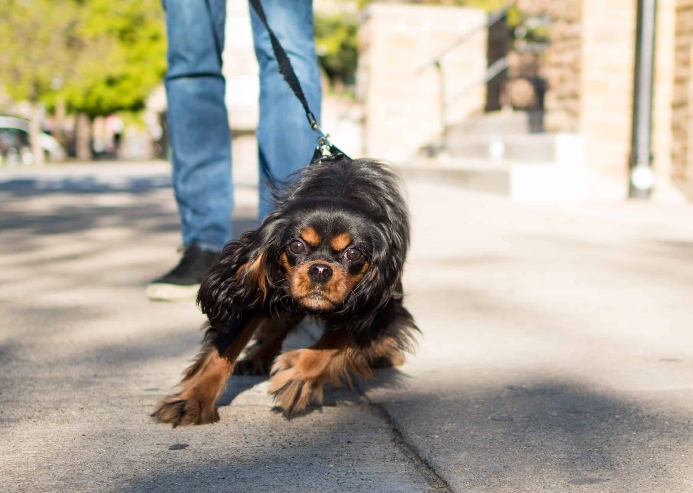
Your arm is practically out of its socket. Again.
You’re being dragged down the sidewalk by a creature that weighs maybe 40 pounds, and every single person who drives by is watching.
You bought the cute leash. You Googled “how to stop my dog from pulling” at 11 p.m.
You’ve tried the stern voice. Nothing works.
And truthfully? You’re starting to wonder if your dog is just broken. Or if you are.
You’re not broken. Neither is your dog.
But something has to change; you have to stop dog pulling because this isn’t walking. This is being walked.
Understanding why dogs pull on the leash
Here’s the truth nobody tells you at the pet store: pulling works.
At least, it works from your dog’s perspective. They pull forward, and forward is exactly where they end up. They’ve trained you, and they didn’t even mean to.
Dogs aren’t being defiant when they pull. They’re not plotting against you. They’re just doing what every living thing does: repeating behaviors that get results.
The smell of that fire hydrant is genuinely thrilling to them. Seeing the other dog or a new person across the street is the most exciting thing that’s happened all day. And their legs move faster than yours, so naturally, they lead.
Understanding this doesn’t make the shoulder pain go away. But it does mean the fix is simpler than you think.
You’re not dealing with a bad dog. You’re dealing with a dog who hasn’t learned the rules yet.
Take Bella as an example. She used to zigzag and pull at every distraction: mail trucks, leaves, other dogs.
Her owner began with short training sessions using treats and a new harness.
In a few weeks, their walks shifted from stressful to enjoyable. Bella needed focused training and guidance.
With the right method, change can happen quickly.
Essential equipment for leash training
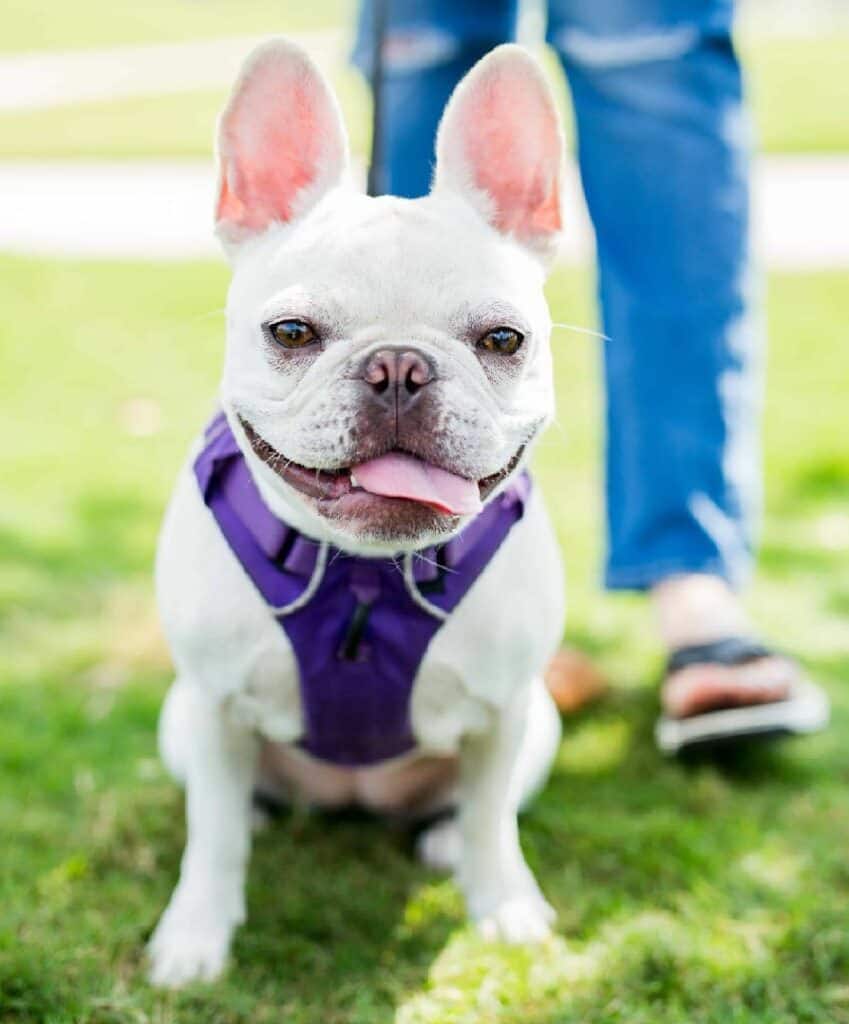
Before you even start training, look down at what you’re using. The wrong gear makes everything harder.
Types of collars and harnesses
Flat collars are fine for dogs who already walk well, as they’re simple and comfortable for everyday wear.
For pullers, though, they’re basically useless—they don’t prevent pulling and can even damage your dog’s trachea over time if pulling is intense.
The pro is comfort for calm walkers; the con is risk for eager pullers.
Front-clip harnesses represent a game-changer for pullers. Attaching the leash at the chest redirects your dog to the side rather than forward, making walks smoother and giving you more control.
These harnesses don’t punish, just guide. Some dogs need time to get used to them, and not every harness fits every dog perfectly.
Look for lightweight, padded options for small or sensitive dogs, and sturdy, adjustable types for larger dogs.
Always check fit and clip security—an improper fit lowers effectiveness.
Head halters (such as the Gentle Leader or Halti) clip around the snout and behind the ears. The pro is increased control, where the head goes, the body follows, which helps with strong pullers.
They are not muzzles, and your dog can still eat, drink, pant, and bark.
The con is that some dogs take time to get used to wearing them, and the introduction must be gradual. These are gentle but require patience and adjustment.
Prong collars and choke chains work by inducing discomfort. While they can stop pulling, they may also create anxiety, leash reactivity, and trust issues.
There are better tools. So, skip these and use them.
Leash options
Keep it simple. A 4-to-6-foot standard leash gives you control without giving your dog so much freedom that they forget you’re there.
The pro is consistent control; the con is less range for investigation.
Retractable leashes offer more distance, but the drawback is that they teach your dog that pulling extends their range, regularly leading to chaos.
Only use retractables in wide-open areas if at all.
Hands-free leashes that clip around your waist keep your hands free and are useful for multitasking and jogging.
The pro is convenience, but the con is a lack of control and the ease with which your dog can pull you if it spots a distraction, like a squirrel.
When introducing a new collar or harness, let your dog wear it for short periods at first and watch for signs of discomfort or chafing.
Adjust the fit as needed and never force your dog to accept new gear all at once. If you notice any redness, limping, or unusual behavior, remove the gear and consult a veterinarian for advice.
Taking it slow ensures your dog stays comfortable and safe with any equipment change.
Step-by-step training methods to stop pulling
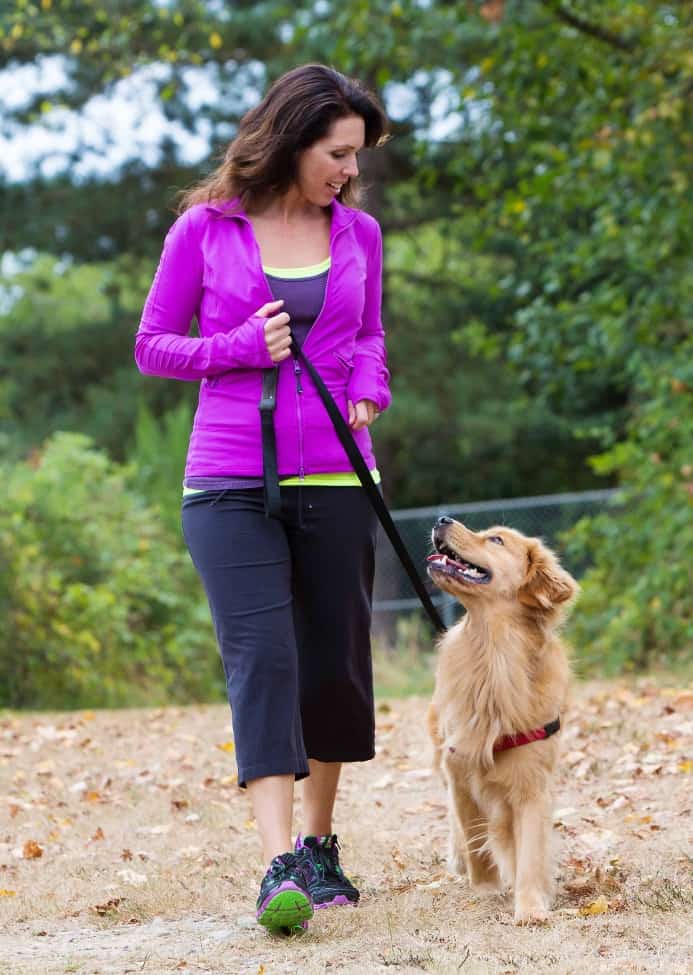
Most people give up too early. Training takes consistency, not perfection.
The key is teaching your dog that staying close to you is always rewarding. Use high-value treats like chicken or cheese, and mark good behavior with a clicker or a happy “yes!” whenever your dog walks without pulling.
Repeat until your dog regularly checks in with you on walks.
For the “heel” command, pick a consistent side and start in a distraction-free area. Lure your dog to your side with a treat, walk a step, and reward them for staying close. Gradually increase steps and distractions, only adding the “heel” cue once your dog understands the position.
Loose leash walking is more relaxed than “heel.” Let your dog sniff, but stop moving the instant the leash tightens. Wait for the leash to go slack, then continue.
Alternatively, try the “turn and go” method: when your dog pulls, turn around and walk the other way. With repetition, your dog learns that pulling never works, but staying close does.
Dealing with distractions
Other dogs. Squirrels. Kids on bikes. Trash cans that apparently smell like treasure. Distractions are where training breaks down — and where most people give up.
The fix is distance and desensitization. If your dog loses their mind when they see another dog, you’re too close. Cross the street.
Find the distance where they can notice the distraction without exploding, and work there. Reward calm, loose-leash behavior. Slowly, over days or weeks, decrease the distance.
You’re not avoiding triggers forever. You’re teaching your dog that they can handle them.
Managing high-energy dogs
Some dogs don’t pull because they’re undertrained. They pull because they’re full. A dog who hasn’t moved their legs since yesterday is running on a full tank of energy — and it’s going to go somewhere.
Exercise before leash training is not cheating. A 10-minute game of fetch, a backyard zoomie session, or even some indoor tug can take the edge off. A tired dog is a trainable dog.
Mental exercise matters too. Puzzle feeders, sniff games, and training sessions burn energy without burning your tolerance. A dog working their brain is a dog who’s got less fuel for disorder.
Handling stubborn behavior
“Stubborn” is usually code for “not motivated enough.” If your dog ignores you on walks, the treats aren’t good enough, or the distractions are too strong. Upgrade the reward before you blame the dog.
It can also mean the behavior is deeply reinforced. A dog who’s been pulling for years has thousands of repetitions in the bank. You’re asking them to undo a long habit with a handful of training sessions.
Be honest concerning the timeline. Most dogs will need several weeks of steady training before you see real improvement, and for dogs with longer histories of pulling, it can take a couple of months to change the habit fully. It takes longer to undo than it did to create, so stay patient and keep showing up.
Troubleshooting FAQs
What if my dog suddenly starts pulling after weeks of good behavior?
Regression is normal! Dogs can be distracted by new scents, stress, or changes in routine. Go back to basics with treats and short training sessions, and your dog will quickly remember the rules.
How do I handle leash-pulling on rainy or busy days?
Try indoor games or hallway leash practice if the weather is rough. On busy days, pick quieter routes or walk during off-peak times. Consistency matters more than location.
Can certain breeds be harder to train, and how do I adapt?
Some breeds are more energetic or stubborn, but every dog can learn. Use higher-value rewards, shorter sessions, and extra patience for strong-willed or easily distracted breeds.
Stay safe
Always watch for hazards on walks: avoid busy roads, check pavement temperature with your hand, and steer clear of unfamiliar or aggressive dogs.
Good leash control keeps your dog safe and shows you’re looking out for their well-being every step of the way.
Walking multiple dogs successfully

Walking multiple dogs is tough without preparation.
Start by training each dog individually to walk politely on a loose leash. Once both dogs have mastered solo walks, begin tandem walks in calm settings using two separate leashes.
If they pull toward each other, walk them on opposite sides and reward each dog for good behavior.
For three or more dogs, work up slowly and ensure every dog can walk alone and with one other dog before group walks.
Use separate leashes to prevent tangles, and bring another adult if needed.
If managing several big or strong dogs is overwhelming, split them into smaller groups or consider a professional dog walker.
Give priority to safety and control over walking everyone at once.
Common myths debunked
Myth: “You have to dominate your dog to stop pulling.”
Fact: Leash training is about communication and clear rewards, not dominance. Positive reinforcement works better than force or intimidation.
Myth: “Pulling means your dog is misbehaving or stubborn.”
Fact: Pulling is natural for dogs—they haven’t learned what you want yet. With the right training, any dog can improve.
Myth: “Some breeds just can’t be trained to walk politely.”
Fact: All breeds can learn to walk on a loose leash. While some dogs require more patience or motivation, success is possible with consistency and the right methods.
Cheat sheet: Quick-start recap
- Use the right leash and harness for your dog’s size and temperament
- Reward your dog for walking beside you—use high-value treats
- Start training in a low-distraction area, then add distractions gradually
- For pulling, stop walking and wait for slack, or turn and walk the other way
- Practice the “heel” command separately from casual walks
- Address distractions by increasing distance and rewarding calm behavior
- Tire out high-energy dogs with exercise and mental games before walks
- Train each dog individually before trying group walks
- Be consistent and patient—progress takes time
- Watch for safety hazards and adjust gear as needed
Follow these steps, and you’ll be on your way to enjoyable, pull-free walks with your dog.
Get the no-pull walk you deserve
Here’s what nobody tells you at the start of this journey: the process is the point. Every session where you stop, redirect, and reward — even when it feels futile — is a deposit in the bank.
One day, without quite knowing how it happened, you’ll notice the leash is slack. Your dog is trotting beside you. They glance up at you. You’re walking together.
That’s not luck. That’s every boring, repetitive, treat-filled moment you showed up for.
Your dog doesn’t pull because they don’t love you. They pull because nobody taught them otherwise — until now.
So be consistent, stay patient, ditch the gear that’s working against you, and trust the process.
Grab your treats, take a deep breath, and start today. Small steps and steady effort lead to real change for you and your dog.
Sara B. Hansen has spent 20-plus years as a professional editor and writer. She’s also the author of The Complete Guide to Cocker Spaniels. She created her dream job by launching DogsBestLife.com in 2011. Sara grew up with family dogs, and since she bought her first house, she’s had a furry companion or two to help make it a home. She shares her heart and home with Nutmeg, a Pembroke Welsh Corgi. Her previous dogs: Sydney (September 2008-April 2020), Finley (November 1993-January 2008), and Browning (May 1993-November 2007). You can reach Sara @ editor@dogsbestlife.com.