
Fight insomnia: 13 tips to help your dog get good sleep

If you’ve ever been jolted awake by your restless dog pacing at 3 a.m., you know that canine insomnia isn’t just your pet’s problem—it’s yours too.
When dogs don’t sleep well, the ripple effects touch everyone in the household.
Poor sleep can transform a calm, well-behaved companion into an anxious, irritable dog prone to destructive behaviors and health issues.
Chronic sleep deprivation weakens your dog’s immune system, slows healing, and can even shorten lifespan.
For owners, sleepless nights mean exhaustion, frustration, and worry about what’s wrong with their beloved pet.
The good news? Most canine sleep problems are solvable with the right approach, and restoring your dog’s rest means reclaiming your own peace of mind.
Many factors can prevent high-quality sleep and lead to canine insomnia. That may surprise you, since most dogs sleep 12 to 14 hours a day.
But some dogs, especially ones with health issues, suffer from sleep disorders and have trouble sleeping all night.
Puppies, overweight dogs, and senior dogs all can experience poor sleep.
Understand canine sleep
Common sleep problems
- Puppies are accustomed to receiving comfort at night from their siblings and mother. However, now they are alone and may have difficulty falling asleep.
- Overweight dogs may be prone to sleep apnea, a condition in which breathing stops during sleep. The dog may wake up scared at night, which is a serious problem. You should consult your vet for assistance.
- Puppies and old dogs may struggle with bladder control. This can disrupt sleep by causing them to wake up too early or in the middle of the night.
- Fleas or skin conditions that cause constant itching can also keep any dog awake. But giving your dog CBD for pets can soothe the itch and help your pup sleep through the night.
- Puppy breathing fast while sleeping, heavier breathing, or twitching typically indicates a REM sleep cycle. Puppies also experience much of their growth and development while sleeping, which uses oxygen.
Even healthy adult dogs may occasionally experience insomnia, but that should rarely happen.
Pent-up energy and inadequate exercise are the leading causes of canine insomnia.
Save your breath! Don’t even say it! A fenced-in backyard is not exercise!
Try these tips to help your dog sleep better at night and improve their sleep habits for high-quality rest.
Experiment to find the ones that work best for you and your pup and create a successful bedtime routine.
Exercise
Making sure your dog gets strenuous exercise a few hours before bedtime is helpful. If you do it immediately before bedtime, they may still be “wired” and have trouble falling asleep.
A bath can also be too stimulating before you want to put your dog to bed.
Sometimes, a trip to the dog park or a long walk a few hours before bed is enough to take the edge off and help with falling asleep.
Pick up the water
If your dog is a heavy drinker, leave some water, but not a full bowl.
Fill the water bowl with ice cubes. That way, your dog has something to do — crunch the cubes — and the ice gives them enough water to stay hydrated without filling their bladder.
Make the last potty break as late as possible. The mission is to go out, tend to business, and then come inside and go to bed. Do not get conned into playing!
Use your dog’s crate
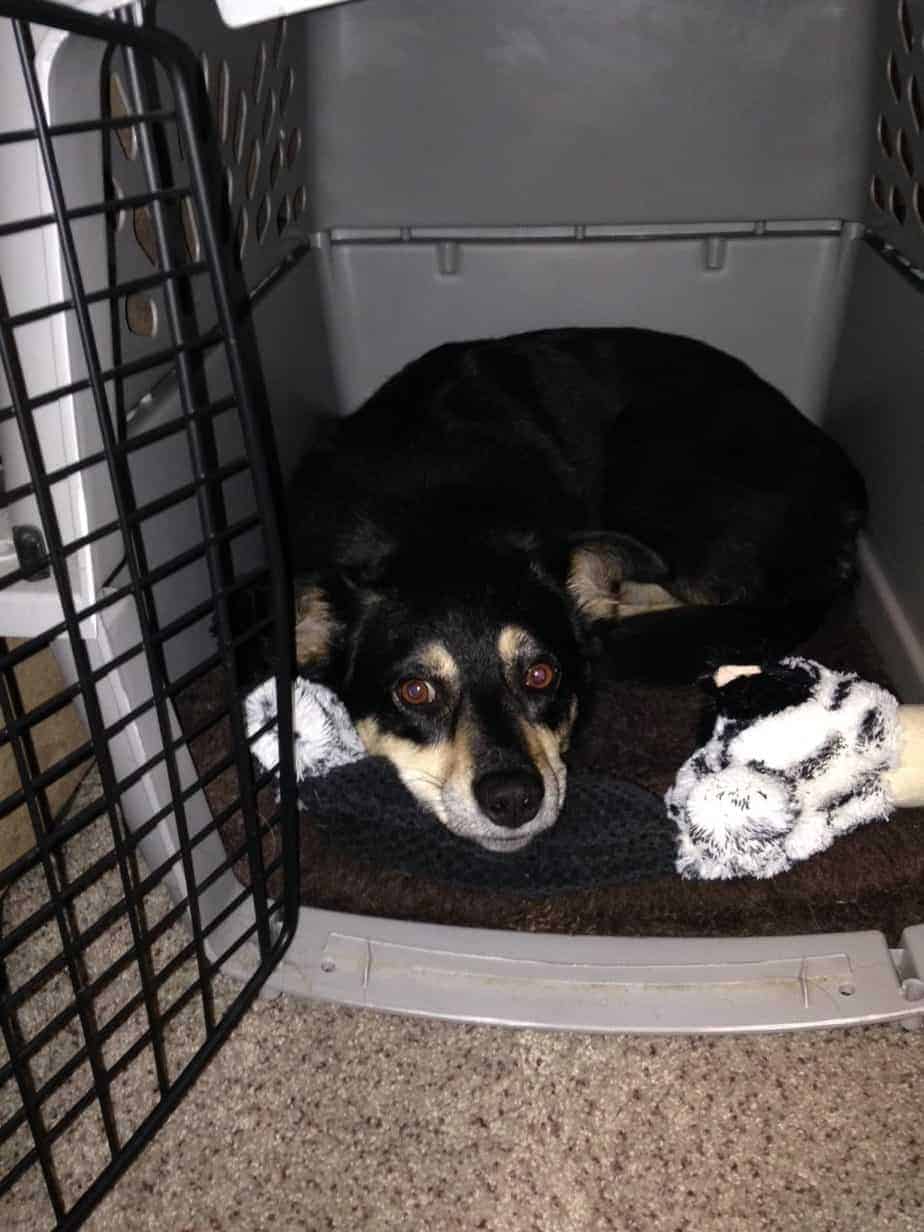
If your dog is a night owl, crate training can help your dog get quality sleep.
Crating or confining your dog will limit its access to the entire house.
Being in a confined space is usually enough to help your dog chill out for the night and get a good night’s sleep.
If you use an air foam mattress that provides the right amount of softness to support your solid nighttime sleep routine, your good example will help your dog relax and get a good night’s sleep.
Make your dog look forward to going into the crate or confined area. With a smile, say, “Bedtime!” and toss a treat or toy where you want them to go.
Praise your dog when she complies. Tell her “good night” and then leave her alone. You want to establish a routine without making your dog think it’s punishment.
Get on a dog sleep schedule
Even if you are a night owl, get your dog on a scheduled nighttime routine to help them sleep through the night. Setting a schedule can help your dog develop a healthy sleeping pattern.
If you are up late at night, don’t be surprised if your dog wants to join you. Remember, being with you is the high point of their life.
Consider placing a calming dog bed in the room where you spend time together to encourage your dog to sleep there.
Hungry?
You know what it’s like going to bed with your belly growling. You toss, turn, and the next thing you know, there you are, staring into the refrigerator at 2 a.m. with Fido at your side!
An empty belly can keep your dog up, too.
Watch the timing of meals. You may be feeding your pup too early or not enough. See if going to bed with a little something in its tummy helps.
Leave a radio on
Some dogs cannot cope with too much quiet.
The silence boosts their anxiety. Leave a radio on low, preferably tuned to a talk show or weather channel, rather than music, to provide soothing sounds.
The sound of voices may comfort your dog.
Lights on or off?
Some puppies and dogs prefer a nightlight. They find it comforting.
But for others, the light can be too stimulating, keeping them awake and busy.
For those dogs, make the house dark and quiet.
Too hot or too cold?
Keep the room where your pet sleeps comfortable.
You might feel a bit like your dog has Goldilocks tendencies, but like with light, some dogs are more sensitive to temperature.
Experiment to find the best temperature.
Create a special spot
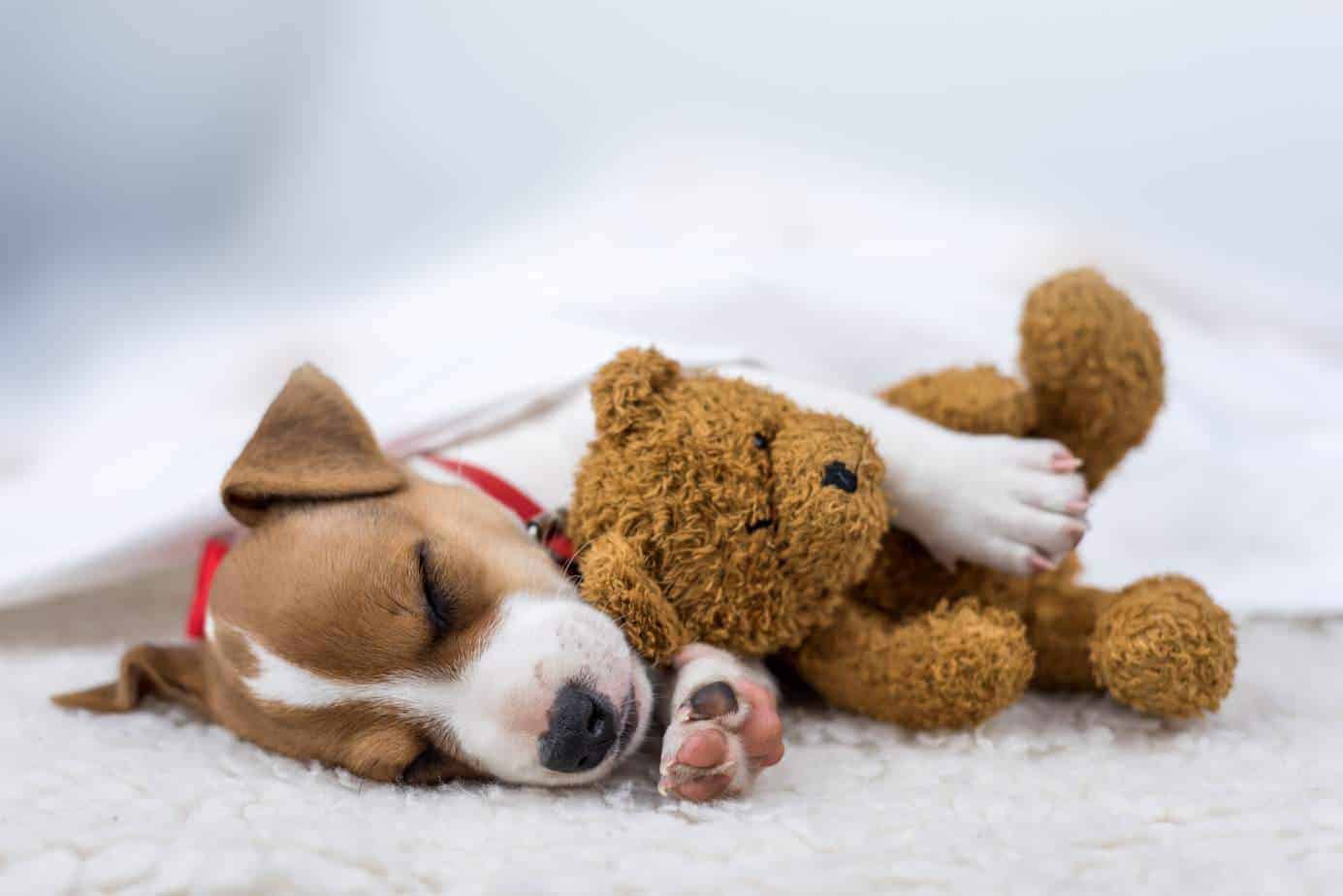
Get your puppy or dog a comfy bed.
If you choose not to let your dog sleep with you on your bed or in your room, create a special safe spot for your dog to sleep.
Consider providing your dog with a comfy bed and a cozy blanket.
Close the door to your bedroom if you don’t confine your dog at night and want to keep your pup out.
Bathe them
Fleas, fleabites, and itchy skin can awaken your pet at night. Use a shampoo designed to ease itchy skin.
Make sure they are flea-free. And if your dog has an itchy skin condition, talk to your veterinarian.
Massage them
A good massage will knock most dogs off their feet for hours!
Older dogs often suffer from chronic insomnia. Risk factors for poor sleep in senior dogs include arthritis and hip dysplasia.
If your senior dog experiences aches and pains, a buffered aspirin, at approximately a quarter of a 325-milligram tablet per 10 pounds, may help slow your dog’s heart rate and let him relax enough to get a good night’s sleep.
One dose in the morning and one in the evening may make your pet much happier and more comfortable.
If your dog’s problem is more serious, your veterinarian may prescribe something more substantial, like Trazodone, to help them relax.
Sleep with your dog
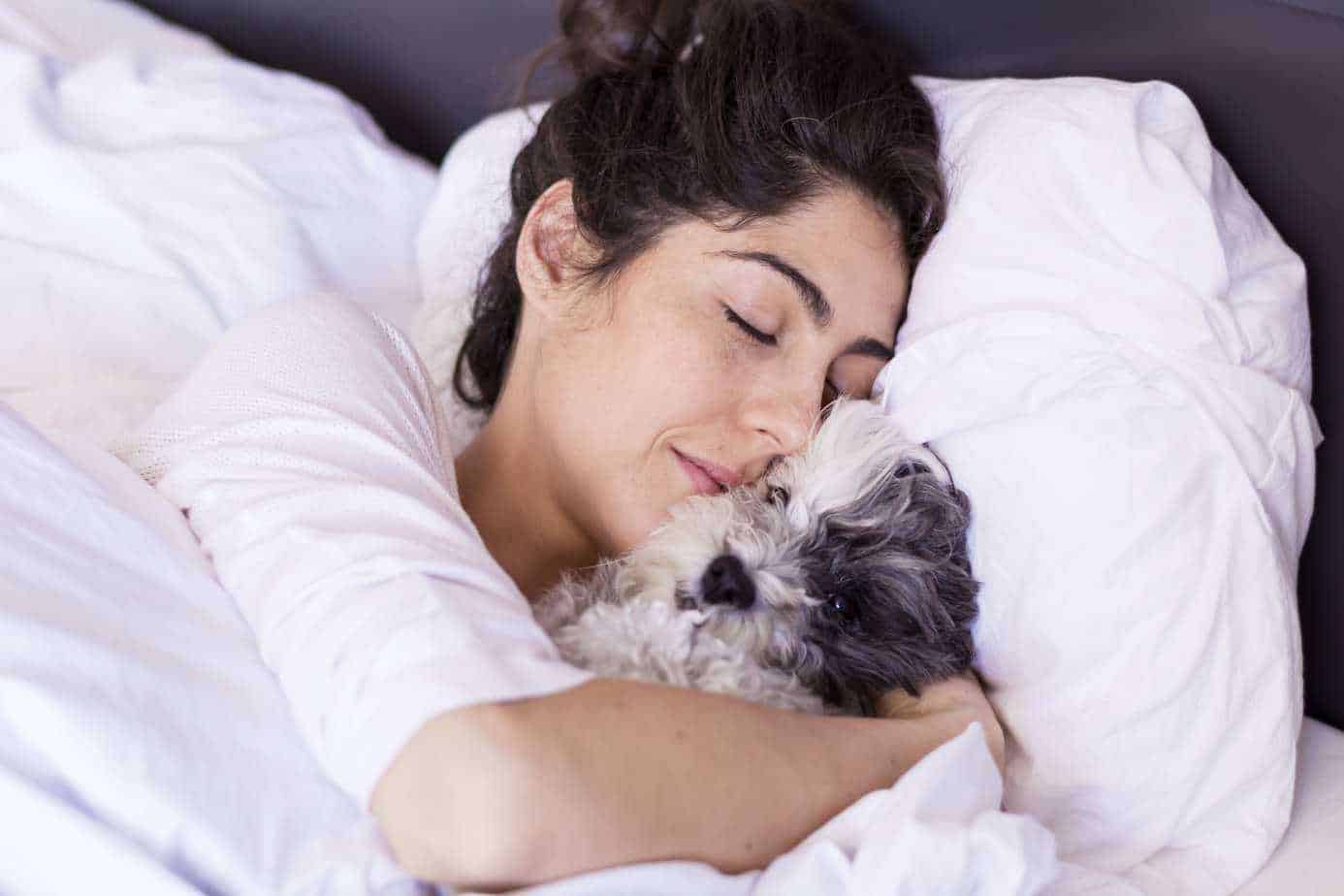
Nearly half of Americans’ dogs sleep in bed with their owners. Because they are pack animals, most dogs like to sleep snuggled up to their pet owners.
That might mean your dog wants to rest between or against the backs of your legs. Other dogs will reach out a single paw to touch their owners.
Confident dogs sleep on their backs with their legs in the air. They know they are safe and secure in your bed.
Some dogs sleep facing away from you to protect the house and be ready to act if danger arises.
Try sleep aids
Know when to call the vet
- Respiratory distress during sleep, including stopping breathing, gasping for air, or labored breathing patterns
- Sudden nighttime restlessness after previously sleeping well, which may indicate pain from arthritis, hip dysplasia, or other conditions
- Excessive panting, whining, or crying at night, especially in senior dogs
- Frequent waking to urinate, which could signal diabetes, kidney disease, or urinary tract infections
- Disorientation or confusion at night, particularly in older dogs
The bottom line on sleep quality
Usually, when a dog is comfortable, their belly isn’t growling at them, they have empty bowels and bladders, they have a cozy place to rest, and they are tired, they will go to sleep.
Learn about your furry friend’s sleeping patterns so you can maximize nightly rest.
Quality sleep is essential for dogs, just as it is for pet parents, and they need the right amount.
Karen A. Soukiasian owns Good Dog! — Dog Training in St. Augustine, Florida. You can follow Karen on Facebook.