
How to calm a dog for nail clipping (7 ways that actually work)
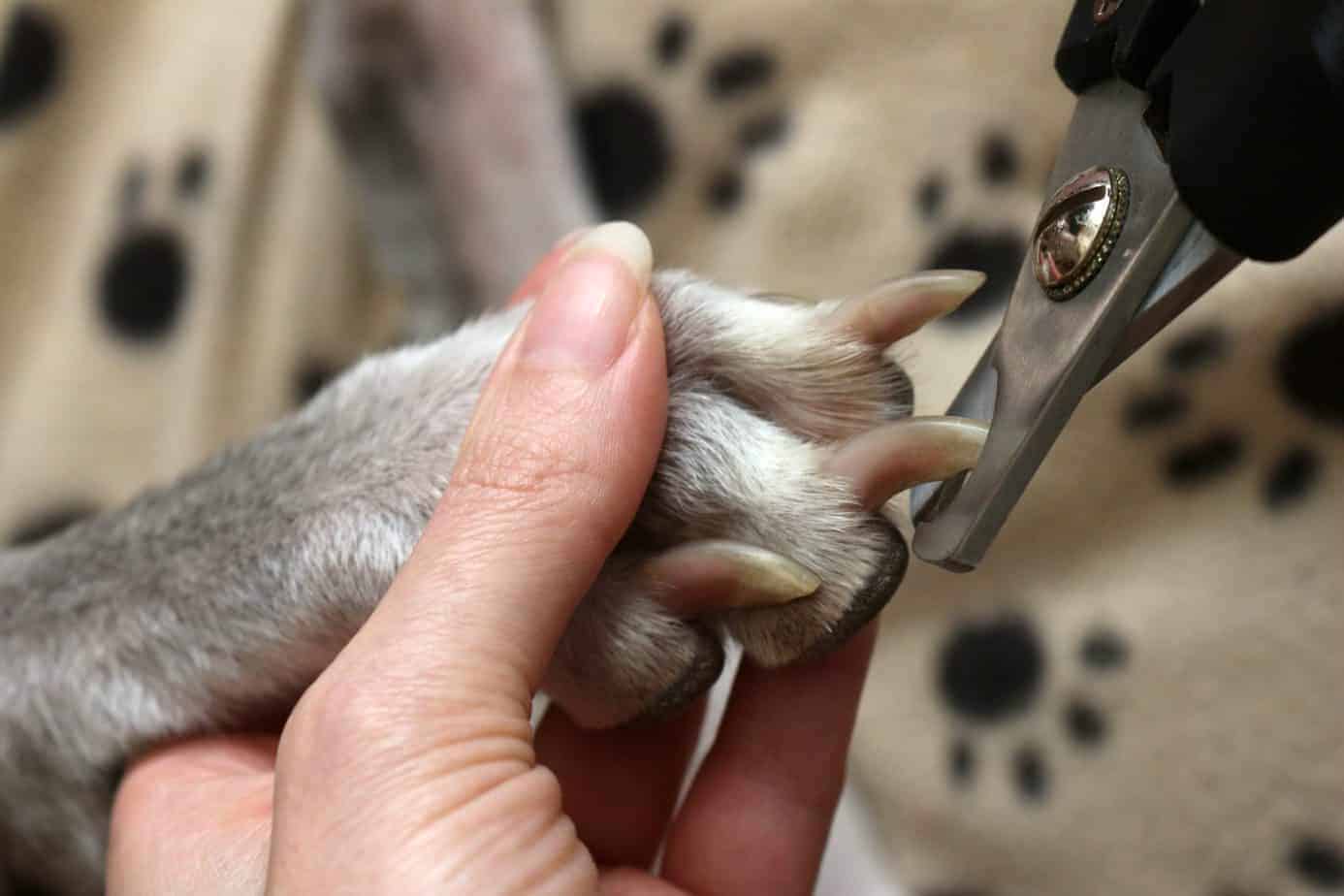
Does your dog turn into a four-legged escape artist the moment you reach for the nail clippers?
You’re not alone. Nail trimming is one of the most dreaded grooming tasks for dogs and their owners alike.
But here’s the good news: you don’t have to wrestle your pup into submission. There are gentler, smarter ways to get the job done.
The word “sedation” gets thrown around a lot in this context, but most vets today prefer “calming” to describe what pet owners can realistically and safely do at home.
True sedation involves prescription drugs and vet supervision.
Calming is what you can do with the right tools, techniques, and a little patience. We’ll cover both ends of the spectrum here so you can pick what best fits your dog.
A quick note before we dive in: Always check with your vet before giving your dog any supplement or medication.
What works for your neighbor’s golden retriever might not work for your anxious chihuahua.
Why do dogs hate nail clipping so much?
- Why do dogs hate nail clipping so much?
- Tire them out first
- Try calming supplements (with your vet’s blessing)
- Give your dog a massage
- Desensitize your dog over time
- Try trimming while your dog sleeps
- Ask your vet about prescription options
- Safely restrain your dog for nail trimming
- The real risks of sedation at home
- When to call in a professional
- Consider alternatives to calming
- Take precautions when nail trimming
- Alternative dog nail clipping methods
- Reward your dog with a treat
- Know when to trim dog nails
- Desensitize your dog to reduce stress
- Recognize signs of stress
- Keep nails short, keep dogs happy
Think about it from your dog’s perspective. Someone’s grabbing their paws (a sensitive area), wielding a strange metal tool, and making a loud snapping sound.
No wonder they panic. Past bad experiences, like a clipped quick that bled, can make things even worse.
Nail trimming anxiety is real, and it deserves a real solution.
Tire them out first
A tired dog is a cooperative dog. Take your pup on a long walk or play an energetic game of fetch before you break out the clippers.
When dogs burn off their energy, their stress response naturally drops. It won’t work miracles for every dog, but it’s the easiest, safest first step, and it costs nothing.
Try calming supplements (with your vet’s blessing)
The language around “sedating” a dog at home has shifted. Most vets and animal behaviorists now use the word “calming” because true sedation carries real risks when done without professional oversight.
That said, some over-the-counter supplements can take the edge off for mildly anxious dogs. Here’s what’s commonly discussed:
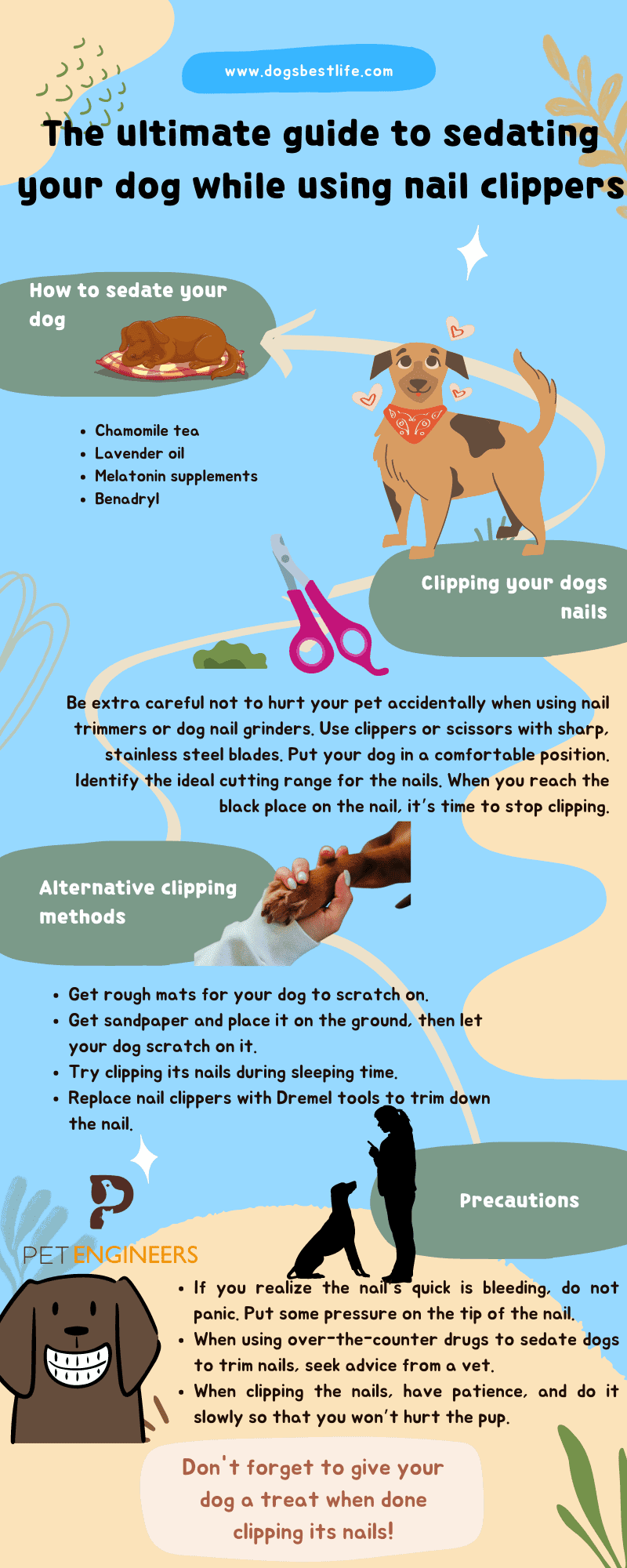
Benadryl (diphenhydramine): This antihistamine can cause mild sedation in some dogs. The general guideline is 1 mg per pound of body weight, but don’t go by that alone.
Talk to your vet first, because Benadryl doesn’t reliably calm anxiety in all dogs, and some dogs react with agitation rather than sleepiness.
Only use plain diphenhydramine, never formulas with other active ingredients like pseudoephedrine, which is toxic to dogs. Learn more at the ASPCA Animal Poison Control Center.
Melatonin: This sleep hormone can help some dogs relax. But don’t give your dog human melatonin tablets; many contain xylitol, which is highly toxic to dogs.
Stick to dog-specific formulas and always run them by your vet to get the right dose. Melatonin isn’t a magic bullet, and there’s limited scientific research on its effectiveness for situational anxiety in dogs.
Also, don’t combine Benadryl and melatonin without veterinary guidance — the combination can cause excessive sedation.
Calming treats: These often include ingredients such as chamomile, hemp, ashwagandha, and L-tryptophan.
Many pet owners report good results, and they’re generally considered lower risk than medications. Still, quality varies widely between brands, so look for products with transparent ingredient lists.
Natural herbal remedies: Herbs like chamomile, valerian, California poppy, and rosemary have calming reputations.
Chamomile tea is a popular option; let your dog drink a warm cup or soak their favorite treats in it. You can also combine chamomile with catnip and skullcap to make a more potent tea.
As always, check with your vet before adding anything new to your dog’s routine.
Aromatherapy
Lavender oil has a calming effect on many dogs. Dilute it properly (never apply essential oils undiluted directly to a dog’s skin) and massage it gently into the back of your dog’s head and down the base of the spine.
Aromatherapy won’t knock your dog out, but it can dial down the tension enough to make clipping or nail grinding easier.
Think of it as setting the mood, not a substitute for training.
Give your dog a massage
Massage isn’t just a spa indulgence; it actively reduces cortisol, the stress hormone, in dogs.
Spend a few minutes before trimming your pup’s nails giving your pup a thorough rub-down. Focus on the neck, shoulders, and back.
When your dog is visibly relaxed, that’s your cue to pick up the clippers. Dog massage techniques are worth learning because they build trust and work as a reliable pre-grooming ritual.
Desensitize your dog over time
This one takes patience, but it’s the most lasting solution.
Desensitization means gradually introducing your dog to the nail-trimming experience in small, non-threatening steps.
Start by simply touching your dog’s paws regularly. Then introduce the clippers without using them.
Let your dog sniff them, hear them click. Over days or weeks, work up to actually trimming one nail at a time. Pair every step with high-value treats.
Counterconditioning and desensitization are the techniques animal behaviorists recommend most highly because they address the root cause of the anxiety, not just the symptoms.
Try bathing your dog before trimming their nails. Wet nails are softer and easier to cut, which means less pressure and less discomfort. Pairing bath time with nail trimming is a smart double win.
Try trimming while your dog sleeps
For very mellow dogs, a little light nail trimming during nap time can work.
Dogs’ feet remain sensitive even when they’re asleep, so this approach needs a delicate touch. Use sharp, high-quality clippers because dull blades crush the nail instead of cutting cleanly, which causes pain and can worsen anxiety the next time.
Choosing the right nail clippers matters more than most owners realize.
Ask your vet about prescription options
When calming strategies and supplements don’t cut it, it’s time to talk to your vet about prescription solutions.
This is the point where the word “sedation” actually applies, and it’s not something to attempt at home without professional guidance.
Overdosing on a sedative can cause respiratory distress or worse. Let the professionals handle it.
Your vet may suggest options like trazodone, gabapentin, acepromazine, or, in severe cases, diazepam.
Each carries its own risk profile and dosing requirements. Some vets will recommend bringing your dog into the clinic so trained technicians can handle the trimming under proper supervision.
That’s often the safest and least stressful option for dogs with severe nail anxiety.
How to actually clip the nails
Once your dog is calm and ready, good technique makes all the difference.
Follow these steps:
Keep styptic powder handy. If you nick the quick and the nail bleeds, styptic powder stops it fast.
Use clippers with sharp, stainless steel blades. Dull clippers crush and split nails, which is painful and scary for your dog.
Find a comfortable position. Let your dog sit in your lap or sit beside you. Grab a helper if you need someone to hold your dog steady.
Cut small amounts at a time. Work bit by bit toward the safety stop point. On dark nails, stop when you see a black dot in the center of the nail.
Reward every single step. Treats make the experience feel positive, and a dog that expects a reward is more likely to cooperate.
Take breaks. You don’t have to do all four paws in one sitting. Trim a few nails, let your dog relax, and come back for more.
Safely restrain your dog for nail trimming
Here are some tips to help safely restrain your dog during the nail-trimming process:
Choose the right location
Find a quiet, comfortable space free from distractions. This will help your dog feel more relaxed.
A non-slip surface can also help prevent slips during grooming.
Use a comfortable restraint technique
Lateral positioning: For smaller dogs, gently place them on their side, ensuring they’re comforted by your body. Place large dogs on their side with their legs extended.
Lap technique: Sit with your dog on your lap. This allows you to hold your dog securely while trimming its nails, but only if it is comfortable being held this way.
Use grooming aids
A grooming muzzle can prevent sudden bites if your dog is fearful. Always introduce the muzzle positively, allowing your dog to become familiar with it first.
Get help from a second person
If possible, have another person assist you. One person can hold and calm the dog while the other handles the nail trimming. This can reduce anxiety and help keep the dog still.
Use positive reinforcement
Reward your dog with treats and praise throughout the process. This behavior modification tool helps create positive associations with nail trimming, making it easier in the future.
Take breaks
If your dog becomes too stressed, take a break and distract them with a toy or affection. This helps prevent negative experiences during nail trimming.
Practice gradually
If your dog is particularly anxious, consider desensitizing it. Spend time simply handling its paws and nails without trimming, allowing it to get used to the sensation.
Use the right tools
Keeping your dog’s nail clippers sharp is essential for safe trimming. Dull clippers can crush nails, causing pain and bleeding, which makes the process stressful for your dog.
Sharp clippers provide a clean cut, reducing stress and allowing for quicker trimming. Regularly checking and sharpening your clippers will improve your dog’s grooming experience.
Manage your dog’s energy
Before the trimming session, take your dog for a walk or engage in some playtime to help expend energy. A tired dog is more likely to stay calm.
Remain calm
Dogs can sense their owner’s stress. Keeping a calm demeanor can help reassure your dog and make the process smoother.
The real risks of sedation at home
Sedation is not something to take lightly. The risks are real: adverse drug reactions, dosing errors, unpredictable behavior changes, and, in worst-case scenarios, breathing problems.
Some dogs react to sedatives with hyperactivity or aggression instead of calmness — the opposite of what you want when handling sharp clippers near their paws.
Monitor your dog closely any time you use a supplement or medication, and watch their breathing, heart rate, and overall responsiveness.
If you’re ever unsure, reach out to your vet. That’s not a sign of failure; it’s smart pet ownership. Your vet can also rule out underlying pain or injury that might be making your dog’s paw sensitivity worse than usual.
When to call in a professional
Some dogs need more help than any home remedy can provide.
If your dog’s anxiety is severe, if they’ve snapped or bitten during past grooming attempts, or if nothing on this list is working, it’s time to call a professional groomer or vet.
Many groomers work alongside veterinary clinics specifically for situations like this.
An animal behaviorist can also help address the root cause of grooming anxiety with lasting results.
Consider alternatives to calming
Sometimes, a little distraction can calm your dog during nail trimming.
One technique is using treats or peanut butter on a lick mat, spread on the floor or wall at eye level so your dog can focus on licking while you clip their nails.
Playing music or white noise can help drown out sounds from the clippers.
Some dogs may even benefit from having their favorite toys nearby while getting their nails trimmed.
Training can help reduce your dog’s stress during nail trimming.
By gradually introducing the grooming tools and rewarding your dog with treats after each successful session, you can help build positive associations with these activities.
One training method is counter-conditioning, in which you associate nail clipping with something your dog loves.
Give your dog a treat every time you show them the clippers. Stop and reward your dog for remaining calm during the trimming process.
If all else fails, consider seeking professional grooming services.
A trained and experienced groomer will have the skills and techniques to handle dogs of all temperaments and keep them calm during nail clipping.
Take precautions when nail trimming
Accidents are inevitable; sometimes, you might cut the dog and cause bleeding.
If you realize the quick is bleeding, do not panic. Apply pressure to the tip of the nail. You can also dip the nail in Styptic powder.
Another alternative would be placing ice cubes on the wounded area.
When clipping the nails, be patient and do it slowly so you won’t hurt the pup. Watch for two dark dots when trimming the nail’s center. These two dots mark the beginning of the quick. Avoid cutting the quick and hurting your dog.
Keeping up with your dog’s nails is ideal, but you can work with them when they get too long.
If you’re wondering how to trim overgrown dog nails, the process is the same. But you may need to make short trims to get the nails to an ideal length.
Don’t forget to trim your dog’s dew claws, the nail higher up on your dog’s paw that doesn’t touch the ground. If you don’t cut your dog’s dew claws, they can snag on things because they don’t wear down naturally when walking.
Alternative dog nail clipping methods
- Get rough mats for your dog to scratch on. This way, it will file its nails without cutting. Get mats designed to wear down pets’ long claws.
- Get sandpaper and place it on the ground. Then, let your dog scratch on it. Be careful and supervise your dog.
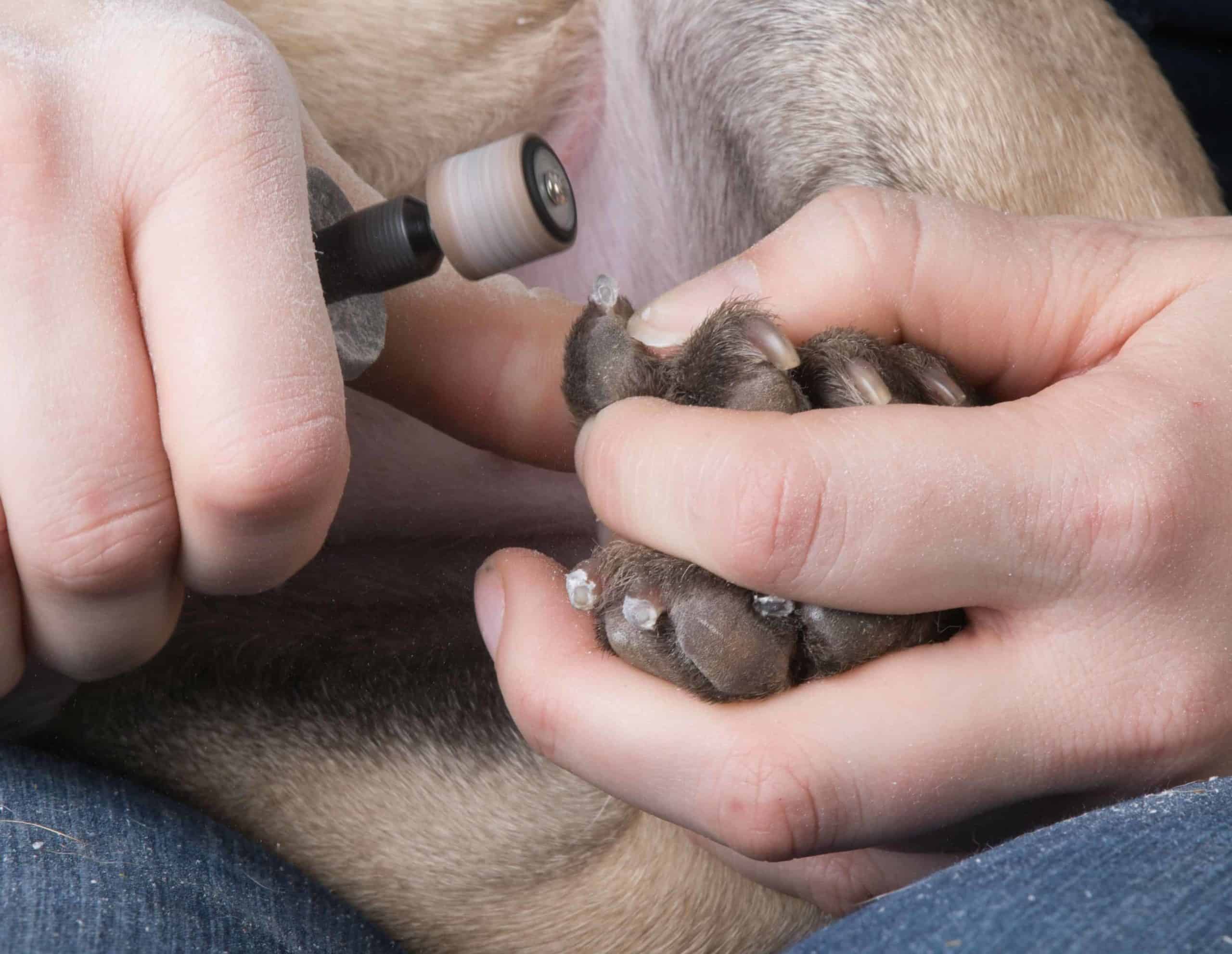
- You can replace dog nail clippers with Dremel tools to trim the nail and file down rough edges.
- Include concrete in your daily walks to help naturally wear down your dog’s nails.
Reward your dog with a treat
Your dog managed to stay still and let you cut his nails. Show your appreciation by rewarding your pup with a treat. This will make him happy and motivate him to cooperate the next time his nails need to be clipped.
Know when to trim dog nails
Knowing when your dog’s nails must be trimmed is essential for maintaining paw health.
Regularly checking your dog’s nails will help you determine when it’s time for a trim.
If you hear clicking sounds as your dog walks on hard surfaces, it’s a sign that the nails are too long.
Additionally, if the nails are visible at the ground or curl under the paws, they must be trimmed.
Overgrown nails can cause discomfort and affect your dog’s gait, so it’s essential to monitor their length and trim them when necessary.
When dogs’ nails become excessively long, they can alter the alignment of their toes and paws, leading to discomfort and potential joint issues.
Long nails may also cause your dog to change their gait, resulting in musculoskeletal problems.
Overgrown nails are more likely to get caught in carpets or other surfaces, leading to painful tears or fractures.
In severe cases, long nails can even grow into the paw pads, causing infection and extreme discomfort for your pet. Regular nail trimming prevents these dangers and keeps your dog healthy and active.
Desensitize your dog to reduce stress
Desensitization training helps dogs feel more comfortable with nail trimming.
This method gradually introduces them to the sights and sounds of nail trimming, reducing their stress and fear.
One key benefit is that it helps dogs form positive associations with the process. For example, pairing clippers with treats and praise can make nail trimming seem less scary. This training also builds trust between the dog and the owner.
As dogs learn that nail trims are a good experience, they become calmer and more cooperative, making the process easier for everyone.
Regular practice allows dogs to relax during nail trims, leading to quicker grooming sessions and fewer accidents.
Overall, desensitization training improves the experience for both dogs and their owners.
Recognize signs of stress
Watch for signs of stress or discomfort when trimming your dog’s nails.
Here are the primary indicators:
Signs of stress or discomfort
Observe your dog’s body language.
- Tension: A stiff body, raised fur, or a tucked tail shows nervousness.
- Withdrawal: If your dog pulls away, it may feel uncomfortable.
- Ears: Ears that are back signal stress; relaxed ears indicate calmness.
- Physical signs: Excessive licking, shaking, or panting can indicate stress.
Vocalization
Whining, barking, or growling may show discomfort or fear.
Paw resistance
If your dog pulls its paw back, it may be anxious.
Aggressive behavior
Snapping or biting suggests your dog is uncomfortable.
Seek professional help if your dog shows:
- Severe fear or aggression: Strong reactions may require a professional’s help.
- Injury or pain: Signs such as limping when touched in the paws indicate a need for veterinary care.
- Excessive stress response: If your dog is very stressed, stop trimming and consult a professional.
- Inability to trim: If you can’t cut your dog’s nails after trying calming methods, seek help from a groomer or vet.
Keep nails short, keep dogs happy
Long nails aren’t just a grooming issue; they’re a health issue.
Overgrown nails press into the paw pad, change your dog’s gait, and can cause real discomfort and even injury over time.
Puppies face an even higher risk of deformities from neglected nails. If you can hear clicking on the floor when your dog walks, that’s your signal: it’s time for a trim.
Healthy paw care starts with regular maintenance, and with the right calming strategy, nail trimming doesn’t have to be a battle.