
Choose the right dog: 9 best dog breeds for first-time owners
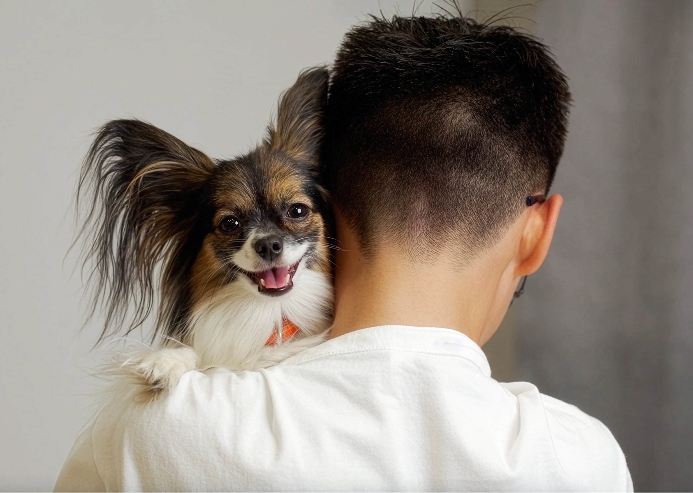
Choosing your first dog is a big decision. Get this right, and you’ll have the best friend for life.
Get it wrong, and you’ll both be miserable. The good news: there’s a learning curve for everyone. Even experienced owners make mistakes.
Most problems are normal, and with patience and readiness to learn, you can work through nearly all of them. Take a breath—no one gets it perfect on day one.
Not every dog suits every person.
Some breeds are headstrong, high-maintenance, or just plain hard. Nobody tells you that until you’re surrounded by chewed furniture and exhausted from sleepless nights, wondering what you’ve gotten yourself into.
Here’s the truth: picking the right breed changes everything.
This isn’t about finding a “perfect” dog. It’s about finding your dog — one whose personality, energy, and needs actually match your life.
If you’re staring at a screen at midnight, overwhelmed by conflicting advice, take a breath. Try writing down what matters most to you in a dog—energy level, size, or how much time you can spend together. Or think honestly about your daily routine. This is your starting point, and it makes everything next much easier.
That frantic, slightly panicked feeling? Completely normal. Picking a dog is a big deal, and the fact that you’re researching this hard means you’re already doing better than most.
Let’s cut through the noise.
Here are 9 breeds that thrive with first-time owners — and why each one earns its spot on this list.
1. Golden Retriever

If you’ve ever thought, “I just want a dog who’s happy to see me and won’t make my life complicated,” — this is your dog.
Golden Retrievers have earned their reputation honestly. They’re warm, willing, and truly invested in making things work — training sessions rarely feel like a struggle because they’re actively trying to meet you halfway.
They need a decent amount of exercise — daily walks plus some playtime, but they’re not frantic about it. Families, singles, older people: Goldens adapt beautifully.
Watch out for: Hip dysplasia is common, so buy or adopt from health-tested lines. This means the parents were screened for breed health issues such as hip and elbow problems, and they have proof of passing results. When talking to breeders or rescues, ask for health certificates or screening reports for both parents. They should provide these without hesitation. Golden Retrievers are also prone to cancers, so regular vet examinations are a must. And that gorgeous coat? It sheds—a lot. Invest in a good vacuum.
2. Labrador Retriever
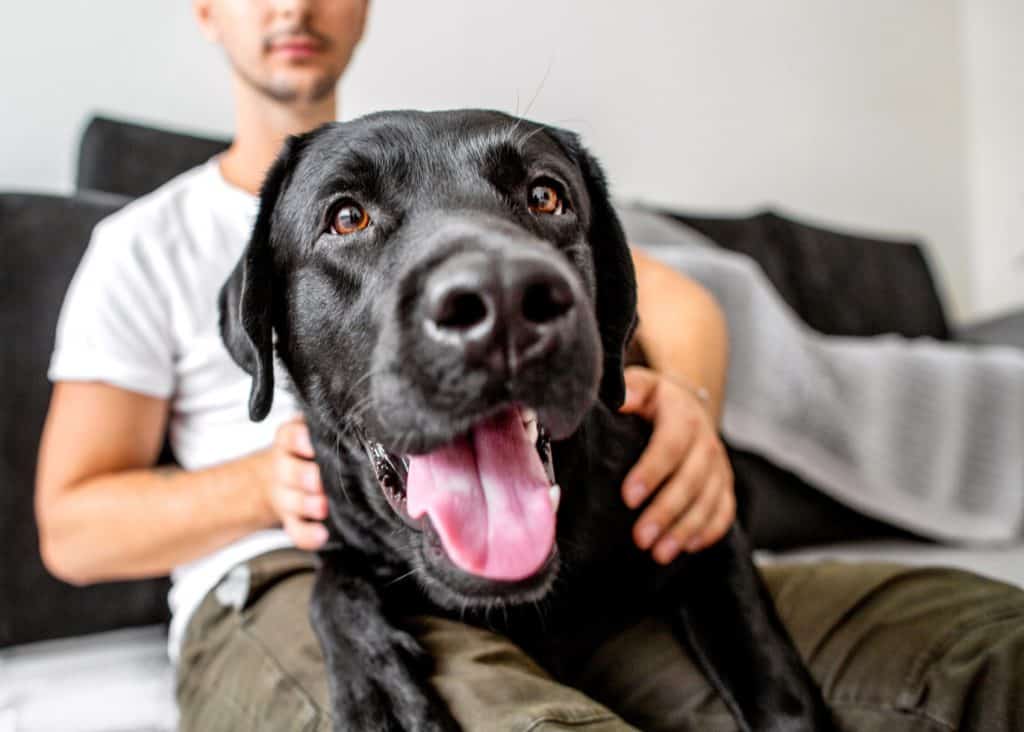
Decades at the top of the most popular breeds list — and Labs earned every year of it.
Labrador Retrievers are sociable, versatile, and deeply motivated by food, which makes training a genuine pleasure. They pick up commands quickly, connect well with children, and have a natural friendliness that makes them a hit with just about anyone they meet.
The flip side of that food obsession is weight gain. Labs will eat until they’re sick if you let them. Portion control and regular exercise aren’t optional — they’re how you keep your Lab healthy for the long haul.
Watch out for: Channel their energy early. A bored, under-exercised Lab becomes destructive. Fetch, swimming, training games — give them an outlet, and they’re golden (pun intended).
3. Cavalier King Charles Spaniel
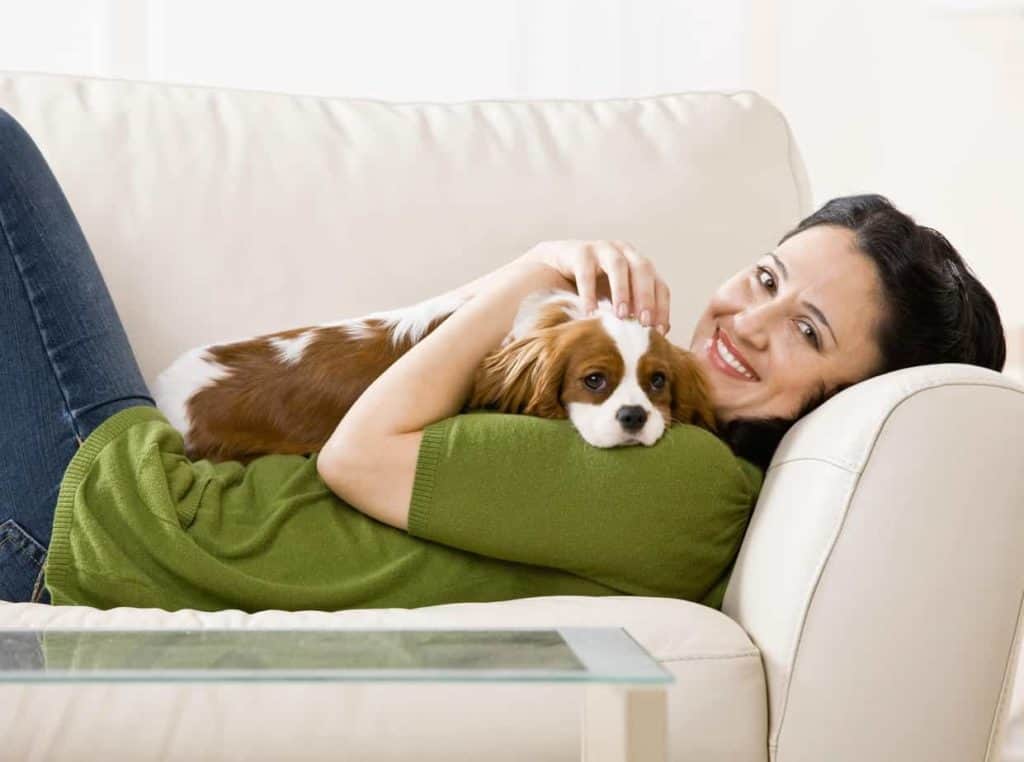
Maybe you’re thinking, “I live in a small apartment, I’m not super active, and I just want a dog who’s chill and loves me.” Say hello to the Cavalier.
Small, gentle, and deeply devoted, Cavaliers are tailor-made for lower-activity lifestyles. They’re happy with moderate walks and a whole lot of couch time. They bond closely with their people — sometimes very closely.
That closeness is also their Achilles heel: Cavalier King Charles Spaniels are prone to separation anxiety. If you work long hours alone every day, your dog may struggle. They do best with company, whether that’s you, another pet, or a dog-sitter a few days a week.
Watch out for: Heart disease, especially mitral valve disease, is a major concern. Find health-tested parents. Grooming is moderate—regular brushing keeps that coat tangle-free.
4. Poodle (standard or miniature)
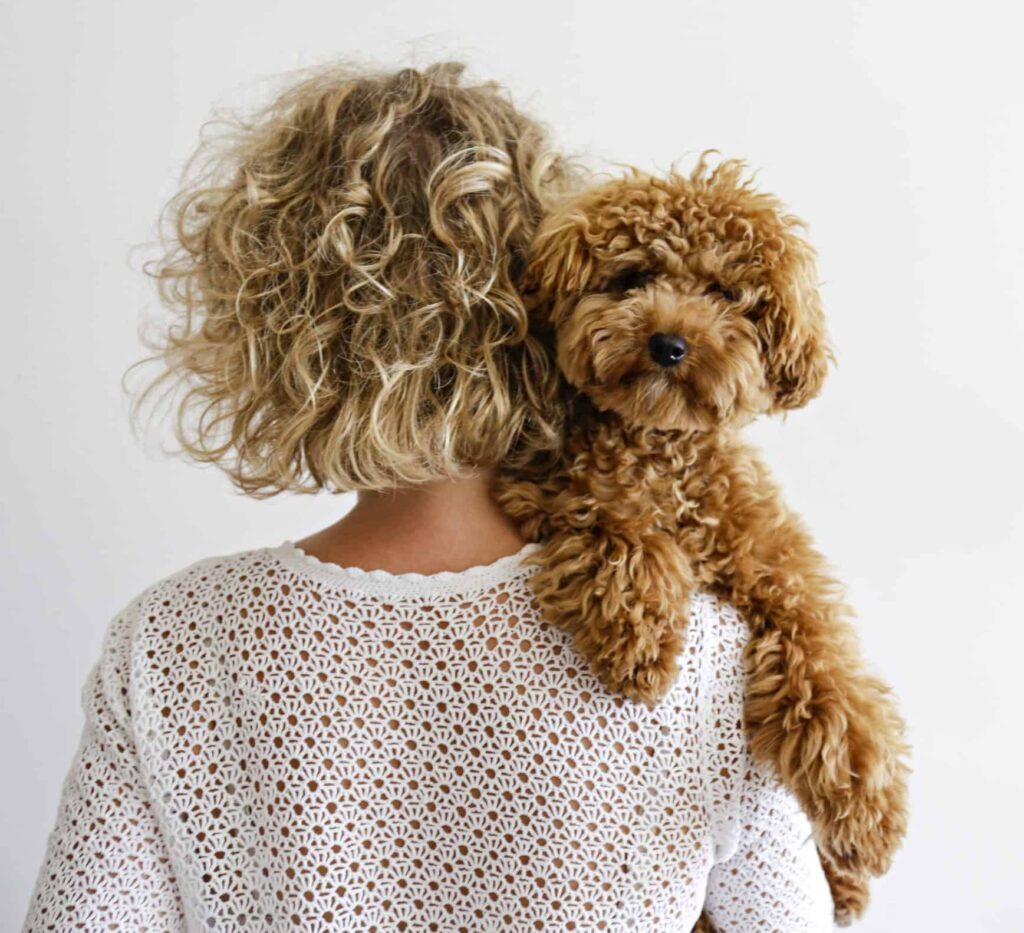
Here’s a breed that suffers from its own reputation. People hear “Poodle” and picture show-ring pompoms.
What they’re missing is one of the most intelligent, trainable, and frankly impressive dogs on the planet.
Poodles are quick learners—almost eerily so. They pick up commands quickly, adapt to different environments, and form deep bonds with their families. They’re also low-shedding, a real bonus if you have allergies or hate dog hair on everything.
Intelligence, though, cuts both ways. A bored Poodle is a creative Poodle — and their creativity usually involves things you’d rather they didn’t do. Mental stimulation is as important as physical exercise for this breed. Puzzle feeders, training sessions, and new challenges keep them happy.
Watch out for: Poodle coats grow continuously and need professional grooming every 6–8 weeks, costing $60–$120 per session. Factor this into your budget before you commit.
5. Bichon Frisé
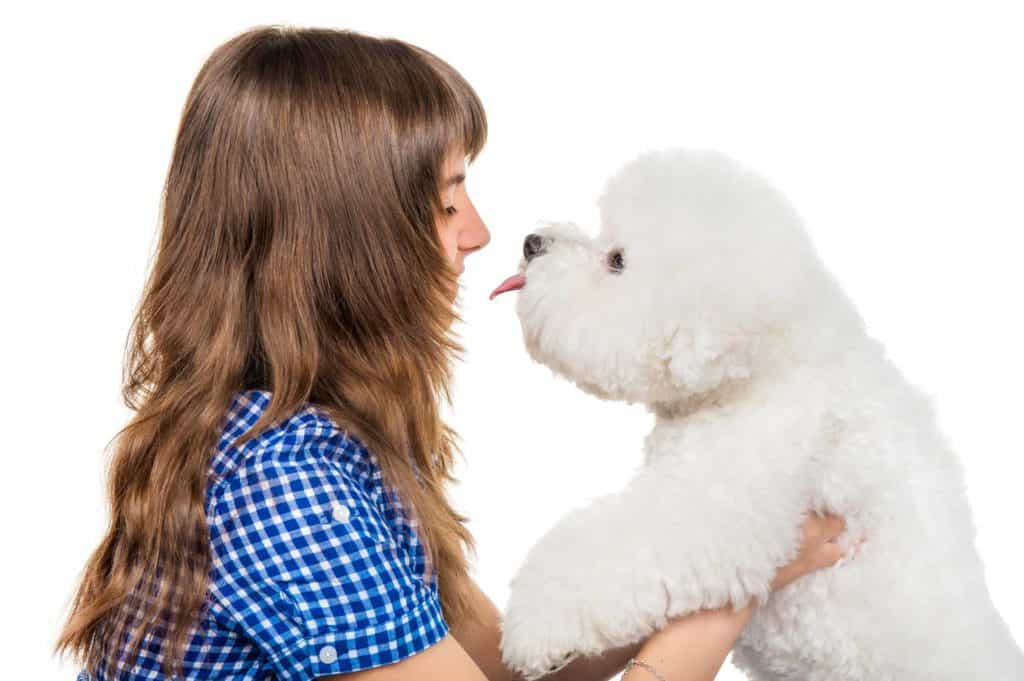
Happy-go-lucky. That’s the Bichon in three words.
These little dogs are adaptable, cheerful, and surprisingly low-shedding — great news if allergies are a concern.
They slot into apartment life or suburban houses with equal ease. They’re playful without being exhausting, affectionate without being clingy, and they get along well with kids, other dogs, and strangers.
If you want a small dog without territorial yapping or the fragile temperament some toy breeds have, the Bichon is a seriously underappreciated choice.
Watch out for: Small dogs are notoriously harder to housetrain — not impossible, just slower. Consistency and patience win here. Grooming is equally a commitment: that fluffy white coat needs regular brushing and professional trims to stay looking its best.
6. Papillon
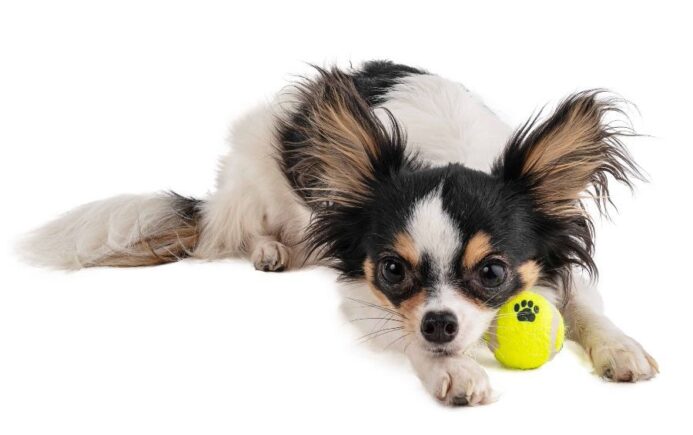
Small dog, enormous personality. The Papillon is the most underrated breed on this list, and it’s not particularly close.
Don’t let the butterfly ears and dainty frame fool you. Papillons are athletic, outgoing, and genuinely smart.
They excel at agility, trick training, and obedience — they’re one of the top-ranked small breeds in canine sports. If you want a small dog who’ll actually keep up with training and challenge you mentally, the Papillon delivers.
They’re also sturdy for their size, less prone to the anxious or yappy temperaments some small breeds carry, and generally healthy.
Watch out for: They need mental engagement and socialization. A well-socialized Papillon is a joy; an under-stimulated one can get nippy or anxious. Start training early and make it fun — they’ll love you for it.
7. Shih Tzu
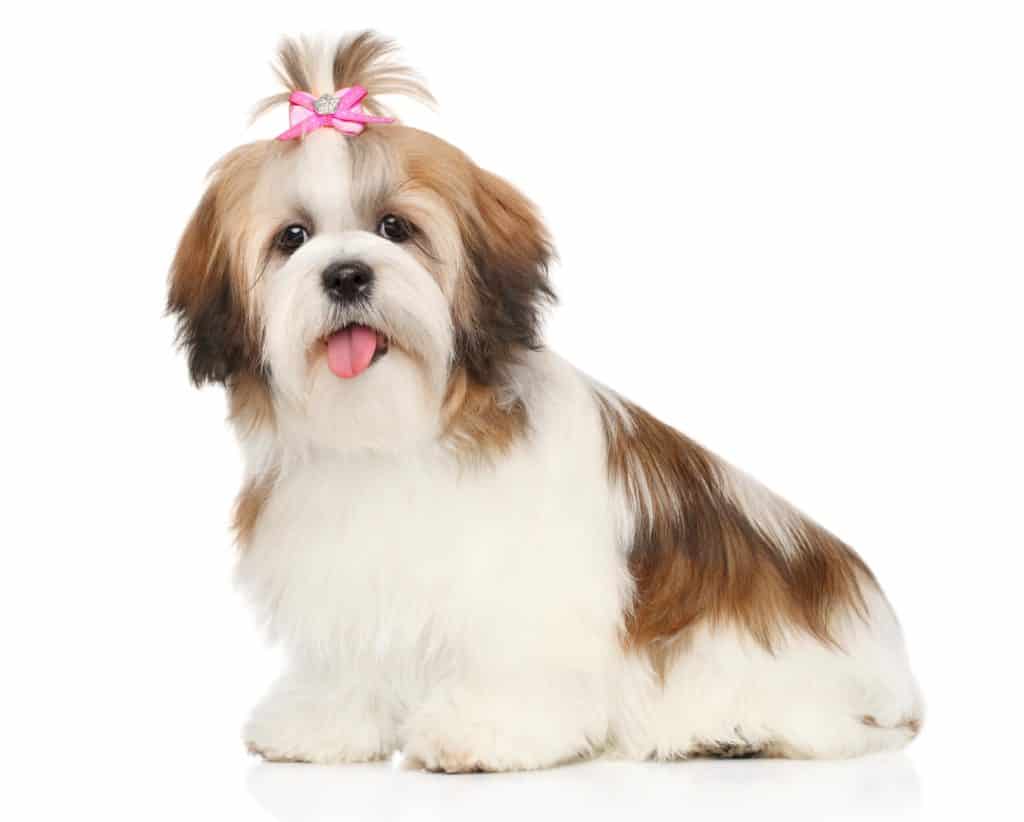
Built for one purpose: companionship. And for that purpose, the Shih Tzu is basically a specialist.
Low exercise needs, a calm temperament, and a loving disposition make Shih Tzus ideal for people whose lifestyle doesn’t involve long hikes or high-energy play sessions. They’re surprisingly sturdy for a toy breed — they don’t shatter if a kid gives them an enthusiastic hug — and they adapt well to different living situations.
They’re not pushovers, either. Shih Tzus have a subtle confidence about them that’s quite charming once you get used to it.
Watch out for Flat-faced breeds (brachycephalic), like the Shih Tzu, which can struggle in heat and with intense exercise. Watch for labored breathing, especially in summer. Their long coats need consistent grooming — many owners opt for a “puppy cut” to make maintenance manageable.
8. Boxer

Every list of beginner breeds tends to skew toward small and calm breeds. The Boxer breaks that mold — and it belongs here anyway.
Boxers are playful, loyal, and fantastically good with families. They’re medium-to-large dogs with the energy to match, but their trainability and deep people-focus make them manageable for attentive first-time owners.
They’re also clowns. Genuine, full-commitment clowns — the kind of dog who trips over their own feet and then looks at you like it was your fault.
That personality makes them an absolute joy to live with, if you can keep up.
Watch out for: Boxers need regular exercise and mental activity — a cooped-up Boxer gets rowdy fast. Their short coats are low-maintenance, which is a plus. They’re also prone to certain heart conditions and some cancers, so health screening from breeders and regular vet visits matter.
9. Greyhound
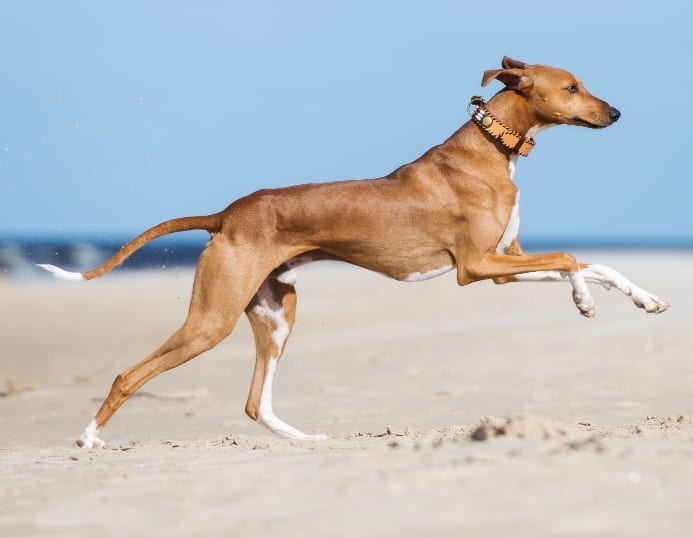
This one surprises people every time: Greyhounds are among the laziest house dogs alive.
Yes, those Greyhounds. The ones built like living missiles. Off the track, a retired racer’s default setting is deeply, contentedly asleep — clocking somewhere between 18 and 20 hours of rest on any given day.
The dogs are gentle, quiet, and deeply content to be near you without constantly being in your lap. In terms of actual day-to-day energy levels, they make many small breeds look exhausting by comparison.
Adopting a retired racing Greyhound is one of the best things you can do. Thousands of these dogs are waiting for homes, and they usually transition beautifully to family life.
Watch out for: Greyhounds have very little body fat and thin skin, which means they feel the cold acutely — a coat in winter isn’t optional, it’s necessary. Their recall off-leash is essentially nonexistent due to their prey drive, so a securely fenced area for off-leash time is mandatory. On-leash walks are calm and easy; off-leash is a different story entirely.
The bottom line on the best dog breeds for first-time owners
There’s no such thing as a universally “easy” dog — but there are dogs whose temperaments, needs, and personalities align much better suited to someone who’s still figuring out the ropes.
Every breed on this list offers something genuinely valuable for first-time owners: forgiveness, trainability, adaptability, and a whole lot of heart.
The best dog for you is the one whose life you can actually provide for — honestly, consistently, and with real commitment.
Match the dog to your lifestyle, not just your feelings in the moment, and you’ll both be better for it.
Whichever breed speaks to you, consider adopting from a rescue or shelter first.
Purebred dogs end up in rescue more often than most people realize, and somewhere one of these dogs is waiting for exactly the right first-time owner.
To begin your search, check your local shelter’s website for available dogs and use online resources to find breed-specific rescues in your area. Many rescues list their adoptable dogs online and can help match you with the right companion.
That might just be you.
Sara B. Hansen has spent 20-plus years as a professional editor and writer. She’s also the author of The Complete Guide to Cocker Spaniels. She created her dream job by launching DogsBestLife.com in 2011. Sara grew up with family dogs, and since she bought her first house, she’s had a furry companion or two to help make it a home. She shares her heart and home with Nutmeg, a Pembroke Welsh Corgi. Her previous dogs: Sydney (September 2008-April 2020), Finley (November 1993-January 2008), and Browning (May 1993-November 2007). You can reach Sara @ editor@dogsbestlife.com.