
First month success: Avoid 10 mistakes new puppy owners make

The first month with a puppy sets habits that last a lifetime. Make sure you’re building the right ones.
Puppies are tiny, warm, and smell like something your brain has been chemically programmed to love.
They’re also chaotic little agents of destruction who will test every ounce of your patience before they’ve even learned their own name.
And here’s the uncomfortable truth nobody puts on the greeting card: the mistakes you make in the first 30 days? They echo for years.
That’s not meant to scare you. It’s meant to wake you up — because the good news is that most of these mistakes are completely avoidable once you know what to watch for.
Every interaction in those early weeks is training, whether you mean it to be or not.
So, let’s get into the 10 most common new puppy owner mistakes — and what to do instead.
Skipping early socialization
Here’s what many new puppy owners think: I’ll wait until all the vaccines are done before I take her anywhere.
Makes sense, right? Feels responsible. The problem is that this well-meaning caution can cost you dearly.
The socialization window — roughly 3 to 16 weeks — is the most neurologically sensitive period of your puppy’s life. During this window, your puppy’s brain is wide open to new experiences. What she encounters now gets filed under “normal.” What she misses can become a source of fear and reactivity for years.
That doesn’t mean dragging an unvaccinated puppy to the dog park. It means controlled, thoughtful exposure.
Carry her to a busy café and let her watch the world go by. Invite friends over — including ones wearing hats, glasses, and beards, because yes, puppies can be weirded out by all of those.
Let her walk on different surfaces: grass, gravel, tile, and hardwood. Expose her to the sound of traffic, children laughing, and umbrellas opening.
Talk to your vet about puppy socialization classes, which are often designed specifically for the vaccine gap period.
The risk of missing socialization is real and lasting. The risk of attending a well-run puppy class is minimal.
Don’t let the perfect be the enemy of the good here. Some exposure is always better than none.
Giving too much freedom too soon
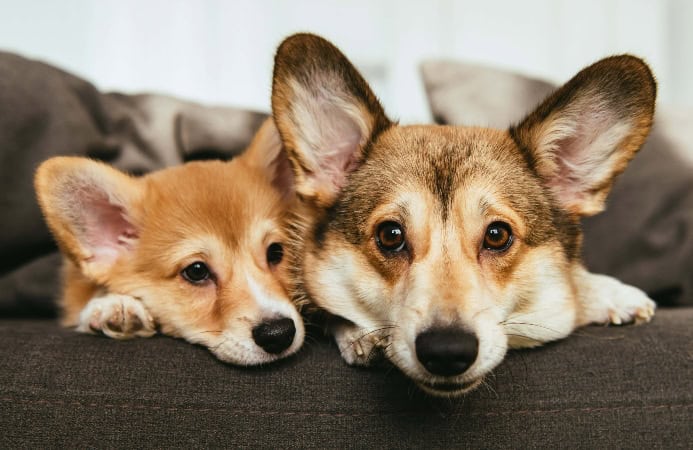
You bring this tiny creature home and feel guilty about confining him.
You want him to feel comfortable. Loved. So you let him roam the living room, then the hallway, and pretty soon he’s discovered the back bedroom, the shoes you left out, and the corner of the couch that looked like a great chew toy.
Sound familiar?
Freedom is earned, not given.
A puppy who has access to the entire house before he understands the rules is set up to fail — and then get blamed for it.
Management tools like crates, puppy pens, and tethering (keeping the puppy on a leash attached to you) aren’t cruel. They’re scaffolding. They prevent mistakes before the puppy can make better choices.
Start small. Give your puppy access to one or two rooms where you can supervise him directly.
Expand that freedom as he demonstrates reliability — fewer accidents, less destructive behavior, more settled energy.
Think of it like earning screen time. You don’t hand a kid the remote and walk away. You introduce it gradually, under supervision.
The puppy who gets too much freedom too soon? He doesn’t learn to behave. He learns that everything is fair game.
Inconsistent rules across family members
This one creates more confusion than almost anything else. Dad lets the puppy on the couch. Mom doesn’t.
The kids think it’s hilarious when the puppy jumps up. The adults are trying to teach her not to. The result? A dog who learns that rules are situational — and therefore optional.
Puppies aren’t trying to manipulate you. They’re just pattern-matchers. They do what works. If jumping up gets them attention from three out of four family members, they’ll keep jumping.
The behavior that gets rewarded — even accidentally — is the behavior that sticks.
Before you bring a puppy home, sit down as a household and agree on the rules.
Couch: yes or no? Bed: yes or no? Jumping up to greet: allowed or not? What word do you use for “go to your bed”? Where does she eat? What does she do when guests arrive?
Write it down if you have to. Consistency doesn’t mean strictness. It just means everyone’s reading from the same page.
A dog can absolutely learn “couch is allowed” or “couch is never allowed.” She can’t reliably learn “couch is sometimes allowed depending on who’s home.”
Reacting to every whine or cry at night
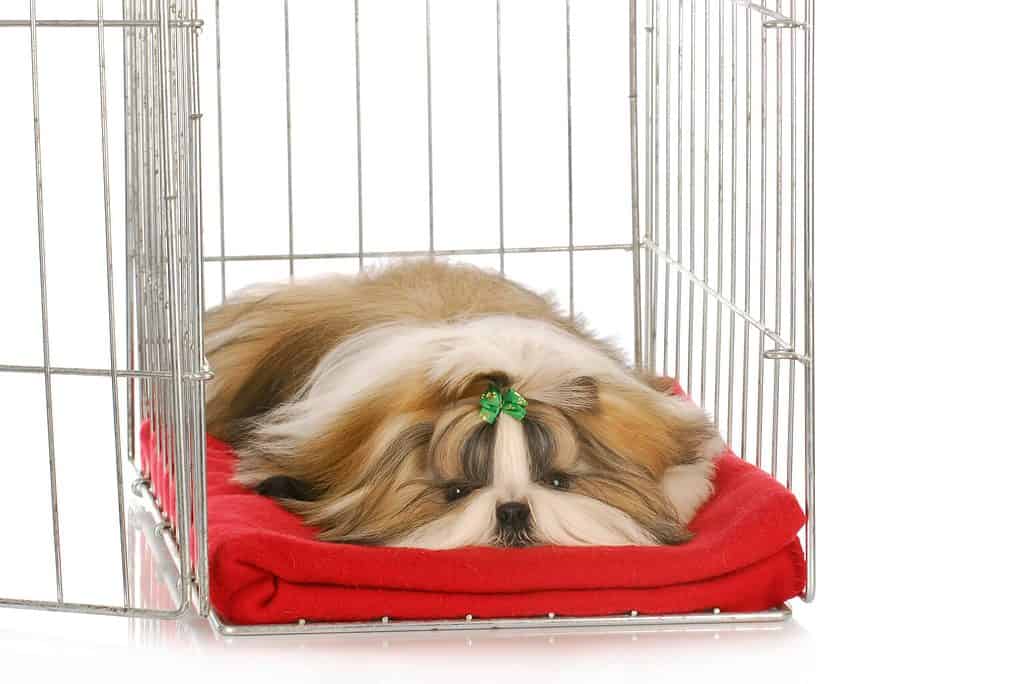
The first few nights with a new puppy are rough. He’s away from his littermates for the first time in his life, in a strange place that smells nothing like what he knows.
Of course, he cries. It’s heartbreaking. And the instinct to rush in and comfort him makes complete sense.
The problem is that puppies learn fast. If crying at 2 a.m. brings a warm human into the room, crying at 2 a.m. becomes the strategy.
That’s not manipulation — that’s learning. And it’s your job to teach him something different.
Start with a crate positioned close to your bed so he can hear and smell you. Some people swear by a warm (not hot) water bottle wrapped in a blanket, or a ticking clock, to mimic the warmth and heartbeat of littermates.
Give him something to chew on before bed. Keep the crate covered on three sides to create a den-like feeling.
If he cries, wait. After a few minutes of whining, your puppy will usually settle.
If he’s been asleep for several hours and starts crying, that’s likely a genuine need — take him outside calmly, let him go to the bathroom, and return him to the crate without turning it into a big deal.
The goal is not to ignore him. The goal is to teach him that the crate is safe, nights are for sleeping, and that calm behavior gets a response—not distress.
Punishing accidents instead of preventing them
Puppies have the bladder capacity of a thimble and the attention span of a goldfish on a sugar high. Accidents are going to happen. The mistake isn’t the accident — it’s what happens next.
Rubbing a puppy’s nose in it doesn’t work. Neither does scolding him after the fact.
Puppies don’t have the cognitive ability to connect a consequence delivered minutes after a behavior to that behavior.
What he learns from after-the-fact punishment is that you become unpredictable and scary — not that peeing inside is wrong.
Prevention is the whole game here.
Take your puppy outside every one to two hours. Every time after eating, drinking, playing, or waking up. Watch for the pre-potty signals: sniffing the ground, circling, and suddenly stopping play.
When you catch him in the act, calmly interrupt and take him outside. When he goes outside, celebrate like he just won an award.
Housetraining is a management problem before it’s a training problem. The more accidents you prevent, the faster he learns. The more accidents you punish after the fact, the more confused and anxious he becomes.
Fewer freedoms plus more trips outside the home lead to faster results. It really is that simple.
Not starting training until the puppy is older
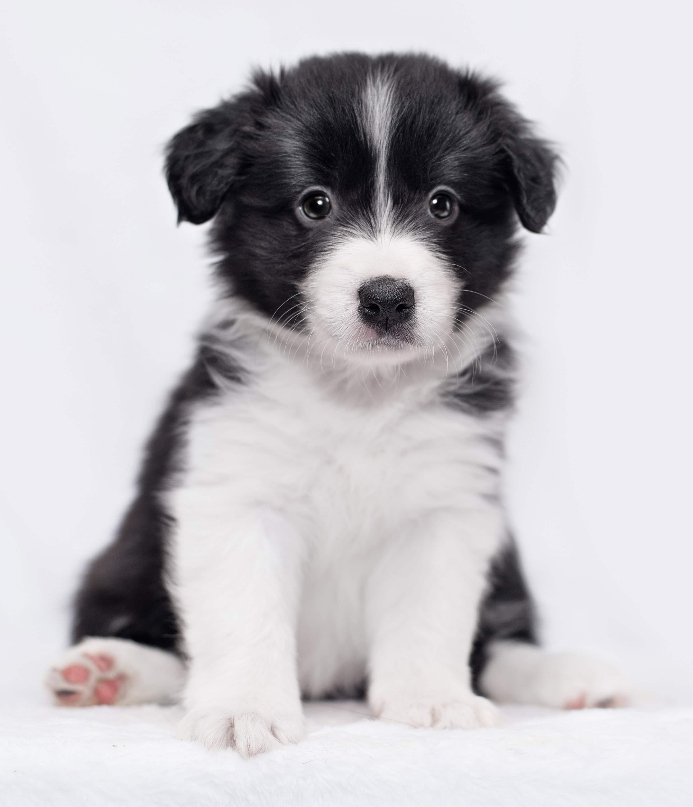
We’ll wait until she’s six months old.” It’s one of the most common things new puppy owners say — and one of the most costly myths in dog training.
Training starts on day one. Not formal obedience classes necessarily, but the process of teaching your puppy what gets rewarded and what doesn’t begins the moment she walks through your door.
Every time she sits, and you give her a treat, you’re training.
Every time she jumps up, and you push her off while laughing, you’re training — just not in the direction you want.
Puppies are capable of learning basic cues — sit, down, come, stay — as early as eight weeks old.
Short sessions work best: two to three minutes, three to five times a day. Use high-value treats. End on a win. Keep it fun.
Puppy kindergarten classes, typically for puppies eight to sixteen weeks old, are gold.
They teach foundational skills, provide socialization, and — crucially — teach you how to train effectively.
The habits you build in the first few months are the habits you’ll be managing for the next decade. Starting early isn’t too much. It’s the smartest thing you can do.
Letting kids overwhelm the puppy

Children and puppies are a magical combination — in theory.
In practice, they’re two creatures who both want to be the center of attention and neither of whom has great impulse control.
Unsupervised interactions between young children and puppies are a recipe for problems.
Not because either is bad, but because kids often misread puppy behavior and puppies often get overstimulated quickly.
Grabbing at ears, chasing the puppy, picking her up incorrectly, not letting her retreat — these experiences can create lasting fear of children if they happen repeatedly in those early weeks.
You must supervise every interaction between a child and a puppy. Teach children to pet calmly, under the chin and on the chest rather than over the head.
Teach them to recognize when the puppy has had enough: yawning, lip-licking, turning away, or trying to hide. These are stress signals, not rudeness.
Give the puppy a “safe zone” — a crate, pen, or room — where the kids know not to follow. This is her decompression space.
Respecting it teaches children important boundaries and gives the puppy a way to regulate herself without resorting to growling or snapping.
A puppy that learns kids are unpredictable and scary can grow up to be a dog that never fully trusts them. It doesn’t have to go that way.
Free-feeding instead of scheduled meals
Leaving food out all day feels kind. Your puppy can eat whenever he’s hungry. No stress, no schedule.
Except — it makes housetraining significantly harder and removes one of your most powerful training tools.
When you control the food, you control the bathroom schedule. A puppy who eats at 7 a.m., noon, and 5 p.m. will need to go to the bathroom at predictable times after each meal.
A puppy who grazes all day will need to go at random, unpredictable intervals — making it nearly impossible to get ahead of accidents.
Scheduled meals also make food more rewarding. A puppy who’s had access to kibble all day isn’t that interested in working for it.
A puppy on a schedule is motivated by food, making training dramatically more effective.
Put the food down. Give your puppy 15 to 20 minutes to eat.
Pick up the bowl, whether he’s finished or not. Repeat at the next meal.
Healthy puppies don’t starve themselves — they adjust quickly to a schedule and eat enthusiastically when the bowl goes down.
It’s a small change. The difference it makes is not small at all.
Underestimating exercise and mental stimulation needs
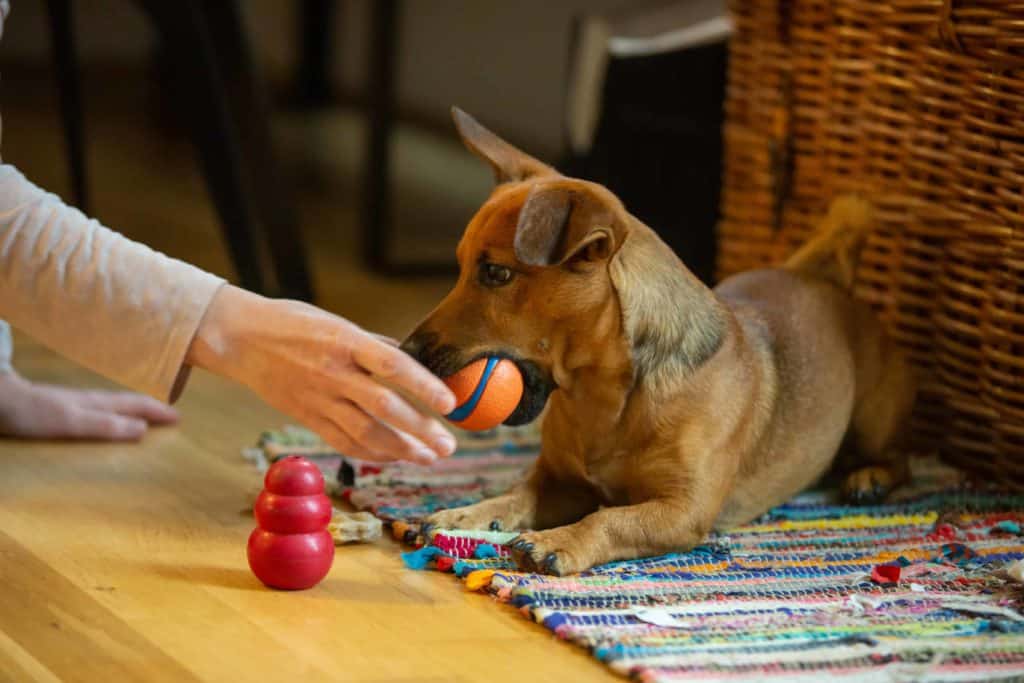
A bored puppy is a destructive puppy. We’ve all seen the evidence: chewed baseboards, eviscerated couch cushions, a single shoe destroyed with surgical precision.
But here’s the other side of that coin: over-exercising a puppy can seriously damage developing joints.
High-impact exercise — long runs, excessive jumping, repetitive fetch on hard surfaces — puts real stress on growth plates that haven’t closed yet. Large and giant breeds are especially vulnerable.
The general guideline is five minutes of structured exercise per month of age, twice a day.
So a four-month-old puppy gets about 20 minutes of walking, twice daily. That’s less than many owners realize — and it leaves a lot of energy to burn.
This is where mental stimulation becomes your best friend. Sniffing is cognitively exhausting in the best possible way — a 20-minute sniff walk tires a puppy out more than a brisk 40-minute march.
Puzzle feeders, training sessions, chew time, and “find it” games, where you hide treats around the room, all drain mental energy without stressing joints.
Work with your puppy’s brain as hard as you work her body, and you’ll have a more satisfied, calmer dog than distance and speed alone will ever give you.
Skipping the vet visit in the first week
New puppies need vaccines. You know that. But the first vet visit does something even more important than starting a health protocol — it establishes the vet’s office as a normal, non-scary place.
Puppies who only see the vet when they’re sick or getting shots quickly learn to associate that building with unpleasantness.
Puppies who visit the vet early, often, and positively — getting treats, being handled gently, and being weighed and examined — build a very different association.
Book the first vet appointment within a week of bringing your puppy home.
Bring high-value treats. Let the staff give them.
Regularly handle your puppy’s paws, ears, and mouth at home so that being examined doesn’t feel invasive or alarming. Ask your vet about “happy visits” — brief drop-in appointments just for treats and attention, with no procedures.
The first exam also catches health issues you might have missed: parasites, congenital problems, and early signs of illness.
A reputable breeder or shelter should provide a health guarantee, but that guarantee only means something if you’ve had an independent vet confirm the puppy’s health early on.
A puppy who loves the vet is a dog who’s easier and less expensive to care for over a lifetime. That relationship starts right now.
The good news about new puppy owner mistakes
Puppies are forgiving. Wildly, almost unfairly forgiving. Even if you’ve already made a few of these mistakes — maybe several — it’s not too late to course-correct.
Dog behavior doesn’t calcify at 30 days. You can tighten up your management today. Start training tonight. You can schedule that vet appointment tomorrow morning. Consistency from this point forward is what matters most, not perfection from day one.
The first month sets the habits. But you’re still writing this story. Make it a good one.
Sara B. Hansen has spent 20-plus years as a professional editor and writer. She’s also the author of The Complete Guide to Cocker Spaniels. She created her dream job by launching DogsBestLife.com in 2011. Sara grew up with family dogs, and since she bought her first house, she’s had a furry companion or two to help make it a home. She shares her heart and home with Nutmeg, a Pembroke Welsh Corgi. Her previous dogs: Sydney (September 2008-April 2020), Finley (November 1993-January 2008), and Browning (May 1993-November 2007). You can reach Sara @ editor@dogsbestlife.com.