
What makes the Teddy Roosevelt Terrier so special? The complete breed guide
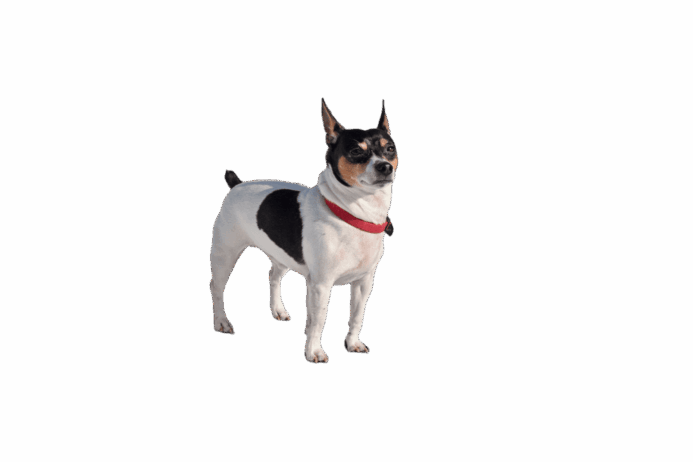
Most people walk into a dog shelter, spot a scrappy little low-rider with a muscular chest, a broad head, and eyes that seem to say “I will outlast you,” and have absolutely no idea what they’re looking at.
That’s a Teddy Roosevelt Terrier. And they just made the best accidental discovery of their life.
This breed flies so far under the radar that it borders on criminal. You could talk to a hundred dog lovers, and maybe two of them know this dog exists.
But once you meet one? You’ll wonder how you ever considered any other breed. These dogs are loyal to their core, sharp as a tack, and built like they’ve been doing CrossFit since puppyhood.
Maybe you’re already smitten. Maybe you’ve been Googling at 11 p.m., falling deeper into a rabbit hole of photos, thinking, “This is the one. But what am I actually getting into?”
That feeling is real, and it makes total sense. You found a gem, and now you want to know everything before you commit. That’s not obsessive. That’s smart. Let’s get into it.
History and origin of the breed
The Teddy Roosevelt Terrier’s story starts where most great American things do: with a messy mix of immigrants and working-class grit.
In the 19th century, European settlers brought small terriers to the United States. These dogs weren’t pets in the pampered sense. They were workers. Rat hunters. Farm dogs. They earned their keep.
Through generations of crossing various small terrier breeds, including Smooth Fox Terriers, Manchester Terriers, Bull Terriers, and Beagles, a distinctly American dog began to emerge.
This dog was lower to the ground than its cousins, with shorter legs and a broader, more powerful build. Farmers loved it. It was fast, fierce, and relentless.
President Theodore Roosevelt reportedly had one of these dogs, and the breed eventually took on his name as a tribute.
Though the American Kennel Club didn’t officially recognize the Teddy Roosevelt Terrier until 2016 as a fully recognized breed via the United Kennel Club’s earlier 1999 recognition, these dogs had already been working American farmland for well over a century.
They’re a piece of living history—and not the stuffy kind.
Physical traits and appearance
The Teddy Roosevelt Terrier looks like someone packed a big dog’s confidence into a compact, no-nonsense frame.
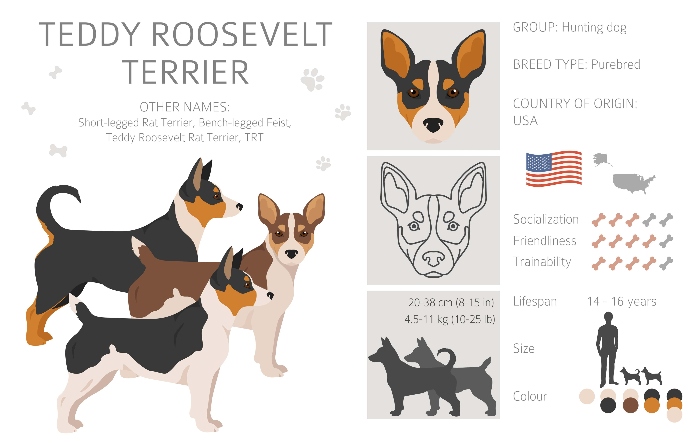
They’re low-set and muscular, typically weighing between 8 and 25 pounds, with a body that’s slightly longer than it is tall. Think powerful, not delicate.
Their coat is short, dense, and smooth. It comes in a variety of colors and patterns, including bicolor and tricolor combinations. White is almost always present in their coat. Their ears can be erect, semi-erect, or tipped, giving each dog a unique expression.
Their eyes are the real show-stopper. Dark, oval, and full of intelligence, they communicate more than most dogs twice their size.
Their head is broad and wedge-shaped, their neck is strong, and their tail is naturally moderate in length.
They look sturdy because they are.
Temperament and personality
Here’s the thing about Teddy Roosevelt Terriers: they are not wallflowers. They’re curious, alert, and opinionated. They know what they want. They’ll tell you about it.
But underneath that bold exterior lives a fiercely devoted companion. These dogs bond deeply with their people. They’re not the type to wander emotionally. Once they’re yours, they’re yours.
They tend to be playful and energetic, with a sense of humor that sneaks up on you. They’ll make you laugh.
Then they’ll do something stubborn that makes you groan. Then they’ll curl up on your lap and make you forget the whole thing happened.
They’re typically good with children, especially when raised with them, and can get along with other dogs. But cats and small animals?
Proceed thoughtfully. The prey drive in these dogs is real. It’s not aggression. It’s instinct, baked in over a hundred years of rat-hunting history.
They’re also alert and watchful, have well-developed pack instincts and a strong protective nature, which makes them decent little watchdogs.
They’ll hear something before you do. And they’ll absolutely let you know about it.
Common health conditions
One of the genuinely great things about the Teddy Roosevelt Terrier is that it’s a hardy breed.
Years of natural selection and working-dog breeding created a dog with solid overall health.
That said, no breed is without its considerations. Some of the health issues that can appear include:
- Patellar luxation: A relatively common issue in small breeds where the kneecap slips out of position. Watch for skipping or occasional limping during play.
- Hip dysplasia: Less common in small breeds, but worth monitoring.
- Allergies: Some Teddies are prone to environmental or food sensitivities that show up as skin irritation or chronic ear issues.
- Legg-Calvé-Perthes disease: A hip joint condition that can affect small breeds, causing pain and lameness.
Routine vet visits, a quality diet, and maintaining a healthy weight go a long way. These dogs can live 14 to 16 years with proper care. That’s a long and full life. Plan accordingly.
Energy levels and exercise needs
Don’t let the small size fool you. A Teddy Roosevelt Terrier is not a lap dog by nature. They have energy. Real energy.
They want to move, explore, sniff, chase, and dig. These are dogs built to work, and they carry that drive whether they’re on a farm or in a city apartment.
Daily exercise isn’t optional. It’s non-negotiable. A couple of brisk walks plus some dedicated playtime keep them balanced and content.
Without adequate exercise, that energy finds other outlets. Chewing, barking, and redecorating your couch.
They also love having a job. Mental stimulation matters as much as physical activity.
Puzzle toys, nose work, agility training, fetch, and even trick training all tap into their intelligence and give that working-dog brain something to chew on.
An exercised Teddy is a calm Teddy. Keep that equation in mind.
Training challenges and tips
Teddy Roosevelt Terriers are smart. And smart dogs can be a double-edged sword. They learn quickly.
They also figure out quickly what they can get away with.
The challenge isn’t getting them to understand a command. It’s convincing them that obeying it is in their best interest. They’re terriers. Independent thinking is coded into their DNA.
Here’s what actually works:
Keep sessions short and rewarding. These dogs don’t do long, repetitive drills well. Ten focused minutes beats an hour of boredom-induced stubbornness every time.
Use high-value rewards. Kibble won’t always cut it. Find what makes your dog’s eyes light up, whether that’s a special treat, a favorite toy, or enthusiastic praise, and use that to reinforce the behaviors you want.
Be consistent. Every person in the household needs to follow the same rules. A Teddy will absolutely exploit any inconsistency it finds.
Start early. Socialization and basic manners should begin in puppyhood. The longer you wait, the more ingrained undesirable habits become.
Never use harsh methods. These dogs shut down with punitive training. Positive reinforcement training isn’t just kinder. It genuinely works better.
Patience and humor help, too. You’ll need both.
Ideal living environment
The Teddy Roosevelt Terrier adapts well to different living situations, but there are a few things worth knowing before you move one in.
A securely fenced yard is a serious asset. These dogs are escape artists when motivated, and their prey drive can carry them far and fast.
An underground electronic fence isn’t sufficient. If they spot a squirrel, the correction won’t stop them.
They do fine in apartments if their exercise needs are consistently met. But they’re not the type to sleep through the day. They want to be involved. In your business. In your life. Right next to you.
They’re happiest in active households where someone is home regularly. Long hours alone can lead to anxiety and destructive behavior. These are social dogs. They need a connection.
Households with older children, or families willing to teach younger kids proper dog interaction, are great fits.
And homes with small prey animals, like rabbits, hamsters, or cats, require extra management and careful introductions.
Grooming and care requirements
Here’s where the Teddy Roosevelt Terrier quietly earns extra points. Their short, smooth coat is remarkably low-maintenance.
A weekly brush to remove loose hair and distribute skin oils is typically all they need. Bathing every four to six weeks, or when they’ve rolled in something they shouldn’t, keeps them fresh.
Their nails grow quickly and need regular trimming. Overgrown nails affect gait and joint health, so staying on top of this matters.
Check your Teddy’s ears weekly for redness or odor. Dental hygiene is important too. Brushing their teeth several times a week, or providing dental chews, helps prevent periodontal disease.
Overall? They’re one of the easier breeds to groom. The time you save there, you’ll invest in exercise and play—a fair trade.
Comparison with similar breeds

If you’re weighing your options, a few breeds share DNA or characteristics with the Teddy Roosevelt Terrier and are worth understanding.
Rat Terrier: The Teddy Roosevelt Terrier actually developed from the same working terrier stock as the Rat Terrier. The primary differences are leg length and body proportions. Rat Terriers are taller and longer-legged. Teddies are lower-set and more compact. They share the same intelligence, prey drive, and loyal nature.
Jack Russell Terrier: High energy, bold, and independent. Jack Russells are intensely driven and can be more challenging for first-time owners. The Teddy tends to be a touch calmer and more adaptable.
Miniature Fox Terrier: Another relative in the terrier family tree. Smaller overall, with a similar alert temperament, but less widely available in the United States.
Beagle: Some Beagle influence shows up in Teddy’s build and scenting ability. Beagles are more laid-back and vocal. Teddies are more agile and trainable.
If the Rat Terrier appeals to you but you want a sturdier, lower-slung version, the Teddy Roosevelt Terrier is often the answer.
Common misconceptions
Let’s clear a few things up.
“They’re too small to be real dogs.” No. These dogs hunt. They work. They’ve got more grit per pound than most large breeds. Small doesn’t mean fragile or less capable.
“They’re hypoallergenic.” They’re not. No dog is truly hypoallergenic, and Teddies do shed, albeit lightly. If allergies are a concern, spend time with the breed before committing.
“Terriers can’t be trained.” This is one of the most persistent myths in the dog world. Terriers are highly trainable. They require the right approach, consistency, and a trainer who respects their intelligence rather than fighting it.
“They’re aggressive.” A well-socialized Teddy Roosevelt Terrier is not aggressive. They’re confident and assertive, which reads differently. A dog with a strong presence isn’t the same as a dangerous one.
“They’re rare and impossible to find.” They’re not common, but they’re findable. Breed-specific rescues, reputable breeders, and general shelters all represent viable paths to bringing one home.
Rescue and adoption info
More Teddy Roosevelt Terriers end up in shelters and rescues than most people realize, precisely because the breed isn’t widely recognized. Dogs are surrendered due to life changes, not because anything is wrong with them.
Tips for finding a Teddy Roosevelt Terrier
Start with breed-specific rescues. Organizations like the American Kennel Club and the National Teddy Roosevelt Terrier Club maintain breeder and rescue resources. Reach out directly. These communities are small but tight-knit and incredibly helpful.
Check Petfinder and Adopt-a-Pet. Search “Terrier mix” and filter by size. Teddies often get labeled as Rat Terrier mixes or simply “Terrier mix” in shelters.
Look at the photos carefully. Learn the physical hallmarks: low-set body, broad head, muscular build.
Contact reputable breeders. A responsible breeder health-tests their dogs, provides references, and lets you meet the parents. They’ll ask you questions, too. That’s a good sign, not a red flag. Expect to be vetted.
Join online communities. Facebook groups and forums dedicated to the breed connect prospective owners with breeders and rescues. These communities are generous with information and referrals.
Final thoughts: Is the Teddy Roosevelt Terrier right for you?
If you want a dog that lounges quietly in the corner and never asks for much, the Teddy Roosevelt Terrier is probably not your match.
But if you want a dog that’s fiercely loyal, endlessly curious, surprisingly athletic, and just a little bit headstrong in the most endearing way possible? Then you’ve found your dog.
These are companion animals in the truest sense. They show up fully and give everything. They ask for consistency, activity, and genuine engagement in return. That’s not a demanding ask. That’s a partnership.
The Teddy Roosevelt Terrier is a breed that rewards attention. The more you put in, the more you get back. And what you get back is extraordinary.
Sara B. Hansen has spent 20-plus years as a professional editor and writer. She’s also the author of The Complete Guide to Cocker Spaniels. She created her dream job by launching DogsBestLife.com in 2011. Sara grew up with family dogs, and since she bought her first house, she’s had a furry companion or two to help make it a home. She shares her heart and home with Nutmeg, a Pembroke Welsh Corgi. Her previous dogs: Sydney (September 2008-April 2020), Finley (November 1993-January 2008), and Browning (May 1993-November 2007). You can reach Sara @ editor@dogsbestlife.com.