
Summer hydration guide: How to make sure your dog gets enough water
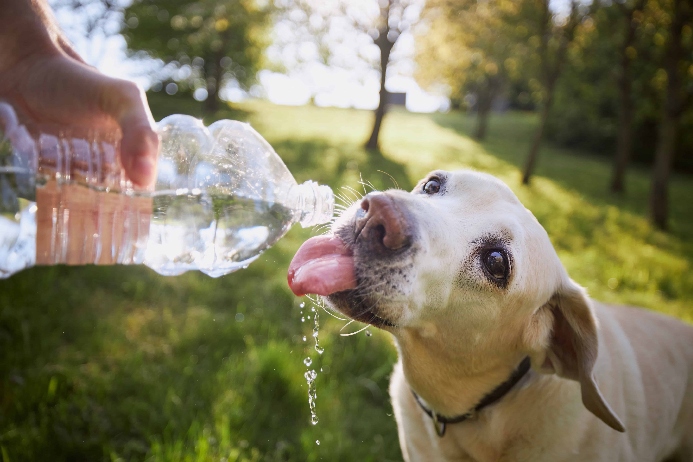
Most dog owners can name their vet, recite their pup’s vaccine schedule, and tell you exactly which flavor of kibble gets the tail wagging.
But ask them how much water their dog needs each day?
Blank stare. It’s one of the most basic questions in dog health, and most of us are flying blind.
Let’s fix that with this summer hydration guide.
The water math: the 1 oz per pound rule
- The water math: the 1 oz per pound rule
- Factors that increase water needs
- Signs of dehydration: what to look for
- When dehydration becomes an emergency
- Getting picky drinkers to actually drink
- Water bowl placement and cleanliness tips
- Wet food vs. dry food: the hydration difference
- Hydrating foods and a homemade electrolyte drink
- The bottom line on dog hydration
Here’s the number you need: one ounce of water per pound of body weight, per day.
That’s it. Simple, right? A 20-pound dog needs roughly 20 ounces, or about 2.5 cups. A 60-pound dog needs 60 ounces, closer to 7.5 cups.
Write it down, stick it to the fridge, tattoo it on your forearm. Whatever it takes.
Now, that baseline assumes moderate temperatures, normal activity, and a dry kibble diet.
Summer blows all of that up. Heat, humidity, exercise, and diet all significantly shift your dog’s needs.
On hot days, your dog’s water requirements can range from 1.5 to 2 times their usual amount.
So if the base formula says your 40-pound dog needs 40 ounces, plan for 60 to 80 ounces (about 7.5 to 10 cups) in hot, humid, or high-activity conditions.
The formula is a floor, not a ceiling.
Factors that increase water needs
Think of your dog’s body as a radiator. More heat in, more coolant needed. Here’s what turns up the heat:
Hot weather and humidity. Dogs don’t sweat through their skin the way humans do. They cool down by panting, which quickly burns through moisture. On a sweltering day, your dog’s water needs can double.
Exercise. A 30-minute fetch session in July isn’t the same as a casual winter stroll. Active dogs need water before, during, and after exercise. Don’t wait for them to ask.
Age. Puppies and senior dogs are both more vulnerable to dehydration. Puppies have faster metabolisms. Older dogs often drink less voluntarily, even when they need more. Keep a close eye on both.
Dry kibble diet. Dry food contains only about 10% moisture. Wet food can run as high as 78%. If your dog eats exclusively dry food, they’re getting almost zero hydration from their meals. Their water bowl has to work harder.
Breed and coat. Brachycephalic breeds, those with flat faces like Bulldogs, French Bulldogs, and Pugs, pant less efficiently. They overheat faster and need more water to compensate. Heavy double-coated breeds like Huskies and Malamutes face similar challenges in summer.
Health conditions. Dogs with kidney disease, diabetes, heart disease, or those taking certain medications like steroids or diuretics often have higher hydration needs.
Even allergies and some chronic skin issues may require extra attention to water intake.
If your dog is on any long-term medication or has a medical diagnosis that might affect their fluid balance, talk to your vet and monitor their drinking habits closely.
Signs of dehydration: what to look for

Dehydration sneaks up. Your dog won’t hand you a note saying they’re running low. You have to know what to watch for.
The skin turgor test. Gently pinch the loose skin on the back of your dog’s neck or between their shoulder blades. Lift it slightly, then let go. Hydrated skin snaps back immediately. Dehydrated skin returns slowly, or worse, stays tented. The more sluggish the return, the more dehydrated the dog.
Gum check. Press your finger against your dog’s gums, then release. In a well-hydrated dog, the pale spot you create fills back with color in under two seconds. Slow refill time or gums that look dry and tacky rather than slick and moist are red flags.
Other signs to watch:
- Sunken or dull eyes
- Lethargy or unusual quietness
- Thick, ropy saliva
- Loss of appetite
- Dry nose (though a dry nose alone isn’t definitive)
When dehydration becomes an emergency
Mild dehydration is manageable. Severe dehydration is a vet visit, right now, no delays.
Rush to an emergency vet if your dog shows any of these:
- Extreme lethargy or collapse
- Rapid breathing or heart rate
- Pale, gray, or bluish gums
- Vomiting that prevents them from keeping water down
- Loss of consciousness or disorientation
Don’t wait it out. Don’t offer water and hope for the best.
Dogs can go downhill fast in the heat, and heat stroke and severe dehydration can cause organ damage within hours. When in doubt, call your vet immediately.
Getting picky drinkers to actually drink

Some dogs are enthusiastic drinkers. Others treat their water bowl like it personally offended them. If yours falls into the second camp, try these tactics.
If your dog persistently refuses to drink water for more than a day or shows any signs of dehydration, consult your veterinarian promptly to rule out underlying health concerns.
Running water wins. Many dogs strongly prefer moving water. A pet fountain provides constant circulation, keeping water cool and aerated. It’s not a luxury item in summer; it’s a practical tool.
Flavor the water. A small splash of low-sodium chicken or beef broth makes plain water suddenly irresistible to most dogs. Keep it unsalted and onion-free.
Wet food or water-added kibble. Stir a few tablespoons of warm water into dry kibble. It softens the food, releases aroma, and adds moisture without any fuss.
Or consider transitioning partially to wet food during the summer months.
If you decide to make the switch, introduce wet food gradually by mixing a small amount with your dog’s regular kibble, then slowly increasing the proportion of wet food over 7 to 10 days.
This helps your dog’s digestive system adjust and reduces the risk of stomach upset.
Multiple bowls in multiple spots. Don’t make your dog walk across the house on a hot day to find water. Put bowls where they spend time, indoors and outdoors.
Ice cubes. Many dogs love crunching ice cubes. Toss a few in the bowl or offer them as a treat—hydration delivered via entertainment.
Track intake. Fill the bowl with a measured amount each morning. Check what’s left at night. If consumption drops significantly, investigate.
Water bowl placement and cleanliness tips
A full water bowl that’s been sitting in the sun since Tuesday isn’t doing your dog any favors. Here’s how to set up a smart hydration station.
Keep bowls in the shade. Direct sunlight heats water quickly and encourages the growth of algae and bacteria. A shaded spot keeps water cooler and fresher longer.
Wash bowls daily. Biofilm, that slippery, invisible layer of bacteria, builds up fast in water bowls. A quick scrub with hot soapy water every day keeps it in check. Stainless steel and ceramic bowls clean more thoroughly than plastic ones, which harbor bacteria in micro-scratches.
Outdoor bowls need extra attention. Debris, insects, and heat all accelerate contamination outside. Refresh outdoor water more frequently than indoor water, at a minimum twice daily in summer.
Bowl size matters. A bowl that holds a full day’s supply means less refilling. Just don’t set it and forget it. Fresh water beats standing water every time.
Wet food vs. dry food: the hydration difference
Here’s something most labels won’t spell out for you.
Dry kibble contains roughly 6-10% moisture. Canned wet food typically runs between 70% and 80%. That gap is enormous when you think about daily fluid intake.
A dog eating 100% dry food gets almost no hydration from meals.
A dog eating wet food gets a substantial portion of its daily needs covered before it even touches the water bowl.
This doesn’t mean every dog needs to switch to wet food. But it does mean that dry-fed dogs have a higher water-bowl burden, especially in summer.
If your dog is a reluctant drinker, swapping even one daily meal to wet food can meaningfully improve hydration without requiring them to drink more.
Hydrating foods and a homemade electrolyte drink
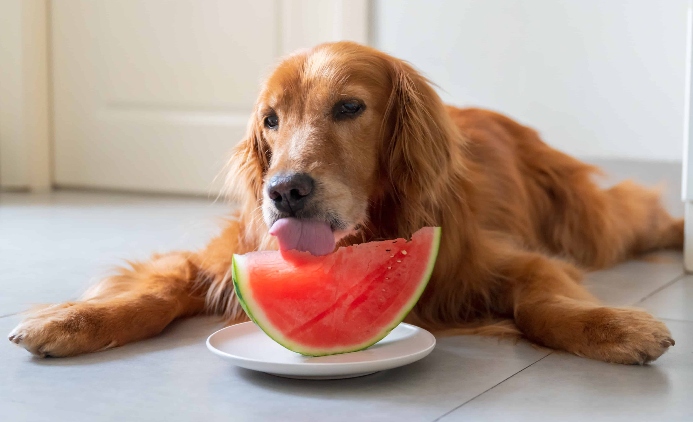
Food can do double duty as hydration, and several dog-safe options make excellent summer snacks.
Hydrating fruits and vegetables (safe for dogs):
- Watermelon (seedless, no rind) – Over 90% water, and most dogs adore it
- Cucumber – Low calorie, high moisture, perfect for warm days
- Blueberries – Antioxidant-rich with decent water content
- Celery – Crunchy and hydrating
- Strawberries – Sweet and water-dense
Always introduce new foods gradually, and avoid grapes, raisins, and onions, which are toxic to dogs.
Frozen treats for hot days. Blend watermelon or blueberries with water, pour into an ice cube tray, freeze, and serve. Your dog gets hydration, enrichment, and a reason to love summer.
Homemade dog electrolyte drink:
When heat or activity has really drained your dog, plain water may not be enough to restore electrolyte balance quickly. This simple recipe helps.
What you need:
- 4 cups clean water
- 1 tablespoon honey (raw if possible)
- 1/4 teaspoon fine sea salt
- 1 tablespoon low-sodium chicken broth (no onion, no garlic)
How to make it:
Stir all ingredients together until fully dissolved. Serve chilled, in small amounts—about 2 to 4 tablespoons per 20 pounds of your dog’s body weight at a time.
You can offer this drink 1 to 2 times a day when your dog needs extra hydration, such as after strenuous exercise or in extreme heat.
This isn’t an everyday drink; think of it as a recovery tool to help restore electrolyte balance on the rare occasions your dog needs it.
Don’t use sports drinks formulated for humans. Many contain xylitol and other artificial sweeteners, which are dangerous for dogs.
The bottom line on dog hydration
Hydration isn’t glamorous, but it’s foundational.
A dog who drinks enough water regulates their body temperature better, digests food more efficiently, flushes toxins faster, and recovers from exercise more quickly.
In summer, good hydration is the difference between a dog who thrives and one who struggles.
Know the 1 oz-per-pound baseline. Watch the signs of dehydration. Keep bowls clean, fresh, and accessible. And if your dog turns their nose up at water, get creative.
Summer should be fun for your dog. Keep them watered, and they’ll keep you company for many summers to come.
Sara B. Hansen has spent 20-plus years as a professional editor and writer. She’s also the author of The Complete Guide to Cocker Spaniels. She created her dream job by launching DogsBestLife.com in 2011. Sara grew up with family dogs, and since she bought her first house, she’s had a furry companion or two to help make it a home. She shares her heart and home with Nutmeg, a Pembroke Welsh Corgi. Her previous dogs: Sydney (September 2008-April 2020), Finley (November 1993-January 2008), and Browning (May 1993-November 2007). You can reach Sara @ editor@dogsbestlife.com.