
20 fun ways to help your dog beat summer boredom

Your dog is getting restless. Maybe it’s the couch cushions in danger. Maybe it’s your favorite pair of shoes. Or perhaps it’s a wild case of the zoomies at 9 p.m., because the pavement outside is too hot for walks and your dog hasn’t had much to do all day.
Sweltering temperatures don’t just affect people—they can also leave even the best-behaved dogs feeling bored, restless, and sometimes a bit destructive.
One thing that often surprises new dog owners: while summer is meant to be the season of fun, it’s actually when many dogs get the least exercise and feel the most cooped up.
Hot pavement can burn paws, and muggy weather quickly drains energy. Just letting your dog out in the backyard only works until he’s bored of sniffing the same spots and is back inside, looking like you’ve ruined his day.
So let’s fix that.
Here are 20 creative ways to keep your dog engaged and active when it’s too hot for long walks.
Activities are organized by time of day, setting, and energy level, so you can pick what best fits your dog.
Why summer boredom hits harder than you’d think
- Why summer boredom hits harder than you’d think
- Morning and evening outdoor activities (with heat safety built in)
- True indoor activities that actually work
- DIY enrichment on a budget
- Matching activities to your dog’s energy level
- Screen time for dogs? It’s a real thing now
- Social activities still count as enrichment
- Warning signs your dog is under-stimulated
- The bottom line on summer boredom busters
A bored dog isn’t simply tired—they’re searching for something to do.
If you don’t give your dog a task, they’ll come up with their own, which often means chewing, barking at anything and everything, or spreading trash around the house.
Hot weather adds another layer of challenge. Dogs require both physical activity to expend energy and mental stimulation to feel content.
Take away the long walks and the dog park sessions, and you’re left with a dog who has plenty of energy and nowhere to put it.
This can result in pacing, whining, chewing, digging, or those unexpected zoomies. None of these behaviors mean your dog is misbehaving.
It simply means your dog needs more stimulation, which you can address.
Morning and evening outdoor activities (with heat safety built in)
The sun might be harsh, but you still have options.
Early mornings and late evenings offer cooler windows, making it safer and more pleasant to be outside with your dog.
1. Sunrise sniff walk 🐌 Couch potato to 🐕 Moderate
Skip the brisk power walk and let your dog actually sniff. A slow, sniff-heavy walk tires out a dog’s brain more than a fast one tires out his legs. Aim for the hour right after sunrise, when pavement temps are lowest.
2. Sprinkler tag 🐕 Moderate to 🐕🦺 High energy
Set up a low hose or sprinkler and let your dog chase the water. It’s affordable, entertaining, and a great way to keep your dog cool while staying active.
3. Shaded fetch sessions 🐕🦺 High energy
Limit fetch to five or ten minutes in the shade, and include plenty of water breaks. Test the pavement with your hand—if it’s too hot for you, it’s not safe for your dog. Watch for heatstroke symptoms like heavy panting, drooling, red gums, confusion, weakness, or lethargy. If you notice any, move your dog to a cooler area and give them water immediately.
4. Kiddie pool splash zone 🐌 Couch potato to 🐕 Moderate
A small plastic pool filled with a few inches of water can provide instant fun. Add floating toys, and even dogs who dislike baths may start to love splashing around.
5. Early evening dog park run 🐕🦺 High energy
When the temperature drops after dinner, a short visit to the dog park gives energetic dogs a chance to socialize and run without overheating. Always bring water and limit your stay if it’s still warm out.
True indoor activities that actually work
This is where the magic occurs during the worst of the heat. A tired brain is just as good as tired legs, sometimes better.
6. Puzzle feeders 🐌 Couch potato to 🐕 Moderate
Instead of a boring bowl, make your dog work for breakfast. Puzzle feeders turn a two-minute meal into a twenty-minute project. If you don’t have a store-bought puzzle feeder handy, try a DIY version: drop kibble into a muffin tin and cover each one with a tennis ball, or scatter food on a towel, roll it up, and let your dog sniff and unroll their way to breakfast. Looking for more options?
7. Snuffle mats 🐌 Couch potato
Hide kibble in the fabric strips of a snuffle mat and let your dog’s nose do the heavy lifting. Sniffing is mentally exhausting for dogs in the best way, kind of like how a crossword puzzle wears out your brain without you ever leaving the chair.
8. Find it scent games 🐕 Moderate to 🐕🦺 High energy
Hide treats around a room and teach your dog the “find it” cue. Start easy, then make it harder by hiding treats inside boxes or under cups. This is a cousin of professional scent work, and most dogs take to it instantly.
9. Training refresh sessions 🐕 Moderate
Ten minutes of “sit, stay, down, shake” might sound basic, but short training bursts build focus and confidence. Rotate in a new trick every week.
10. Hide and seek 🐕 Moderate to 🐕🦺 High energy
Hide somewhere in the house and call your dog. When he finds you, throw a party. This game taps into a dog’s natural drive to track and locate, minus the heat.
11. The muffin tin game 🐌 Couch potato
Drop treats into a few cups of a muffin tin, then cover each one with a tennis ball. Your dog has to figure out which balls hide the goods. Simple, cheap, surprisingly effective.
12. Tug of war 🐕🦺 High energy
Indoor-friendly, low space required, and a legitimate calorie burner. Just set ground rules so it doesn’t turn into a game of “win the couch.”
DIY enrichment on a budget
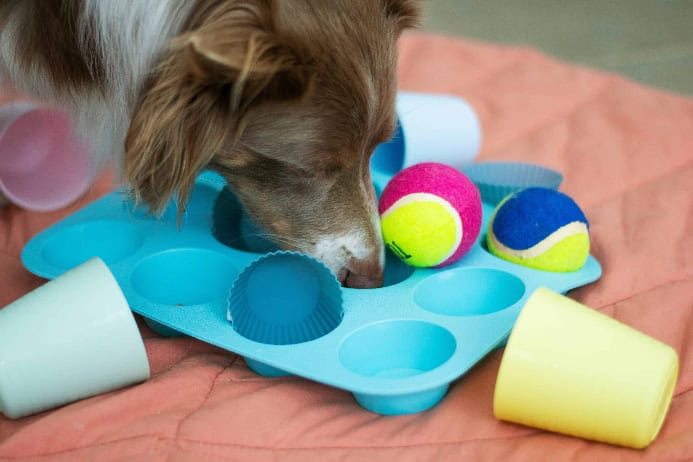
Photo by Ayla Verschueren
You don’t need a credit card to keep a dog entertained. You need a cardboard box and a little imagination.
13. The cardboard box treasure hunt 🐌 Couch potato to 🐕 Moderate
Layer crumpled paper and treats inside an empty box. Let your dog dig and shred his way to the prize. Supervise so cardboard doesn’t get swallowed.
14. Frozen Kong or frozen treat puzzle 🐌 Couch potato
Stuff a Kong with peanut butter, plain yogurt, or wet food, then freeze it. A frozen treat takes way longer to finish than a fresh one, which buys you a solid chunk of quiet time.
15. DIY agility course 🐕🦺 High energy
Use couch cushions, broomsticks balanced on books, and laundry baskets to build a mini obstacle course. It looks ridiculous, but it works beautifully for high-drive dogs who need a job.
16. Towel roll treat hunt 🐌 Couch potato
Roll treats inside a towel, then let your dog unroll it to find them. It’s the low-budget cousin of a snuffle mat and just as satisfying for a bored nose.
Matching activities to your dog’s energy level
Not every dog needs to run a marathon, and not every activity fits every personality. Here’s the quick cheat sheet.
If you’ve got more than one dog at home, try adapting activities so everyone can get involved without turning playtime into a competition.
Offer each dog their own puzzle or treat item to prevent squabbles.
For games like fetch or tug, take turns or use separate toys. If your dogs have different energy levels or play styles, split them into pairs for individual attention, or closely supervise group games to keep things peaceful and fun for all.
Couch potato dogs (bulldogs, basset hounds, older dogs) do best with puzzle feeders, frozen treats, and gentle scent games. Think low effort, high payoff.
Moderate energy dogs (most mixed breeds, beagles, cocker spaniels) thrive on a mix of training games, find-it sessions, and short fetch bursts.
High-energy dogs (border collies, huskies, working breeds) need structured outlets like agility courses, tug, and scent work that challenge both their bodies and their brains. Skipping this group’s enrichment is basically asking for trouble.
Screen time for dogs? It’s a real thing now
Yes, dog TV exists, and no, it’s not as ridiculous as it sounds. Calming music or nature soundtracks designed for dog hearing can take the edge off anxious pacing during the hottest part of the day.
Combine it with a snuffle mat or a frozen Kong for a low-key afternoon that keeps your dog settled without you having to lift a finger every 10 minutes.
It’s not a replacement for real engagement, more like a supplement. Think of it as the difference between a snack and a meal. Useful, but not the whole solution.
Social activities still count as enrichment
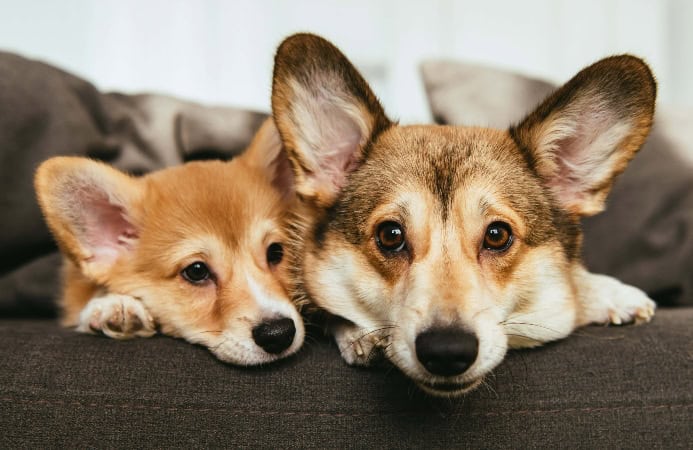
Dogs are social creatures, and isolation makes boredom worse. A few low-effort ways to keep the social calendar alive:
17. Doggy playdates: Set up a backyard hangout with a dog-savvy friend’s pup during cooler hours. Supervised play burns energy fast and builds confidence.
18. Training classes: Group classes, whether in person or virtual, give your dog structure, mental work, and a chance to practice manners around other dogs.
19. Doggy daycare for a day: If your dog tolerates other dogs well, a single daycare day during a brutal heat week can reset his energy levels fast.
20. Video call playdates: It sounds silly until you watch a dog perk up at a familiar bark coming through a phone speaker. Not a substitute for real contact, but a fun novelty on a rough day.
Warning signs your dog is under-stimulated
How do you know boredom has crossed into a real problem? Watch for these red flags:
Excessive chewing on things that aren’t toys. Pacing in circles or back and forth along the same path. Barking at nothing in particular, over and over. Digging at carpets, doors, or furniture. Sudden bursts of frantic zoomies, especially in the evening. Restlessness that doesn’t settle even after a nap.
If any of that sounds familiar, your dog isn’t being difficult. He’s telling you something. If you notice these signs persisting even after trying new enrichment activities, it might be time to check in with your vet or a certified trainer.
Sometimes, ongoing boredom behaviors can signal an underlying medical or behavioral issue that warrants closer examination.
The bottom line on summer boredom busters
Summer doesn’t have to mean four months of a stir-crazy, sandal-eating, 2 a.m.-zoomies dog.
A little structure, a few cheap supplies, and a willingness to get creative go a long way. Aim to spend 30 to 60 minutes a day on these activities, splitting that time between cooler mornings or evenings for outdoor fun and the hottest parts of the day for indoor brain games.
You don’t have to do it all at once—multiple short sessions work just as well.
Mix and match the activities above based on your dog’s energy level, lean on the cooler hours for outdoor time, and fill the hot middle of the day with the kind of mental work that leaves a dog happily collapsed on the floor by dinnertime.
Boredom is solvable. Your dog needs you to hand him the job.
Sara B. Hansen has spent 20-plus years as a professional editor and writer. She’s also the author of The Complete Guide to Cocker Spaniels. She created her dream job by launching DogsBestLife.com in 2011. Sara grew up with family dogs, and since she bought her first house, she’s had a furry companion or two to help make it a home. She shares her heart and home with Nutmeg, a Pembroke Welsh Corgi. Her previous dogs: Sydney (September 2008-April 2020), Finley (November 1993-January 2008), and Browning (May 1993-November 2007). You can reach Sara @ editor@dogsbestlife.com.