
How to avoid new puppy health scares: Dos and don’ts

Getting a new puppy is one of the best feelings in the world.
The cuddles, the zoomies, the tiny little sneezes, it’s a lot.
But puppies are also surprisingly fragile, and the first few months matter more than you’d think.
The good news? Most common puppy health scares are totally preventable. Here’s what to do (and what not to do) to keep your pup safe and thriving.
Do connect with a vet right away
Don’t wait on this one. A good vet is your puppy’s best defense against illness and disease. Find one before you bring your pup home if you can. Those first vet visits set the foundation for a lifetime of good health.
Your vet will map out a vaccination schedule and make sure your puppy gets every dose on time. Miss a booster, and your pup won’t have full immunity. It’s that simple.
Learn more about the benefits of sticking to the schedule.
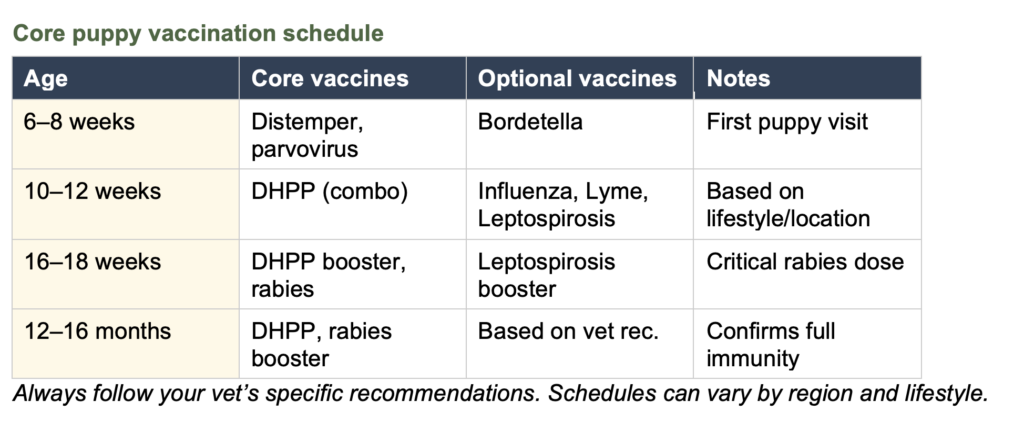
Don’t have a vet yet? The American Veterinary Medical Association makes it easy to find one near you.
Don’t take your puppy to public places before they’re fully vaccinated
We get it. You want to show your puppy off to the whole world. But hold off on the dog park, the pet store, and busy sidewalks until your pup has all their shots.
Unvaccinated puppies face real risks in public spaces. Parvovirus, for example, can survive in soil for months. A single sniff of contaminated ground can be enough to infect a puppy who isn’t fully protected. Until your vet gives the all-clear, keep outings low-key and close to home.
Once your puppy is fully vaccinated, go ahead and explore. You’ve earned it, and so have they.
Do puppy-proof your home before they arrive
Think of it this way: a puppy sees your home the same way a curious toddler does. Everything is something to chew, climb, or investigate. A little prep work now prevents a lot of panic later.
Puppy-proofing checklist
☐ Store all medications, vitamins, and personal care products out of reach
☐ Secure or cover electrical cords and block access to outlets
☐ Check that all doors, windows, fences, and gates close securely
☐ Learn which human foods are toxic to dogs and lock them away
☐ Remove small objects a puppy could choke on (coins, batteries, rubber bands)
☐ Rearrange furniture to eliminate tight spots where a puppy could get stuck
☐ Move toxic houseplants (lilies, pothos, sago palm) off the floor or out of the room
☐ Keep toilet lids closed and laundry hampers covered
☐ Secure trash cans with locking lids
Don’t overfeed your puppy
Puppies need plenty of nutrients to grow, but more food doesn’t always mean better health. Most puppies don’t have an off switch.
They’ll eat as long as there’s food in the bowl, and that can lead to obesity, heart disease, and joint problems down the road.
Ask your vet how much to feed and how often. The right food and a consistent feeding schedule make a bigger difference than most people realize.
Do take flea and tick prevention seriously
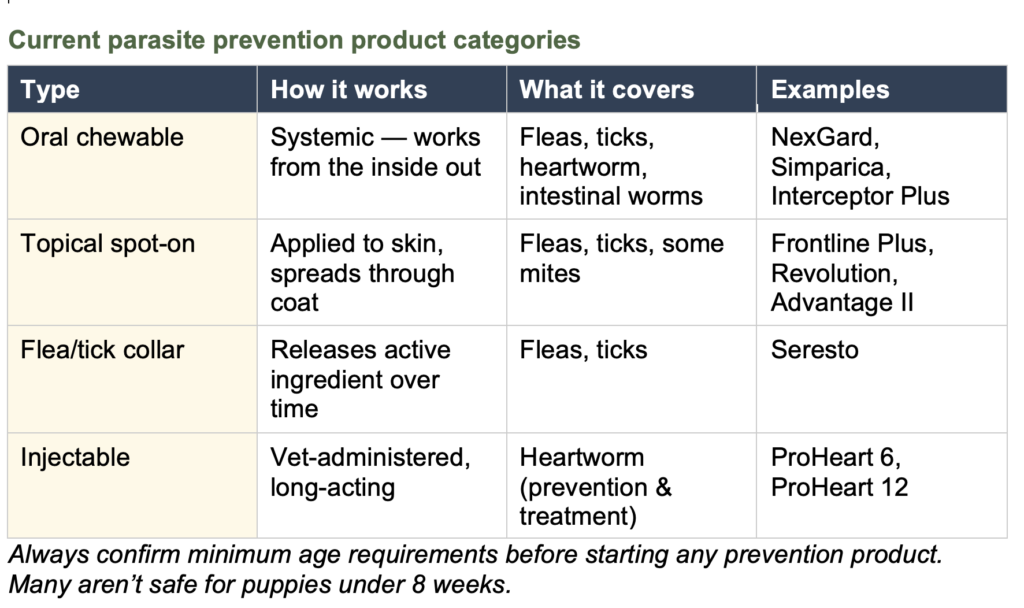
Fleas, ticks, and other parasites aren’t just gross. They’re genuinely dangerous to puppies whose immune systems are still developing. And no, indoor dogs aren’t off the hook.
Fleas hitch rides on clothing. Ticks lurk in backyards. Prevention is always easier than treatment.
Start your puppy on a parasite prevention plan as soon as your vet says it’s safe. There are several product categories to choose from, and your vet will help match the right option to your puppy’s age, weight, and lifestyle.
Don’t ignore the warning signs
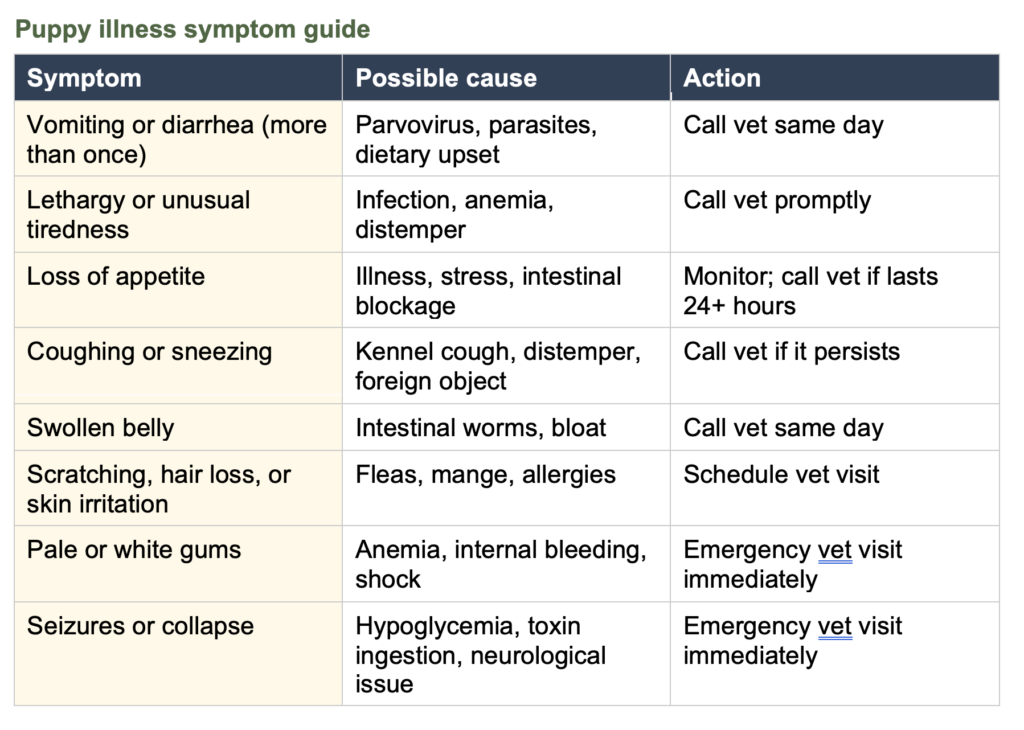
Catching a health problem early can make all the difference. The tricky part is that puppies can’t tell you when something’s wrong. You have to know what to look for.
Here are the most common symptoms that should prompt a call to your vet. Don’t wait to see if it gets better on its own.
New puppy health checklist
Use this list to stay on top of your puppy’s health from day one.
☐ Find a vet before or right when you bring your puppy home
☐ Schedule your first vet visit within 48–72 hours of bringing your puppy home
☐ Start and complete the full vaccination schedule
☐ Keep your puppy away from public spaces until fully vaccinated
☐ Puppy-proof your home before your pup arrives
☐ Set up a consistent feeding schedule with age-appropriate food
☐ Start flea, tick, and heartworm prevention as soon as your vet recommends
☐ Learn the warning signs of common puppy illnesses
☐ Schedule regular wellness checkups every 3–4 weeks until 16 weeks of age
Raising a healthy puppy takes attention and consistency.
But with the right vet, a solid prevention plan, and a puppy-safe home, you’re giving your new best friend the strongest possible start.
That’s worth everything.
David Cruz and his travel nurse girlfriend are the happy parents of a beautiful Samoyed named Bosco. Together, the trio travels the U.S., enjoying hikes and other adventures.
Unleash your puppy’s full potential with our puppy training guide