
Crack the dog breed code with this easy tail analysis method
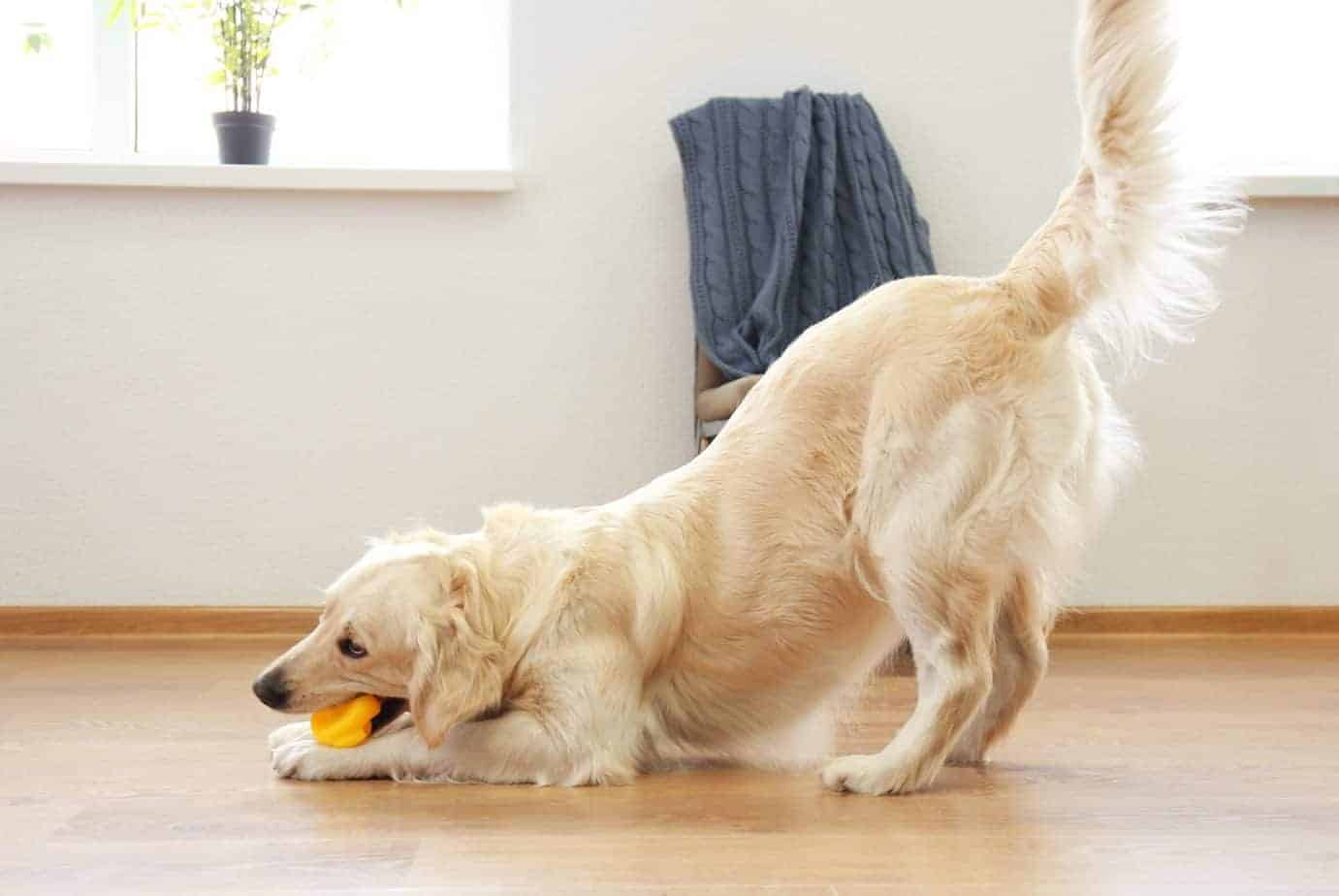
Studying a dog’s tail, especially its length and shape, can help determine what breeds make up your pup if you have a mixed breed.
Even though everyone says, “Oh, they’re just a mutt,” you know you have the best dog in the world.
But let’s face it, you are curious about what breeds co-mingle to create your unique canine companion.
An excellent place to start is at the end, the tail end.
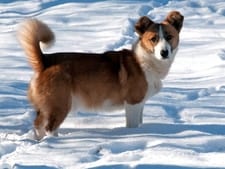
Why do dogs wag their tails?
Most, but not all, dogs have tails.
Certain dog breeds, like Australian Shepherds and Pembroke Welsh Corgis, have small fatty flaps instead of tails that wag happily.
Most experienced dog owners know that dogs communicate by using their tails.
Learning to read your dog’s tail is critical to successfully communicating with your dog. Your dog’s tail is a vital part of dog body language.
Tails held high are usually a sign of an alert, aware dog.
Tails tucked low or between the legs usually indicate a dog feeling threatened, frightened, or nervous.
Bristled tails are usually a sign that a dog is on defense.
Why do dogs wag their tails, and does the wagging direction mean anything?
Experts believe that a dog’s tail wagging indicates familiarity with the person it is meeting or greeting.
This suggests that the dog’s wagging behavior can reflect its level of familiarity with the individual.
Wagging from left to right means a stranger. To the right means the dog recognizes you.
Wagging in circles usually means the dog is happy or excited.
Content dogs wag their tails while lying down or sleeping. When your dog holds his tail up and still, it means he’s wary.
A high-set tail, a natural extension of your mutt’s body, could hint at a scent hound ancestry. Perhaps your dog has a touch of Beagle, Foxhound, or Airedale.
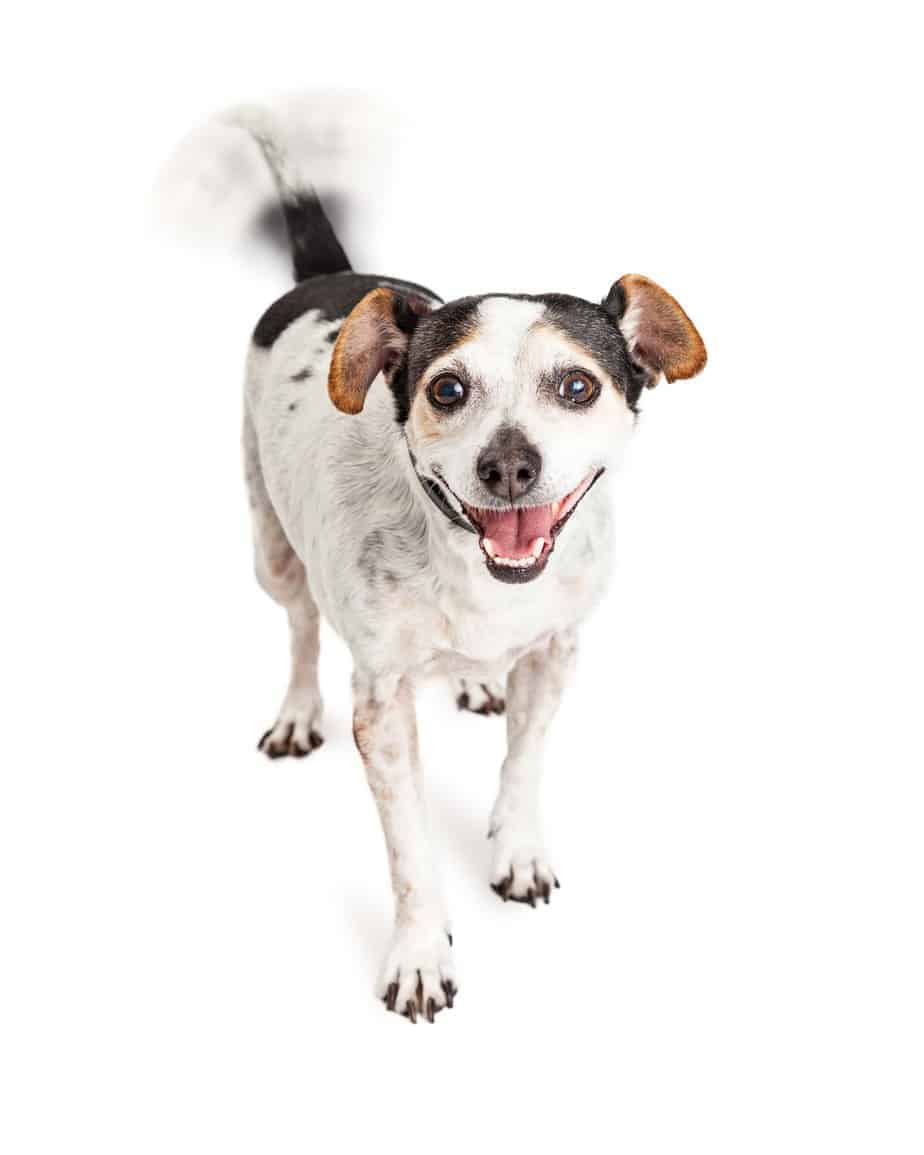
Dog tail position
The tail’s setting, shape, and size are markers of your mutt’s intriguing gene pool. Combinations make it even more fascinating.
One position is a high set, where the tail is a natural extension of the dog’s back or topline.
Sometimes, the tail sits low and seems to start below the top line.
Like many dogs that hunt in packs, Terriers, Beagles, or Foxhounds have high tails.
Sighthounds like Greyhounds, Whippets, and Afghan Hounds have low-set tails.
Is your dog’s tail low set, whip-shaped, with a slight curve? They could be Whippet, Wolfhound, or Ibizan Hound.
A high-set tail, a natural extension of your dog’s body, could hint at a scent hound ancestry. Perhaps your dog has a touch of Beagle, Foxhound, or Airedale.
Dog tail shape
The length and shape of the dog’s tail can give you a hint of their ancestry.
Tail lengths can be long, medium, short, or bobbed. They are straight, screw/curled, gay, saber, taper, whip, plum, otter, brush, sickle, snap, carrot, and tuft.
Here are a few clues that you may find helpful when doing detective work on your mixed breed’s diverse pedigrees:
- Curled or sickle tail — Northern cold-weather breeds, including the Akita, Siberian Husky, Alaskan Malamute, Spitz, Shiba Inu, Keeshond, American Eskimo Dog, Swedish or Finnish Lapphunds, Schipperkes, and Chow Chow, to name a few, have brushed or sickle-shaped tails that curl forward. The tail helps warm the dog’s face, especially the nose, as the dog curls up into a big C to retain as much body heat as possible when sleeping. Oddly enough, Chihuahuas also have sickle tails.
- Swimmer tail — Otter tails work like rudders for water dogs such as Labrador Retrievers, Chesapeake Bay Retrievers, and other sport-class dogs. Their tails are usually thick, medium to short compared to body size, heavily furred, and taper to a blunt tip. This tail style helps swimmers.
- Carrot tail — Does your mutt have a carrot tail? That would be identified as reasonably short, thicker at the base, and tapering to a stumpy tip. That shape helps a farmer grab a dog and pull it out of vermin holes. If your dog’s tail is carrot-shaped, chances are that somewhere in their gene pool is a West Highland Terrier or two.
Determine your dog’s pedigree
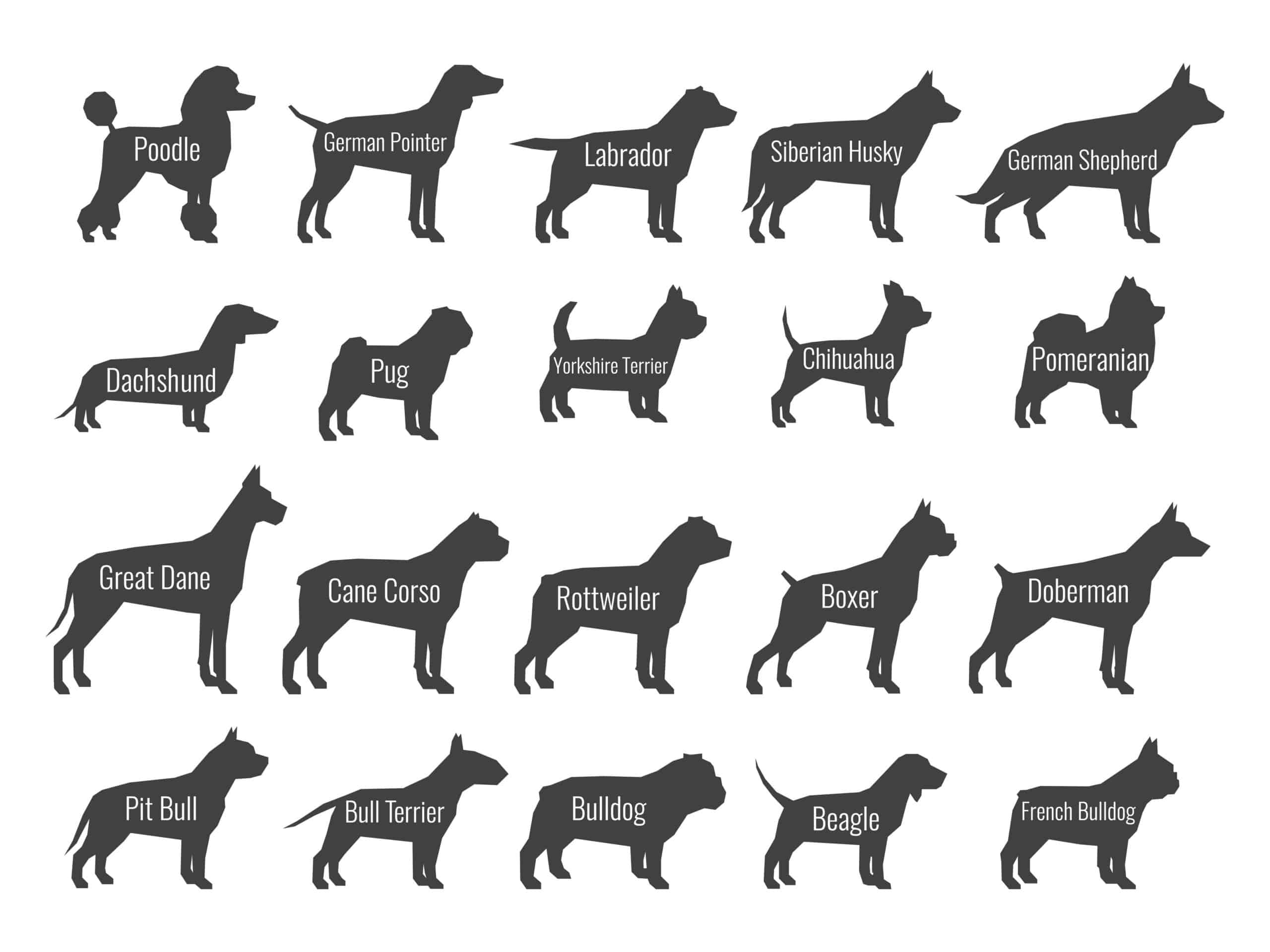
More dog tail shapes
- Tufted or fluffy tails — If your mixed breed has a tufted tail, there is a likelihood it’s got some Poodle in it! Poodle tails are set high on their back, straight and well-furred with a tufted end.
- Snap tail — Also known as a tightly curled tail, this trait is shared with Northern breeds and colder climates. Mutts with Alaskan Malamute, American Eskimo Dog, and even little Pomeranian ancestors commonly share this shaped tail.
- Swordtail — The regal swordtail is generally associated with Great Danes, Greater Swiss Mountain Dogs, American Staffordshire Terriers, and many Pointers.
- Bobtail — Old English Sheepdogs, Pembroke Welsh Corgis, and some Australian Shepherds have a tiny nub of fatty tissue rather than a full tail.
- Gay tail — Beagles, Cavalier King Charles Spaniels, Border Collies, and Wire Fox Terriers have thick tails with a small white tuft at the tip that they hold horizontally with a slight curve.
- Saber Tail — Certain herding breeds, such as German Shepherds, Collies, Belgian Malinois, and Belgian Tervurens, have saber-shaped tails. They are long and held low. Those impish Cardigan Welsh Corgis also wear their tails low.
- Tapered — Your mixed-breed dog might have a tapered tail if they have some Terrier genes, like Manchester, Border, or Airedale. Typically, the base of those tails is thicker, set high on the back, and held straight up or out. Dachshunds, Dalmatians, and English Setters also fit in this tail category.
- Corkscrew tail — Dogs with curly tails that resemble a corkscrew include Bulldogs and Pugs.
- Plumed — Dogs with plumed tails could be Belgian Tervuren, Saluki, or Borzoi.
- Short — Dogs with short tails include the French Bulldog, English Bulldog, Australian Cattle Dog, Blue Heeler, Mudi, and Boston Terrier.
- Long-tailed dog breeds — Breeds with long tails include Irish Wolfhound, German Shepherd, Irish Setter, Chihuahua, Whippet, and St. Bernard.
Docked tails
Working breed dogs often have docked tails to reduce injury risk. Many working dogs belong to the Spaniel or Terrier breeds.
Dogs with docked tails include Airedale Terrier, American Cocker Spaniel, Boxer, Brittany Spaniel, Cane Corso, Doberman Pinscher, English Springer Spaniel, Giant Schnauzer, Hungarian Vizsla, King Charles Spaniel, Miniature Pinscher, Miniature Poodle, Miniature Schnauzer, Norfolk Terrier, Norwich Terrier, Rottweiler, Standard Poodle, Toy Poodle, Weimaraner, and Yorkshire Terrier.
Selective breeding has created some dog breeds born without tails.
Those breeds include Australian Shepherd, Brittany Spaniel, Danish Swedish Farmdog, Jack Russell Terrier, and the Pembroke Welsh Corgi.
Tail docking—the practice of removing a portion of a dog’s tail—is controversial because many argue it is unnecessary, potentially painful, and primarily performed for cosmetic reasons.
Some also believe it can hinder a dog’s communication ability.
Tail health
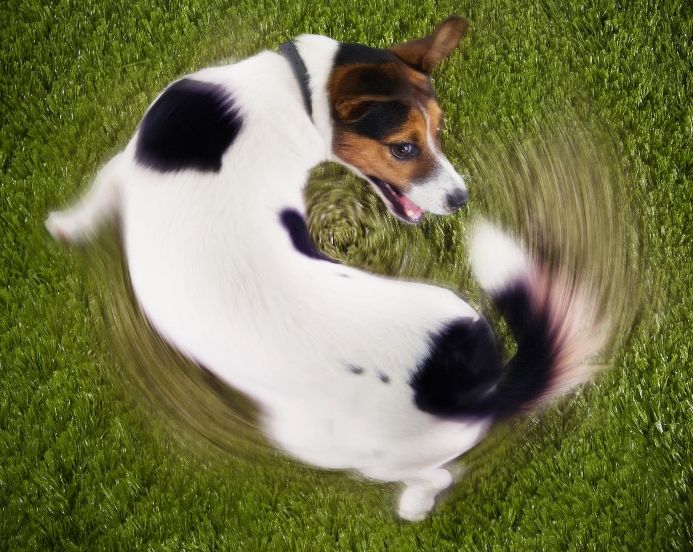
The tail is essential to a dog’s anatomy and plays a crucial role in communication and balance.
It’s vital to care for your dog’s tail by keeping it clean and inspecting it regularly for signs of injury or infection.
See a veterinarian promptly if you notice any changes in your pet, such as unusual swelling, discharge, or pain.
Proper care helps ensure your dog’s overall well-being and comfort.
Commonly asked questions
Q: What is the anatomy of a dog’s tail?
A: A dog’s tail is primarily made up of bones, tendons, muscles, and ligaments. The base is connected to the vertebrae, which form the spinal column.
Q: Is a dog’s tail bone or cartilage?
A: A dog’s tail consists of both bone and cartilage. The main structure is made up of vertebrae (bony segments), while the tips of the tail can have more flexibility due to the presence of cartilage.
Q: Is docking tails painful for dogs?
A: Docking tails can be painful for dogs. The procedure, if done without proper anesthesia, can cause significant pain and shock.
It’s often performed on puppies at a very young age, but there are ethical considerations and varying opinions about its necessity and the welfare implications of the practice.
Q: Does a dog feel pain in its tail?
A: Yes, dogs can feel pain in their tails. Like other parts of their body, the tail has nerves that can send pain signals when injured.
Q: Can you damage a dog’s tail by pulling it?
A: Yes, pulling a dog’s tail can cause damage. This can lead to injuries such as sprains to the tail muscle or fractures to the tail itself.
Q: How to tell if a dog’s tail is sprained?
A: Signs that a dog’s tail may be sprained include swelling, limping or favoring the tail, whimpering or resistance when the tail is touched, and changes in the way the dog carries its tail.
If you suspect a sprain, consult your veterinarian.
Watch for things like happy tail syndrome, a condition in which your dog’s tail strikes hard surfaces and causes injuries like cuts, bruises, or bleeding. It’s more common in large, energetic breeds like a Golden Retriever.
Q: What do dogs feel when you pull their tail?
A: When you pull a dog’s tail, they may feel discomfort or pain.
Dogs can react negatively to having their tails pulled, which can lead to stress or aggression.
Q: Should I stop my dog from chasing his tail?
A: Yes, you should consider stopping your dog from chasing his tail if it becomes excessive or is done out of frustration or anxiety.
While some dogs may do it playfully, it can lead to injuries or compulsive behavior if it’s a frequent activity.
Q: Can dogs have phantom tail pain?
A: Yes, dogs can experience phantom tail pain after tail docking or injury.
The bottom line on dog tails
As a rule, the tail gives clues about a dog’s lineage. Docking can confuse the issue.
But let’s face it, does it matter what pedigree secrets are swimming around in your Heinz 57 gene pool?
Your pup will always be the best dog in the world to you. And nothing beats seeing a happy dog wag its tail.
But, you must admit, figuring out where they came from could be challenging and fun. And even more to understand the meanings of tail-wagging.
Karen A. Soukiasian owns Good Dog! — Dog Training in St. Augustine, Florida. You can follow Karen on Facebook.